
Pogonomyrmex texanus
- Nome científico
- Pogonomyrmex texanus
- Tribo
- Pogonomyrmecini
- Subfamília
- Myrmicinae
- Autor
- Francke & Merickel, 1982
- Distribuição
- Encontrada em 1 países
Introdução
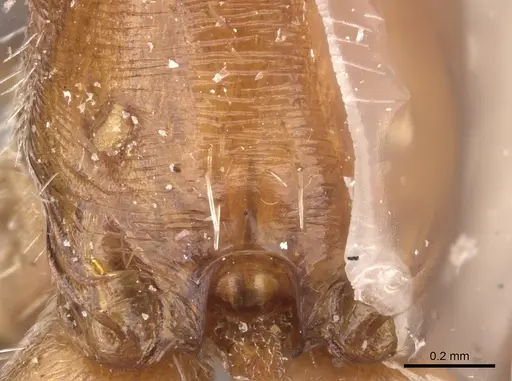
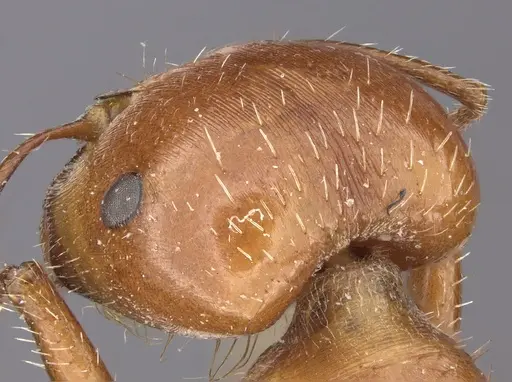
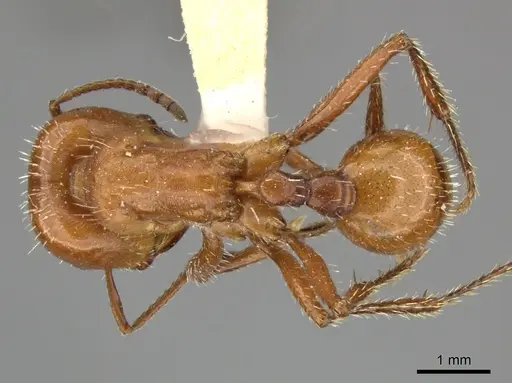
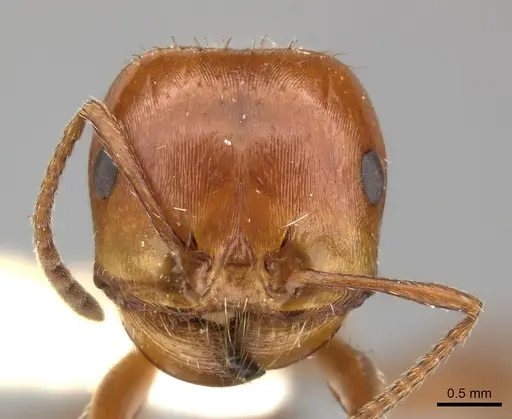
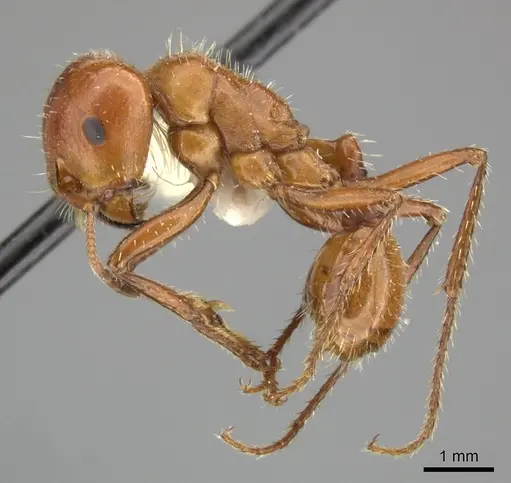
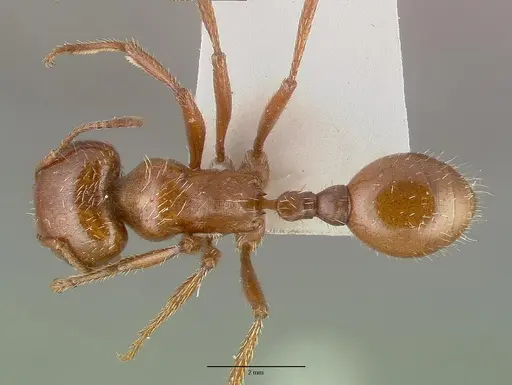
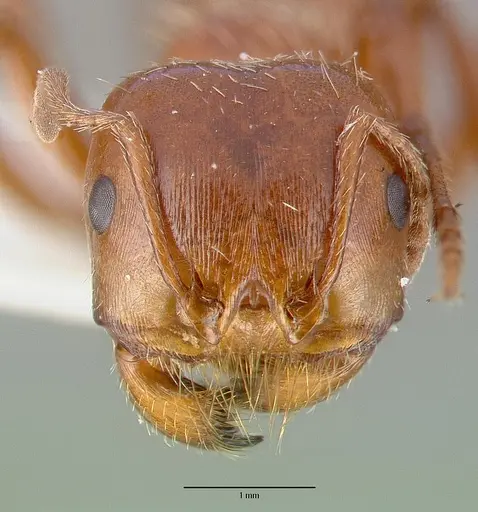
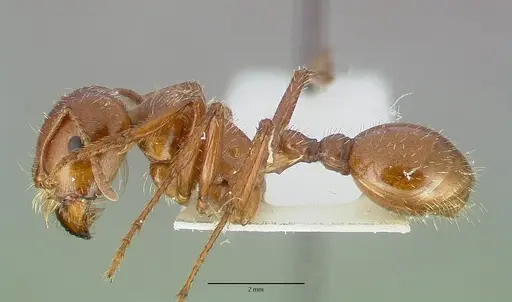
Pogonomyrmex texanus is a large harvester ant native to the Chihuahuan Desert region of the southwestern United States and northern Mexico. Workers are over 9 mm in total length , lack propodeal spines , and have fine, nearly parallel rugae on the head. Colonies nest in soil with a small mound around the entrance . Unlike many aggressive harvester ants, this species shows no defensive aggression when disturbed . What stands out about P. texanus is its docile temperament combined with medically significant venom, similar in potency to Pogonomyrmex barbatus and Pogonomyrmex rugosus . Colonies remain small, typically under 100 workers , and workers forage solitarily for seeds rather than using coordinated recruitment .
Quick Summary
- Difficulty: Medium
- Origin & Habitat: Chihuahuan Desert, rocky areas in Texas and northern Mexico [1][5][6]. Nests in soil at elevations 580-1645 m [1].
- Colony Type: Based on genus patterns, likely monogyne (single queen colonies) [1].
- Size & Growth:
- Queen: Size data unavailable, no total length measurements in research. Inferred from Pogonomyrmex genus patterns as ~12-15 mm.
- Worker: Over 9 mm total length [1].
- Colony: Up to 100 workers [1].
- Growth: Moderate, inferred from small colony size.
- Development: Estimated 6-10 weeks based on related Pogonomyrmex species [1]. (Development time is inferred, specific data for P. texanus not available.)
- Antkeeping:
- Temperature: Keep warm, roughly 24-30°C, based on desert habitat patterns [1].
- Humidity: Low to moderate, keep nest substrate relatively dry, as desert species prefer drier conditions [1].
- Diapause: Unknown, no specific data on diapause requirements.
- Nesting: Soil-nesting species. Use naturalistic setup with sandy-clay substrate or Y-tong/plaster nest with dry conditions [1].
- Behavior: Docile temperament, workers move slowly and steadily when disturbed, with no aggressive defense [1][3][4]. Solitary foragers collecting seeds. Sting is medically significant and painful [2]. Escape risk is moderate due to size, use standard barriers.
- Common Issues: fungal issues if kept too humid, desert species requires dry conditions., venom sting risk, handle with care to avoid painful stings., escape risk, use proper barriers as ants are large but can escape.
Housing and Nest Setup
Pogonomyrmex texanus is a soil-nesting desert species that does well in naturalistic setups with a sandy-clay substrate they can dig through. Use a formicarium with compact soil or a Y-tong/plaster nest with dry conditions. Provide a deep enough area for chamber creation, as these ants excavate their own tunnels. A test tube setup works for founding queens, but move them to a proper nesting container once workers emerge. The nest entrance in the wild has a small mound, so some loose substrate around the entrance is appreciated. Keep the nesting area relatively dry [1].
Feeding and Diet
As a seed harvester ant, P. texanus primarily collects and stores seeds as their main food source. In captivity, offer a mix of grass seeds, millet, sunflower seeds (cracked or small enough to handle), and other small seeds. They also need protein, offer small insects like fruit flies, small crickets, or mealworms periodically. Place food in the outworld and give them time to discover it since they forage solitarily. Fresh water should always be available [3][4].
Temperature and Seasonal Care
Being a Chihuahuan Desert species, P. texanus thrives in warm conditions. Keep the nest area around 24-30°C, with a thermal gradient allowing workers to choose their preferred temperature. A heating cable on one side of the nest can create this gradient. During winter, provide cooler temperatures if diapause is needed, but specific requirements are unknown [1].
Behavior and Handling
P. texanus is notably docile among harvester ants. When disturbed, workers move away slowly rather than attacking. However, the venom is medically significant and quite painful, so never handle with bare hands [2]. Workers move at a slow, steady pace and hold their gaster parallel to the substrate while foraging. They forage solitarily with limited recruitment, and colonies stay small [1][3][4].
Growth and Development
Colony growth in P. texanus is moderate, with colonies typically reaching up to 100 workers [1]. The founding queen likely seals herself in a claustral chamber, but founding behavior is unconfirmed. Development from egg to worker is estimated at 6-10 weeks based on related species [1]. Once established, the colony grows steadily but slowly, making it manageable for keepers.
Frequently Asked Questions
How long does it take for Pogonomyrmex texanus to produce first workers?
Based on related species in the genus, expect first workers around 6-10 weeks after the queen lays eggs. This timeline is inferred from genus patterns, as specific development timing for P. texanus is not documented [1].
Are Pogonomyrmex texanus good for beginners?
They are moderate difficulty. The small colony size and docile nature make them manageable, but their desert habitat requirements and potent sting require some experience. They are not recommended as a first species [1].
What do I feed Pogonomyrmex texanus?
They are seed harvesters, offer a mix of small seeds like millet, grass seeds, and cracked sunflower seeds. They also need protein from small insects like fruit flies or mealworms. Place food in the outworld and allow time for solitary foragers to discover it [3][4].
How big do Pogonomyrmex texanus colonies get?
Colonies remain small, typically up to 100 workers [1]. This is normal for the species and not a sign of problems.
Do Pogonomyrmex texanus need hibernation?
Diapause requirements are unknown, no specific data is available. Based on genus patterns, some winter rest might be beneficial, but this is not confirmed.
Can I keep multiple Pogonomyrmex texanus queens together?
This is likely a monogyne species based on genus patterns, so multiple queens would fight. Only keep one queen per colony [1].
Why is my Pogonomyrmex texanus colony so small?
Small colony size is normal for this species, they naturally max out around 100 workers [1]. This is typical and not a cause for concern.
What temperature do Pogonomyrmex texanus need?
Keep them warm, roughly 24-30°C, based on their desert habitat patterns [1]. Provide a thermal gradient for self-regulation.
Are Pogonomyrmex texanus aggressive?
No, they are surprisingly docile. When disturbed, workers move away slowly rather than attacking. However, they will sting if threatened, and the sting is very painful [2].
Report an Issue
The current care sheet is based fully on literature. See inconsistencies, or something that's incorrect? Please , it will be resolved after review from an admin. Contributing to the blogs tab also helps providing information, to make us be able to further improve the caresheets. Thank you for your support!
References

Este guia de cuidados está sob a licença CC BY-SA 4.0 .
Posts da comunidade
Literatura
Carregando mapa de distribuição...Carregando produtos...