
Plagiolepis abyssinica
- Nome científico
- Plagiolepis abyssinica
- Tribo
- Plagiolepidini
- Subfamília
- Formicinae
- Autor
- Forel, 1894
- Distribuição
- Encontrada em 0 países
Introdução
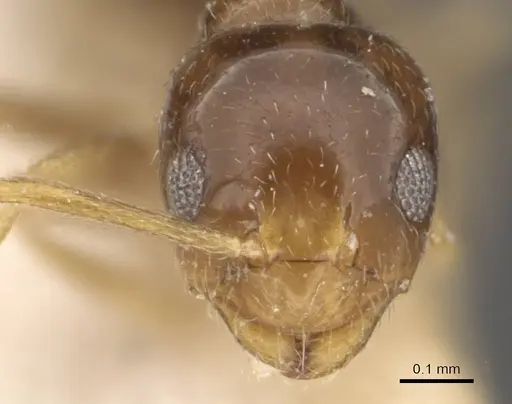
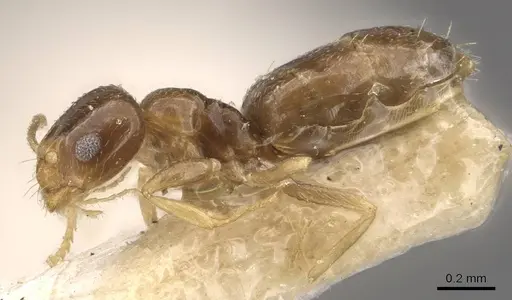
Plagiolepis abyssinica is a tiny ant species with workers measuring 1.2 mm in total length . They have a brownish body with yellowish-brown legs and yellowish antennae, clypeus, and mandibles . These ants are found in Eritrea, Ethiopia, and Saudi Arabia, where they nest in partially rotting wood . Queens and males have not been described, so colony establishment requires wild-caught queens . The most notable aspect is that sexuals are undescribed, making captive breeding challenging since colony founding relies on wild-caught queens .
Quick Summary
- Difficulty: Hard
- Origin & Habitat: Afrotropical region, Eritrea, Ethiopia, and Saudi Arabia. They nest in partially rotting wood [2][1].
- Colony Type: Unknown, queens and males have not been described, so colony structure is unconfirmed [2].
- Size & Growth:
- Queen: Unknown, queens have not been described [2].
- Worker: 1.2 mm total length [1].
- Colony: Unknown, no colony size data available.
- Growth: Unknown, no development data exists.
- Development: Unknown, no direct data available. (Based on related Plagiolepis species, development may take 4-8 weeks at warm temperatures, but this is unconfirmed.)
- Antkeeping:
- Temperature: Based on their Afrotropical distribution, temperatures around 24-28°C are likely suitable [1].
- Humidity: Keep nest substrate consistently moist but not waterlogged, as they nest in rotting wood [2].
- Diapause: Unknown, no data on overwintering. Given Afrotropical distribution, they likely do not require diapause [1].
- Nesting: Naturally nest in partially rotting wood [2]. In captivity, use small wooden nests or Y-tong with narrow chambers [2].
- Behavior: Workers are very small (1.2 mm) and active, making escape prevention critical [1]. They are likely generalist foragers, similar to other Plagiolepis species. Workers have large eyes, which may aid visual navigation [1]. Not known to be aggressive.
- Common Issues: tiny size makes escape prevention critical, they can squeeze through standard mesh, no described queens means colonies cannot be established from scratch, only wild-caught queens can start a colony, all care information is estimated due to lack of species-specific data, slow growth is likely due to small size, risk of colony collapse from stress, wild-caught colonies often struggle in captivity
Understanding the Challenge
Plagiolepis abyssinica is challenging to keep because queens and males are undescribed [2]. This means you cannot establish a colony from scratch, only wild-caught queens can start a colony. The lack of described sexuals means we know little about reproduction, nuptial flight timing, or colony founding behavior. Everything is estimated from related Plagiolepis species and their Afrotropical distribution [1].
Housing and Escape Prevention
Workers measure 1.2 mm, so escape prevention is critical [1]. Use fine mesh (at least 0.5mm) on ventilation holes, seal connections with fluon, and check for gaps regularly. For founding colonies, a test tube setup works, but modify the cotton plug tightly. For established colonies, use small wooden nests or Y-tong with narrow chambers (2-3mm wide) [2].
Temperature and Heating
Given their origin in Eritrea, Ethiopia, and Saudi Arabia, aim for 24-28°C [1]. Provide a temperature gradient with heating on one side. Room temperature may be acceptable but growth slower. Avoid temperatures above 32°C to prevent stress.
Feeding and Diet
Diet is unknown for this species. In captivity, offer sugar water and small protein sources like fruit flies, but observe what the colony accepts [2]. Feed small amounts every 2-3 days and remove uneaten food to prevent mold.
Nesting Preferences
Naturally nest in partially rotting wood [2]. In captivity, provide small wooden formicarium or Y-tong with damp substrate. Chambers should be very small,2-3mm deep, to match their size [2].
Frequently Asked Questions
Can I buy a Plagiolepis abyssinica queen to start a colony?
No, queens have never been scientifically described for this species, so they are not available from any breeder. The only way to keep this species is to find a wild-caught founding queen during nuptial flights, if you can locate them in their natural range (Eritrea, Ethiopia, or Saudi Arabia) [2].
How long do Plagiolepis abyssinica workers live?
Unknown, no research has studied worker longevity in this species [2].
Are Plagiolepis abyssinica good for beginners?
No, this species is not recommended for beginners. Queens are not described, meaning you cannot establish a colony from scratch. All care information is estimated rather than proven. Their tiny size also makes them challenging to house and feed properly [2].
What do Plagiolepis abyssinica eat?
Diet is unknown for this species. In captivity, offer sugar water and small protein sources, but observe what the colony accepts [2].
How big do Plagiolepis abyssinica colonies get?
Unknown, no colony size data exists for this species [2].
Do Plagiolepis abyssinica need hibernation?
Unknown, given their Afrotropical distribution (Eritrea, Ethiopia, Saudi Arabia), they likely do not require true hibernation [1].
Why are my Plagiolepis abyssinica dying?
Without established care guidelines, mortality is likely due to stress from incorrect humidity, temperature extremes, inadequate nutrition, or escape-related injuries. Their tiny size makes them vulnerable to many stressors that larger ants tolerate [2].
When do Plagiolepis abyssinica nuptial flights occur?
Unknown, nuptial flight timing has not been documented [2].
Can I keep multiple Plagiolepis abyssinica queens together?
Unknown, we don't know if this species is monogyne or polygyne. Without described queens, we cannot recommend combining them. Do not attempt to combine unrelated foundress queens [2].
Report an Issue
The current care sheet is based fully on literature. See inconsistencies, or something that's incorrect? Please , it will be resolved after review from an admin. Contributing to the blogs tab also helps providing information, to make us be able to further improve the caresheets. Thank you for your support!
References

Este guia de cuidados está sob a licença CC BY-SA 4.0 .
Posts da comunidade
CASENT0909850
Ver no AntWeb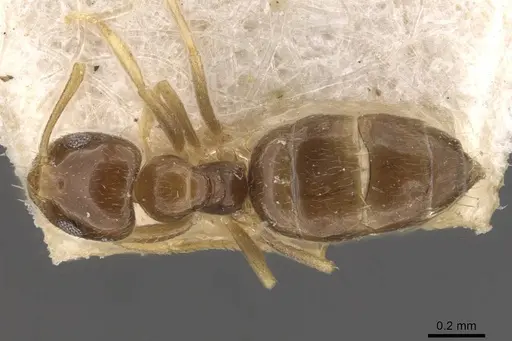
Literatura
Carregando mapa de distribuição...Carregando produtos...