
Philidris myrmecodiae
- Nome científico
- Philidris myrmecodiae
- Tribo
- Leptomyrmecini
- Subfamília
- Dolichoderinae
- Autor
- Emery, 1887
- Distribuição
- Encontrada em 3 países
Introdução
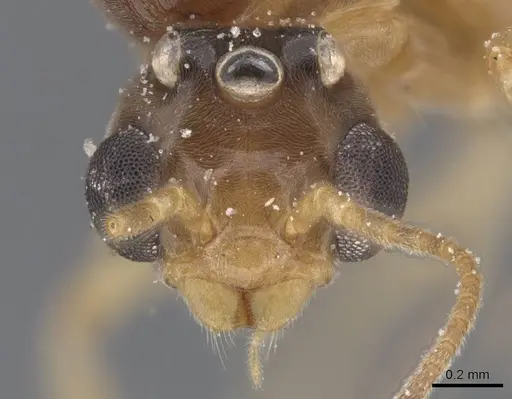
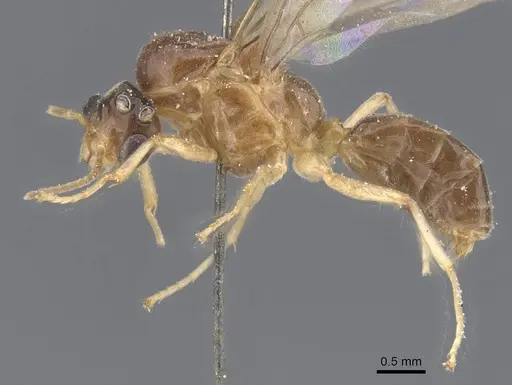
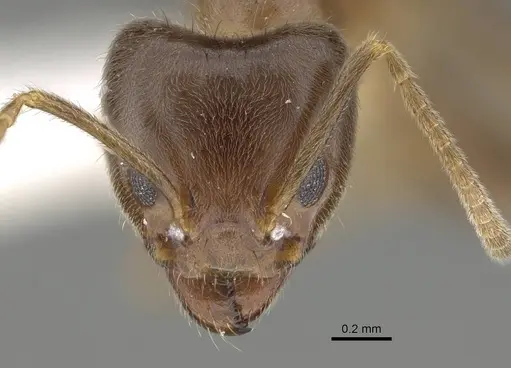
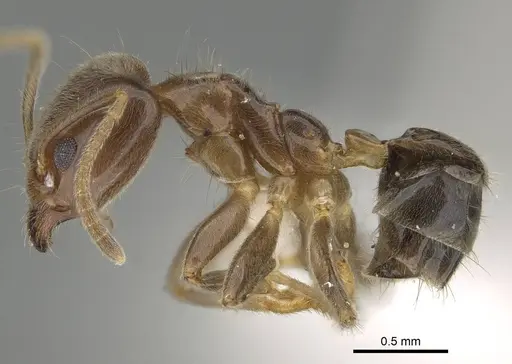
Philidris myrmecodiae is a small, dark ant in the Dolichoderinae subfamily, native to the Indomalaya region from India through Southeast Asia to the Solomon Islands . Workers are aggressive and will bite when disturbed . This species has a unique symbiosis with ant-plants like Myrmecodia and Dischidia, living inside their bulbous stems and helping the plant by depositing nutrients . They also disperse Dischidia seeds, making them important for plant reproduction .
Quick Summary
- Difficulty: Medium
- Origin & Habitat: Native to the Indomalaya region, including India, Borneo, Philippines, Malaysia, Singapore, Indonesia, and the Solomon Islands [1][2]. They inhabit tropical forest canopies, often in epiphytic ant-plants, and nest in rotting wood, tree hollows, or between branches [3][1].
- Colony Type: Single-queen colonies (monogyne). Studies in Sarawak found all examined colonies had a single physogastric queen [5].
- Size & Growth:
- Queen: Size data unavailable
- Worker: Size data unavailable
- Colony: Up to several hundred workers (estimated)
- Growth: Moderate
- Development: Estimated 6-8 weeks at optimal temperatures (25-28°C) (Development is tied to warm tropical conditions)
- Antkeeping:
- Temperature: Keep warm, around 24-28°C, based on their tropical habitat [1]
- Humidity: Keep humidity high with moist substrate, as they live in humid canopies [1]
- Diapause: No, as a tropical species that does not hibernate [1]
- Nesting: Use Y-tong or plaster nests with high humidity. Provide climbing structures as they are arboreal [3]
- Behavior: Aggressive defenders, workers bite when disturbed [3]. Arboreal and active foragers, exploring their outworld thoroughly.
- Common Issues: mold can develop if ventilation is poor due to high humidity requirements, aggressive biting makes handling challenging, they may chew through soft materials when building nests, wild-caught colonies may carry parasites from their native habitats, colony growth may be slow compared to faster-growing genera
Natural History and Symbiosis
Philidris myrmecodiae has a close relationship with ant-plants in the genera Myrmecodia and Dischidia. These epiphytic plants provide hollow chambers for the ants to nest in, and the ants benefit the plant by depositing nutrients in the cavities through their waste [4]. The ants also disperse Dischidia seeds by pulling them by their pappus hairs and moving them to suitable locations [3]. This mutualism helps both the ants and plants thrive in their canopy habitats [1].
Housing and Nest Setup
Provide a setup that mimics their natural epiphytic habitat. Use Y-tong (AAC) or plaster nests with narrow chambers to replicate tight spaces like Myrmecodia bulbs. Keep the nest humid by moistening the substrate or using a water reservoir. Include climbing structures like branches or cork bark in the outworld since they are arboreal. Test tube setups work for founding colonies but upgrade as the colony grows. Ensure excellent escape prevention, as they can squeeze through small gaps.
Feeding and Diet
In the wild, these ants tend mealybugs and scale insects for honeydew, and hunt small insects [3]. In captivity, offer sugar water or honey for energy, and protein sources like small crickets, mealworms, or fruit flies. Provide protein 2-3 times per week and keep sugar water available at all times.
Temperature and Seasonal Care
As a tropical species, maintain temperatures between 24-28°C year-round [1][2]. They do not require hibernation. Avoid temperatures below 22°C, as this may slow metabolism. A slight temperature gradient in the nest allows workers to self-regulate.
Behavior and Handling
Be prepared for defensive behavior, workers will swarm and bite when the nest is disturbed [3]. Use slow, gentle movements during inspections and consider red light to minimize disturbance. They are active foragers and arboreal, so ensure secure enclosures to prevent escapes.
Frequently Asked Questions
Is Philidris myrmecodiae good for beginners?
This species is not ideal for beginners due to its aggressive biting and specific humidity needs. Workers readily swarm and bite when disturbed, making care more challenging [3]. It is better suited for experienced keepers comfortable with defensive tropical ants.
How long does it take for the first workers to emerge?
Based on typical Dolichoderine development, expect approximately 6-8 weeks from egg to first worker at optimal temperatures (25-28°C). This is an estimate, as direct measurements for this species are not available.
Can I keep multiple queens together?
This species is monogyne, with single-queen colonies documented in wild populations [5]. Combining unrelated queens is not recommended and may result in fighting. Only one queen should be kept per colony.
What should I feed Philidris myrmecodiae?
Offer a balanced diet including sugar water or honey for energy, and protein like small crickets, mealworms, or fruit flies. In the wild, they consume honeydew from sap-sucking insects [3]. Keep sugar water available always and provide protein 2-3 times per week.
Do they need hibernation?
No, as a tropical species from Southeast Asia and the Solomon Islands, they do not require hibernation or winter cooling [1][2]. Maintain warm temperatures year-round.
Why are my ants dying?
Common causes include low humidity (they need consistently moist conditions), temperatures below 22°C, improper feeding, or stress from excessive disturbance. Check for parasites if the colony was wild-caught. Ensure the nest has adequate moisture without being waterlogged.
When should I move them to a formicarium?
Start with a test tube setup for the founding queen. Once the colony has 20-30 workers and active foraging, consider moving to a larger setup. Key triggers include crowding or frequent water reservoir depletion.
Report an Issue
The current care sheet is based fully on literature. See inconsistencies, or something that's incorrect? Please , it will be resolved after review from an admin. Contributing to the blogs tab also helps providing information, to make us be able to further improve the caresheets. Thank you for your support!
References

Este guia de cuidados está sob a licença CC BY-SA 4.0 .
Posts da comunidade
CASENT0219904
Ver no AntWeb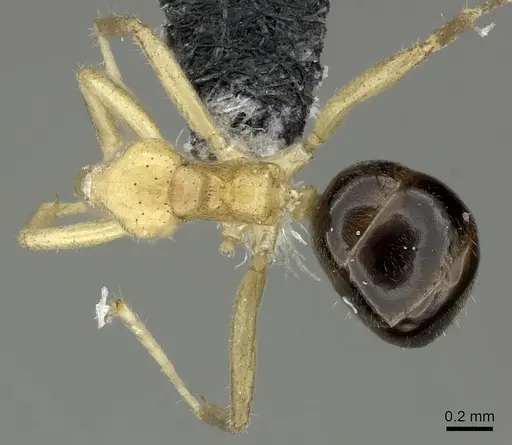
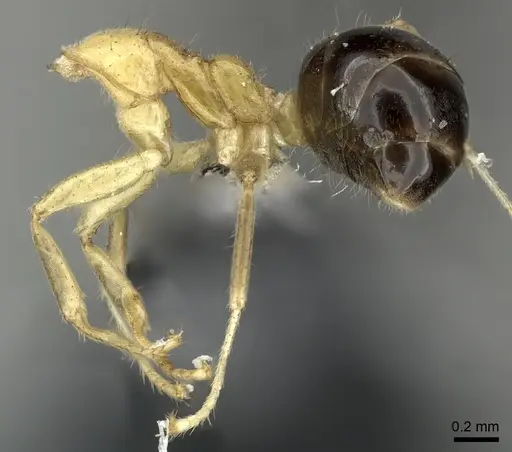
CASENT0903000
Ver no AntWeb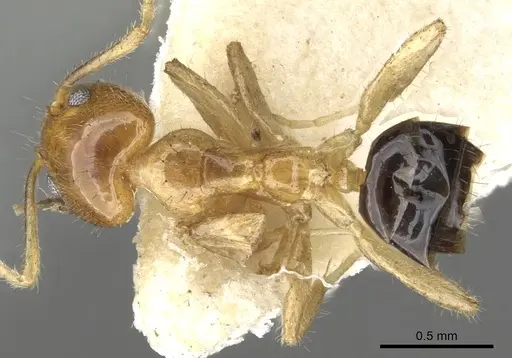
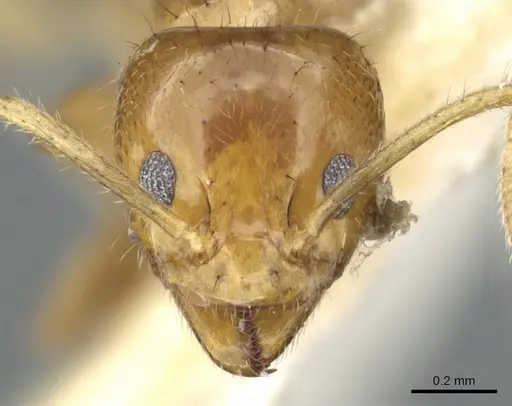
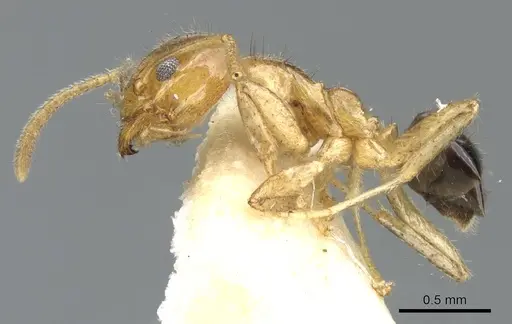
CASENT0905058
Ver no AntWeb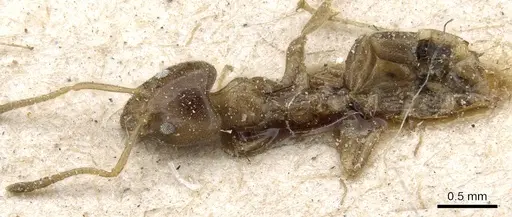
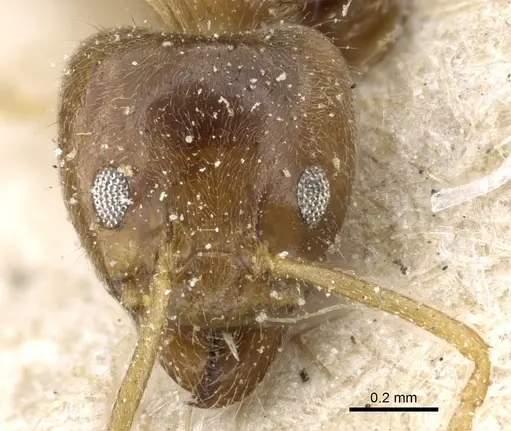
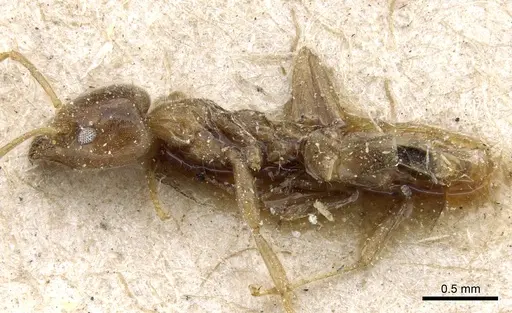
CASENT0909550
Ver no AntWeb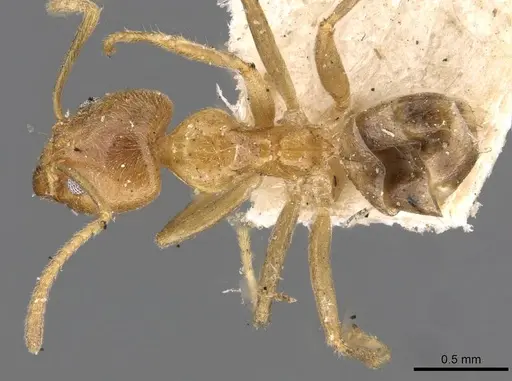
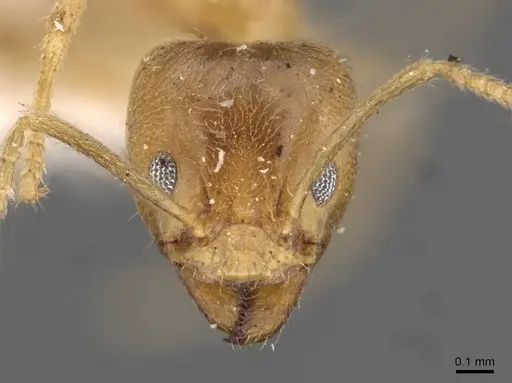
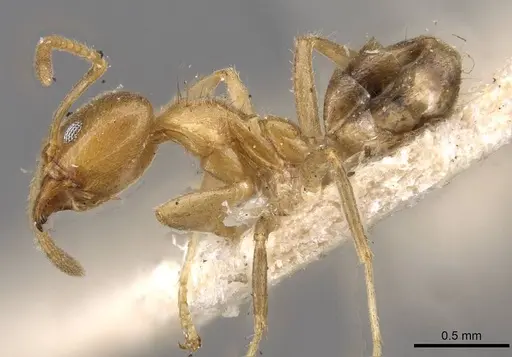
CASENT0911567
Ver no AntWeb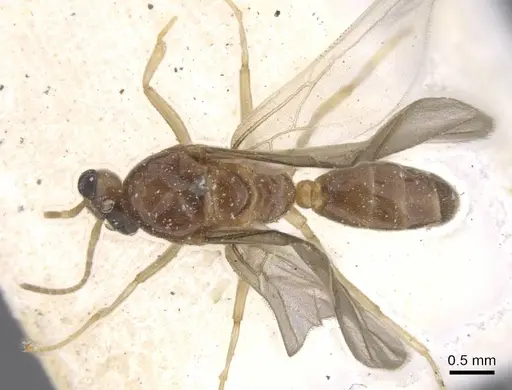
CASENT0919859
Ver no AntWeb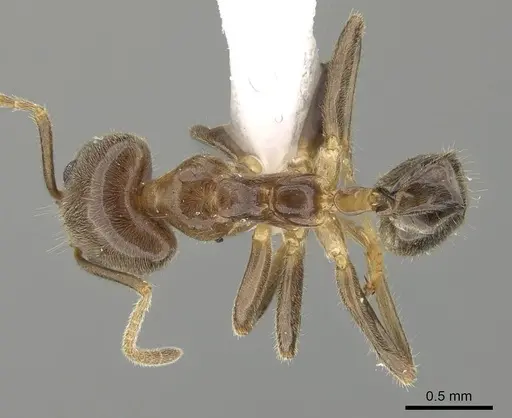
Literatura
Carregando mapa de distribuição...Carregando produtos...