
Philidris cruda
- Nome científico
- Philidris cruda
- Tribo
- Leptomyrmecini
- Subfamília
- Dolichoderinae
- Autor
- Smith, 1860
- Distribuição
- Encontrada em 0 países
Introdução
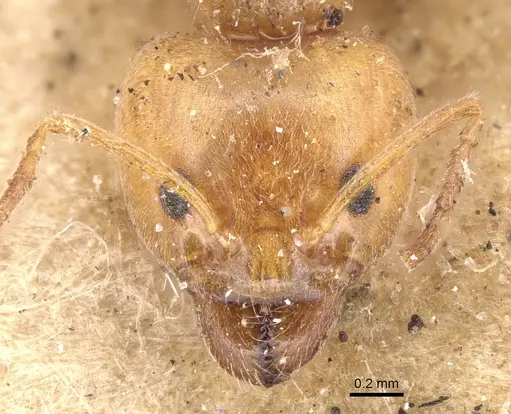
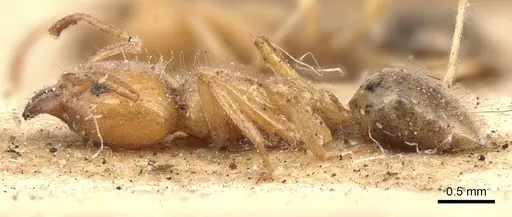
Philidris cruda is a tiny tropical ant species native to the Moluccan Islands of Indonesia. Workers measure approximately 2.1-4.2 mm, with a pale testaceous coloration and a dark brown abdomen . Their head is heart-shaped . These ants are found beneath bark and among fern roots in warm, humid environments . This species belongs to the Dolichoderinae subfamily, which typically uses a smear defense mechanism by secreting defensive chemicals from the abdomen. Their tiny size makes escape prevention critical in captivity.
Quick Summary
- Difficulty: Medium
- Origin & Habitat: Moluccan Islands (Bachian), Indonesia, tropical islands with warm, humid conditions [1]
- Colony Type: Unconfirmed colony structure, no specific data available on queen number or social system
- Size & Growth:
- Queen: Size data unavailable, no measurements found in literature
- Worker: Approximately 2.1-4.2 mm [1]
- Colony: Unknown, no data on colony size
- Growth: Unknown
- Development: Estimated 4-6 weeks at optimal temperatures, based on related Dolichoderinae patterns (Development timeline is estimated, no species-specific study found)
- Antkeeping:
- Temperature: Keep warm, roughly 26-28°C, based on tropical habitat [1]
- Humidity: Keep nest substrate consistently moist but not waterlogged, as they are found in damp environments [1]
- Diapause: No, tropical species does not require hibernation
- Nesting: Prefer small, humid spaces, in captivity, use Y-tong, plaster, or soil nests with moist substrate
- Behavior: Active foragers with high escape risk due to tiny size (2.1-4.2 mm). Generally non-aggressive toward keepers but may be territorial toward other ants. Workers are fast-moving.
- Common Issues: escape prevention is critical due to very small size, use fine mesh barriers, humidity management is important to prevent mold or desiccation, overheating risk, keep away from direct heat sources, limited species-specific care information, monitor colony closely
Housing and Nest Setup
Philidris cruda nests under bark and among fern roots in the wild [1]. In captivity, provide small, humid spaces with some decay material. Use Y-tong, plaster, or soil nests with appropriately sized chambers for their 2.1-4.2 mm workers. Keep the nest substrate consistently moist but not waterlogged. A small water reservoir can help maintain humidity. Because of their tiny size, use fine mesh (at least 0.5 mm or smaller) on ventilation holes to prevent escapes.
Temperature and Heating
As a tropical species from the Moluccan Islands, Philidris cruda needs warm conditions. Maintain temperatures around 26-28°C for optimal health. Room temperature may suffice if within this range, otherwise use a heating cable on one side to create a gradient. Never place the nest directly on heating mats. Monitor with a digital thermometer. Temperatures below 24°C may slow activity, while above 30°C can be fatal. [1]
Feeding and Diet
Like most Dolichoderinae, Philidris cruda likely feeds on honeydew, nectar, and small insects. Offer sugar water or honey water constantly. Provide protein sources like fruit flies or pinhead crickets, scaled to their tiny size. Feed protein 2-3 times per week and remove uneaten prey after 24 hours. Fresh water should always be available.
Humidity and Water
These ants come from damp environments, so humidity is important. Keep the nest substrate moist but not waterlogged. A water tube connected to the nest can help maintain moisture. Check for condensation, which indicates good humidity. Balance ventilation to prevent mold. [1]
Escape Prevention
With workers measuring only 2.1-4.2 mm, escape prevention is critical. Use test tubes with firmly packed cotton plugs. For formicaria, ensure all seams are tight. Use fine mesh with holes no larger than 0.5 mm for ventilation. During feeding, use barriers and have a backup container. Consider fluon or petroleum jelly on rim edges as additional barriers. [1]
Colony Development
Little is known about specific development. Based on related species, expect 4-6 weeks from egg to first worker at optimal temperatures. First workers may be smaller than mature workers. Colony growth is likely slow. Avoid disturbing the queen during founding to prevent stress.
Frequently Asked Questions
How long does it take for Philidris cruda to get first workers?
Based on related Dolichoderinae species, expect first workers in about 4-6 weeks at optimal temperatures of 26-28°C. This is an estimate as no specific study exists for this species.
What do Philidris cruda ants eat?
They likely accept standard ant foods: sugar water or honey water for energy, and small protein sources like fruit flies or pinhead crickets. Prey should be appropriately scaled to their tiny size.
Can I keep multiple Philidris cruda queens together?
Not recommended without more information. Combining unrelated queens has not been studied. Keep foundresses separate until one is established.
What temperature do Philidris cruda ants need?
Keep them warm at roughly 26-28°C, based on their tropical habitat in the Moluccan Islands [1].
Are Philidris cruda good for beginners?
This species is not ideal for complete beginners due to their tiny size, specific humidity needs, and limited care information. Experienced antkeepers may have success.
How big do Philidris cruda colonies get?
Colony size is unknown, no data is available on maximum colony size.
Do Philidris cruda need hibernation?
No, they are tropical ants and do not require hibernation or winter cooling. Keep them at warm temperatures year-round.
Why are my Philidris cruda escaping?
Their tiny size (2.1-4.2 mm) means they can escape through standard barriers. Use fine mesh (0.5 mm or smaller), tightly packed cotton, and additional barriers like fluon on rim edges.
When should I move Philidris cruda to a formicarium?
Wait until the colony has a stable number of workers before moving to a larger setup. They do well in small Y-tong or plaster nests due to their preference for tight spaces.
Report an Issue
The current care sheet is based fully on literature. See inconsistencies, or something that's incorrect? Please , it will be resolved after review from an admin. Contributing to the blogs tab also helps providing information, to make us be able to further improve the caresheets. Thank you for your support!
References

Este guia de cuidados está sob a licença CC BY-SA 4.0 .
Posts da comunidade
CASENT0901921
Ver no AntWeb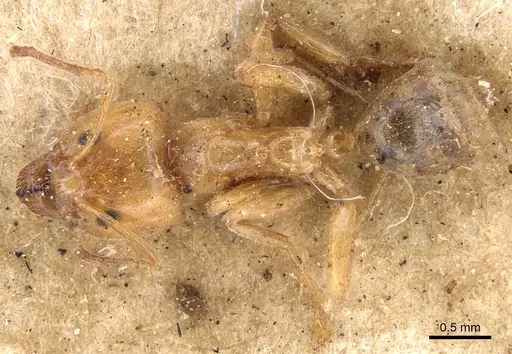
Literatura
Carregando mapa de distribuição...Carregando produtos...