
Pheidole horni
- Nome científico
- Pheidole horni
- Tribo
- Attini
- Subfamília
- Myrmicinae
- Autor
- Emery, 1901
- Distribuição
- Encontrada em 0 países
Introdução
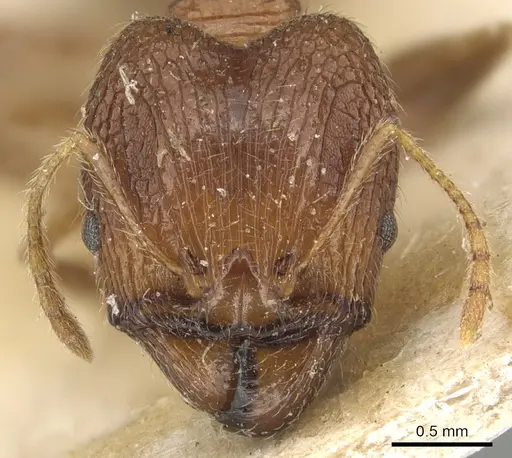
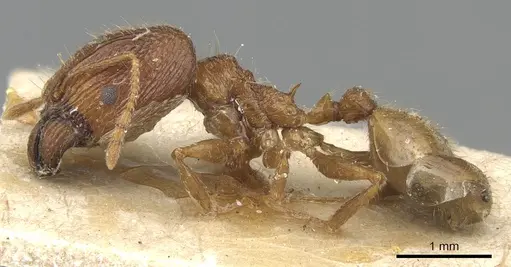
Pheidole horni is a small ant species native to Sri Lanka and has been recorded in Manipur, India . Like all Pheidole species, they have a caste system with major workers (soldiers) that have enlarged heads for defense and seed-crushing, while minor workers are typical in appearance . Exact body size measurements are not available in the research context; based on genus patterns, workers are likely small . This species inhabits tropical forests . A notable feature is their seed-harvesting behavior, where soldiers use their enlarged heads to crack open seeds, a common trait in Pheidole ants .
Quick Summary
- Difficulty: Easy
- Origin & Habitat: Sri Lanka and Manipur, India, tropical forest environments [1][2]
- Colony Type: Typical for Pheidole genus, but unconfirmed for this species
- Size & Growth:
- Queen: Size data unavailable, inferred from Pheidole genus patterns [2]
- Worker: Size data unavailable, inferred from Pheidole genus patterns [2]
- Colony: Up to a few thousand workers based on genus patterns [2]
- Growth: Moderate, inferred from tropical Myrmicinae patterns
- Development: Estimated 6-8 weeks at optimal temperature based on genus patterns [2] (Development time inferred from related Pheidole species, actual timeline unconfirmed)
- Antkeeping:
- Behavior: Generally peaceful, soldiers defend with enlarged heads but pose no threat to humans. Small size requires escape prevention due to high risk of squeezing through gaps [2].
- Common Issues: escape prevention is critical due to small size, they can squeeze through tiny gaps, tropical species are sensitive to temperature drops, keep them warm, limited specific data means colony development may vary from estimates, overfeeding can lead to mold in nest setups, remove uneaten food promptly, test tube setups work well for founding but upgrade as colony grows
Housing and Nest Setup
Use a test tube setup for founding colonies, as queens may seal themselves in to raise first brood [2]. As the colony grows, move to a Y-tong nest with narrow chambers suited to their small size [2]. Provide an outworld for foraging and use fine mesh and fluon on barriers to prevent escapes [2].
Feeding and Diet
Offer a mix of seeds (e.g., millet) and protein sources like small insects [2]. Soldiers crack seeds with enlarged heads, so keep seeds available constantly [2]. Feed small amounts 2-3 times per week and remove uneaten food to prevent mold [2].
Temperature and Heating
Maintain warm temperatures around 24-28°C for optimal development [2]. Use a heating cable on one side of the nest to create a gradient, allowing ants to self-regulate [2]. Avoid temperatures below 22°C, which can slow development [2].
Humidity and Water
Keep the nest substrate moist but not waterlogged [2]. Provide a water tube for drinking and mist the outworld occasionally [2]. Good ventilation prevents mold while maintaining humidity [2].
Colony Development
Queens may seal themselves in to lay eggs and raise first workers [2]. First workers are smaller and help expand the colony [2]. Colony growth is steady, with soldiers increasing as the colony matures [2]. Development from egg to worker is estimated at 6-8 weeks at optimal temperature [2].
Frequently Asked Questions
How long does it take for Pheidole horni to produce first workers?
Based on typical Pheidole patterns, expect first workers in about 6-8 weeks after egg laying, assuming warm temperatures [2]. This is estimated as specific data is unavailable.
What do Pheidole horni ants eat?
They are omnivorous with a preference for seeds. Offer seeds, protein sources like small insects, and sugar water [2].
Can I keep multiple Pheidole horni queens together?
This species is likely monogyne, but unconfirmed. Combining queens is not recommended as they may fight [2].
What temperature do Pheidole horni ants need?
Keep them warm at 24-28°C, as they are tropical and do not tolerate cool temperatures well [2].
Do Pheidole horni ants need hibernation?
No, they do not require hibernation as a tropical species [2].
How big do Pheidole horni colonies get?
Colonies can reach up to a few thousand workers based on genus patterns, but exact maximum is unconfirmed [2].
When should I move Pheidole horni to a formicarium?
Move them when the colony reaches around 20-30 workers and the test tube setup is crowded [2].
Are Pheidole horni ants good for beginners?
Yes, they are considered easy to keep due to peaceful nature and no hibernation needs, but escape prevention is critical due to small size [2].
Why are my Pheidole horni ants dying?
Common causes include low temperature, improper humidity, mold from overfeeding, or escapes. Check conditions and remove uneaten food promptly [2].
Report an Issue
The current care sheet is based fully on literature. See inconsistencies, or something that's incorrect? Please , it will be resolved after review from an admin. Contributing to the blogs tab also helps providing information, to make us be able to further improve the caresheets. Thank you for your support!
References

Este guia de cuidados está sob a licença CC BY-SA 4.0 .
Posts da comunidade
CASENT0281653
Ver no AntWeb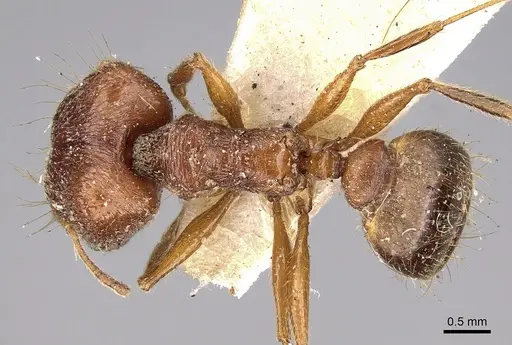
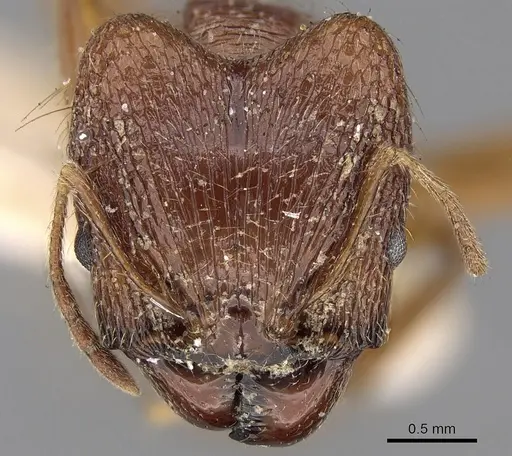
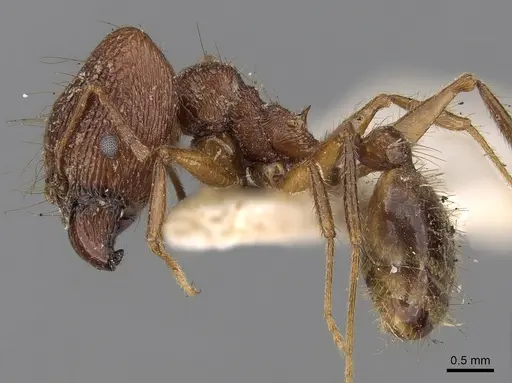
CASENT0904230
Ver no AntWeb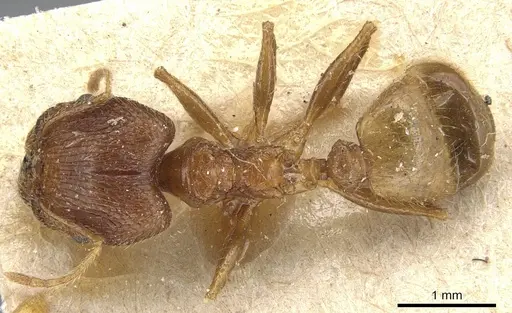
Literatura
Carregando mapa de distribuição...Carregando produtos...