
Pheidole furcata
- Nome científico
- Pheidole furcata
- Tribo
- Attini
- Subfamília
- Myrmicinae
- Autor
- Sarnat, 2008
- Distribuição
- Encontrada em 1 países
Introdução
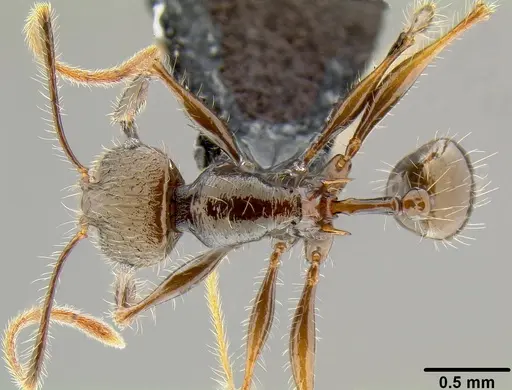
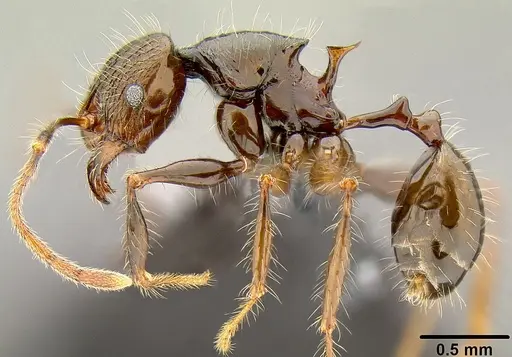
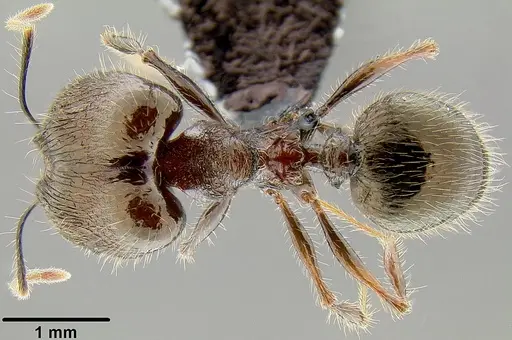
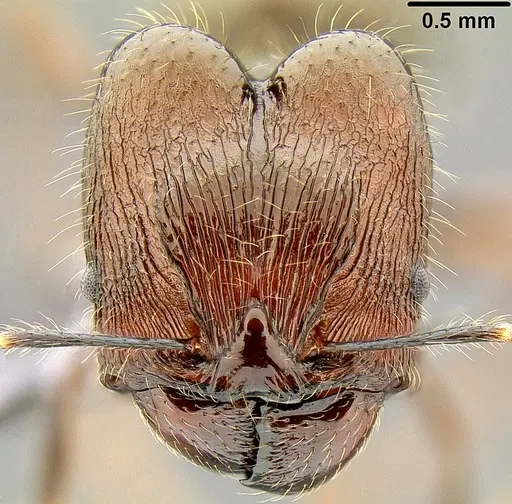
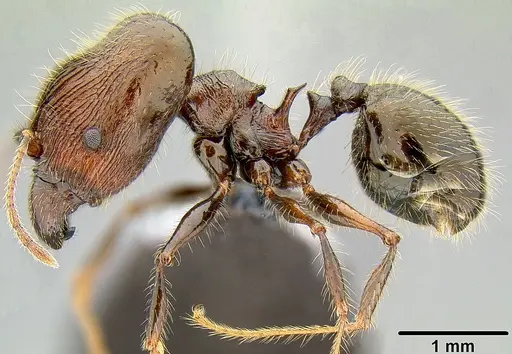
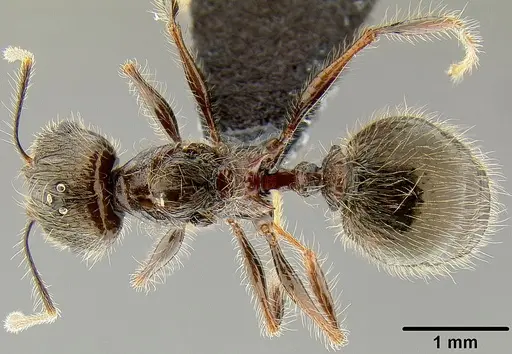
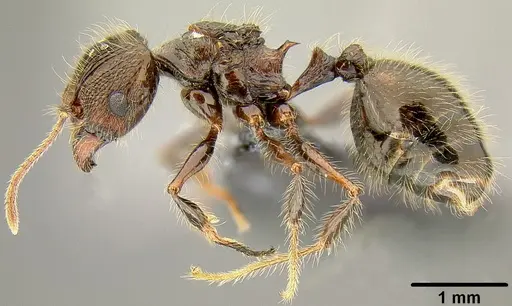
Pheidole furcata is a small ant endemic to the Fijian island of Kadavu. Majors reach up to 6.61 mm in total length and minors up to 3.85 mm, with a reddish-brown body and lighter appendages . The species name comes from the Latin word for fork, describing its uniquely forked propodeal spines with a short front point and a longer back point . Queens have strongly reduced mesosomas, giving them a wasp-like appearance compared to typical ant queens . This ant is only found at Mt. Washington on Kadavu Island at 760m elevation in highland moss forest .
Quick Summary
- Difficulty: Expert
- Origin & Habitat: Endemic to Kadavu Island, Fiji, specifically Mt. Washington at 760m elevation in highland moss forest [1][2]. Nests are built in bare soil with distinctive turret entrances that rise several centimeters above the ground [1][2].
- Colony Type: Colony structure is unconfirmed. Pheidole species are typically single-queen (monogyne) colonies, but this has not been documented for P. furcata specifically.
- Size & Growth:
- Queen: Up to 5.95 mm [1]
- Worker: Majors up to 6.61 mm, minors up to 3.85 mm [1]
- Colony: Unknown, no colony size data exists for this species
- Growth: Unknown, no development data exists for this species
- Development: Unknown, no direct measurements exist. Based on typical Pheidole patterns in tropical species, estimate 4-8 weeks at optimal temperature. (Estimated based on genus-level data for tropical Pheidole. No species-specific development studies exist.)
- Antkeeping:
- Temperature: Based on highland Fiji habitat, expect preference for moderate temperatures around 22-27°C. Avoid extreme heat. Start in this range and observe colony activity [1][2].
- Humidity: Based on moss forest habitat, expect moderate to high humidity. Keep nest substrate consistently moist but not waterlogged, with some drier areas available [1][2].
- Diapause: Unlikely, Fiji is tropical with minimal seasonal temperature variation. No diapause documented for this species [1].
- Nesting: Natural nests are turret nests in bare soil. In captivity, use soil-based or moisture-retaining nests like plaster or Y-tong to mimic natural conditions [1][2].
- Behavior: Behavior is poorly documented. No foragers were observed in the wild, suggesting cryptic activity [2]. Based on typical Pheidole patterns, majors likely defend the nest while minors handle foraging and brood care. Escape risk is moderate, minors at 3.5mm can fit through small gaps, so use standard barriers.
- Common Issues: extremely limited range makes wild collection difficult and potentially harmful to wild populations., no captive breeding data exists, establishing founder colonies may be challenging., cryptic behavior means colonies may appear inactive even when healthy., highland origin means they may not tolerate high temperatures., queens have reduced mesosomas, unknown if this affects founding success.
Distribution and Rarity
Pheidole furcata is the only member of the roosevelti-group known from Kadavu Island in Fiji [1][2]. Unlike other roosevelti-group species that can be locally abundant, P. furcata appears rare, no foragers were observed during field searches [2]. This rarity makes wild collection ethically questionable. The species was discovered by its distinctive turret nest entrance, which rises several centimeters above bare soil [1][2]. Its highland moss forest habitat at 760m elevation suggests preference for cooler, humid conditions.
Identification and Unique Morphology
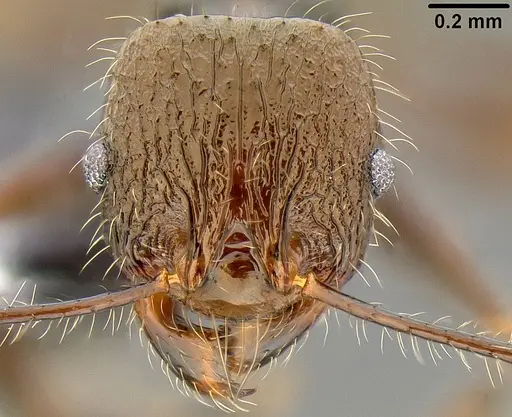
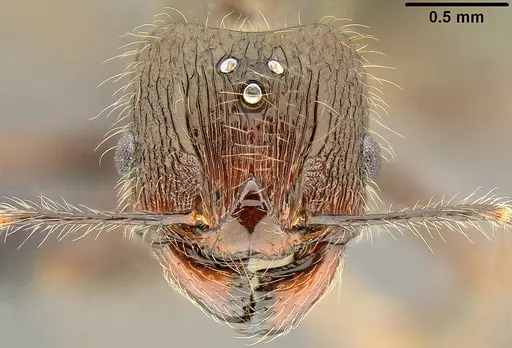
The species name 'furcata' refers to its forked propodeal spines, which split into a short front point and a longer back point [1]. Majors have strong facial sculpture that does not reach the back of the head, leaving it smooth and shiny, unlike close relatives P. bula and P. roosevelti [1][2]. Minors have a completely smooth and shiny underside of the head [1]. Queens have strongly reduced mesosomas, shared with P. bula and P. colaensis [1][2].
Nest Preferences
In the wild, P. furcata builds turret nests in bare soil, with entrances rising several centimeters above the ground [1][2]. This behavior helps locate the species. Nests are found in highland moss forest at 760m elevation. For captivity, use soil-based or moisture-retaining nests like plaster or Y-tong to mimic natural conditions. Avoid dry setups.
Care Recommendations
Since no captive data exists, care recommendations are estimates based on natural habitat. Keep temperatures around 22-27°C and humidity moderate with moist substrate [1][2]. Feed typical Pheidole diet: protein like insects and seeds for majors. Colonies may be cryptic, so inactivity does not necessarily mean poor health. Founders are difficult to obtain ethically due to rarity.
Taxonomic Context
Pheidole furcata belongs to the roosevelti-group, a Fijian ant radiation with spinescent morphology [1][3]. It is part of the southern clade [4]. The species was described in 2008 by Eli Sarnat [1]. Its limited range and distinctive features make it specialized among Fijian ants.
Frequently Asked Questions
How do I identify Pheidole furcata?
Look for forked propodeal spines, the back spines split into two points. Majors have facial sculpture that doesn't reach the back of the head, leaving it smooth. Minors have a smooth underside of the head. Queens have unusually small mesosomas. The species is only from Kadavu Island, Fiji [1][2].
Where does Pheidole furcata live?
This species is only known from Mt. Washington on Kadavu Island, Fiji, at 760m elevation in highland moss forest [1][2].
What do Pheidole furcata nests look like?
They build turret nests in bare soil, distinctive earthen turrets that rise several centimeters above the ground [1][2].
How big do Pheidole furcata colonies get?
Colony size is unknown, no data exists for this species [1].
What temperature do Pheidole furcata need?
Based on highland Fiji origin, they likely prefer moderate temperatures around 22-27°C [1][2].
Do Pheidole furcata need hibernation?
No, Fiji is tropical with minimal seasonal variation, so diapause is unlikely [1].
Are Pheidole furcata good for beginners?
No, this is an expert-level species due to extreme rarity, lack of captive data, and ethical concerns about wild collection [1][2].
Can I keep multiple Pheidole furcata queens together?
This is unknown. Pheidole species are typically single-queen, but colony structure has not been documented for P. furcata. Not recommended given rarity.
How long does it take for Pheidole furcata to develop from egg to worker?
Unknown, no development data exists. Based on typical tropical Pheidole, estimate 4-8 weeks at optimal temperature.
Is Pheidole furcata aggressive?
Aggression levels are unconfirmed. Based on genus patterns, expect moderate defensive behavior from majors.
Report an Issue
The current care sheet is based fully on literature. See inconsistencies, or something that's incorrect? Please , it will be resolved after review from an admin. Contributing to the blogs tab also helps providing information, to make us be able to further improve the caresheets. Thank you for your support!
References

Este guia de cuidados está sob a licença CC BY-SA 4.0 .
Posts da comunidade
Literatura
Carregando mapa de distribuição...Carregando produtos...