
Pheidole embolopyx
- Nome científico
- Pheidole embolopyx
- Tribo
- Attini
- Subfamília
- Myrmicinae
- Autor
- Brown, 1968
- Distribuição
- Encontrada em 3 países
Introdução
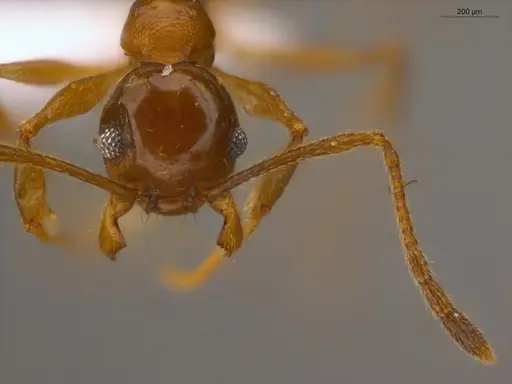
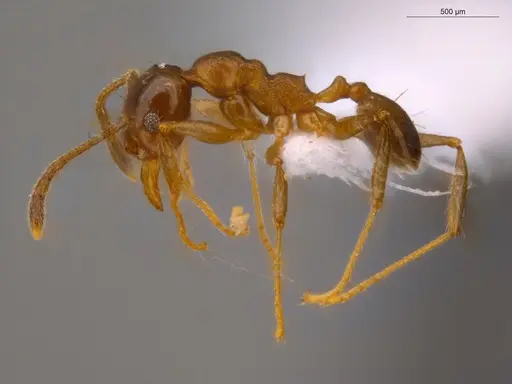
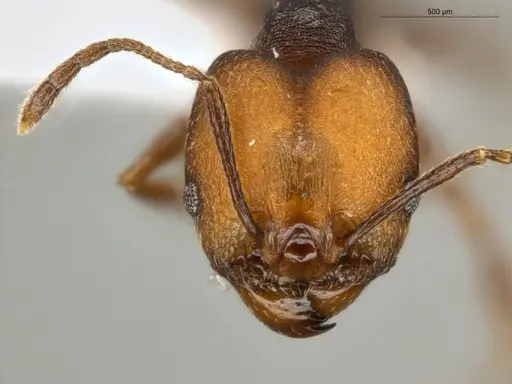
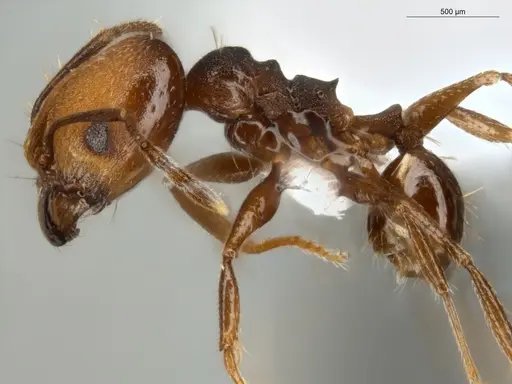
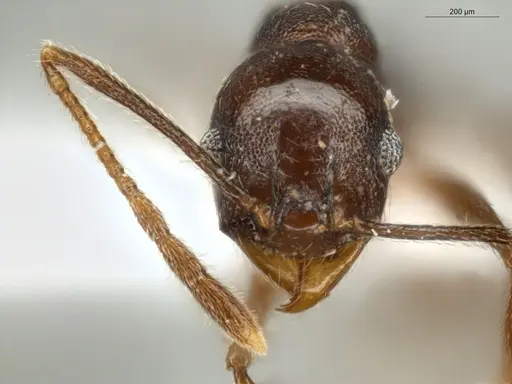
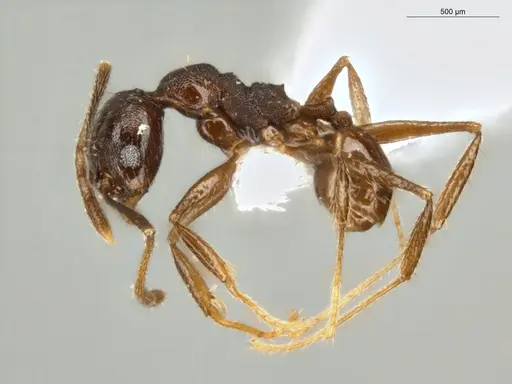
Pheidole embolopyx is a physically dimorphic Pheidole species from Amazonian rainforests, known for its unusual queen with a truncated abdomen. The queen's flattened rear gaster is covered with short hooked hairs. Workers come in two distinct castes: major workers are robust and bicolored, while minor workers are smaller and concolorous light brown. The species is recorded across the northern Amazon region including Brazil, Ecuador, Peru, and French Guiana . This species shows division of labor between worker castes: minor workers lay trail pheromones from their poison gland to mark food sources, while major workers follow these trails and transport food back to the nest. Queens use a turtle-like crouching defensive posture with gelatinous head secretions and pronotal flanges when threatened .
Quick Summary
- Difficulty: Medium
- Origin & Habitat: Amazonian rainforest in northern South America (Brazil, Ecuador, Peru, French Guiana). Nests in small pieces of rotting wood buried in leaf litter [1][4].
- Colony Type: Single-queen colonies (monogyne). Winged queens have been found in March near Manaus. Colonies contain several hundred workers at maturity [1].
- Size & Growth:
- Queen: Size data unavailable, no total length measurements provided in research context
- Worker: Size data unavailable, no total length measurements provided in research context
- Colony: Up to several hundred workers [1]
- Growth: Moderate, inferred from related Pheidole species
- Development: 6-10 weeks, estimated based on typical Pheidole development at tropical temperatures [1] (Development time inferred from related Amazonian Pheidole species, exact timeline for P. embolopyx has not been directly studied.)
- Antkeeping:
- Temperature: Keep warm and stable, roughly low-to-mid 20s°C, as they are adapted to tropical conditions. They are flood intolerant [4].
- Humidity: Keep nest substrate consistently moist but not waterlogged, as they are rainforest species [1].
- Diapause: No, tropical species do not require hibernation.
- Nesting: Twig-nesting species, prefer small chambers in rotting wood or leaf litter. In captivity, use small formicariums with narrow chambers or natural twig sections [5][4].
- Behavior: Physically dimorphic with distinct caste roles. Minor workers handle trail-laying and food guarding by biting competitor legs. Major workers handle food transport and head attacks on enemies. Both castes cooperate in colony defense. They are ground-foraging ants that use chemical trails to recruit nestmates to food sources. Escape risk is moderate due to small minor workers, use standard escape prevention [2][3].
- Common Issues: flood intolerance, these ants cannot survive flooding events, so keep nesting areas dry and elevated., temperature drops below 22°C can stress colonies as they are adapted to stable tropical conditions., small colony size at founding, expect slow initial growth typical of monogyne Pheidole., twig nesting means they need appropriately sized nest chambers, too large spaces stress them., infrequent species in the wild means wild-caught colonies may be difficult to locate.
Housing and Nest Preferences
Pheidole embolopyx is a twig-nesting species that naturally colonizes small pieces of rotting wood buried in the rainforest leaf litter. In captivity, they do well in small formicariums or test tube setups designed for small Myrmicinae. The key is providing appropriately sized chambers, these ants prefer tight-fitting spaces similar to the twigs they occupy in the wild. Use plaster nests, soil nests, or 3D-printed nests with narrow chambers. Avoid large, open spaces that would stress them. The nest should have small entrance holes similar to what they would find in natural twig cavities. Provide a humid water reservoir connected to the nest to maintain moisture without direct flooding [5][4].
Feeding and Diet
Like other Pheidole species, P. embolopyx is a generalist forager that will collect proteins, sugars, and seeds. In the wild, they are ground-foraging ants that use chemical trails to recruit nestmates to food sources. Minor workers specialize in laying trail pheromones from their poison gland to mark food locations, while major workers follow these trails and transport food back to the nest. Feed them a varied diet including protein sources (small insects like fruit flies, mealworms) and sugar sources (honey water, sugar water). Both worker castes cooperate in defending food finds, minors guard the resource while majors carry it back [2][6].
Temperature and Seasonal Care
As an Amazonian rainforest species, Pheidole embolopyx requires warm, stable temperatures. Keep them in the low-to-mid 20s°C range. They are flood intolerant and cannot survive flooding events, so keep their nesting area dry and well-drained. Unlike temperate species, they do not require diapause or hibernation, maintain warm conditions year-round. Avoid temperature fluctuations and drops below 22°C, as this species is adapted to the stable tropical environment of the Amazon basin [4].
Colony Structure and Caste Roles
This species exhibits pronounced physical dimorphism with two distinct worker castes that have specialized roles. Minor workers specialize in laying trail pheromones from their poison gland, they create chemical paths to food sources. They also guard food finds by biting the legs of competing ants. Major workers do not lay trails but instead follow the paths created by minors and handle the heavy work of transporting food back to the nest. When defending against competitors or threats, both castes cooperate: minors target legs while majors go for the head. The queen has a unique truncated abdomen with hooked hairs and gelatinous head secretions that serve in defensive postures. Colonies are monogyne with a single reproductive queen. Queens are monandrous, meaning they mate with only one male [2][7][3].
Defense and Behavior
Pheidole embolopyx has several defensive adaptations. The queen's most distinctive feature is her truncated abdomen, which she uses in a turtle-like crouching defensive posture along with pronotal flanges and gelatinous head secretions when threatened. Workers use chemical communication, trail pheromones from the poison gland and alarm pheromones from the pygidial gland. The division of labor extends to defense: minor workers guard food by biting competitor legs while major workers deliver more powerful bites to the head. They are not aggressive toward keepers but major worker bites can be noticeable due to their robust mandibles [2][3][1].
Frequently Asked Questions
How long does it take for Pheidole embolopyx to have first workers?
Expect first workers (nanitics) in approximately 6-10 weeks after the queen lays eggs, based on typical Pheidole development at tropical temperatures [1]. This is an estimate as the exact development timeline for P. embolopyx has not been directly studied.
Can I keep multiple Pheidole embolopyx queens together?
No, this is a monogyne (single-queen) species. Colonies have only one queen [1]. Do not attempt to keep multiple unrelated queens together as they will fight.
What do Pheidole embolopyx ants eat?
They are generalist foragers. Feed them protein sources like small insects and sugar sources like honey water. Both worker castes participate in food collection, minors create trails and guard food while majors transport it [2].
Are Pheidole embolopyx good for beginners?
This is a medium-difficulty species. They require warm, humid conditions typical of Amazonian rainforest species and are flood intolerant. Their twig-nesting preference requires appropriate housing. Not the best choice for absolute beginners, but manageable for those with some antkeeping experience [4].
What size colony does Pheidole embolopyx reach?
Mature colonies reach up to several hundred workers [1]. Growth rate is moderate, expect several months to a year to reach significant colony size.
Do Pheidole embolopyx need hibernation?
No, as a tropical Amazonian species, they do not require hibernation or diapause. Maintain warm temperatures year-round [4].
What is the best nest type for Pheidole embolopyx?
Twig-nesting setup works best. Use small formicariums with narrow chambers or natural twig sections. They prefer tight-fitting spaces similar to the small rotting wood pieces they colonize in the wild [5][4].
Why is the queen's abdomen truncated?
The queen has a uniquely flattened rear gaster, this is the feature that gives the species its name 'embolopyx' meaning 'stopper box' in Greek. She uses it in a defensive crouching posture along with pronotal flanges and gelatinous head secretions [3][1].
How do the worker castes differ in Pheidole embolopyx?
This is a physically dimorphic species with major and minor workers. Minor workers specialize in laying trail pheromones and guard food finds by biting competitor legs. Major workers follow trails and transport food, they deliver head-targeted bites during defense [2][1].
Report an Issue
The current care sheet is based fully on literature. See inconsistencies, or something that's incorrect? Please , it will be resolved after review from an admin. Contributing to the blogs tab also helps providing information, to make us be able to further improve the caresheets. Thank you for your support!
References

Este guia de cuidados está sob a licença CC BY-SA 4.0 .
Posts da comunidade
ECOFOG-IT14-0798-30
Ver no AntWeb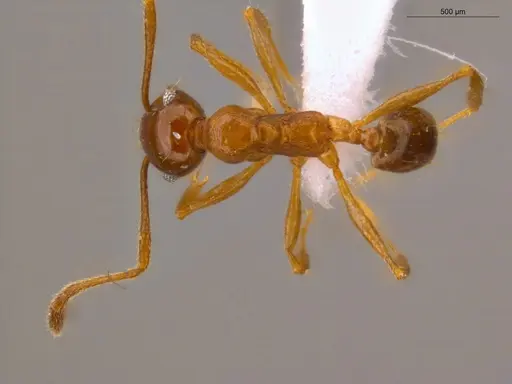
ECOFOG-MI15-0379-21-S
Ver no AntWeb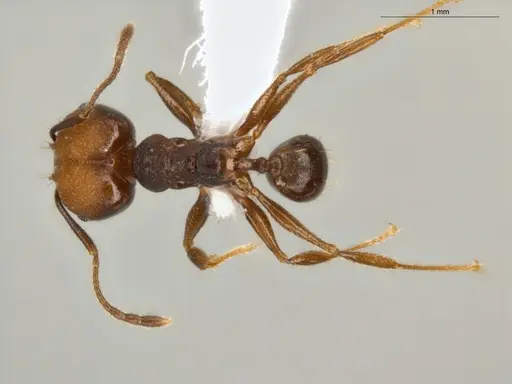
ECOFOG-MI15-0379-21
Ver no AntWeb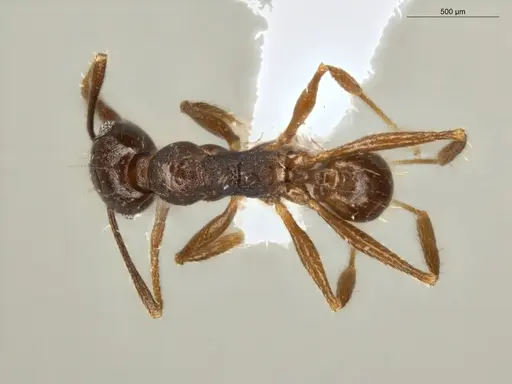
Literatura
Carregando mapa de distribuição...Carregando produtos...