
Pheidole capillata
- Nome científico
- Pheidole capillata
- Tribo
- Attini
- Subfamília
- Myrmicinae
- Autor
- Emery, 1906
- Distribuição
- Encontrada em 2 países
Introdução
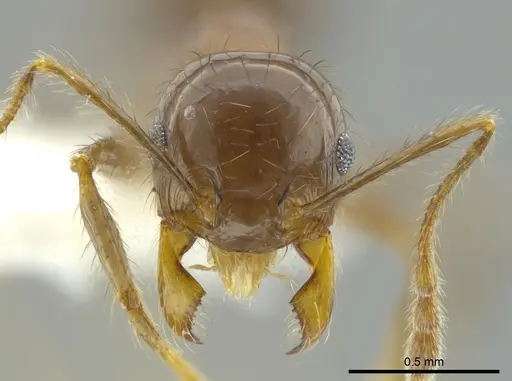
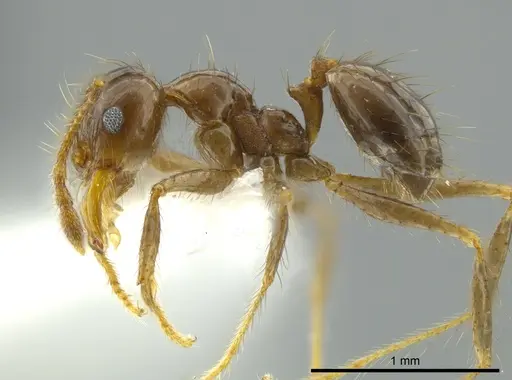
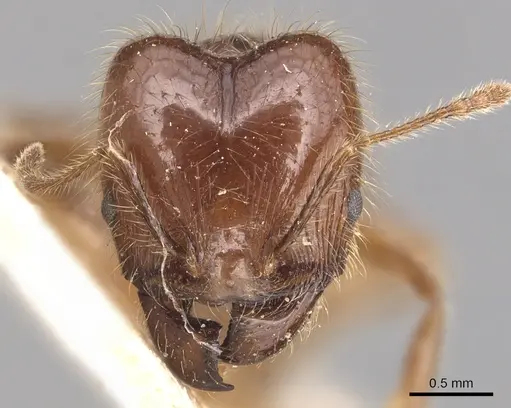
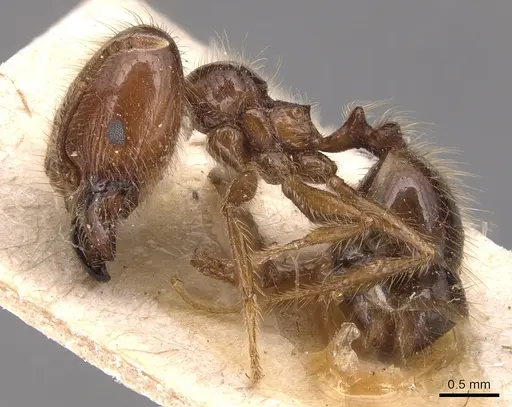
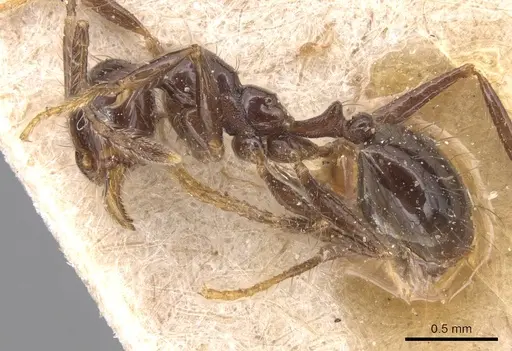
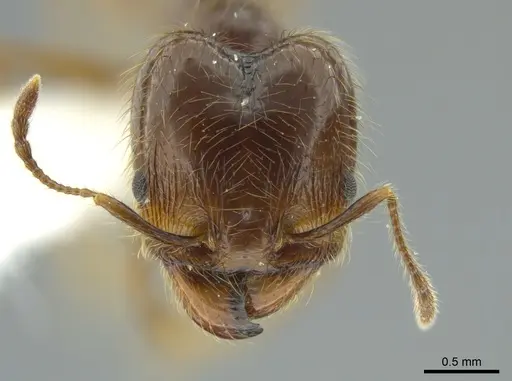
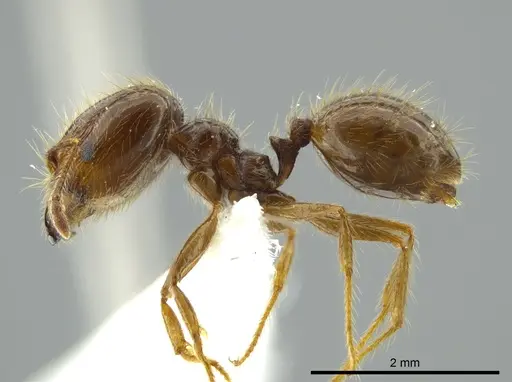
Pheidole capillata is a Neotropical ant species native to South America, found in Brazil and Peru. They have two worker castes: major workers (soldiers) with enlarged heads, and minor workers that handle daily tasks. Their body is light yellowish brown with a reddish tint, and they nest in heavy clay soil in grassy clearings, avoiding dense rainforest . Workers are most active during cloudy days and at dawn and dusk, showing a preference for cooler parts of the day .
Quick Summary
- Difficulty: Medium
- Origin & Habitat: Native to the Neotropical region, specifically Goias and Mato Grosso in Brazil, and Madre de Dios and San Martin in Peru. They inhabit grassy clearings near rivers like the Madre de Dios, nesting in heavy clay soil [1][2][3].
- Colony Type: Colony structure is unconfirmed, no specific data on queen number for this species.
- Size & Growth:
- Queen: ~6-8mm, inferred from Pheidole genus patterns
- Worker: ~1-2mm, inferred from Pheidole genus patterns
- Colony: Unknown, no specific colony size data available
- Growth: Moderate, inferred from related Pheidole species
- Development: Estimated 6-8 weeks based on tropical ant patterns [4] (Development time is inferred from genus-level data since species-specific studies are unavailable.)
- Antkeeping:
- Temperature: Keep warm, roughly 24-28°C, as inferred from their tropical habitat [1]
- Humidity: Keep nest substrate consistently moist but not waterlogged, as they nest in clay soil near rivers [4]
- Diapause: No, tropical species do not require hibernation
- Nesting: Y-tong, plaster, or soil nests preferred, with moist substrate to mimic natural clay soil conditions [4]
- Behavior: These ants are not aggressive and typically flee from threats. Workers forage at dawn, dusk, and on cloudy days [2]. Escape risk is moderate due to small worker size, so ensure outworld is escape-proof.
- Common Issues: temperature drops below 20°C can cause colony inactivity and slow brood development, wild-caught colonies may carry parasites that can harm captive colonies, overfeeding can lead to mold problems in the nest, minor workers can escape through small gaps if barriers are not secure
Housing and Nest Preferences
Pheidole capillata does well in Y-tong, plaster, or soil nests that can hold moisture. In the wild, they nest in heavy clay soil in grassy clearings, so a nest setup with damp substrate mimics their natural conditions [4]. A test tube setup works for founding colonies, fill a test tube with water and cotton, then place the queen in a dark area. Once the colony has workers, move them to a proper formicarium. Ensure the outworld is escape-proof, as minor workers are small.
Feeding and Diet
Pheidole species are generalist omnivores. Offer protein sources like small insects and sugar sources like honey water [4]. Feed small prey 2-3 times per week, removing uneaten food within 24 hours to prevent mold. A varied diet promotes healthy colony growth.
Temperature and Seasonal Care
As a tropical species, Pheidole capillata requires warm temperatures. Keep the nest area between 24-28°C. Temperatures below 20°C can slow brood development. A heating cable on one side of the nest creates a gradient for self-regulation. No diapause is needed. [1]
Behavior and Colony Dynamics
Workers are most active during cloudy conditions and at dawn and dusk, avoiding hot parts of the day [2]. Major workers have enlarged heads for defense and seed processing, but they are not aggressive toward humans. The colony may be most active in the evening.
Frequently Asked Questions
How long does it take for Pheidole capillata to raise first workers?
Expect first workers around 6-8 weeks after queen lays eggs, assuming warm temperatures. This is estimated from tropical ant patterns [4].
Can I keep multiple Pheidole capillata queens together?
Not recommended, combining unrelated queens is undocumented and may result in fighting. Colonies are typically founded by a single queen.
What do I feed Pheidole capillata?
Offer a varied diet including small insects for protein and sugar water for carbohydrates. Remove uneaten food to prevent mold [4].
Are Pheidole capillata good for beginners?
They are moderate difficulty due to temperature requirements. Their generalist diet makes feeding straightforward.
When should I move my colony to a formicarium?
Move from a test tube setup once the colony has workers, ensuring adequate humidity and an escape-proof outworld.
Do Pheidole capillata need hibernation?
No, as a tropical species, they do not require hibernation or diapause.
Why is my colony inactive during the day?
This is normal, workers are most active at dawn, dusk, and on cloudy days [2].
Report an Issue
The current care sheet is based fully on literature. See inconsistencies, or something that's incorrect? Please , it will be resolved after review from an admin. Contributing to the blogs tab also helps providing information, to make us be able to further improve the caresheets. Thank you for your support!
References

Este guia de cuidados está sob a licença CC BY-SA 4.0 .
Posts da comunidade
CASENT0624240
Ver no AntWeb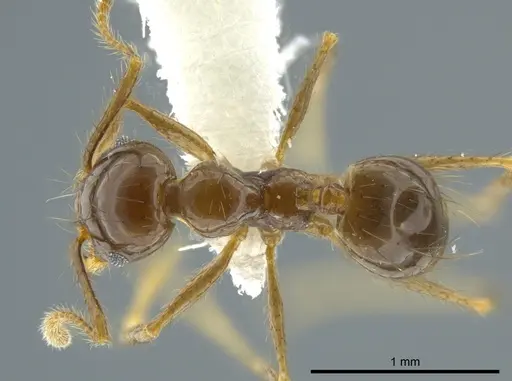
CASENT0904368
Ver no AntWeb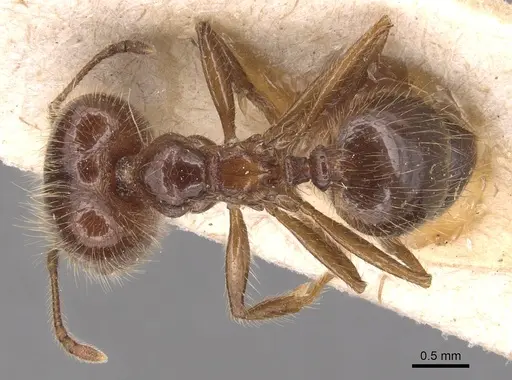
CASENT0904369
Ver no AntWeb
JTLC000016338
Ver no AntWeb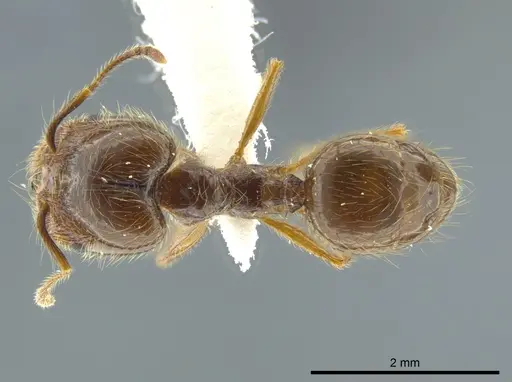
Literatura
Carregando mapa de distribuição...Carregando produtos...