
Pheidole avaratra
- Nome científico
- Pheidole avaratra
- Tribo
- Attini
- Subfamília
- Myrmicinae
- Autor
- Salata & Fisher, 2020
- Distribuição
- Encontrada em 1 países
Introdução
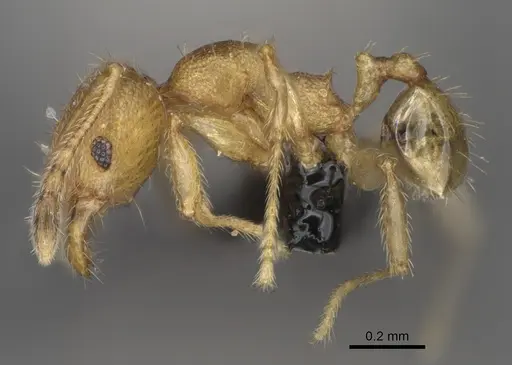
Pheidole avaratra is a small ant species native to northern Madagascar, described in 2020. It belongs to the Pheidole makaensis group and inhabits low-elevation areas between 15-210 meters in rainforest, tropical dry forest, and open secondary vegetation. Nests are found in rotten sticks on the ground, under moss, and in soil . The species name 'avaratra' means 'north' in Malagasy, reflecting its distribution in the Antsiranana region . Like other Myrmicinae ants, they possess a sting for defense, but it is not medically significant to humans. This species exhibits the typical Pheidole caste system with major and minor workers, where majors have enlarged heads for seed processing and colony defense.
Quick Summary
- Difficulty: Medium
- Origin & Habitat: Northern Madagascar (Antsiranana region), specifically Forêt Ambato near Ambanja. They inhabit low-elevation areas (15-210m) in rainforest, tropical dry forest, and open secondary vegetation [1].
- Colony Type: Unconfirmed for this species. No specific data on queen number or social structure.
- Size & Growth:
- Queen: Size data unavailable, no queen measurements in the original description.
- Worker: Size data unavailable, body size (total length) is not specified in the research. Head measurements are available but not representative of full body size.
- Colony: Unknown, no colony size data available.
- Growth: Estimated moderate based on typical Pheidole patterns in tropical environments.
- Development: Estimated 6-10 weeks at optimal temperatures, based on typical Pheidole development in tropical conditions. (Development timeline is unconfirmed for this specific species. Tropical Pheidole species typically develop faster due to year-round warm conditions.)
- Antkeeping:
- Temperature: Keep warm, roughly 24-28°C, based on their tropical habitat in Madagascar [1]. Provide a gentle gradient for self-regulation.
- Humidity: Keep substrate consistently moist but not waterlogged, as they nest in humid environments [1].
- Diapause: No, as a tropical species, they do not require hibernation. Maintain year-round warm conditions.
- Nesting: Prefer nests in rotten sticks, under moss, or in soil [1]. Use naturalistic setups with soil and decaying wood, or Y-tong/plaster nests with moisture provision.
- Behavior: Pheidole species are generally non-aggressive but will defend their nest vigorously. They have a sting for defense, typical of Myrmicinae ants. Escape risk is high due to the small size of minor workers, use fine mesh barriers and tight-fitting lids [1].
- Common Issues: escape prevention is critical due to their very small minor workers, use fine mesh barriers., tropical species require consistent warmth year-round, cold temperatures can be fatal., rotten wood nesting preference means they need humid substrate that doesn't dry out quickly., newly described species means limited captive care information, monitor colony closely for issues., wild-caught colonies may carry parasites that can cause problems in captivity.
Natural History and Distribution
Pheidole avaratra is endemic to northern Madagascar, specifically the Antsiranana region around Forêt Ambato near Ambanja [1]. The species was described in 2020 by Salata and Fisher as part of their revision of Madagascar Pheidole species. The name 'avaratra' is Malagasy for 'north', referencing its northerly distribution [1].
They inhabit low elevations between 15-210 meters, living in rainforest, tropical dry forest, and open secondary vegetation [1]. This indicates a preference for warm, humid tropical conditions with some tolerance for disturbed habitats. Nests are in decaying organic material on the forest floor, rotten sticks, under moss, and in soil [1].
Identification and Morphology
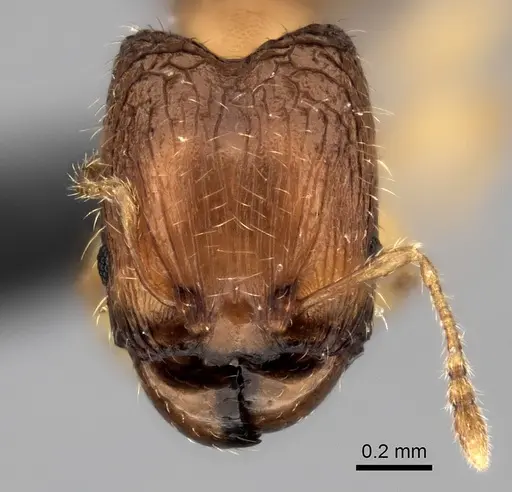
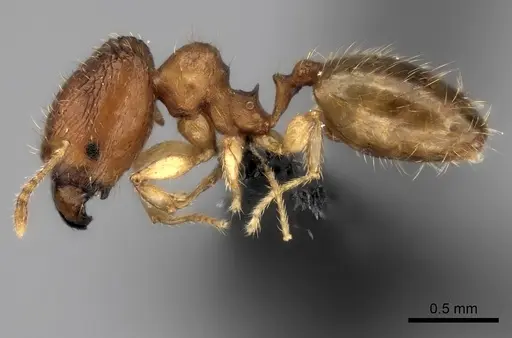
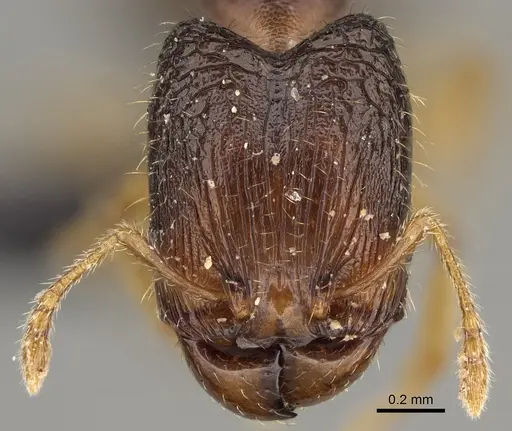
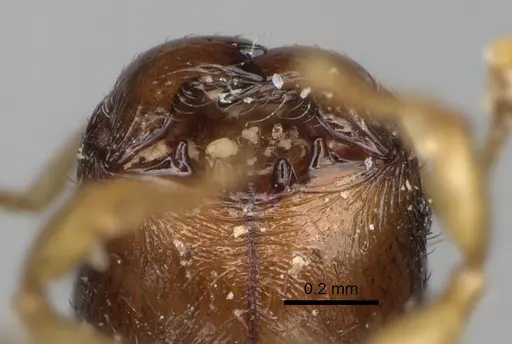
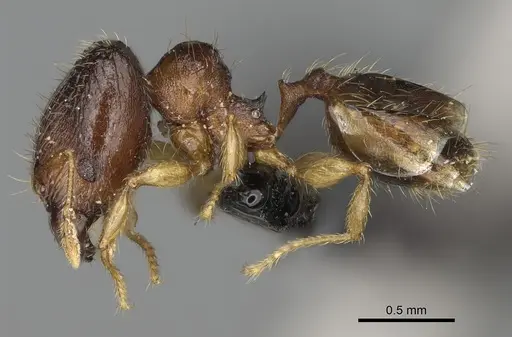
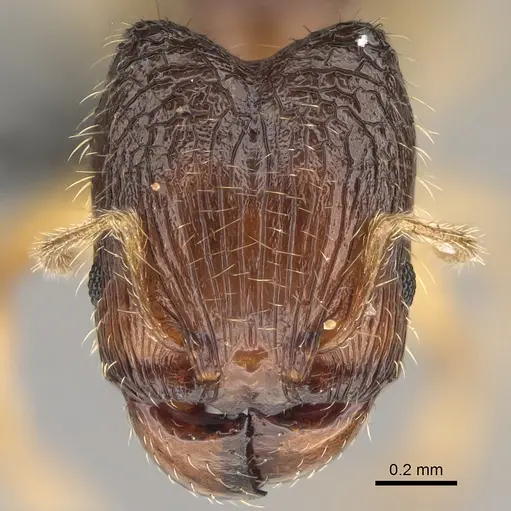
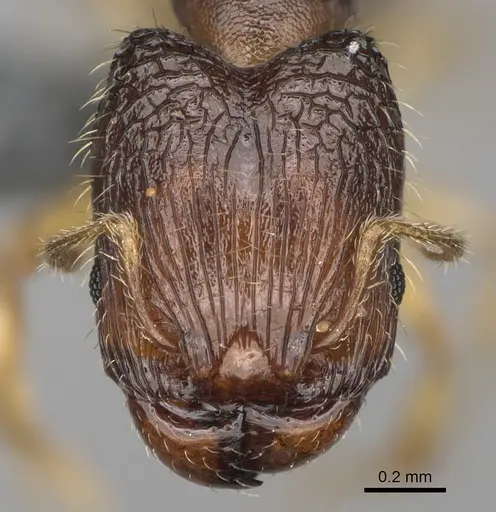
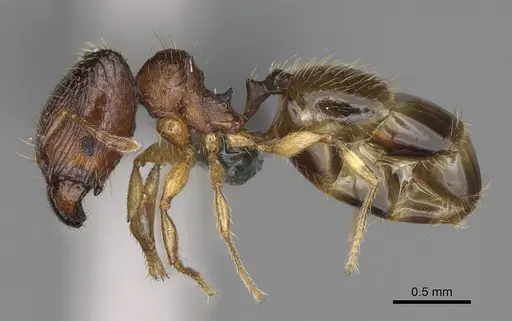
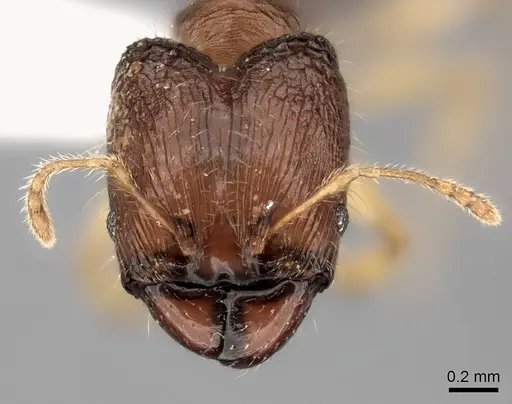
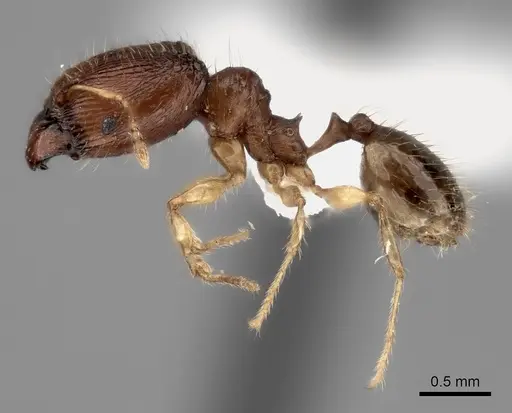
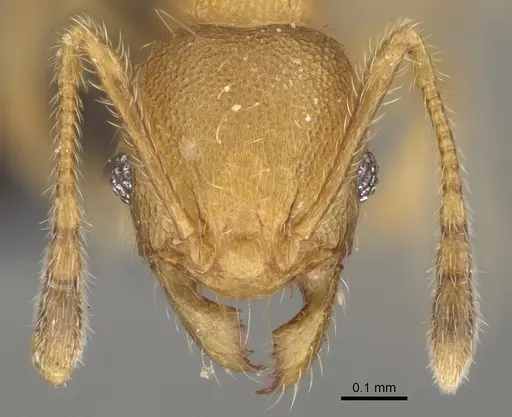
This species belongs to the Pheidole makaensis group, characterized by specific head and hypostomal tooth structures. Major workers have an elongated head with thick, sparse, irregular rugae on the occipital lobes, and prominent inner hypostomal teeth that are high, closely spaced, and triangular [1]. Major workers are brown to dark brown with yellowish-brown markings, while minor workers are entirely yellow with a foveolate head and a smooth notch behind the eyes [1]. The presence of major and minor castes is typical of Pheidole species.
Housing and Nesting Preferences
In nature, Pheidole avaratra nests in rotten sticks on the ground, under moss, and in soil at low elevations [1]. For captive care, replicate these conditions using a naturalistic setup with soil substrate, decaying wood pieces, and moss. Alternatively, a Y-tong or plaster nest with consistent moisture works well. Escape prevention is critical due to small worker size, use fine mesh on ventilation and ensure tight connections.
Feeding and Diet
Pheidole species are generalist foragers that collect seeds, small insects, and honeydew. While specific dietary studies for P. avaratra are lacking, they likely follow typical Pheidole patterns. Offer a varied diet: protein sources like small insects or protein paste 2-3 times per week, and constant carbohydrate sources like sugar water or honey. Pheidole majors can store liquid food in their crop [2], so a steady sugar source is beneficial. Remove uneaten food after 24-48 hours to prevent mold.
Temperature and Seasonal Care
As a tropical species from northern Madagascar, Pheidole avaratra requires warm conditions year-round. Maintain temperatures around 24-28°C, with a slight gradient for self-regulation [1]. They do not require diapause, consistent warmth is essential. Use heating cables if room temperatures fall below this range, placed on top of the nest to avoid drying.
Colony Development and Growth
Pheidole avaratra is a recently described species, so specific development timelines are unconfirmed. Based on typical Pheidole patterns in tropical environments, expect an estimated 6-10 weeks from egg to first worker at optimal temperatures. Colony growth is likely moderate, with majors appearing after the colony reaches several dozen workers. Founding colonies should be kept in warm, humid test tube setups until workers emerge.
Frequently Asked Questions
How long does it take for Pheidole avaratra to produce first workers?
The exact timeline is unconfirmed. Based on typical Pheidole development in tropical conditions, estimated 6-10 weeks from egg to first worker at 24-28°C. Nanitics are typically smaller than normal workers.
What temperature do Pheidole avaratra ants need?
Keep them at 24-28°C year-round, based on their tropical habitat in Madagascar [1]. Use heating if room temperatures are too low.
Do Pheidole avaratra ants need hibernation?
No, they do not require hibernation as a tropical species. Maintain consistent warmth year-round.
What do Pheidole avaratra ants eat?
They likely accept small insects, seeds, sugar water, and honey. Offer protein 2-3 times per week and keep a constant sugar source. Pheidole majors can store liquid food in their crop [2].
How big do Pheidole avaratra colonies get?
Colony size data is not available. Based on typical Pheidole patterns, colonies may reach several hundred to a few thousand workers over time.
Can I keep multiple Pheidole avaratra queens together?
The colony structure is unconfirmed. Pheidole species are typically monogyne, but some can be polygynous. Until more information is available, keeping a single queen is recommended.
What type of nest is best for Pheidole avaratra?
They naturally nest in rotten sticks, under moss, and in soil [1]. A naturalistic setup with soil and decaying wood works well, or a Y-tong/plaster nest with moisture provision.
Are Pheidole avaratra good for beginners?
This species is rated Medium difficulty. They require tropical conditions and escape prevention due to small size. Limited captive care information is available due to recent description.
Why are my Pheidole avaratra dying?
Common causes include temperatures below 20°C, dry substrate, escape through small gaps, mold from overwatering, or parasites from wild-caught colonies. Monitor conditions closely.
When should I move my colony to a formicarium?
Keep founding colonies in a test tube setup until you have 20-30 workers. Then introduce a larger setup while maintaining similar humidity levels.
How do I identify Pheidole avaratra major and minor workers?
Major workers have an elongated head with thick, irregular rugae and are brown to dark brown. Minor workers are much smaller, entirely yellow, and have a foveolate head with a smooth notch behind the eyes [1].
Report an Issue
The current care sheet is based fully on literature. See inconsistencies, or something that's incorrect? Please , it will be resolved after review from an admin. Contributing to the blogs tab also helps providing information, to make us be able to further improve the caresheets. Thank you for your support!
References

Este guia de cuidados está sob a licença CC BY-SA 4.0 .
Posts da comunidade
CASENT0056727
Ver no AntWeb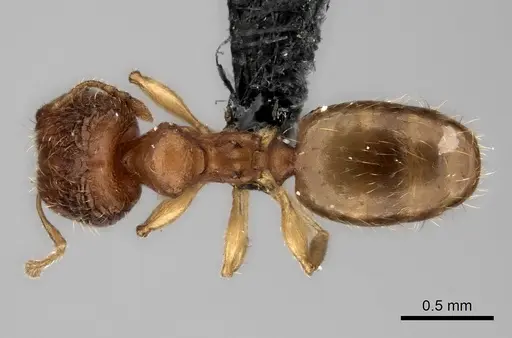
CASENT0107719
Ver no AntWeb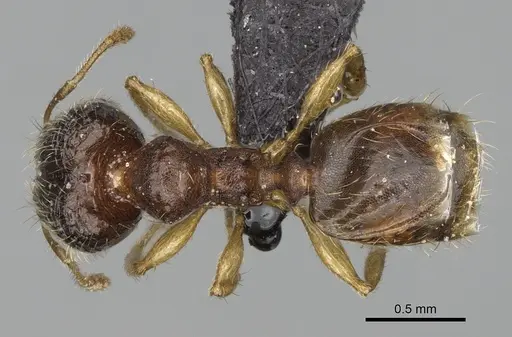
CASENT0303182
Ver no AntWeb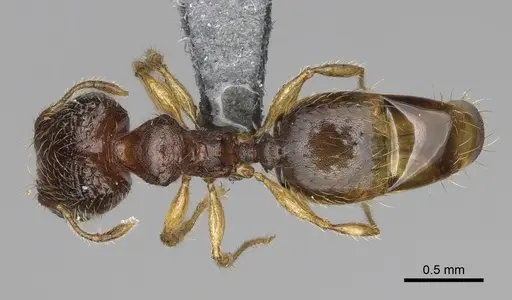
CASENT0406688
Ver no AntWeb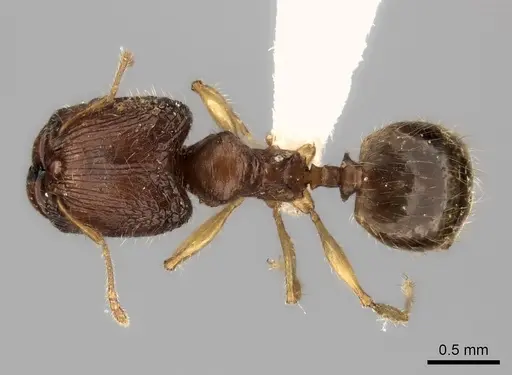
CASENT0923184
Ver no AntWeb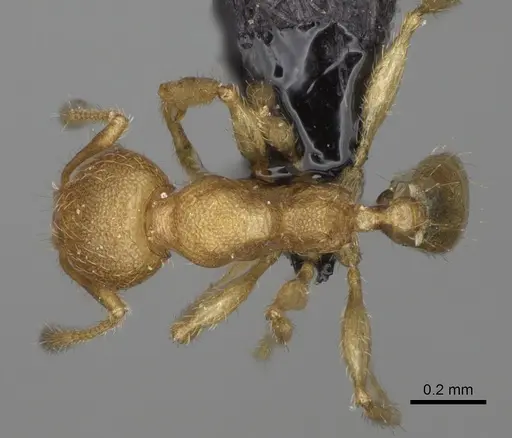
Literatura
Carregando mapa de distribuição...Carregando produtos...