
Peronomyrmex overbecki
- Nome científico
- Peronomyrmex overbecki
- Tribo
- Crematogastrini
- Subfamília
- Myrmicinae
- Autor
- Viehmeyer, 1922
- Distribuição
- Encontrada em 1 países
Introdução
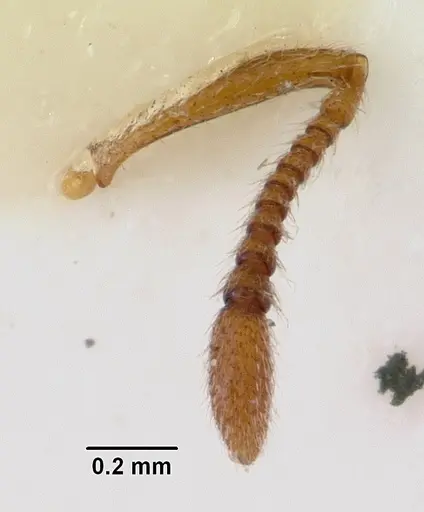
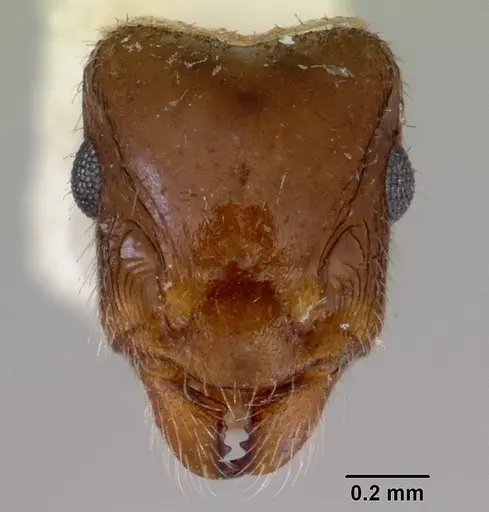
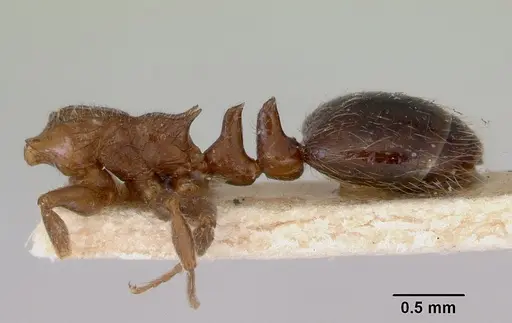
Peronomyrmex overbecki is an extremely rare Australian ant species known from only two worker specimens collected nearly a century apart. Workers measure approximately 4.1 mm in total length, with a dull chestnut-brown coloration and darker gaster. The most distinctive features include well-developed antennal scrobes with distinct rugae along the inner margins, a flat posterior face on the postpetiole, and fine microreticulation across the body surface. These ants are nocturnal and likely arboreal, having been collected from tree trunks at night, which explains their extreme rarity in museum collections .
Quick Summary
- Difficulty: Expert
- Origin & Habitat: Eastern Australia (New South Wales and Queensland), from Trial Bay NSW and Brisbane QLD, with arboreal and nocturnal habits [1][2].
- Colony Type: Unknown, colony structure has never been documented. No queens have ever been described, and colony size is completely unknown.
- Size & Growth:
- Antkeeping:
- Temperature: Unknown, no captive data exists. Based on collection in subtropical Brisbane, temperatures in the low-to-mid 20s°C may be tolerated, but this is speculative.
- Humidity: Unknown, no data on humidity requirements. Provide a gradient with moist and drier areas based on arboreal habits.
- Diapause: Unknown, no seasonal data available.
- Nesting: Likely arboreal based on collection from a tree trunk, but no nests have been found. In captivity, arboreal-style setups may be appropriate, though this is speculative.
- Behavior: No behavioral observations exist from captivity. The two known specimens were collected at night from tree trunks, suggesting nocturnal and arboreal foraging. Defense mechanism is based on subfamily Myrmicinae and tribe Crematogastrini, which use a smear defense with a modified stinger, no specific data for this species. Given their tiny size and lack of captive observations, extreme caution is advised.
- Common Issues: no captive breeding success has ever been documented, this species may prove impossible to keep long-term, queen has never been described or collected, founding behavior is completely unknown, only two workers have ever been found in the wild, suggesting extremely low natural colony sizes or cryptic habits, no diet information exists, what these ants eat in the wild is completely unknown, no temperature or humidity parameters have been established for captive care
Why This Species Is So Rare
Peronomyrmex overbecki represents one of the most poorly known ants in the world. Since its description in 1922,only two workers have ever been collected, the type specimen from Trial Bay, New South Wales, and a second specimen found in Brisbane in 2003. This extreme rarity is likely explained by their nocturnal, arboreal lifestyle. Both known specimens were collected at night, and at least one was found on a tree trunk. This means they likely forage in the canopy and nest in hollow branches or under bark, making them nearly impossible to find using standard ant collection methods like pitfall traps or sifting leaf litter [1].
What We Know About Their Appearance
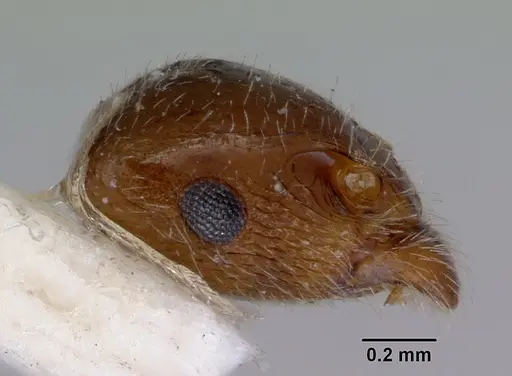
Workers measure approximately 4.1 mm in total length. They have a dull chestnut-brown coloration with a darker gaster and black eyes. The most distinctive identification features include well-developed antennal scrobes with distinct rugae along the inner margins, and a flat posterior face on the postpetiole. The body surface has fine microreticulation, giving them a slightly shining appearance. Short erect hairs are present on the head, thoracic dorsum, and the tops of the waist segments [1].
Challenges for Antkeepers
This species presents extraordinary challenges for anyone interested in keeping it. No queens have ever been described or collected, meaning we have no information about colony founding, queen size, or reproduction. No one has ever successfully maintained a colony in captivity. We don't know what they eat, what temperature they need, how large their colonies grow, or even whether they nest in soil, rotting wood, or live tree branches. The complete absence of any captive data means attempting to keep this species would be essentially experimental with a very low probability of success. For these reasons, Peronomyrmex overbecki should be considered an expert-only species that is not recommended for anyone unless they have extensive experience with difficult, data-poor species [1].
Frequently Asked Questions
Can I keep Peronomyrmex overbecki as a pet?
This is not recommended. No one has ever successfully kept this species in captivity, and queens have never been collected or described. Without any information about their diet, nesting requirements, or colony structure, attempting to maintain them would be extremely unlikely to succeed. This is an expert-level species that should only be attempted by researchers with the resources to document their findings [1][2].
What do Peronomyrmex overbecki ants eat?
Unknown, their diet has never been studied or documented. The only two known specimens were collected from tree trunks at night, suggesting arboreal foraging, but nothing is known about what foods they consume [1].
Where do Peronomyrmex overbecki nest?
Likely arboreal, the single documented collection from a tree trunk suggests they may nest in hollow branches, under bark, or similar elevated microhabitats. However, no actual nests have ever been found or described [1].
How big do Peronomyrmex overbecki colonies get?
Unknown, only two workers have ever been collected, so we have no information about natural colony size. They may form very small colonies, or they may be cryptic and rarely encountered even when present in reasonable numbers [1].
Do Peronomyrmex overbecki queens exist?
Queens have never been collected or described. The original description only included workers, and despite nearly a century of searching, no queens or alates have ever been found [2].
What temperature should I keep Peronomyrmex overbecki at?
No captive temperature data exists. Based on their collection in Brisbane, they may tolerate temperatures in the low-to-mid 20s°C range, but this is speculative and unconfirmed [1].
Are Peronomyrmex overbecki dangerous?
Unknown, no behavioral observations exist. Workers are tiny (4.1 mm) and likely unable to sting humans effectively, but nothing is known about their defensive behaviors or aggression levels. Defense mechanism is based on subfamily and tribe general knowledge [2].
Why are they so rarely found?
Their nocturnal, arboreal lifestyle makes them extremely difficult to collect using standard methods. They likely forage in tree canopies and nest in elevated microhabitats, meaning they are essentially invisible to researchers using pitfall traps or ground-based collection techniques. The combination of naturally low abundance and difficult-to-access habitat explains why only two workers have been found in over 100 years [1].
Report an Issue
The current care sheet is based fully on literature. See inconsistencies, or something that's incorrect? Please , it will be resolved after review from an admin. Contributing to the blogs tab also helps providing information, to make us be able to further improve the caresheets. Thank you for your support!
References

Este guia de cuidados está sob a licença CC BY-SA 4.0 .
Posts da comunidade
CASENT0172316
Ver no AntWeb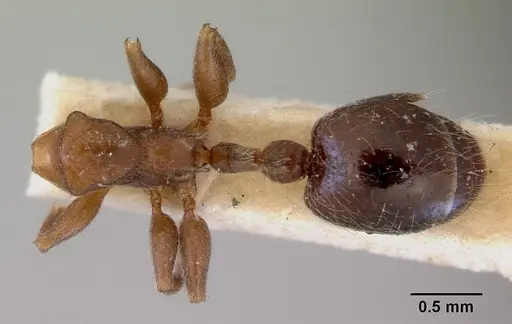
Literatura
Carregando mapa de distribuição...Carregando produtos...