
Paratopula ceylonica
- Nome científico
- Paratopula ceylonica
- Tribo
- Crematogastrini
- Subfamília
- Myrmicinae
- Autor
- Emery, 1901
- Distribuição
- Encontrada em 2 países
Introdução
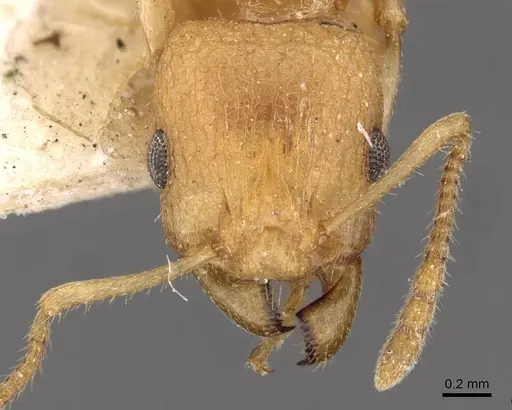
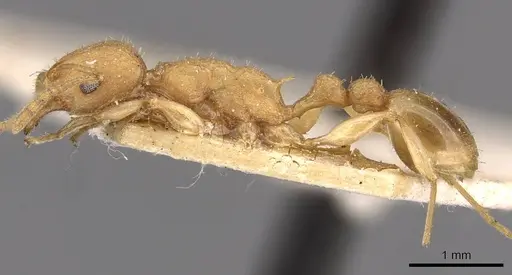
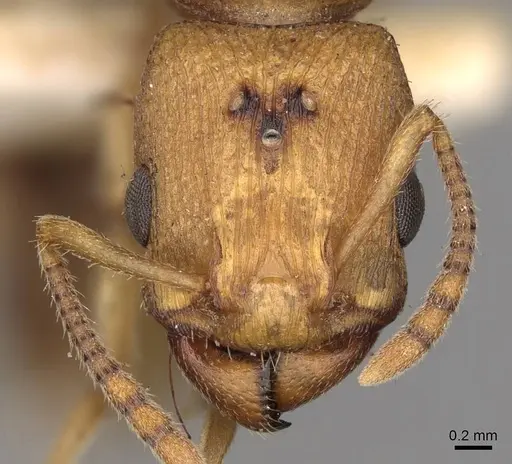
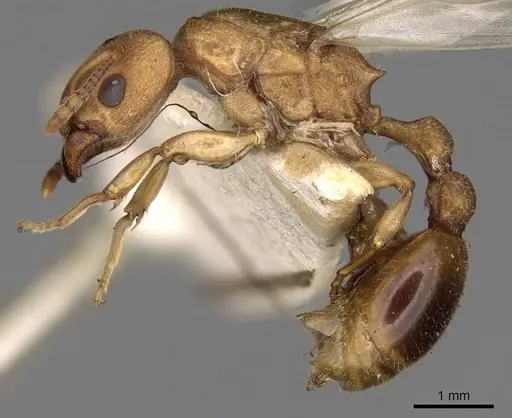
Paratopula ceylonica is a small myrmicine ant found across South and Southeast Asia. Workers measure about 5–6 mm and are golden yellow with a darker reddish-brown head and mesosoma, a black gaster, and lighter antennae, clypeus, and legs. The mandibles have a black masticatory margin. Propodeal spines are slender and straight to slightly downcurved, and the post-petiole looks squarish from above . Queens are larger but their exact size is not documented in the available literature. This species belongs to the tribe Crematogastrini and was originally described from Sri Lanka . What makes this ant interesting is its unusual feeding behavior – it has been seen scavenging dead cockroaches and bread in human dwellings, suggesting an omnivorous diet that includes both protein and carbs . The genus Paratopula is rarely collected and considered arboreal, yet this species is also found in grasslands and buildings, making it somewhat adaptable .
Quick Summary
- Difficulty: Hard
- Origin & Habitat: Found across the Indomalaya region including Bangladesh, India (Karnataka, Orissa, Uttar Pradesh, West Bengal), Myanmar, Pakistan, Sri Lanka, Taiwan, and southern China. In Sri Lanka it has only been recorded from the wet zone (Lenagala Forest Reserve) [6]. The species inhabits grasslands and has been collected in residential buildings, such as kitchens and lawns, feeding on dead cockroaches and bread [5][1].
- Colony Type: Unconfirmed. The genus Paratopula is rarely studied and colony organization has not been documented. Based on related Crematogastrini, single-queen colonies are possible but not certain.
- Size & Growth:
- Queen: Size data unavailable – no total length reported in available literature.
- Worker: 5–6 mm [1][2]
- Colony: Unknown – no colony size data found in scientific sources.
- Growth: Unknown
- Development: Unknown – no direct measurements exist. Given its tropical distribution, development is likely faster than in temperate species, but this is speculative. (Development timing has not been studied. Any observations would be valuable to the hobby.)
- Antkeeping:
- Temperature: Not directly studied. Based on its tropical to subtropical range, aim for warm conditions around 24–28°C. Room temperature in most heated homes should work. If workers seem sluggish, try a slight increase.
- Humidity: No specific data. Since it comes from grasslands and buildings, moderate humidity likely suits it. Keep the nest substrate moist but not waterlogged. A humidity gradient (drier area and a moist area) may help.
- Diapause: Unknown. Its tropical distribution suggests true hibernation is not required. If kept in a temperate region, a brief cool period (2–3 months at 15–18°C) might be tried, but this is an estimate.
- Nesting: The genus Paratopula is considered arboreal [3], so a setup with vertical space is recommended. A Y-tong (AAC), plaster, or 3D-printed nest with chambers scaled to 5–6 mm workers would be appropriate. Despite being arboreal, they are also found at ground level, so a flexible setup is wise.
- Behavior: Behavior is poorly documented. Workers have been observed foraging in kitchens and grasslands, scavenging dead cockroaches and bread [5][1]. As a member of tribe Crematogastrini, this species likely uses a modified spatulate stinger to smear venom onto threats. Aggressiveness is not known, but given its small size, any sting would likely be mild. Escape risk is moderate – workers are 5–6 mm, so standard barriers (fluon, oil) should work, but fine mesh is recommended as a precaution.
- Common Issues: nearly zero captive care information means you will be pioneering its husbandry – proceed only if you are experienced and prepared for uncertainty., no documented development timeline – you cannot benchmark your colony's health against known norms., colony structure is unknown – you may not know if your nest setup matches their social needs., founding behavior is unconfirmed – you will have to experiment with how to start a colony., rarely available in the hobby – sourcing colonies may be difficult, and you may accidentally deal with wild-caught specimens from protected areas (check local laws).
Appearance and Identification
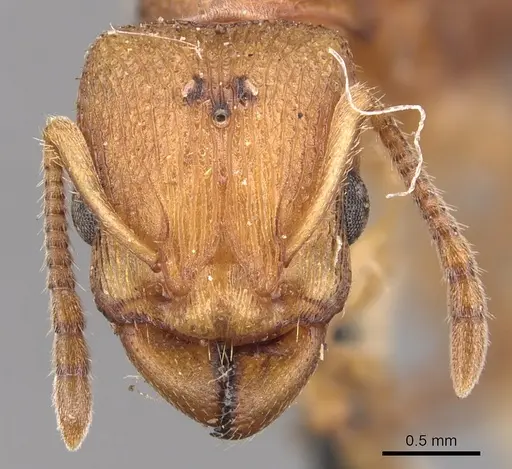
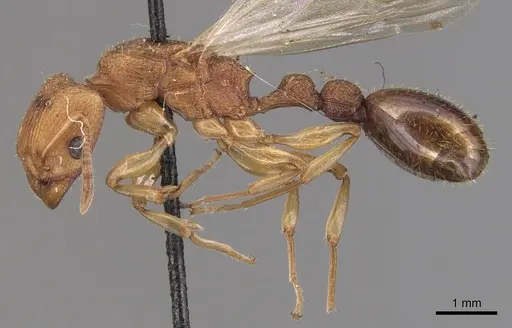
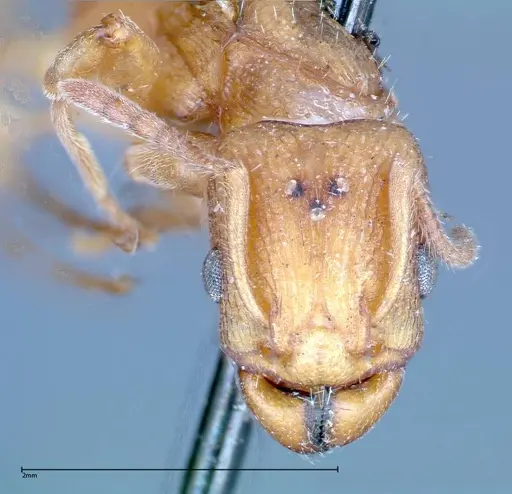
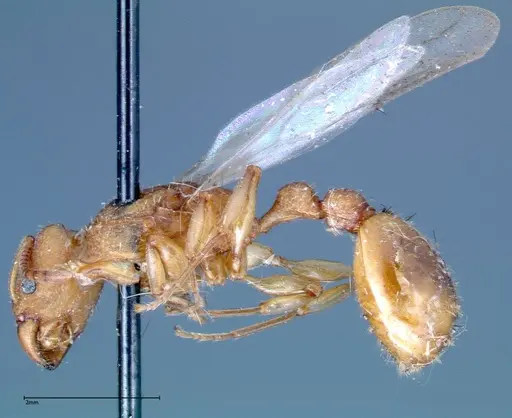
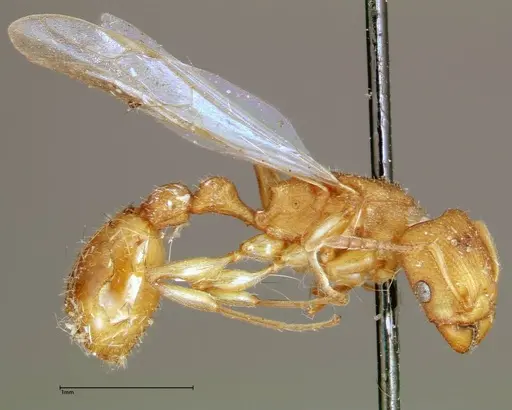
Paratopula ceylonica workers are 5–6 mm in total length. They have a dark reddish-brown head and mesosoma, a black gaster, and lighter antennae, clypeus, and legs. The mandibles are darker with a black masticatory margin. The body is covered with sparse, erect brownish-yellow hairs and a short appressed pubescence on the antennae, legs, and gaster. The head, thorax, and abdomen are uniformly rugose and reticulate. Propodeal spines are slender and straight to slightly downcurved, and the post-petiole appears squarish when viewed from above [1][2][3]. Queens are larger, but their exact size is not documented.
Distribution and Habitat
This species ranges across South and Southeast Asia – Bangladesh, India (Karnataka, Orissa, Uttar Pradesh, West Bengal), Myanmar, Pakistan, Sri Lanka, Taiwan, and southern China [3][7][8]. In Sri Lanka it is restricted to the wet zone, specifically Lenagala Forest Reserve [6]. It has been collected in grasslands and residential buildings (kitchens, lawns) [5]. Despite being considered an arboreal genus, recordings from ground level suggest flexibility.
Feeding and Diet
Field observations show Paratopula ceylonica feeding on dead cockroach bodies and bread pieces [5][1]. This indicates an omnivorous diet that includes scavenging. In captivity, offer small dead insects (crickets, fruit flies) as protein and sugar water, honey, or bread as carbohydrates. Since the species has not been kept before, start with small portions and see what they accept.
Nest Preferences and Housing
The genus Paratopula is considered arboreal [3], so a nest with vertical climbing space (e.g., branch or cork bark) is suggested. A Y-tong (AAC), plaster, or 3D-printed nest with chambers sized for 5–6 mm workers works well. Provide a moisture gradient – a damp area and a drier area – because they are found in both grasslands and buildings. These recommendations are based on genus inference, not documented captive husbandry.
Temperature and Seasonal Care
Paratopula ceylonica is distributed across tropical to subtropical regions, so it likely prefers warm conditions. Aim for 24–28°C. Room temperature in most heated homes should be fine. No data exists on diapause, given its tropical range, a true hibernation period is probably not required. If you live in a temperate area, a mild cool period (15–18°C for 2–3 months) could be tried, but this is an educated guess.
Defense Mechanism
As a member of the tribe Crematogastrini, Paratopula ceylonica likely uses a modified, flattened spatulate stinger to wipe or smear venom onto enemies rather than piercing. This is a common defense in the tribe, but has not been specifically studied in this species.
Known Challenges and Limitations
This is one of the least studied ant species in the hobby. There is no literature on its colony structure, founding, development timeline, or captive care. All recommendations here are inferred from taxonomy and limited field observations. This makes it a poor choice for beginners. If you keep it, you will be pioneering its care – document everything. The species is rarely available, try to source from reputable breeders who do not collect from protected areas.
Frequently Asked Questions
How long does it take for Paratopula ceylonica to develop from egg to worker?
This is unknown – no research has documented the development timeline. Based on typical Myrmicinae patterns and its tropical distribution, estimates suggest 4–8 weeks at warm temperatures (around 26°C), but this is purely speculative.
What do Paratopula ceylonica ants eat?
Field observations show they feed on dead cockroach bodies and bread pieces [5][1]. In captivity, offer small insects, dead arthropods, sugar water, honey, and bread. Their acceptance of various foods is unconfirmed since this species has not been kept before.
Are Paratopula ceylonica ants good for beginners?
No. This species is not recommended for beginners or even most experienced keepers because there is essentially no captive husbandry information available. You would be pioneering their care with no established protocols. The lack of data on colony structure, development, and basic requirements makes successful keeping very uncertain.
Do Paratopula ceylonica ants need hibernation?
Unknown. Given their tropical and subtropical distribution, true hibernation is likely not required. If you live in a temperate region, a brief cool period (2–3 months at 15–18°C) during winter may be appropriate, but this is an estimate rather than a documented requirement.
What size nest do Paratopula ceylonica ants need?
Since the genus is considered arboreal [3], a naturalistic setup with vertical spaces or a Y-tong/plaster nest with medium-sized chambers would be appropriate. Workers are around 5–6 mm, so chambers should be scaled to that size – not too tight, but not too large.
How big do Paratopula ceylonica colonies get?
Unknown – no colony size data exists in scientific literature. The maximum colony size for this species has not been documented.
Can I keep multiple Paratopula ceylonica queens together?
Unknown. The colony structure (monogyne vs polygyne) has not been documented. Without this basic information, it is impossible to recommend whether to keep single or multiple queens. Do not attempt to combine unrelated foundresses without documented evidence that this species tolerates pleometrosis.
What temperature should I keep Paratopula ceylonica at?
Based on their tropical to subtropical distribution, aim for warm conditions around 24–28°C. Room temperature in most heated homes should be suitable. Observe colony activity and adjust if workers seem sluggish (try slightly warmer) or avoid heated areas (try slightly cooler).
Do Paratopula ceylonica ants sting?
As a Myrmicinae ant, they likely have a stinger, but its potency and whether it can penetrate human skin is unconfirmed. Given their small size (5–6 mm), any sting would probably be mild if present. They belong to a tribe known to smear venom rather than pierce.
Where is Paratopula ceylonica found?
This species is found across South and Southeast Asia including Bangladesh, India, Myanmar, Pakistan, Sri Lanka, Taiwan, the Philippines, and southern China [3][7]. In India, it has been recorded from Karnataka, Orissa, Uttar Pradesh, and West Bengal [7]. It is considered a rare species with limited distribution records.
Report an Issue
The current care sheet is based fully on literature. See inconsistencies, or something that's incorrect? Please , it will be resolved after review from an admin. Contributing to the blogs tab also helps providing information, to make us be able to further improve the caresheets. Thank you for your support!
References

Este guia de cuidados está sob a licença CC BY-SA 4.0 .
Posts da comunidade
CASENT0904714
Ver no AntWeb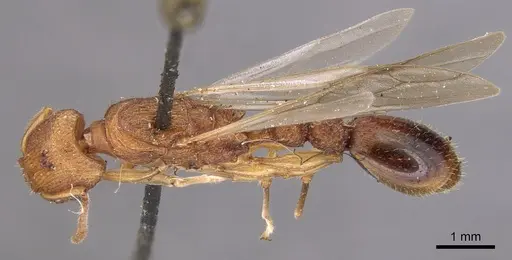
CASENT0908985
Ver no AntWeb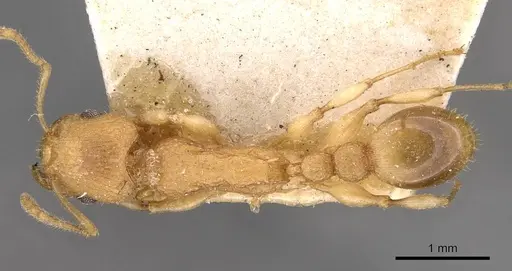
CASENT0914167
Ver no AntWeb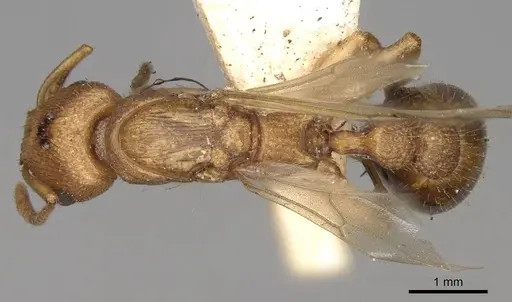
FOCOL0309
Ver no AntWeb
Literatura
Carregando mapa de distribuição...Carregando produtos...