
Oxyopomyrmex pygmalioni
- Nome científico
- Oxyopomyrmex pygmalioni
- Tribo
- Stenammini
- Subfamília
- Myrmicinae
- Autor
- Salata & Borowiec, 2015
- Distribuição
- Encontrada em 1 países
Introdução
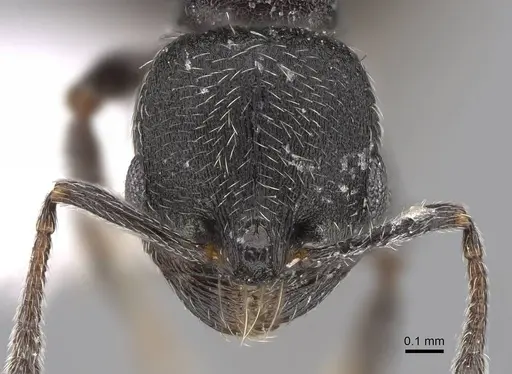
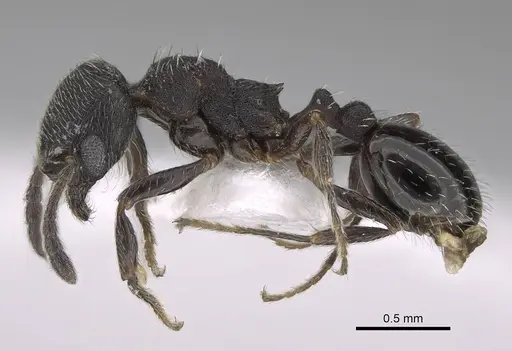
Oxyopomyrmex pygmalioni is a tiny ant species endemic to Cyprus. Workers have a total length of about 0.48 mm . They are black with brownish accents on antennae and legs, and have a sculptured head with longitudinal striae . The species was described in 2015 and is found on grassy coastal terraces in Paphos district . Workers are active at 16°C in windy conditions, showing cold tolerance . This indicates they prefer cooler environments than most ants.
Quick Summary
- Difficulty: Medium
- Origin & Habitat: Endemic to Cyprus, found on grassy coastal terraces of cliffs in Paphos district [1][2].
- Colony Type: Unknown, only worker caste has been described [1].
- Size & Growth:
- Queen: size data unavailable
- Worker: 0.48 mm (total length) [1]
- Colony: Unknown, no colony size data available
- Growth: Unknown
- Development: Unknown, no direct data. Based on typical small Myrmicinae patterns, estimate 6-10 weeks at optimal temperature [3]. (Development timeline is unconfirmed. Temperature affects development speed.)
- Antkeeping:
- Temperature: Keep at cool room temperature, around 18-24°C. Wild specimens were active at 16°C [1]. Avoid overheating.
- Humidity: Moderate humidity. Found in grassy coastal terraces, so keep nest substrate consistently moist but not waterlogged [1].
- Diapause: Likely yes, as a Mediterranean species, but unconfirmed [1].
- Nesting: Natural nesting in soil under grass clumps. In captivity, use test tube setups or small formicaria with sandy/soil substrate [1].
- Behavior: Workers are docile and slow-moving, as they were hand-collected without defensive behavior [1]. Their tiny size means escape prevention is critical. They are active foragers even at cool temperatures.
- Common Issues: escape risk due to tiny size, use fine mesh barriers, overheating risk since they prefer cool conditions, colony founding uncertain as queen caste is unknown
Discovery and Taxonomy
Oxyopomyrmex pygmalioni was described in 2015 by Sebastian Salata and Lech Borowiec [1]. The species was discovered in Cyprus, specifically at Cape Drepano in the Paphos district [1]. The name honors Pygmalion, a figure from Greek mythology, reflecting the ant's sculptured appearance [1]. Only the worker caste has been described, so queen and male biology are unknown [1].
Natural Habitat and Distribution
This species is endemic to Cyprus, found only on grassy coastal terraces of cliffs in the Paphos district [1][2]. Workers were active at 16°C in windy conditions, indicating adaptation to cool, exposed environments [1]. The biogeographic region is Palearctic [2].
Identification and Appearance
Workers are tiny, with a total length of about 0.48 mm [1]. They are black with brownish accents on antennae and legs [1]. The head has longitudinal striae, and the pronotum is rugose [1]. These features distinguish it from related species.
Temperature and Cold Tolerance
Workers are active at 16°C in windy conditions, showing cold tolerance [1]. For captivity, keep at cool room temperature (18-24°C) and avoid overheating [1]. This suggests they prefer cooler conditions than most ants.
Related Species and Care Inferences
Oxyopomyrmex belongs to the tribe Stenammini, which includes genera like Messor and Pheidole [1]. Diet is unconfirmed for this species, but based on tribe patterns, they may be omnivorous [3]. Nesting in soil under grass clumps is inferred from habitat [1]. Care should start with standard test tube setups and adjust based on colony behavior.
Frequently Asked Questions
How do I keep Oxyopomyrmex pygmalioni?
Use a test tube setup at cool room temperature (18-24°C) [1]. Keep humidity moderate with moist substrate [1]. Escape prevention is critical due to tiny size [1].
What do Oxyopomyrmex pygmalioni eat?
Diet is unconfirmed for this species [3]. Based on related Stenammini, they may accept protein and carbohydrates [3].
How long does it take for Oxyopomyrmex pygmalioni to develop from egg to worker?
Development timeline is unknown, no direct data exists. Based on typical small Myrmicinae patterns, estimate 6-10 weeks at optimal temperature [3].
Are Oxyopomyrmex pygmalioni good for beginners?
Difficulty is medium due to limited research [1]. Not recommended for beginners because queen biology is unknown [1].
Do Oxyopomyrmex pygmalioni queens exist?
The queen caste has never been documented [1]. Only workers have been collected [1].
Do Oxyopomyrmex pygmalioni ants sting?
Stinging ability is unknown, but workers are docile [1].
What temperature is best for Oxyopomyrmex pygmalioni?
Keep them cool, around 18-24°C [1]. Wild specimens were active at 16°C [1].
Where is Oxyopomyrmex pygmalioni found?
This species is endemic to Cyprus, found on grassy coastal terraces in Paphos district [1][2].
How big do Oxyopomyrmex pygmalioni colonies get?
Colony size is unknown, no data available [1].
Can I keep multiple Oxyopomyrmex pygmalioni queens together?
Colony structure is unconfirmed [1]. Combining queens is not recommended due to lack of data [1].
Report an Issue
The current care sheet is based fully on literature. See inconsistencies, or something that's incorrect? Please , it will be resolved after review from an admin. Contributing to the blogs tab also helps providing information, to make us be able to further improve the caresheets. Thank you for your support!
References

Este guia de cuidados está sob a licença CC BY-SA 4.0 .
Posts da comunidade
CASENT0922693
Ver no AntWeb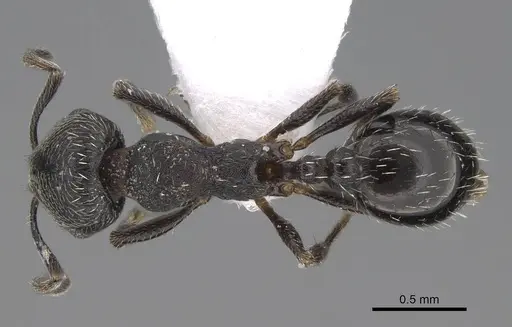
Literatura
Carregando mapa de distribuição...Carregando produtos...