
Odontomachus scalptus
- Nome científico
- Odontomachus scalptus
- Tribo
- Ponerini
- Subfamília
- Ponerinae
- Autor
- Brown, 1978
- Distribuição
- Encontrada em 5 países
Introdução
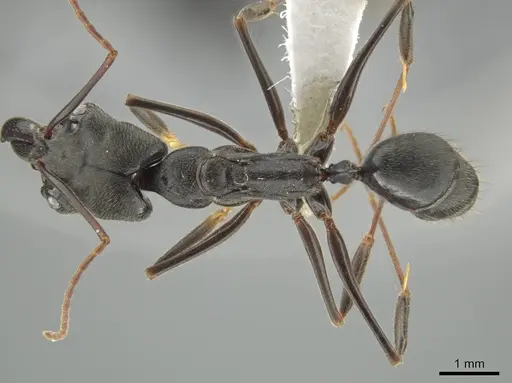
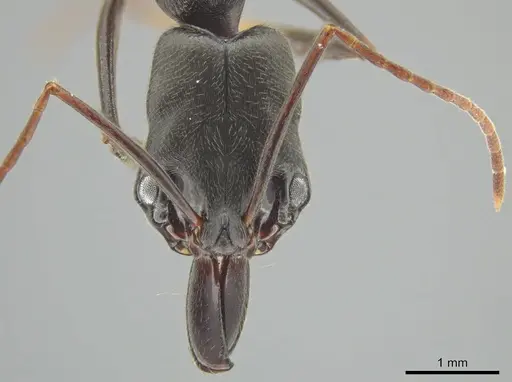
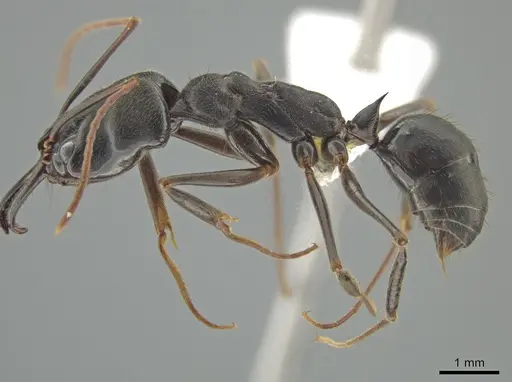
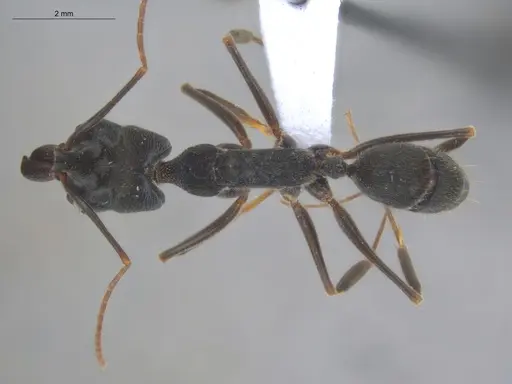
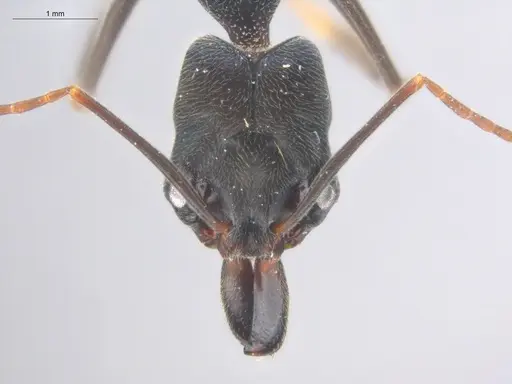
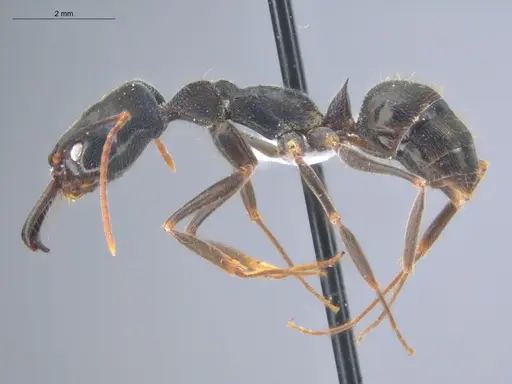
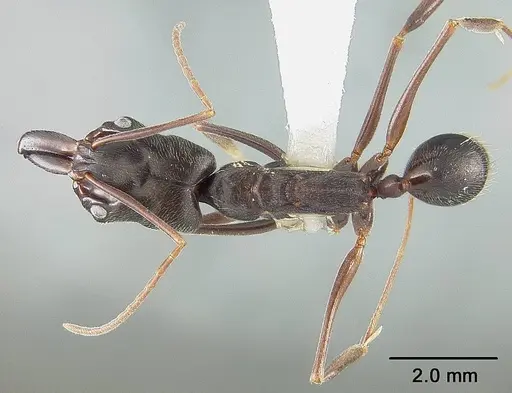
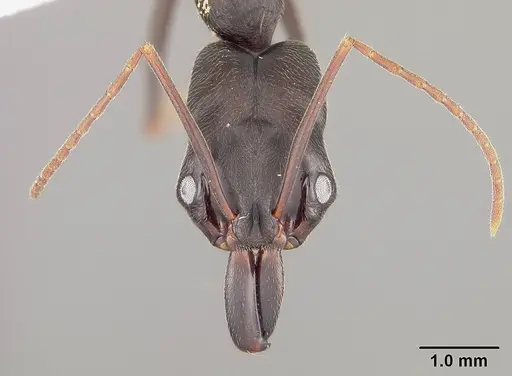
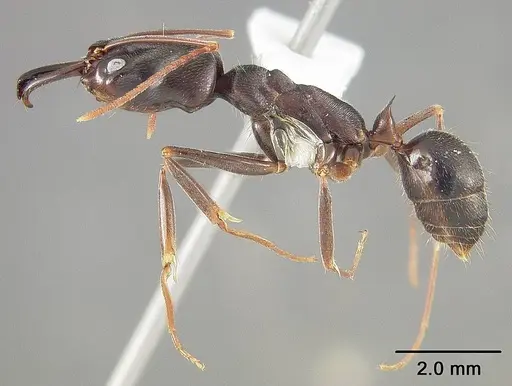
Odontomachus scalptus is a large trap-jaw ant native to the Neotropical region, including Brazil, Colombia, Ecuador, French Guiana, Guyana, and Suriname . Workers have a total length of 9.3-12.2 mm and queens reach about 13.3 mm, with dark coloration, a square-shaped head, and longitudinal striations on the mesonotum . This species nests in soil in forest areas from 100 to 800 meters altitude and forages in leaf-litter .
Quick Summary
- Difficulty: Medium
- Origin & Habitat: Neotropical rainforests in Brazil, Colombia, Ecuador, French Guiana, Guyana, and Suriname, from 100-800 meters altitude, nesting in soil and foraging in leaf-litter [3][1].
- Colony Type: Colony structure is not well documented. Based on typical Odontomachus patterns, likely monogyne (single queen) colonies, but this requires confirmation for O. scalptus.
- Size & Growth:
- Queen: ~13.3 mm [3]
- Worker: ~9.3-12.2 mm [3]
- Colony: Size data unavailable for this species, related Odontomachus species can reach several hundred workers.
- Growth: Moderate, based on Ponerinae patterns
- Development: Unknown, no specific data available for O. scalptus (Development time is unconfirmed, Ponerinae ants generally develop slower than other subfamilies.)
- Antkeeping:
- Temperature: Keep warm around 24-28°C, as this species inhabits tropical forests [3]. Provide a slight gradient if possible.
- Humidity: Keep substrate consistently moist but not waterlogged, as they nest in soil in humid environments [3].
- Diapause: No, this is a tropical species and does not require hibernation.
- Nesting: Soil-nesting species, use a naturalistic setup with deep, moist substrate or a Y-tong/plaster nest with large chambers [3].
- Behavior: Active predators with trap-jaw mandibles for capturing prey. Workers are moderately aggressive and have a functional stinger, but are not typically aggressive toward humans unless provoked. They are ground-dwelling hunters that forage in leaf-litter [4][5].
- Common Issues: tropical species is sensitive to temperature drops, keep warm year-round to prevent colony decline, predatory diet requires live prey, failure to provide adequate protein can lead to starvation, soil-nesting needs proper humidity balance, too dry causes desiccation, too wet causes fungal issues, large size requires appropriately sized prey items, too large prey may be ignored, wild-caught colonies may have parasites that need treatment
Housing and Nest Setup
You should use a soil-based nest for Odontomachus scalptus, as they nest in soil in the wild [3]. Provide a deep substrate (at least 5-6 cm) to allow for digging and expansion. A mix of soil and sand works well to maintain structure and moisture. Alternatively, a Y-tong or plaster nest with large chambers can be used, but ensure chambers are scaled to their size. Connect the nest to an outworld for foraging. Escape prevention is important, use a barrier like fluon on the outworld edges, though their large size reduces escape risk.
Feeding and Diet
You need to provide a protein-rich diet of live prey, as O. scalptus is a predatory ant [4][5]. Offer small live insects like fruit flies, crickets, or mealworms 2-3 times per week. Remove uneaten prey after 24-48 hours to prevent mold. They are active hunters and may not scavenge readily.
Temperature and Seasonal Care
Keep the nest warm at 24-28°C, as this species comes from tropical forests [3]. Use a heating cable on one side if room temperature is below 24°C. Do not allow temperatures to drop below 22°C for extended periods. No hibernation is needed.
Colony Founding
Founding behavior for O. scalptus is unconfirmed. Based on Ponerinae patterns, queens may be semi-claustral, meaning they leave the nest to hunt during founding. Provide a deep soil setup and offer small live prey near the queen's chamber.
Behavior and Defense
Workers use trap-jaw mandibles to capture prey at high speed. They have a functional stinger and can sting if threatened, but are not highly aggressive toward humans. When disturbed, they may click their jaws as a warning [4].
Growth and Development
Colony growth is moderate. Development time from egg to worker is unknown for O. scalptus. Ponerinae ants generally develop slower than other subfamilies. Provide consistent warmth and prey to support growth.
Frequently Asked Questions
How long does it take for Odontomachus scalptus to get their first workers?
Development time is unknown for this species. Based on Ponerinae patterns, it may take several weeks, but no specific data is available.
What do Odontomachus scalptus eat?
They require live prey such as fruit flies, crickets, or mealworms. Feed them 2-3 times per week and remove uneaten items [4][5].
What temperature do Odontomachus scalptus need?
Keep them warm at 24-28°C, as they are tropical ants [3]. Use heating if needed to maintain this range.
Are Odontomachus scalptus good for beginners?
They are medium difficulty due to temperature and dietary needs. Beginners should gain experience with easier species first.
How big do Odontomachus scalptus colonies get?
Colony size data is unavailable, but related species can reach several hundred workers.
Do Odontomachus scalptus need hibernation?
No, they are tropical and do not require hibernation [3].
What type of nest is best for Odontomachus scalptus?
A soil-based nest with deep, moist substrate is best, as they nest in soil [3]. Y-tong or plaster nests with large chambers also work.
Can I keep multiple queens together?
This is unconfirmed for O. scalptus. Based on typical Odontomachus patterns, they are likely monogyne, so combining queens may lead to fighting.
Why is my colony declining?
Common causes include temperatures too cool, insufficient prey, improper humidity, or mold. Review your care setup and ensure warm temperatures and adequate feeding [4].
Report an Issue
The current care sheet is based fully on literature. See inconsistencies, or something that's incorrect? Please , it will be resolved after review from an admin. Contributing to the blogs tab also helps providing information, to make us be able to further improve the caresheets. Thank you for your support!
References

Este guia de cuidados está sob a licença CC BY-SA 4.0 .
Posts da comunidade
Literatura
Carregando mapa de distribuição...Carregando produtos...