
Odontomachus affinis
- Nome científico
- Odontomachus affinis
- Tribo
- Ponerini
- Subfamília
- Ponerinae
- Autor
- Guérin-Méneville, 1844
- Distribuição
- Encontrada em 1 países
Introdução
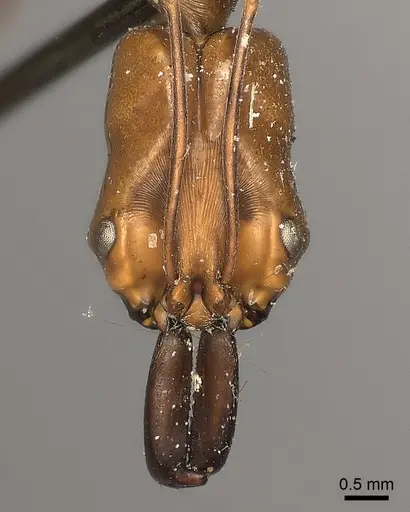
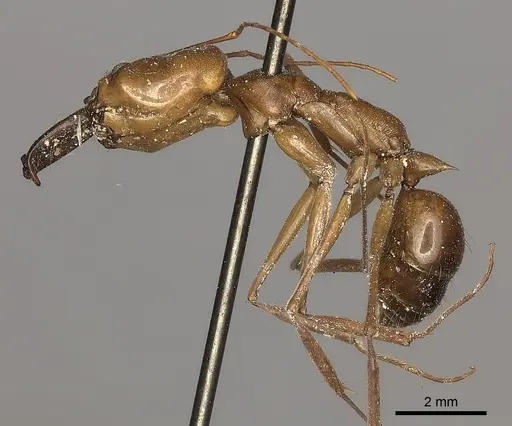
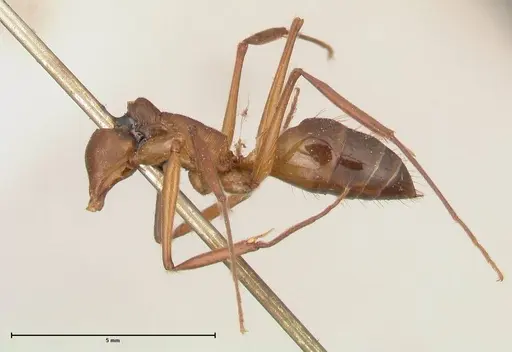
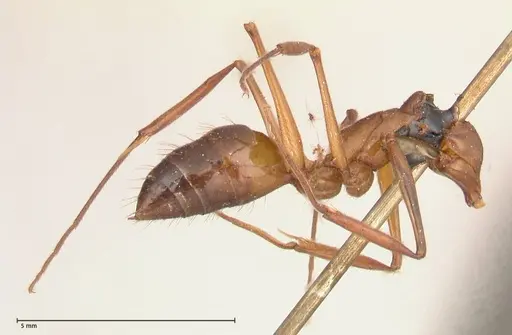
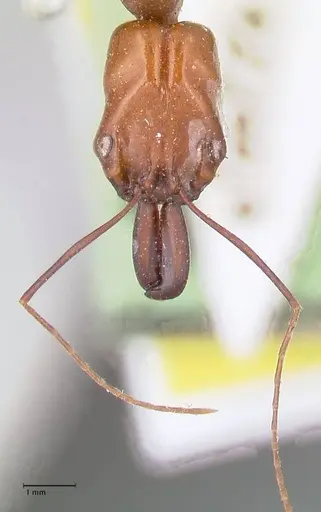
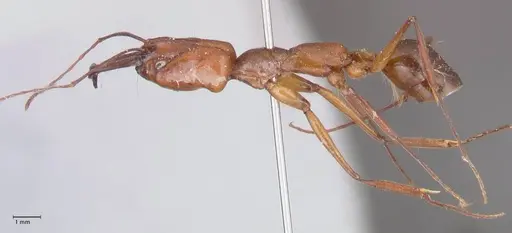
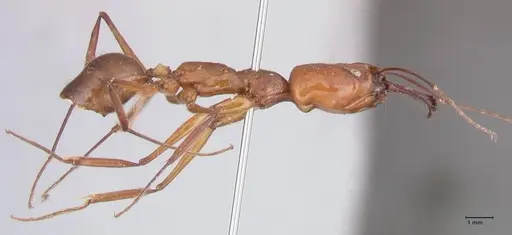
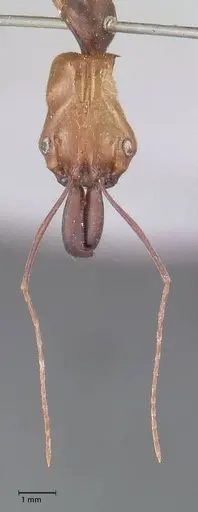
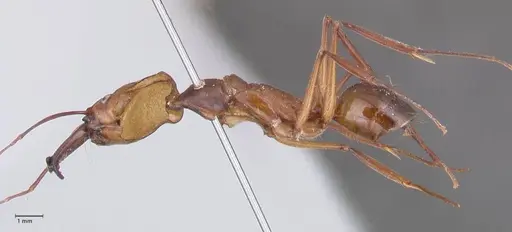
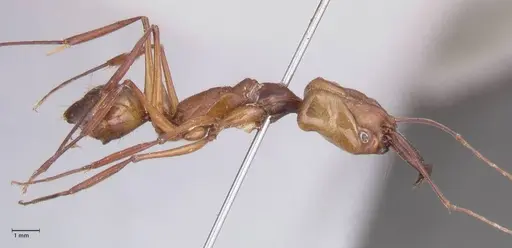
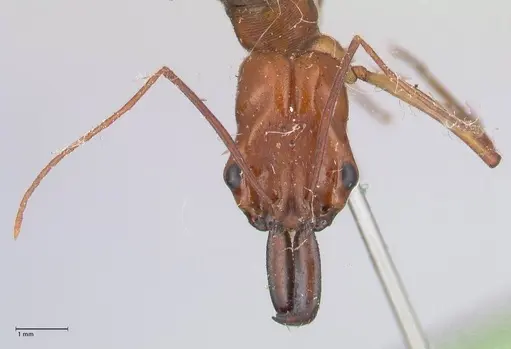
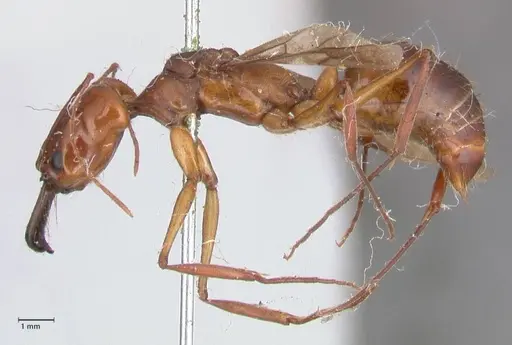
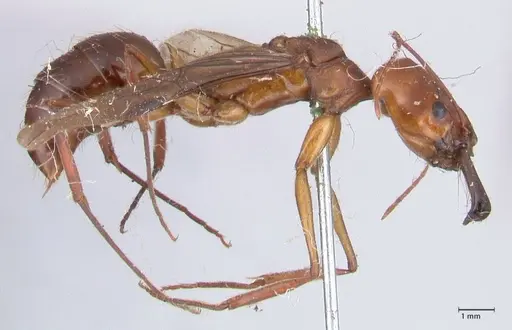
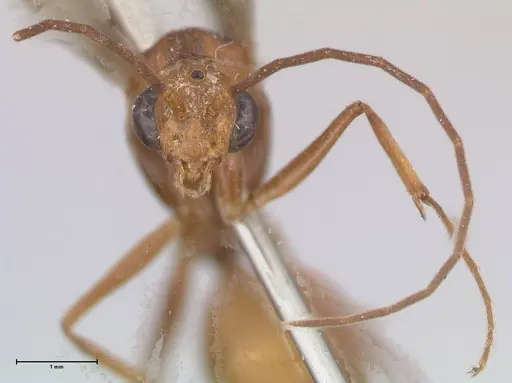
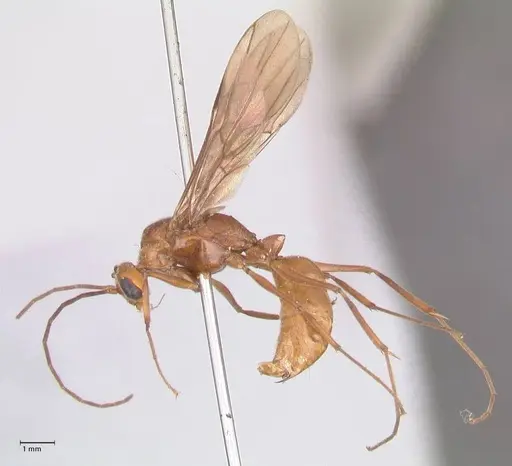
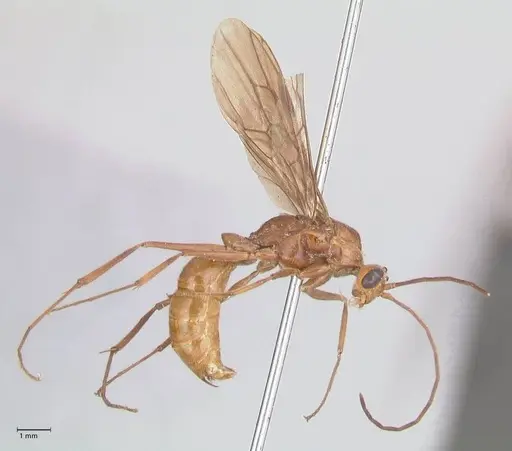
Odontomachus affinis is a medium-sized trap-jaw ant native to the Atlantic Forest of Brazil and Colombia. Workers measure 11.4-14.8 mm total length, and queens measure 14.9-16.7 mm total length, with a smooth and shining appearance on the vertex, petiolar node, and first gastral tergum . This species belongs to the haematodus group and is the sister species to Odontomachus chelifer . They nest in soil, rotten wood, or under tree bases, with underground nests extending about 50 cm deep and 30 cm wide . The species is endemic to the Atlantic Forest and found from 50 m to 1000 m elevation . O. affinis shows complex social behavior where queens in young colonies have varied roles, but as colonies grow, they focus on egg-laying. Workers can lay eggs if the queen dies or is unfertilized, suggesting queens control worker sterility .
Quick Summary
- Difficulty: Medium
- Origin & Habitat: Atlantic Forest of Brazil and Colombia, found in forest or urban green areas from 50 m to 1000 m elevation [3]. Nests in soil, rotten wood, or under tree trunk bases with galleries along root systems [1].
- Colony Type: Likely single-queen colonies based on AntWiki, but research does not confirm queen number [3].
- Size & Growth:
- Queen: 14.9-16.7 mm total length [1]
- Worker: 11.4-14.8 mm total length [1]
- Colony: Unknown, no specific data available
- Growth: Moderate
- Development: Approximately 8-10 weeks based on male egg development time [1] (Male egg development takes 59 (±3) days in artificial conditions. Development is temperature-dependent.)
- Antkeeping:
- Temperature: Keep at 24-28°C. This tropical species prefers warm, stable conditions. Use a heating cable on one side for a gradient [3].
- Humidity: Keep nest substrate consistently moist but not waterlogged, as they affinity with humid environments [4]. Provide a water tube at all times.
- Diapause: No, as a tropical species, they do not require hibernation. Maintain warm conditions year-round [3].
- Nesting: Use naturalistic setups with damp soil or a Y-tong/plaster nest with medium-sized chambers. They nest in soil, rotten wood, or under tree bases in the wild [1].
- Behavior: O. affinis is an aggressive predator that forages in leaf litter and on the ground [4]. They are part of the large predator epigaeic guild [5]. Workers have trap-jaw mandibles for capturing prey. They are sensitive to environmental changes [6]. Escape prevention should be moderate due to their medium size and active hunting.
- Common Issues: sensitive to habitat disturbance, wild-caught colonies may struggle if collected from degraded areas, slow colony growth compared to many common ants, requires patience during founding, requires live prey as primary food source, will not survive on sugar alone, humidity must be maintained consistently, drying out causes colony decline, queen may stop foraging once established, workers must hunt for the colony
Nest Preferences and Setup
In the wild, O. affinis nests in soil, rotten wood, or under tree trunk bases. Underground nests extend about 50 cm deep and 30 cm wide, with galleries along root systems [1]. Young colonies are sometimes found under partially rotten trunks with the founding queen in a single chamber under the bark [3].
For captive care, use a naturalistic setup with soil and small substrate pieces in a formicarium, or a Y-tong/plaster nest with medium-sized chambers. Keep the nest substrate consistently moist but not waterlogged. These ants are sensitive to drying out and require humid conditions [4]. Always provide a water tube.
Feeding and Diet
O. affinis is an aggressive predator that forages in leaf litter and on the ground, preying on small invertebrates [4]. In laboratory conditions, they feed on honey and sugar water but reject termites [7]. Live prey is essential for their survival.
Feed them a diet primarily of live small invertebrates like fruit flies, small crickets, and mealworms. Offer sugar water or honey as a supplement, but protein from live prey should be the main food source. Feed 2-3 times per week, adjusting based on colony size.
Temperature and Seasonal Care
As a tropical species from the Atlantic Forest, O. affinis requires warm conditions year-round. Keep the nest area at 24-28°C. A heating cable on one side of the nest creates a suitable gradient [3].
Unlike temperate species, O. affinis does not require hibernation. Maintain consistent warm temperatures throughout the year. They are sensitive to temperature drops and should not be exposed to cool conditions for extended periods.
Behavior and Colony Dynamics
Queens in young colonies display varied behavior, but as colonies grow, their role becomes limited to egg-laying. Workers from colonies without queens or unfertilized gynes will lay eggs, suggesting queens control worker sterility [3].
Workers are active hunters that patrol the leaf litter and ground surface. They are part of the large predator epigaeic guild [5]. Their trap-jaw mandibles snap shut rapidly to capture prey. They are sensitive to environmental changes [6].
Growth and Development
Colony growth is moderate. Male egg development takes 59 (±3) days in artificial conditions [1]. This suggests approximately 8-10 weeks from egg to worker at optimal temperature. Development is faster at warmer temperatures within their range.
Colony size is unknown, as no specific data is available. They are not rapid recruiters like some ants, but their hunting efficiency compensates for smaller colonies.
Frequently Asked Questions
How long does it take for Odontomachus affinis to produce first workers?
Expect approximately 8-10 weeks from egg to first worker at optimal temperature (24-28°C), based on male egg development time [1].
What do Odontomachus affinis eat?
They are aggressive predators that need live small invertebrates as their primary food, such as fruit flies or crickets. They will also take sugar water or honey as a supplement [4][7].
Do Odontomachus affinis need hibernation?
No. As a tropical species from Brazil's Atlantic Forest, they do not require hibernation. Keep them warm year-round at 24-28°C [3].
Are Odontomachus affinis good for beginners?
They are rated as medium difficulty. They require warm temperatures, high humidity, and live prey, which is more specialized than sugar-feeding ants. Expect slower colony growth than common species.
How big do Odontomachus affinis colonies get?
Colony size is unknown, no specific data is available for this species.
Can I keep multiple Odontomachus affinis queens together?
Research does not confirm queen number, but based on AntWiki, they are likely single-queen colonies. Multiple unrelated queens may fight, so it is safer to keep one queen per colony [3].
What temperature range does Odontomachus affinis need?
Keep them at 24-28°C. This is a warm-tropical species that needs consistently warm conditions. A heating cable on one side of the nest creates a suitable gradient [3].
What type of nest should I use for Odontomachus affinis?
A naturalistic setup with damp soil or a Y-tong/plaster nest with medium-sized chambers works well. They naturally nest in soil, rotten wood, or under tree bases [1].
Why is my Odontomachus affinis colony declining?
Common causes include: too low temperature (below 24°C), dry conditions (they need high humidity), lack of live prey, or stress from disturbance. They are sensitive to environmental changes [4][6].
Is Odontomachus affinis invasive anywhere?
No. This species is native to Brazil and Colombia and has not been documented as invasive in any region [3].
What makes Odontomachus affinis different from other trap-jaw ants?
O. affinis has distinctly smooth and shining vertex, petiolar node, and gastral terga, unlike related species like O. chelifer which have striated surfaces. They are also sensitive to environmental disturbance [1][6].
Report an Issue
The current care sheet is based fully on literature. See inconsistencies, or something that's incorrect? Please , it will be resolved after review from an admin. Contributing to the blogs tab also helps providing information, to make us be able to further improve the caresheets. Thank you for your support!
References

Este guia de cuidados está sob a licença CC BY-SA 4.0 .
Posts da comunidade
CASENT0217536
Ver no AntWeb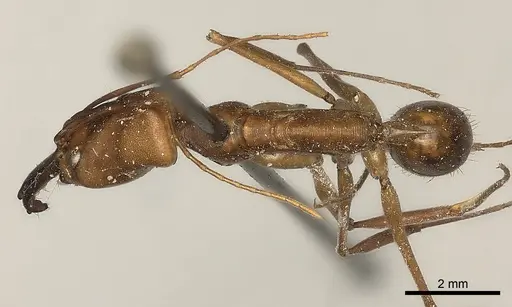
CASENT0923413
Ver no AntWeb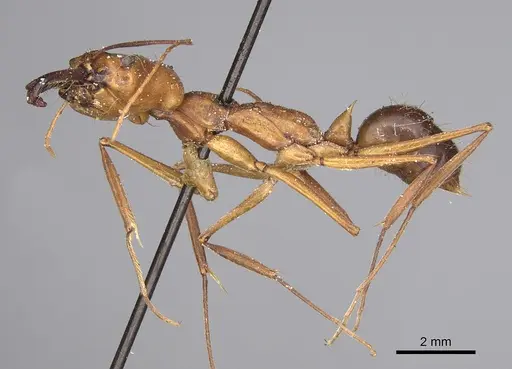
FOCOL0682
Ver no AntWeb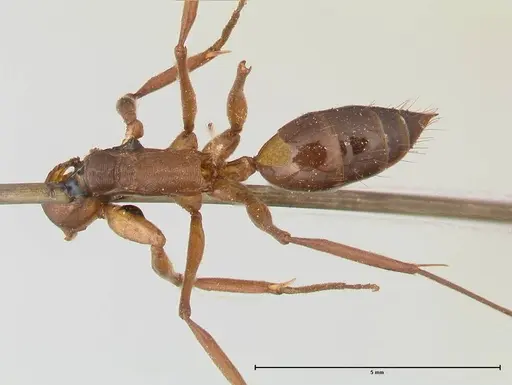
FOCOL1055
Ver no AntWeb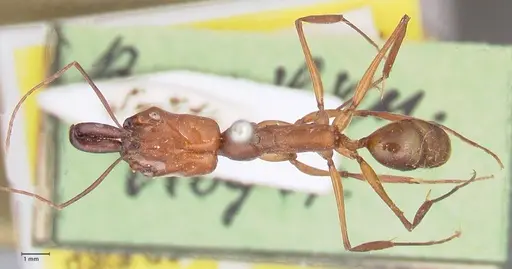
FOCOL1056
Ver no AntWeb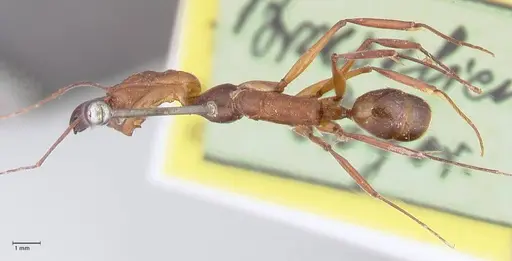
FOCOL1057
Ver no AntWeb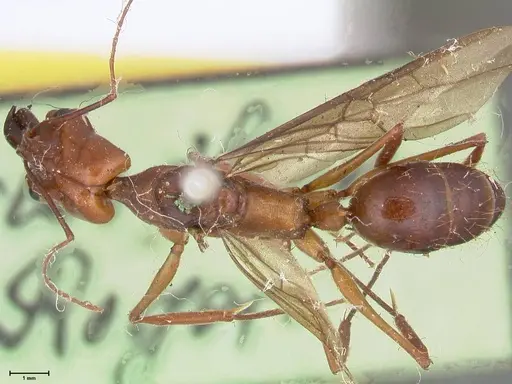
FOCOL1058
Ver no AntWeb
Literatura
Carregando mapa de distribuição...Carregando produtos...