
Neivamyrmex piraticus
- Nome científico
- Neivamyrmex piraticus
- Subfamília
- Dorylinae
- Autor
- Borgmeier, 1953
- Distribuição
- Encontrada em 0 países
Introdução
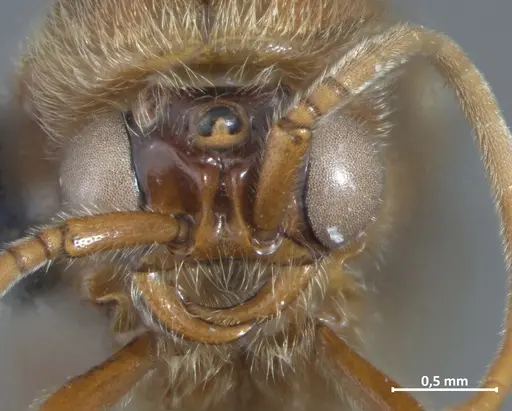
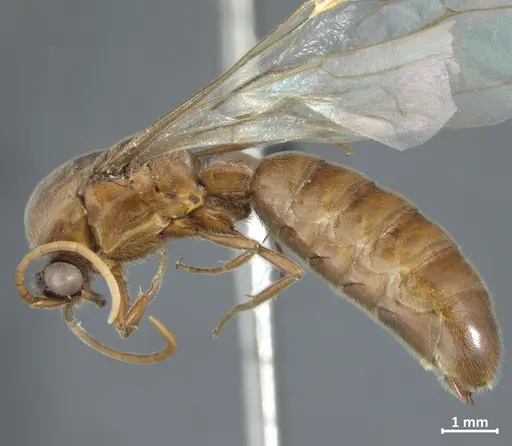
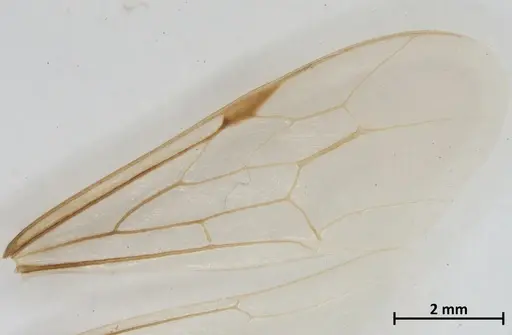
Neivamyrmex piraticus is a poorly known army ant species from Brazil. Only male specimens have been described in scientific literature - the worker caste and queen have never been documented. Males have typical army ant morphology including large eyes adapted for nocturnal mating flights, powerful mandibles, and the characteristic army ant body form. The species was first described by Borgmeier in 1953 from specimens collected in São Paulo, Paraná, and Espírito Santo states . As a member of the subfamily Dorylinae (army ants), this species would likely exhibit the nomadic hunting behavior typical of army ants if workers were ever discovered, but no biological observations exist for this specific species.
Quick Summary
- Difficulty: Expert
- Origin & Habitat: Eastern Brazil (São Paulo, Paraná, Espírito Santo, Bahia). The type specimens were collected from Atlantic Forest regions at various localities including Ipiranga, Serra Negra, São José dos Campos, Palmeiras, and Santa Teresa [1]. Additional specimens have been recorded from Ilhéus in Bahia [2]. The habitat is consistent with tropical/subtropical forest environments in southeastern Brazil.
- Colony Type: Unknown, only males have been documented. Army ant colonies typically have a single queen and can reach thousands of workers, but this species' colony structure is unconfirmed.
- Size & Growth:
- Queen: size data unavailable, queen caste has never been described
- Worker: size data unavailable, worker caste has never been described
- Colony: Unknown, no colony samples have been studied
- Growth: Unknown
- Development: Unknown, no developmental data exists for this species (No data available.)
- Antkeeping:
- Temperature: Unknown, no specific data exists for this species. Based on typical army ant preferences and Brazilian habitat, likely requires warm conditions around 24-28°C.
- Humidity: Unknown, no specific data exists for this species. Based on Atlantic Forest habitat, likely requires moderate to high humidity.
- Diapause: Unlikely, as a tropical species, probably active year-round with seasonal nuptial flights.
- Nesting: Unknown, no natural nesting observations exist. Army ants typically bivouac (create temporary nests from their own bodies) rather than excavating permanent nests.
- Behavior: No behavioral observations exist for this species. Army ants are known for their nomadic hunting raids, aggressive predation on other insects, and massive mating swarms. Males are nocturnal and attracted to lights during nuptial flights [2].
- Common Issues: this species has never been kept in captivity, no husbandry information exists., only males have been described, making it impossible to establish a colony., the worker caste is unknown, so even if found, identification would be difficult., males collected at lights may be exhausted and unlikely to establish colonies., no captive breeding success has been documented for this species.
Why This Species Is Not Recommended for Keepers
Neivamyrmex piraticus is one of the least suitable species for antkeeping. The worker caste has never been described, meaning no one knows what these ants look like or how to identify them. Only winged males have been collected, typically at light traps during nuptial flights. Without workers, it is impossible to establish a functional colony. Even if workers were somehow discovered, there is zero captive husbandry information available, no one has ever successfully kept this species in captivity. Army ants in general are extremely difficult to maintain because they require constant hunting opportunities and form temporary bivouac nests rather than permanent structures. For these reasons, N. piraticus should be considered a species for scientific study rather than antkeeping. [1][2]
What We Know About This Species
The scientific knowledge of Neivamyrmex piraticus is limited to male specimens. The original description was published by Borgmeier in 1953 based on males collected from multiple locations in São Paulo, Paraná, and Espírito Santo states [1]. Males have been recorded from January and December, suggesting seasonal nuptial flights during the Brazilian summer [1]. The species was later reported from Ilhéus in Bahia state in 2004,representing the first record from that state [2]. The male morphology follows typical army ant patterns: large compound eyes for nocturnal flight, well-developed mandibles, and the characteristic Dorylinae body shape. Beyond these basic observations, nothing is known about the queen, workers, colony structure, behavior, or development of this species.
Army Ant Biology and Expectations
While specific data for N. piraticus does not exist, we can make educated guesses based on what is known about the genus Neivamyrmex and army ants in general. Army ants (subfamily Dorylinae) are famous for their nomadic lifestyle, they do not build permanent nests but instead form temporary bivouacs from their own bodies, often in hollow logs, under rocks, or in other sheltered locations. They hunt in massive raids, swarming across the forest floor and overwhelming prey colonies. Colony sizes can reach into the tens of thousands. Queens are permanently wingless (ergatoid) after mating and are carried with the colony during nomads. Nuptial flights occur seasonally, with winged males and females taking to the air in large swarms. If N. piraticus follows these patterns, it would require extremely specialized care that is beyond current hobby capabilities.
The Challenge of Poorly Studied Species
Neivamyrmex piraticus represents a broader challenge in antkeeping: many species are simply too poorly studied to maintain in captivity. For a species to be kept successfully, we need to know what they eat, what temperature and humidity they require, how they found colonies, and what their colony structure looks like. For N. piraticus, none of this information exists. The worker caste has never been described, meaning we cannot even identify workers if they were found. This is not unusual, many tropical army ant species are known only from males collected at lights. The best approach for enthusiasts interested in army ants is to focus on better-studied species like Eciton burchellii or Labidus praedator, or to work with researchers to document new species in the field rather than attempting to keep poorly known species in captivity.
Frequently Asked Questions
Can I keep Neivamyrmex piraticus ants?
No. This species cannot be kept because only males have ever been documented, the worker caste is completely unknown. Without workers, it is impossible to establish a colony. No one has ever kept this species in captivity, and there is no husbandry information available.
What do Neivamyrmex piraticus workers look like?
We don't know. The worker caste has never been described or documented. This is one of the most significant knowledge gaps for this species, even if workers were discovered, there is no scientific description to compare them against for identification.
Where does Neivamyrmex piraticus live?
The species is known from eastern Brazil, specifically the states of São Paulo, Paraná, Espírito Santo, and Bahia. Specimens have been collected in the Atlantic Forest region from locations including Ipiranga, Serra Negra, São José dos Campos, Palmeiras, and Santa Teresa.
Are Neivamyrmex piraticus army ants?
Yes. Neivamyrmex is a genus within the subfamily Dorylinae, which contains all New World army ants. However, this particular species is extremely poorly known compared to better-studied army ants like Eciton burchellii.
How big do Neivamyrmex piraticus colonies get?
Unknown. No colony samples have ever been studied. Based on typical army ant colony sizes, they likely reach thousands of workers, but this is purely speculative for this species.
What do Neivamyrmex piraticus eat?
Unknown. No feeding observations exist for this species. Other army ants are predators that hunt insects and other arthropods, but specific diet preferences are unconfirmed for N. piraticus.
When do Neivamyrmex piraticus have nuptial flights?
Based on collection dates, males have been caught in January and December, suggesting seasonal flights during the Brazilian summer. However, the exact timing is poorly documented.
Is Neivamyrmex piraticus a good species for beginners?
No. This species is completely unsuitable for any antkeeper, including experts. No information exists about its care, and the worker caste has never been described. There are no captive colonies in existence.
Can I find Neivamyrmex piraticus workers in Brazil?
Possibly, but extremely unlikely. Workers have never been scientifically documented, so even if you found some, identification would be impossible without a formal description. Better-studied army ant species would be more practical targets for field collection.
Report an Issue
The current care sheet is based fully on literature. See inconsistencies, or something that's incorrect? Please , it will be resolved after review from an admin. Contributing to the blogs tab also helps providing information, to make us be able to further improve the caresheets. Thank you for your support!
References

Este guia de cuidados está sob a licença CC BY-SA 4.0 .
Posts da comunidade
DZUP549827
Ver no AntWeb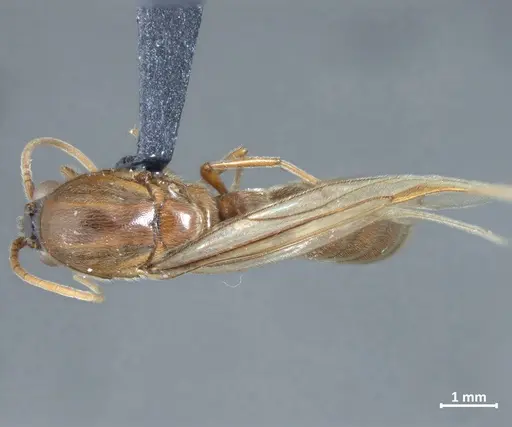
Literatura
Carregando mapa de distribuição...Carregando produtos...