
Myrmoteras brachygnathum
- Nome científico
- Myrmoteras brachygnathum
- Tribo
- Myrmoteratini
- Subfamília
- Formicinae
- Autor
- Moffett, 1985
- Distribuição
- Encontrada em 1 países
Introdução
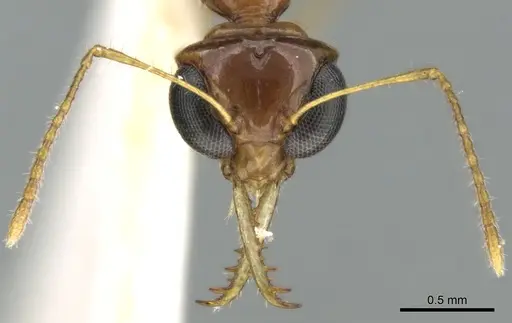
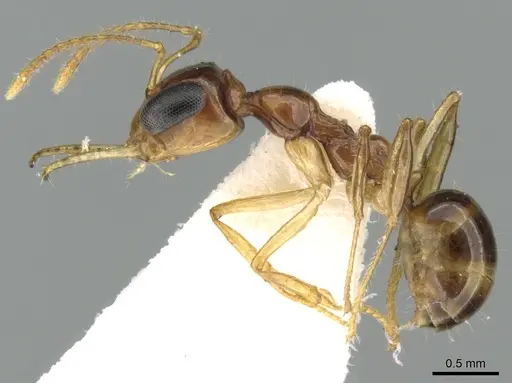
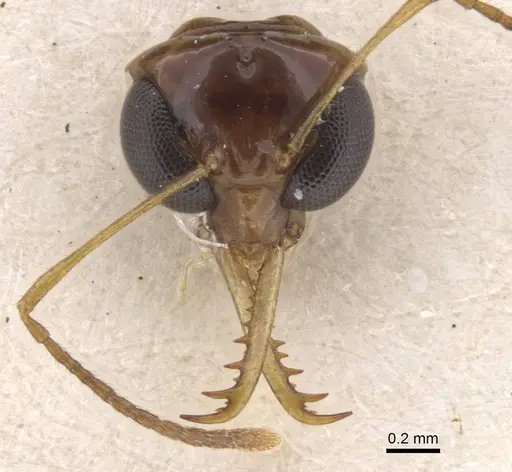
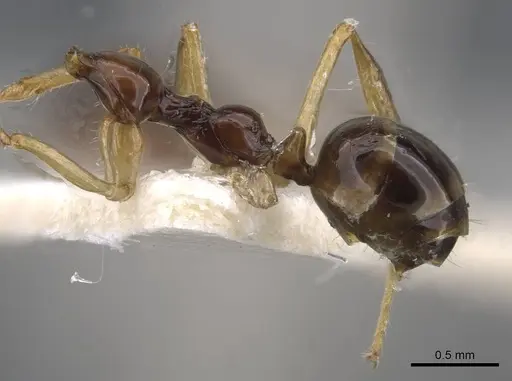
Myrmoteras brachygnathum is a rare ant species endemic to India, belonging to the Formicinae subfamily. Workers measure approximately 3.9-4.0mm in total length with a distinctive smooth, polished appearance lacking the sculpture typical of related species . The species gets its name from the Greek words for 'short jaw' (brachys + gnathum), referring to its notably shorter mandibles compared to other Myrmoteras species . Queens are slightly larger at 4.3mm, and males are smaller at 3.45-3.53mm . The species is distinguished by its sparse pilosity, only 2-10 hairs break the dorsal margin of the body in profile, and its completely smooth head and pronotum . This ant is known only from the Western Ghats of India, specifically from Tamil Nadu and Kerala states . Almost nothing is known about the biology of this species in the wild or in captivity. The few specimens collected come from montane forest habitats in the Palni Hills at 2,200m elevation and lowland Kerala at 118m . Based on its placement in Formicinae and the limited observations of related species, it likely shares general traits with other forest-dwelling ants in this subfamily, but specific care requirements remain unstudied.
Quick Summary
- Difficulty: Expert
- Origin & Habitat: Endemic to the Western Ghats of India, specifically Tamil Nadu and Kerala states. Found in montane forest habitats in the Palni Hills at 2,200m elevation and lowland areas around 118m [1][2].
- Colony Type: Colony structure is completely unconfirmed. No data exists on whether colonies are single-queen (monogyne) or multi-queen (polygyne), or on colony size in the wild.
- Size & Growth:
- Antkeeping:
- Temperature: Likely prefers cooler conditions given its montane habitat at 2,200m elevation. Start around 20-24°C and observe colony activity. The elevation range (118m to 2,200m) suggests it may tolerate a broad range of temperatures. Adjust based on colony response.
- Humidity: Likely requires moderate to high humidity typical of forest-floor ants from the Western Ghats. Keep nest substrate consistently moist but not waterlogged. Provide a moisture gradient so ants can choose their preferred humidity zone.
- Diapause: Unknown, no data on overwintering requirements. The montane habitat suggests some seasonal temperature variation, but whether they require a true hibernation period is unconfirmed.
- Nesting: Natural nesting habits are unconfirmed. Based on habitat data, likely nests in soil or rotting wood in shaded forest environments. A naturalistic setup with moist substrate or a Y-tong/plaster nest with good humidity retention would be appropriate starting points.
- Behavior: Completely unstudied in captivity. Based on genus placement in Formicinae, likely displays typical ant behaviors: workers forage for food, tend any brood, and respond to threats. Escape risk is moderate given worker size of approximately 4mm, standard barriers should suffice, but fine mesh is recommended as a precaution. No data exists on aggression levels, sting capability, or foraging patterns. The trigger hairs on the labrum (characteristic of the subgenus Myrmoteras) suggest possible specialized prey capture mechanisms, but this is unconfirmed.
- Common Issues: no biological data means all care is experimental, monitor colonies closely for signs of stress., humidity requirements are unknown, improper moisture levels could kill colonies., temperature needs are unconfirmed, starting points may need significant adjustment., this species may be extremely difficult to acquire as no captive breeding is documented., wild-caught colonies may carry parasites or diseases with no documented treatment.
Species Identification and Range
Myrmoteras brachygnathum is one of the rarest ant species in the hobby, known only from the Western Ghats mountain range in southern India. Workers reach 3.9-4.0mm in total length and are easily identified by their completely smooth and polished head and pronotum, unlike related species Myrmoteras ceylonicum and Myrmoteras scabrum which have pronounced sculpture [1]. The species name means 'short jaw' in Greek, referring to its relatively short mandibles compared to other Myrmoteras species [1]. Queens measure 4.3mm and closely resemble workers but with a more massive thorax. Males are smaller at 3.45-3.53mm and have distinctive reduced mandibles appearing as small triangular pegs [1]. The species has been recorded from Tamil Nadu (Palni Hills) and Kerala, with elevations ranging from 118m to 2,200m [1][2].
Why This Species Is So Difficult to Keep
This is one of the least-studied ant species in the world. The AntWiki explicitly states that nothing is known about the biology of Myrmoteras brachygnathum [3]. No research exists on their diet, founding behavior, colony size, temperature preferences, or any aspect of their captive care. This means every aspect of keeping them is essentially experimental. You will be pioneering their care with no established guidelines to follow. This makes them suitable only for expert antkeepers who have extensive experience with difficult species and can carefully observe and adapt to colony needs. Even basic questions like what they eat, how fast they grow, and whether they need hibernation remain unanswered.
Housing Recommendations
Since we have no direct data on this species' nesting preferences, we must make educated guesses based on their natural habitat and related ants. They come from forested areas in the Western Ghats, suggesting they prefer shaded, humid conditions. A naturalistic setup with moist soil substrate and some rotting wood pieces would be a logical starting point. Alternatively, a Y-tong or plaster nest with good humidity retention could work well. The nest should have chambers scaled appropriately for 4mm workers, neither extremely tight nor overly spacious. Provide a water reservoir to maintain humidity without flooding. Given the elevation range (118m to 2,200m), they may tolerate a range of conditions, but start with moderate warmth (around 22°C) and moderate-high humidity.
Feeding and Diet
The diet of Myrmoteras brachygnathum is completely unstudied. As a member of Formicinae, they likely have typical ant dietary needs: protein from insects and sugar from honeydew or nectar. However, the genus Myrmoteras has specialized trigger hairs on the labrum (the mouthpart covering the mandibles), which in some related ants is associated with specialized prey capture [1]. This suggests they might be more predatory than typical ants, possibly hunting small invertebrates. For captive care, offer a variety of foods: small live insects (fruit flies, pinhead crickets, mealworms), protein jelly or paste, and sugar water or honey. Start with protein offerings and observe acceptance. Do not rely on sugar sources until acceptance is confirmed. Given the complete lack of data, be prepared for experimentation.
Temperature and Seasonal Care
Temperature requirements are entirely unknown for this species. The wild specimens were collected from both lowland Kerala (118m) and montane Tamil Nadu (2,200m), suggesting they may tolerate a range of conditions [1]. The higher elevation collection site experiences cooler temperatures year-round, while Kerala is more tropical. Start around 20-24°C and monitor colony behavior, if workers cluster together and show reduced activity, they may prefer warmer conditions, if they avoid heated areas, reduce temperature. Regarding diapause or hibernation, no data exists. The montane habitat suggests some seasonal variation, so consider providing a cooler period (around 15-18°C) during winter months if the colony shows natural slowing of activity. This is speculative but represents reasonable husbandry for an unknown species.
Behavior and Temperament
No behavioral observations exist for this species in captivity or in the wild beyond specimen collection. As a Formicine ant, they likely possess the ability to spray formic acid as a defense mechanism, though the effectiveness and likelihood of this is unknown. Workers are approximately 4mm in size, so escape prevention should be moderate, standard barriers work for this size class. The trigger hairs on their labrum are a distinctive morphological feature of the subgenus Myrmoteras, but their functional significance (if any) for behavior is unknown [1]. Do not expect any documented behaviors like tandem running, slave-making, or specialized foraging patterns since no research exists. Each colony will be a unique observation opportunity.
Frequently Asked Questions
Is Myrmoteras brachygnathum available in the antkeeping hobby?
This species is extremely rare in the antkeeping hobby. It is endemic to India and has never been documented in captive breeding. Finding a colony would be exceptionally difficult, and if you do obtain one, it would likely be wild-caught. This makes them essentially unavailable for most antkeepers.
How do I care for Myrmoteras brachygnathum?
No documented care guidelines exist for this species. All care would be experimental. Based on limited inferences: keep at 20-24°C with moderate-high humidity, offer protein (small insects) and sugar sources, and use a naturalistic or Y-tong nest with moist substrate. You will need to pioneer their care through careful observation and experimentation.
What do Myrmoteras brachygnathum eat?
Their diet is completely unstudied. As Formicine ants, they likely accept protein (insects) and sugar (honeydew/nectar). The specialized trigger hairs on their mouthparts suggest they might be more predatory than typical ants. Offer small live insects, protein jelly, and sugar water, then observe what they accept.
How long does it take for Myrmoteras brachygnathum to develop from egg to worker?
This is entirely unknown, no research exists on their development timeline.
What temperature should I keep Myrmoteras brachygnathum at?
No specific temperature data exists. Start around 20-24°C based on their montane habitat in India. The elevation range (118m to 2,200m) suggests they may tolerate a range of conditions. Observe colony activity and adjust accordingly.
Do Myrmoteras brachygnathum need hibernation or diapause?
Unknown. The montane habitat (2,200m elevation) suggests they experience seasonal temperature changes, so they may benefit from a cooler winter period (15-18°C). However, no research confirms whether a true hibernation period is required. Consider providing a seasonal temperature reduction if the colony naturally slows activity.
Are Myrmoteras brachygnathum good for beginners?
No. This is an expert-only species due to the complete lack of any biological or husbandry data. Keeping them would be entirely experimental with no established guidelines to follow. Even experienced antkeepers would struggle with this species. If you are interested in Myrmoteras, consider more well-documented related species instead.
How big do Myrmoteras brachygnathum colonies get?
Unknown. No colony size data exists for this species. The few specimens collected are single individuals, not colonies. Maximum colony size is completely unstudied.
Can I keep multiple Myrmoteras brachygnathum queens together?
Unknown. No data exists on colony structure, whether they are single-queen (monogyne) or multi-queen (polygyne) is completely unstudied. Combining unrelated queens is not recommended given the lack of any documented colony founding behavior.
Report an Issue
The current care sheet is based fully on literature. See inconsistencies, or something that's incorrect? Please , it will be resolved after review from an admin. Contributing to the blogs tab also helps providing information, to make us be able to further improve the caresheets. Thank you for your support!
References

Este guia de cuidados está sob a licença CC BY-SA 4.0 .
Posts da comunidade
CASENT0906284
Ver no AntWeb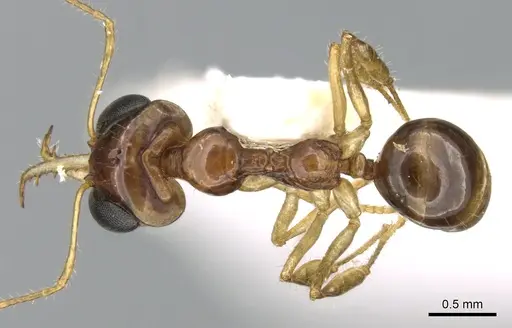
CASENT0911203
Ver no AntWeb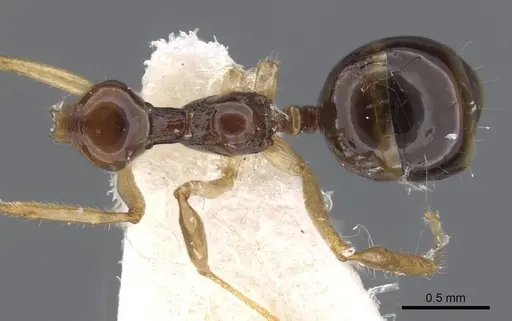
Literatura
Carregando mapa de distribuição...Carregando produtos...