
Myrmica rupestris
- Nome científico
- Myrmica rupestris
- Tribo
- Myrmicini
- Subfamília
- Myrmicinae
- Autor
- Forel, 1902
- Distribuição
- Encontrada em 2 países
Introdução
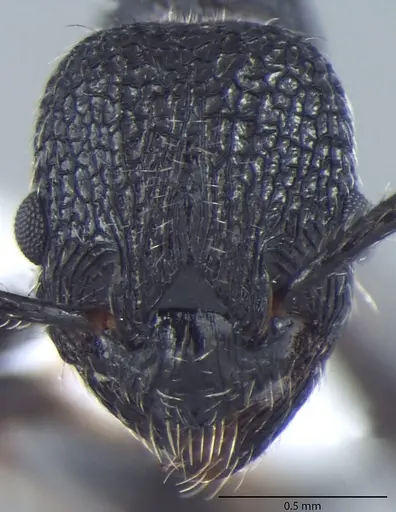
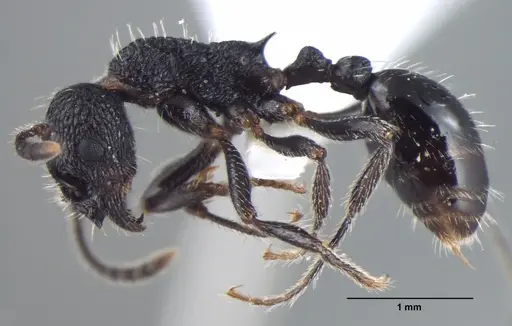
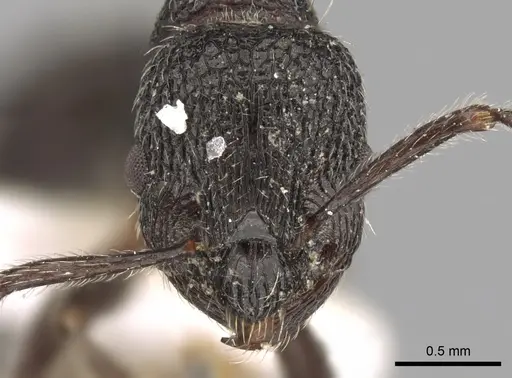
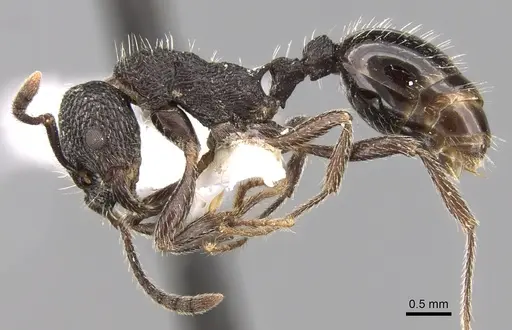
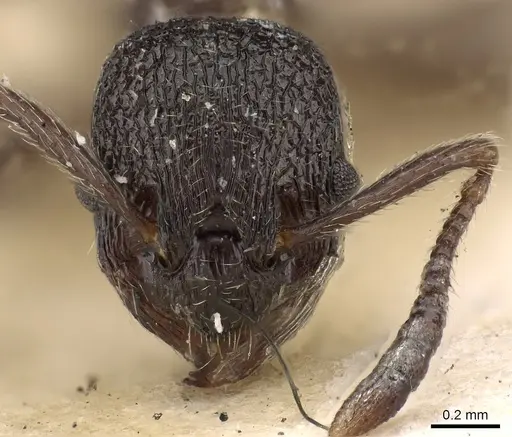
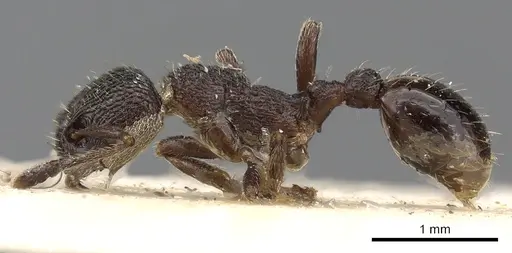
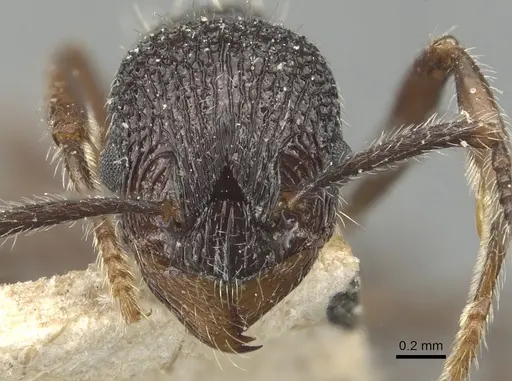
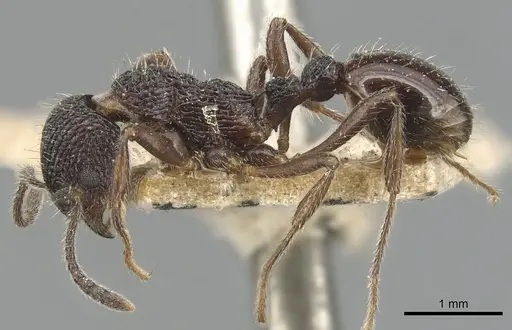
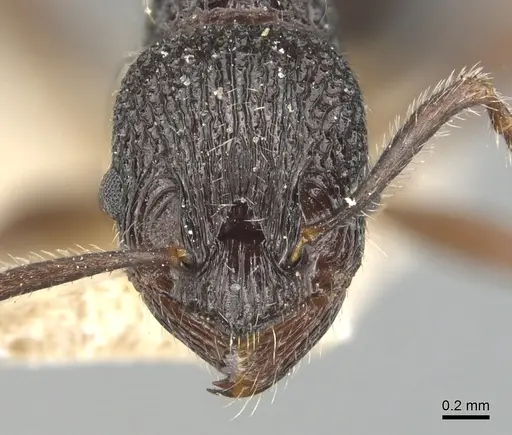
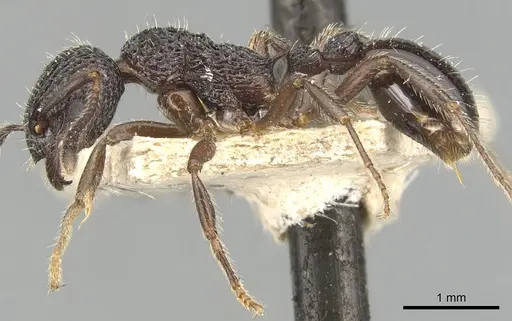
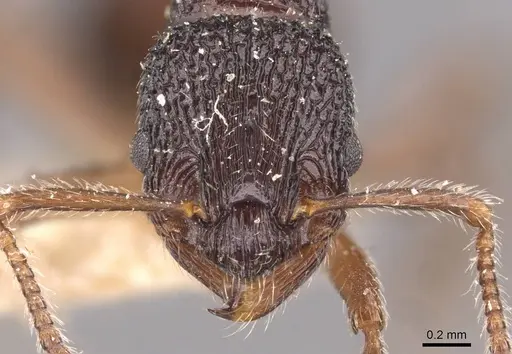
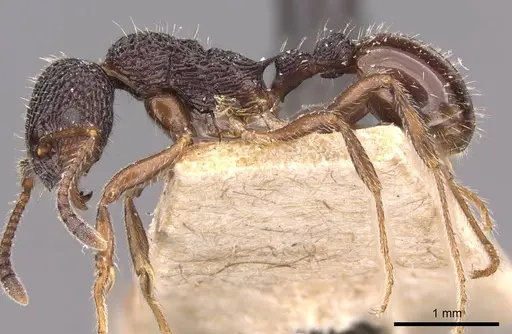
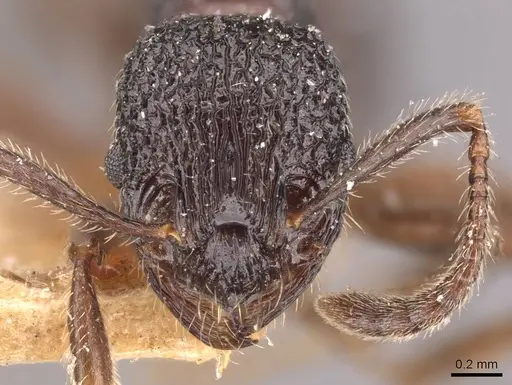
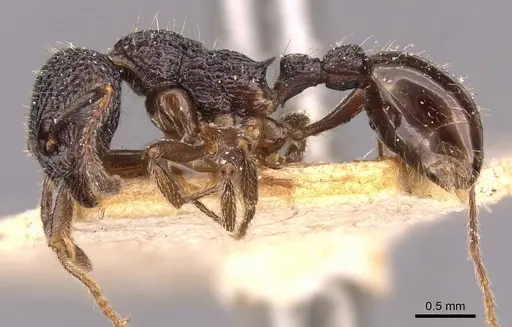
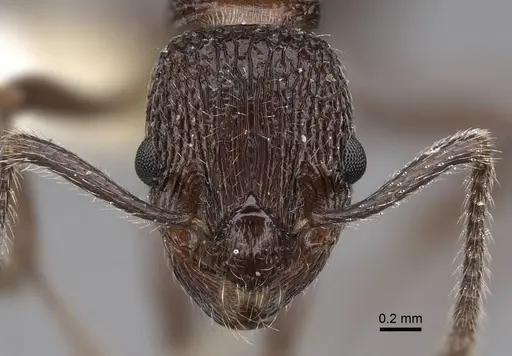
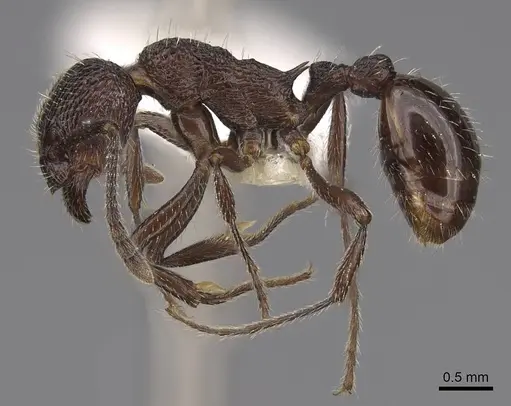
Myrmica rupestris is a small ant species belonging to the rugosa species group, native to the Himalayan region. Workers are reddish-brown with coarse sculpture on the petiole and postpetiole that distinguishes them from related species. This species is found across high altitudes of India, Nepal, Bhutan, and northeastern Afghanistan, typically nesting in soil under stones in open forests between 2100-4100m elevation . A notable aspect of this species is its role as a host to the social parasite Myrmica nefaria .
Quick Summary
- Difficulty: Medium
- Origin & Habitat: Himalayan region (India, Nepal, Bhutan, NE Afghanistan, China) at altitudes of 1341-4084m. Nests are built in soil, often under stones, in open deciduous and mixed forests and areas with steppe-like vegetation [5].
- Colony Type: Colony structure is unconfirmed. This species serves as a host for the social parasite Myrmica nefaria [3].
- Size & Growth:
- Queen: Size data unavailable, inferred from Myrmica genus (~5-7mm)
- Worker: Size data unavailable, inferred from Myrmica genus (~4-6mm)
- Colony: Maximum colony size unconfirmed
- Growth: Moderate
- Development: Approximately 6-10 weeks based on related Myrmica species [6] (Development occurs faster during warmer summer months when colonies are most active)
- Antkeeping:
- Temperature: Keep at 20-26°C during active season. This species tolerates 8-36°C in the wild but prefers moderate temperatures. A thermal gradient allows workers to regulate body temperature [5]
- Humidity: Moderate to high, aim for 60-80% relative humidity. In their natural habitat, humidity ranges from 63% in drier areas to 85% in wetter grasslands. Keep the nest substrate consistently moist but not waterlogged [5]
- Diapause: Yes, this species is adapted to high-altitude seasonal conditions. Reduce temperatures to 10-15°C for 2-3 months during winter, simulating natural hibernation conditions [5]
- Nesting: Prefers soil nests with stone coverage. In captivity, a naturalistic setup with a soil layer and flat stones on top works well, or a Y-tong/plaster nest with moisture chambers. They prefer moderate chamber sizes scaled to their worker size [5]
- Behavior: Workers are active foragers that search for food both on the ground surface and under stones. They are opportunistic feeders, accepting protein sources like small insects and sweet liquids. Workers have a functional stinger but rarely sting unless directly threatened. Due to their small size, escape prevention is important, use fine mesh barriers. They show increased activity during warmer months and reduce activity during winter diapause.
- Common Issues: high-altitude species may struggle in warm, dry indoor environments without proper humidity control, colonies may fail if temperatures exceed 30°C for prolonged periods, as a host species, watch for social parasites if kept near other Myrmica colonies, slow colony growth compared to tropical species may frustrate beginners, test tube setups may dry out too quickly, monitor moisture levels regularly
Natural History and Distribution
Myrmica rupestris is endemic to the Himalayan region, found across parts of India (Himachal Pradesh, Jammu & Kashmir, Sikkim, West Bengal, Arunachal Pradesh), Nepal, Bhutan, and northeastern Afghanistan and China [7][2]. This is a high-altitude species, typically collected between 2100-3500m elevation, though specimens have been recorded from 1341m up to 4084m [1][5]. They build nests in soil, often under stones, in diverse habitats including open deciduous forests, mixed forests, and areas with steppe-like vegetation. In the northwestern Himalayas, they inhabit subtemperate forests with scattered cedar, oak, and broad-leaved trees, sometimes in areas near apple orchards. In the northeastern Himalayas, they nest in grasslands with dense ground vegetation, typically in wet soil conditions [5]. The species belongs to the Myrmica rugosa species group, characterized by their coarse body sculpture [8].
Role as Host Species
Myrmica rupestris serves as a known host for the social parasite Myrmica nefaria, a recently described species from the Himalayan region [3][4]. This parasitic ant invades M. rupestris colonies and exploits the host's workers to raise its own brood. The relationship represents typical Myrmica social parasitism, where the parasite queen infiltrates the host colony, kills or replaces the host queen, and uses the host workforce to raise her offspring. If you keep multiple Myrmica species, ensure proper separation to prevent accidental parasite introduction. This host-parasite relationship is one reason why M. rupestris has been extensively studied in Himalayan ant surveys [3].
Temperature and Seasonal Care
Myrmica rupestris is adapted to the variable temperature conditions of high-altitude Himalayas, where summer temperatures range from 8-36°C and winter temperatures range from 3-27°C [5]. In captivity, aim for a comfortable range of 20-26°C during the active season. They can tolerate brief temperature spikes but should not be kept consistently above 30°C. A thermal gradient within the nest allows workers to regulate their body temperature by moving between warmer and cooler areas. During winter, this species requires a diapause period, reduce temperatures to 10-15°C for 2-3 months to simulate natural hibernation conditions. This winter rest is essential for colony health and reproductive success. Queens and males have been found in nests from the end of May to the end of June, indicating the species breeds during the warmer months [5].
Nesting and Habitat Setup
In the wild, M. rupestris nests in soil, typically under stones that provide protection and help maintain moisture [5]. For captive care, a naturalistic setup works well, a soil-based formicarium with flat stones placed on the surface allows the ants to nest underneath. Alternatively, Y-tong or plaster nests with appropriately sized chambers work well. The nest should have a water reservoir or moisture chamber to maintain humidity. Keep the substrate consistently moist but avoid waterlogging, which can drown brood. The species prefers moderate chamber sizes, too large and they may not utilize the space efficiently. Ensure the nest has good ventilation to prevent mold while maintaining humidity levels of 60-80%.
Feeding and Nutrition
As an opportunistic forager typical of the Myrmica genus, M. rupestris accepts a varied diet. They primarily hunt small invertebrates and insects for protein, and also collect honeydew from aphids and sweet secretions. In captivity, offer protein sources such as small crickets, mealworms, fruit flies, and other appropriately sized insects. Sugar water, honey, or diluted syrup can be offered as an energy source. Feed protein prey 2-3 times per week, and keep a constant sugar source available. Remove uneaten prey after 24-48 hours to prevent mold. Workers forage both on the ground surface and under stones in the wild, so food can be offered in the outworld where they can easily discover it [5].
Colony Development and Growth
Myrmica rupestris colonies follow typical Myrmica development patterns. The first workers (nanitics) are typically smaller than mature workers and emerge within 6-10 weeks under optimal conditions, based on related species in the rugosa group [6]. Colonies grow gradually over several years. Alates (reproductives) are produced seasonally, in the northwestern Himalayas, they are collected from June to early August, while in the northeastern Himalayas, they appear from September to October [5]. This seasonal variation suggests the timing of reproductive development depends on local climate conditions.
Frequently Asked Questions
Is Myrmica rupestris a good species for beginners?
Myrmica rupestris is rated as medium difficulty. While not as challenging as some exotic tropical species, they do require attention to temperature and humidity. They are not as forgiving as common temperate species like Lasius niger. Beginners should be prepared to provide proper winter diapause and maintain appropriate humidity levels. The main challenges are their need for a hibernation period and sensitivity to overheating.
Do Myrmica rupestris ants sting?
Yes, Myrmica ants have a functional stinger. However, their sting is mild and rarely penetrates human skin significantly. Most keepers report minimal discomfort if stung. They are not aggressive and typically only sting when directly threatened or handled roughly.
What temperature range is best for Myrmica rupestris?
Keep the nest at 20-26°C during the active season. This species can tolerate temperatures from 8-36°C in the wild, but optimal growth occurs in the moderate range. During winter diapause, reduce temperatures to 10-15°C for 2-3 months. Avoid temperatures above 30°C for extended periods.
How long does it take for Myrmica rupestris to produce first workers?
Based on related Myrmica species in the rugosa group, expect first workers (nanitics) to emerge approximately 6-10 weeks after the queen lays eggs, assuming optimal temperatures around 24°C. Development is temperature-dependent, cooler temperatures will slow growth.
Do Myrmica rupestris need hibernation?
Yes, this species requires a winter diapause period. In their natural high-altitude habitat, temperatures drop significantly during winter. In captivity, provide 2-3 months of reduced temperatures (10-15°C) during the winter months to maintain natural colony cycles and support healthy reproduction.
What do Myrmica rupestris eat?
They are opportunistic feeders that accept protein prey (small insects like crickets, mealworms, fruit flies) and sugar sources (honey water, sugar water, syrup). Feed protein 2-3 times per week and keep a constant sugar source available. Remove uneaten prey after 24-48 hours.
Can I keep multiple Myrmica rupestris queens together?
Colony structure is unconfirmed for this species. While some Myrmica species can be polygynous, combining unrelated queens is not recommended as they likely will fight. If you obtain a wild colony, it will typically contain one founding queen.
How big do Myrmica rupestris colonies get?
Maximum colony size is unconfirmed. Growth is moderate, expect several years to reach maximum colony size. Colonies produce alates (reproductives) seasonally, typically in late summer or early fall depending on local conditions.
What humidity level do Myrmica rupestris need?
Maintain 60-80% relative humidity. In their natural habitat, humidity ranges from 63% in drier areas to 85% in wetter grasslands. Keep the nest substrate consistently moist but not waterlogged. A moisture chamber or water reservoir in the nest helps maintain stable humidity.
What makes Myrmica rupestris different from other Myrmica species?
M. rupestris is distinguished by its high-altitude Himalayan distribution, membership in the rugosa species group (with coarse sculpture on petiole and postpetiole), and its role as a host for the social parasite Myrmica nefaria. It is one of the few Myrmica species endemic to the Himalayan region rather than Europe or North America.
Report an Issue
The current care sheet is based fully on literature. See inconsistencies, or something that's incorrect? Please , it will be resolved after review from an admin. Contributing to the blogs tab also helps providing information, to make us be able to further improve the caresheets. Thank you for your support!
References

Este guia de cuidados está sob a licença CC BY-SA 4.0 .
Posts da comunidade
ANTWEB1008044
Ver no AntWeb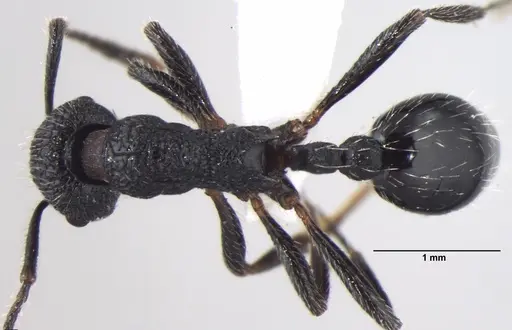
CASENT0280839
Ver no AntWeb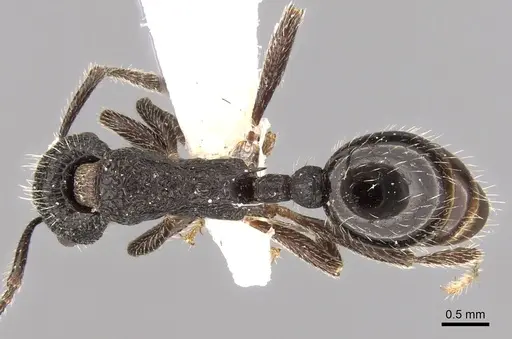
CASENT0900340
Ver no AntWeb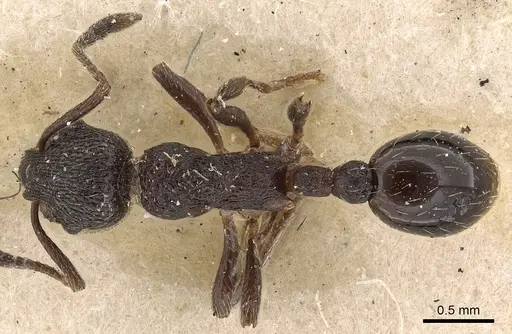
CASENT0904091
Ver no AntWeb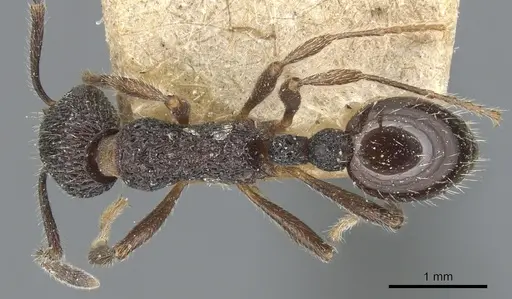
CASENT0904095
Ver no AntWeb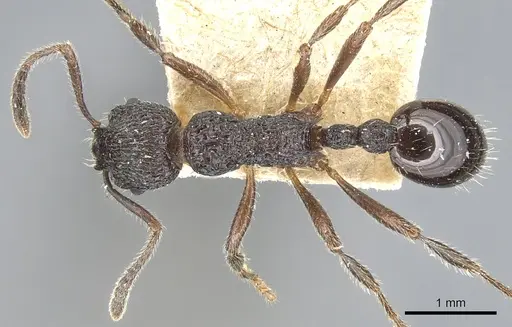
CASENT0907650
Ver no AntWeb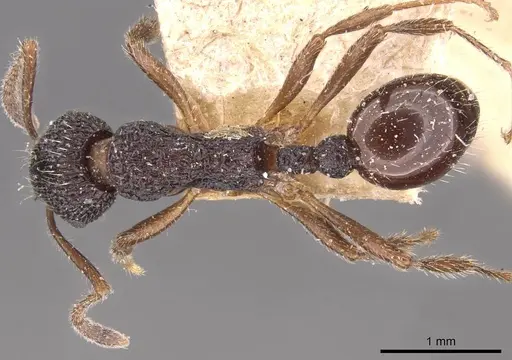
CASENT0907659
Ver no AntWeb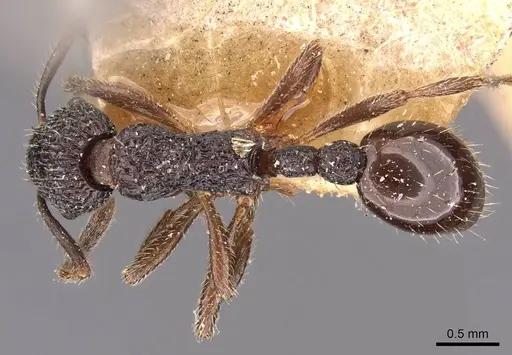
CASENT0922786
Ver no AntWeb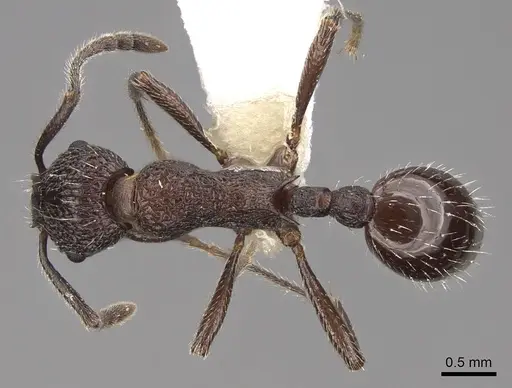
Literatura
Carregando mapa de distribuição...Carregando produtos...