
Myrmecina modesta
- Nome científico
- Myrmecina modesta
- Tribo
- Crematogastrini
- Subfamília
- Myrmicinae
- Autor
- Mann, 1919
- Distribuição
- Encontrada em 1 países
Introdução
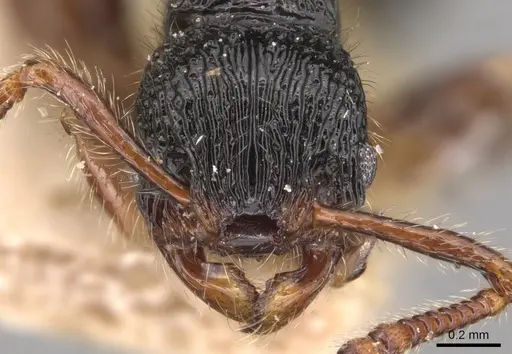
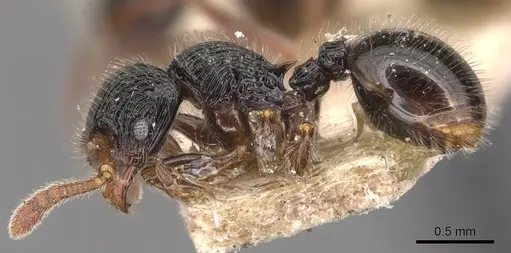
Myrmecina modesta is a tiny ant species native to the Solomon Islands archipelago in the Pacific. Workers measure 2.50-2.75mm in total length, making them a small but distinctive species . They have a black body with brownish-red mandibles, antennae, and legs. The head and thorax feature coarse striations, giving them a somewhat shiny texture . This species nests in small colonies beneath stones across multiple islands including Makira, Guadalcanal, Malaita, Santa Isabel, Three Sisters, Ugi, San Cristoval, Ysabel, and Santa Cruz Islands . Workers are slow-moving and peaceful, with no painful sting.
Quick Summary
- Difficulty: Easy
- Origin & Habitat: Solomon Islands archipelago in the Pacific Ocean. Found on islands including Makira, Guadalcanal, Malaita, Santa Isabel, Three Sisters, Ugi, San Cristoval, Ysabel, and Santa Cruz Islands [3][1]. Natural habitat is under stones in small colonies.
- Colony Type: Small colony structure. Colony type (single or multiple queen) is unconfirmed in scientific literature.
- Size & Growth:
- Queen: Size data unavailable, queen measurements have not been documented
- Worker: 2.50-2.75mm [1]
- Colony: Small colonies, exact maximum size unconfirmed
- Growth: Moderate, small species develop gradually
- Development: Development time unconfirmed (As a tropical species, development likely continues year-round at warm temperatures)
- Antkeeping:
- Temperature: Keep at 24-28°C. As a tropical Solomon Islands species, they need warm conditions year-round.
- Humidity: Moderate humidity. Keep nest substrate slightly moist but not waterlogged. These ants naturally live under stones in humid forest environments.
- Diapause: No, this is a tropical species from the Solomon Islands and does not require hibernation. Maintain warm temperatures year-round.
- Nesting: Y-tong (AAC) nests or plaster nests work well. Provide tight chambers scaled to their tiny size. They naturally nest under stones, so a naturalistic setup with a flat stone or slate as a cover can mimic their natural environment. Keep nesting area dark and undisturbed.
- Behavior: Myrmecina modesta is a peaceful, non-aggressive species. Workers are slow-moving and not particularly defensive. They do not have a painful sting, this species belongs to Myrmicinae which typically use a smear defense (wiping venom onto enemies rather than piercing). Escape prevention is important due to their very small size, use fine mesh and tight-fitting lids.
- Common Issues: escape prevention is critical due to very small worker size, they can squeeze through standard barrier gaps, small colony size means slow growth, patience is required, wild-caught colonies may be stressed from collection and transport, overheating is a risk, keep away from direct sunlight and excessive heat sources, disturbance during founding, queens need dark, quiet conditions to establish successfully
Housing and Nest Setup
Myrmecina modesta is a tiny ant that requires appropriately scaled housing. A Y-tong (AAC) nest with narrow chambers works well, as does a plaster nest with tight passages. The chambers should be sized to the worker size of 2.5-2.75mm, avoid tall, open spaces that would make them feel exposed. In the wild, they nest under stones, so a naturalistic setup with a flat stone or slate covering a portion of the setup can mimic their natural environment. Keep the nesting area dark and avoid frequent disturbances, especially during founding. An outworld area of about 10x10cm is sufficient for foraging space. [2]
Feeding and Diet
Like most Myrmecina species, M. modesta is an omnivore that feeds on small insects, honeydew, and plant secretions. In captivity, offer sugar water or honey as a constant energy source. For protein, provide small prey items such as fruit flies, pinhead crickets, or small mealworms. Given their tiny size, prey items should be appropriately scaled, wingless fruit flies or small springtails are ideal. Feed protein 2-3 times per week, and remove any uneaten prey after 24 hours to prevent mold.
Temperature and Seasonal Care
As a tropical species from the Solomon Islands, Myrmecina modesta requires warm temperatures year-round. Maintain nest temperatures between 24-28°C. A small heating cable placed on one side of the nest can create a gentle thermal gradient, allowing workers to regulate their temperature by moving between warmer and cooler areas. Avoid placing the nest in direct sunlight or near heat sources that could cause overheating. Since this species does not come from a seasonal climate, they do not require hibernation or diapause. Maintain consistent warm conditions throughout the year to support continuous brood development. [3]
Colony Establishment
When establishing a new colony, provide the queen with a small, dark chamber that she can seal herself into. A test tube setup with a cotton barrier and a small dark cover works well for founding colonies. Keep the founding setup in a quiet, dark location and avoid vibrations or disturbances. The queen will lay eggs and raise the first workers (nanitics) entirely on her own. Once the first workers emerge, you can gradually introduce them to a larger nest setup. Growth is gradual, expect several months before you see significant colony growth. Patience is key with this species.
Behavior and Temperament
Myrmecina modesta is a peaceful, non-aggressive species that makes an excellent choice for antkeepers who prefer calm colonies. Workers are relatively slow-moving and spend much of their time foraging modestly near the nest. They do not possess a painful sting. This species belongs to the subfamily Myrmicinae and tribe Crematogastrini, which typically use a smear defense mechanism, wiping venom onto enemies rather than piercing flesh. The colony will likely form modest foraging trails rather than aggressive swarms. [1]
Frequently Asked Questions
How long does it take for Myrmecina modesta to produce first workers?
Development time is unconfirmed for this specific species. Expect several months for the first workers to emerge, as specific development timing has not been documented.
Can I keep Myrmecina modesta in a test tube?
Yes, test tubes work well for founding colonies. Use a small test tube with a cotton barrier and keep it dark and undisturbed. Once the colony reaches 20-30 workers, consider moving to a small Y-tong or plaster nest.
Do Myrmecina modesta ants sting?
No, this species is not known for stinging. They are peaceful and non-aggressive. Like other Myrmicinae in the Crematogastrini tribe, they may use a smear defense to wipe venom onto threats rather than stinging.
What do Myrmecina modesta eat?
They are omnivores. Offer sugar water or honey as a constant energy source, and small protein sources like fruit flies, pinhead crickets, or small mealworms 2-3 times per week.
Are Myrmecina modesta good for beginners?
Yes, they are considered an easy species to keep. They are peaceful, do not require hibernation, and have modest care requirements. The main challenges are their very small size (requiring good escape prevention) and gradual growth.
How big do Myrmecina modesta colonies get?
Colonies are naturally small. Exact maximum colony size is unconfirmed in scientific literature, but they are not known to form large colonies.
Do Myrmecina modesta need hibernation?
No, they are a tropical species from the Solomon Islands and do not require hibernation. Keep them warm year-round at 24-28°C.
When should I move Myrmecina modesta to a formicarium?
Move them when the test tube setup becomes crowded, typically around 20-40 workers. Use a small formicarium with appropriately sized chambers for their tiny workers.
Why are my Myrmecina modesta dying?
Common causes include: escape due to small size, overheating from direct sunlight or heat sources, disturbance during founding, or stress from wild collection. Ensure proper escape prevention, keep at stable warm temperatures, and minimize disturbances.
Can I keep multiple Myrmecina modesta queens together?
Not recommended. There is no documented evidence of polygyny in this species, and combining unrelated queens has not been studied. Stick to single-queen colonies.
Report an Issue
The current care sheet is based fully on literature. See inconsistencies, or something that's incorrect? Please , it will be resolved after review from an admin. Contributing to the blogs tab also helps providing information, to make us be able to further improve the caresheets. Thank you for your support!
References

Este guia de cuidados está sob a licença CC BY-SA 4.0 .
Posts da comunidade
CASENT0904690
Ver no AntWeb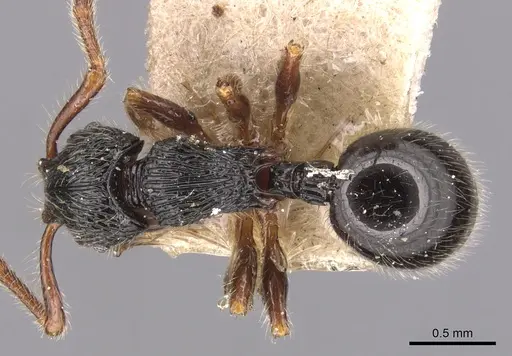
Literatura
Carregando mapa de distribuição...Carregando produtos...