
Myopias nops
- Nome científico
- Myopias nops
- Tribo
- Ponerini
- Subfamília
- Ponerinae
- Autor
- Willey & Brown, 1983
- Distribuição
- Encontrada em 0 países
Introdução
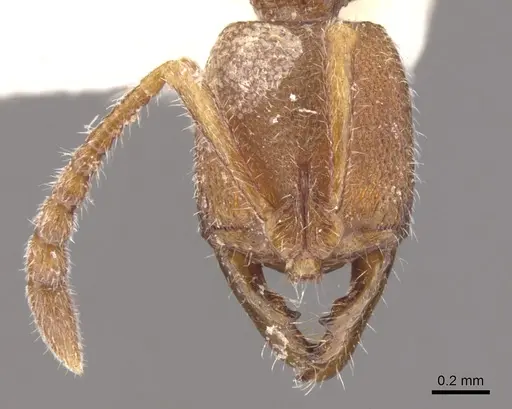
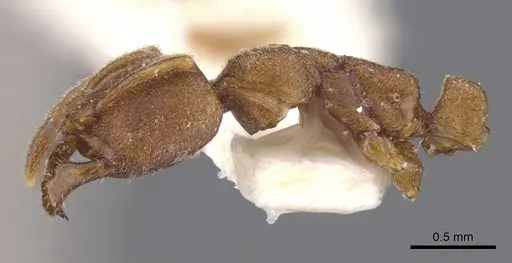
Myopias nops is a small, pale yellowish ant native to Taiwan, belonging to the subfamily Ponerinae. Workers measure approximately 4.4mm in total length and are completely blind with no visible eyes - fitting for a species whose name 'nops' comes from the Greek word for blind. They have short, stout mandibles and a thick, tapered petiolar node. The body is dull and lightly pigmented, with dense reticulate-punctulate sculpture giving them an opaque appearance. This species is extremely cryptic and represents one of the least-studied ants in the Ponerinae subfamily, with virtually no documented observations of its biology in the wild.
Quick Summary
- Difficulty: Expert
- Origin & Habitat: Endemic to Taiwan, specifically recorded from the southwestern Taipei region (approximately 24°44'N,121°26'E). The natural habitat is unconfirmed, but based on related species, they likely inhabit soil or rotting wood in forested areas [1].
- Colony Type: Colony structure is unconfirmed. No queen caste has been described in the scientific literature.
- Size & Growth:
- Antkeeping:
- Temperature: Unknown for this species. Based on related Ponerine ants and its Taiwan distribution, aim for roughly 22-26°C with a gentle gradient. Monitor colony activity and adjust accordingly.
- Humidity: Unknown. Given its likely soil or rotting wood nesting habits, provide consistently moist substrate, damp but not waterlogged. Include slightly drier areas for the ants to choose.
- Diapause: Unknown. Taiwan has a mild climate, so a reduced activity period during cooler months may be appropriate, but this is unconfirmed.
- Nesting: No specific nesting data exists. Based on the AntWiki note that it is probably a cryptic species living in soil or rotting wood, a naturalistic setup with moist substrate or a Y-tong/plaster nest with narrow chambers would be appropriate. Keep the nest humid and dark.
- Behavior: Nothing is documented about this species' behavior in captivity. As a Ponerine, they are predatory with a stinger, though the sting of such small ants is rarely felt by humans. Their completely blind workers suggest they rely on chemical and tactile cues. Escape risk is moderate given their 4+mm size, but standard barriers should suffice. Keep handling to a minimum as Ponerines can be defensive when threatened.
- Common Issues: lack of biological data makes captive care largely speculative, no confirmed diet acceptance, must experiment with live prey, colony may fail due to incorrect humidity if substrate conditions are wrong, completely blind workers may have unusual foraging behaviors requiring special setup, no information on founding behavior makes introducing new queens risky
Species Overview and Identification
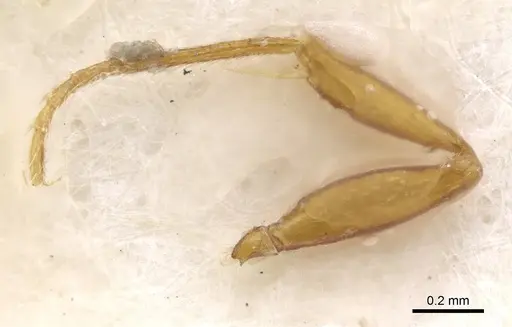
Myopias nops is a rare Ponerine ant described from Taiwan in 1983 by Willey and Brown. The type series consists of only three damaged worker specimens collected in 1933,making this one of the most poorly known ant species in captivity. Workers are small at 4.4mm total length, with a dull yellowish-brown coloration and completely absent eyes, the most distinctive feature. The head, trunk, and petiole have dense reticulate-punctulate sculpture that appears opaque. Mandibles are short and stout, adapted for predatory feeding. The name 'nops' literally means blind in Greek, referencing the complete absence of eyes. This species has never been found again since the original collection, making any captive specimens extremely valuable for scientific study [1][2][3].
Natural History and Distribution
This species is known only from Taiwan, specifically from the southwestern Taipei region (Rarasan/La La Shan area at 24°44'N,121°26'E). No observations of living colonies exist in scientific literature. The AntWiki entry notes this is a cryptic-foraging form, probably living in the soil or in rotten wood. A related undescribed species has been found in Borneo, suggesting the genus Myopias prefers humid, forested environments. Nothing is known about their diet, predators, nuptial flight timing, or seasonal behavior in the wild. This represents a significant knowledge gap in ant biology [1].
Housing and Nesting Recommendations
Since no natural nesting data exists, you must make educated guesses based on related Ponerines. A naturalistic setup with moist soil or a Y-tong/plaster nest with narrow chambers works well for cryptic soil-nesting ants. Keep the nest humid and dark, these blind ants will likely avoid light. The nest material should remain damp but not waterlogged, with some variation in moisture levels across the setup. A test tube setup can work for founding colonies if kept humid, but a more naturalistic approach may better suit their likely natural behaviors. Provide a darkness cover to reduce stress on light-sensitive workers.
Feeding and Diet
No documented feeding observations exist for this species. As a Ponerine ant, they are almost certainly predatory, likely hunting small invertebrates like springtails, mites, and other micro-arthropods in the soil. Start by offering live springtails and small fruit flies. Other micro-prey like frozen bloodworms, small mealworms, or pinhead crickets may be accepted. Do not rely on sugar sources, Ponerines are primarily protein predators. Remove uneaten prey within 24-48 hours to prevent mold. Feed small amounts frequently rather than large prey items that may go uneaten.
Temperature and Seasonal Care
No temperature data exists for this species. Taiwan has a subtropical climate with warm temperatures year-round, so aim for roughly 22-26°C as a starting point. Use a heating cable on one side of the nest to create a gentle gradient, allowing the ants to self-regulate. Observe colony behavior, if workers cluster near the heat, increase slightly, if they avoid it, reduce. Since nothing is known about diapause or winter behavior, do not force hibernation. Instead, maintain stable temperatures year-round and reduce feeding slightly during cooler months if colony activity decreases.
Challenges and Ethical Considerations
This species presents extreme challenges due to almost complete lack of biological data. Captive colonies may behave differently than expected since no one has documented their care before. If you obtain this species, detailed observations of your colony's behavior would be scientifically valuable. Consider joining antkeeping communities to share findings. Also note: this species is extremely rare in the hobby and may have legal protections in Taiwan. Ensure your source is legitimate and ethical. Do not release any specimens in non-native areas, this applies to all exotic ants.
Frequently Asked Questions
How do I keep Myopias nops ants?
This is extremely challenging since no captive care information exists. Provide a humid, dark nest (Y-tong or naturalistic setup), maintain temperatures around 22-26°C, and offer live small prey like springtails. Expect trial and error.
What do Myopias nops eat?
Unknown, but as a Ponerine they are likely predatory. Start with live springtails and small fruit flies. Remove uneaten prey promptly.
Are Myopias nops good for beginners?
No. This is an expert-level species due to almost no biological data existing. Only experienced antkeepers should attempt this species.
How big do Myopias nops colonies get?
Unknown. No colony size data exists for this species.
Can I keep multiple Myopias nops queens together?
Unknown. No data exists on colony structure or queen behavior. Do not attempt combining unrelated queens.
How long does it take for Myopias nops to produce first workers?
Unknown. No development data exists. Based on related Ponerines, expect 6-12 weeks at optimal temperature.
Do Myopias nops need hibernation?
Unknown. Taiwan has mild winters, so a true hibernation may not be necessary. Maintain stable temperatures year-round.
Why are my Myopias nops dying?
Without any established care parameters, mortality causes are speculative. Check humidity (avoid both dry and waterlogged), temperature stability, and prey acceptance. Consider that this species may have specific, unknown requirements.
Where does Myopias nops come from?
This species is endemic to Taiwan, specifically the southwestern Taipei region. It has never been found outside this limited area.
Report an Issue
The current care sheet is based fully on literature. See inconsistencies, or something that's incorrect? Please , it will be resolved after review from an admin. Contributing to the blogs tab also helps providing information, to make us be able to further improve the caresheets. Thank you for your support!
References

Este guia de cuidados está sob a licença CC BY-SA 4.0 .
Posts da comunidade
CASENT0902527
Ver no AntWeb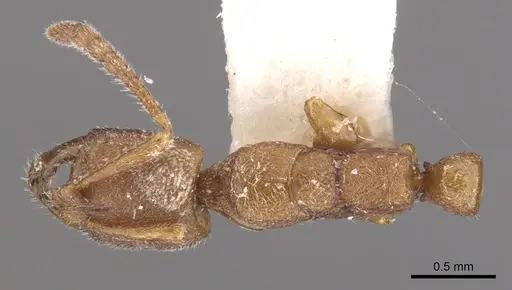
Literatura
Carregando mapa de distribuição...Carregando produtos...