
Monomorium pallidum
- Nome científico
- Monomorium pallidum
- Tribo
- Solenopsidini
- Subfamília
- Myrmicinae
- Autor
- Donisthorpe, 1918
- Distribuição
- Encontrada em 0 países
Introdução
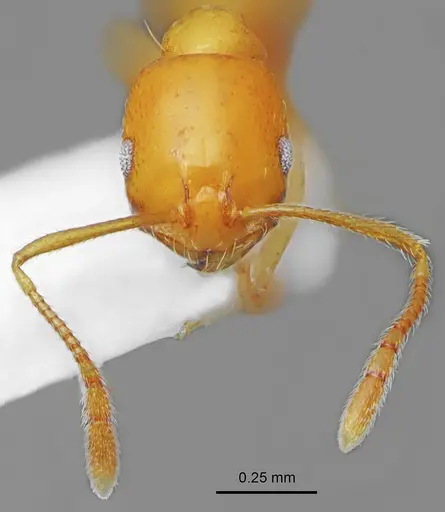
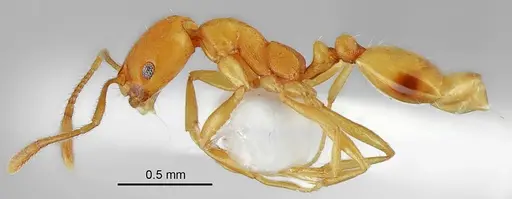
Monomorium pallidum is a tiny yellow ant species native to the Middle East, found in Iraq, Iran, Israel, and Afghanistan . Workers measure 2.2-2.4 mm in total length and have uniform yellow coloration with small brown patches on the rear of the abdomen . The head is slightly longer than wide, with 12-segmented antennae and a three-segmented club . Originally described as a variety of Monomorium destructor, it is now recognized as a distinct species in the Monomorium genus . It is closely related to Monomorium sarawatense and Monomorium holothir, distinguished by fine body sculpture and simple body hairs .
Quick Summary
- Difficulty: Medium
- Origin & Habitat: Middle East, Iraq, Iran, Israel, and Afghanistan in dry, hot areas with Irano-Turanian affinity [3][2].
- Colony Type: Colony structure is unconfirmed. Based on Monomorium genus patterns, likely single-queen colonies.
- Size & Growth:
- Queen: Size data unavailable, inferred from Monomorium genus as approximately 5-7 mm
- Worker: 2.2-2.4 mm [1]
- Colony: Unknown
- Growth: Moderate, inferred from genus patterns
- Development: Estimated 5-8 weeks at optimal temperature, inferred from related species (Development time is inferred as no direct study exists for this species)
- Antkeeping:
- Temperature: Keep warm at 24-28°C, based on Middle Eastern distribution [3].
- Humidity: Dry to moderate, keep nest substrate slightly moist but allow drying periods, as they inhabit dry areas [3].
- Diapause: Yes, likely a 2-3 month winter diapause at 10-15°C, typical for Irano-Turanian species [3].
- Nesting: Nesting preferences are unconfirmed. Use Y-tong, plaster, or soil nests with dry conditions, based on general antkeeping practice.
- Behavior: Workers are small and active, not particularly aggressive. Their stinger is present but too small to penetrate human skin. Escape risk is high due to tiny size, use fine mesh barriers and tight lids.
- Common Issues: tiny size makes escape likely without fine mesh barriers., overheating risk due to preference for warm conditions., colonies may fail if kept too humid, they prefer dry conditions., slow growth can lead to overfeeding by impatient keepers., wild-caught colonies may have parasites.
Housing and Nest Setup
Monomorium pallidum workers are tiny, so nest setup must prevent escapes. Use fine mesh barriers (at least 0.5 mm) and tight-fitting lids. Keep the nest warm at 24-28°C [3]. Nesting type is unconfirmed, but Y-tong, plaster, or soil nests are suitable for small species. The outworld should be simple with a textured bottom for grip. For founding colonies, a test tube setup works well.
Feeding and Diet
Like most Monomorium species, these ants are generalist feeders. Offer sugar water, honey, or diluted syrup as a constant energy source. For protein, provide small insects like fruit flies or pinhead crickets, scaled to their tiny size. Feed protein 2-3 times per week and keep sugar sources available at all times. Remove uneaten prey within 24-48 hours to prevent mold. [4]
Temperature and Seasonal Care
Monomorium pallidum comes from warm, dry areas, so keep the nest at 24-28°C for optimal activity [3]. A heating cable on one side creates a temperature gradient. During winter, they likely enter diapause for 2-3 months at 10-15°C [3]. Reduce feeding and moisture during diapause. If room temperature stays above 20°C year-round, diapause may be skipped, but colonies often develop better with a winter rest.
Behavior and Colony Dynamics
Workers are active foragers but not aggressive toward humans. Their stinger is too small to penetrate skin. Colonies likely grow moderately, starting with claustral founding where the queen seals herself in, but founding behavior is unconfirmed. First workers (nanitics) appear smaller than mature workers. These ants establish foraging trails and are not territorial. [1]
Growth and Development
Development from egg to worker is estimated at 5-8 weeks at optimal temperature, inferred from related Monomorium species. The queen lays eggs after mating and survives on stored fat during founding. Growth rate is moderate, so patience is key. A healthy colony should produce first workers within 2 months under warm conditions.
Frequently Asked Questions
How long does it take for Monomorium pallidum to produce first workers?
Based on related Monomorium species, expect first workers in 5-8 weeks at optimal temperature (25-28°C). The exact timeline varies with temperature [1].
What do Monomorium pallidum ants eat?
They accept sugar sources like honey or sugar water and small protein items like fruit flies or pinhead crickets, scaled to their tiny size [4].
Do Monomorium pallidum ants sting?
They have a stinger but due to their very small size (2.4 mm), it's unlikely to penetrate human skin [1].
What temperature do Monomorium pallidum ants need?
Keep them warm at 24-28°C, based on their Middle Eastern distribution [3].
Do Monomorium pallidum ants need hibernation?
Yes, likely a 2-3 month diapause at 10-15°C during winter, typical for Irano-Turanian species [3].
Are Monomorium pallidum ants good for beginners?
They are moderate difficulty. Their small size requires excellent escape prevention, and they have specific temperature needs. Not the easiest species but manageable for those with some experience.
How big do Monomorium pallidum colonies get?
Colony size is not well documented, so it is unknown.
Can I keep multiple Monomorium pallidum queens together?
Not recommended, combining unrelated queens has not been documented. Colony type is unconfirmed, but likely single-queen based on genus patterns.
What humidity level do Monomorium pallidum ants need?
Dry to moderate. Keep the nest slightly moist but allow drying periods, as they inhabit dry areas [3].
When should I move Monomorium pallidum to a formicarium?
Wait until the colony has a stable number of workers, but specific thresholds are unconfirmed. For small species, a test tube setup works well for founding, then move to a Y-tong or plaster nest.
Why are my Monomorium pallidum ants escaping?
Their tiny size (2.2-2.4 mm) means they can squeeze through small gaps. Use fine mesh (0.5 mm or smaller) and apply barriers to all surfaces [1].
What is the best nest type for Monomorium pallidum?
Y-tong, plaster, or soil nests work well, allowing humidity control and appropriate sizing for tiny workers. Keep nesting area dry [4].
Report an Issue
The current care sheet is based fully on literature. See inconsistencies, or something that's incorrect? Please , it will be resolved after review from an admin. Contributing to the blogs tab also helps providing information, to make us be able to further improve the caresheets. Thank you for your support!
References

Este guia de cuidados está sob a licença CC BY-SA 4.0 .
Posts da comunidade
CASENT0902219
Ver no AntWeb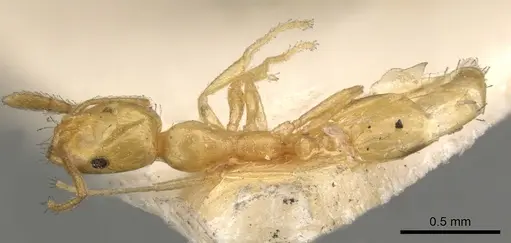
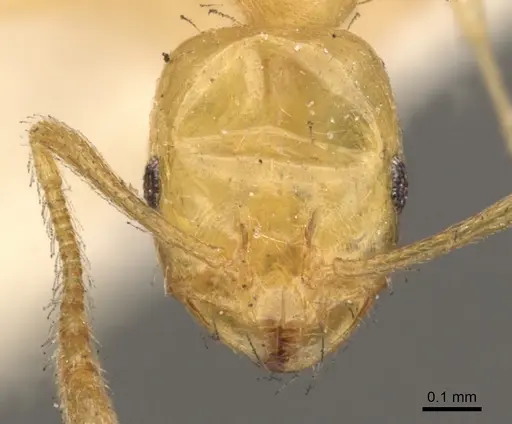
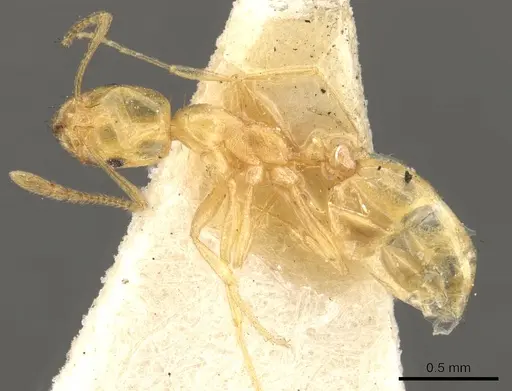
LBC-IR00135
Ver no AntWeb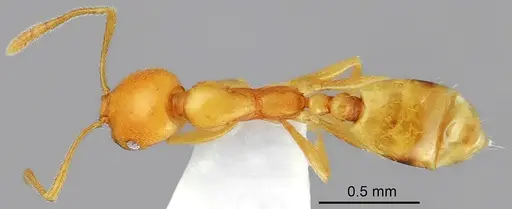
Literatura
Carregando mapa de distribuição...Carregando produtos...