
Monomorium opacum
- Nome científico
- Monomorium opacum
- Tribo
- Solenopsidini
- Subfamília
- Myrmicinae
- Autor
- Forel, 1913
- Distribuição
- Encontrada em 5 países
Introdução
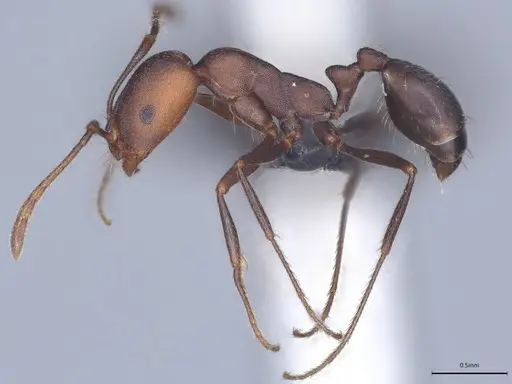
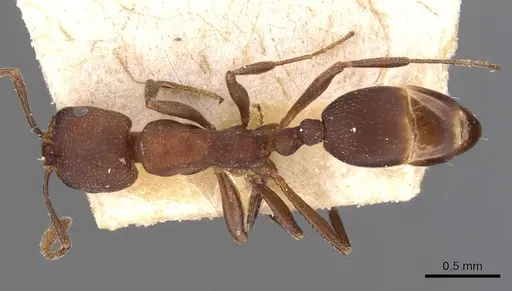
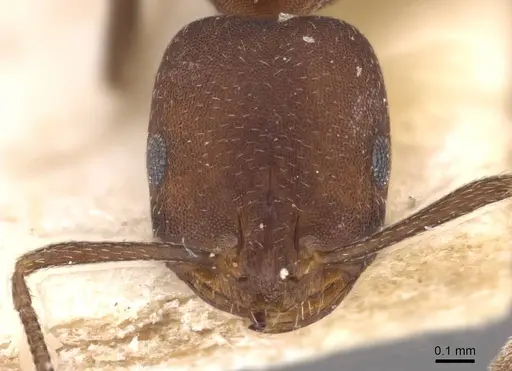
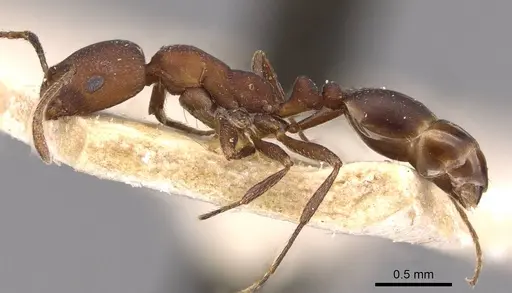
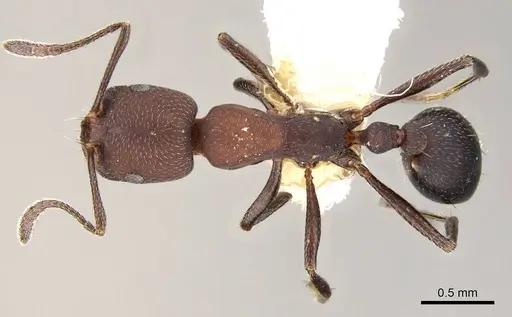
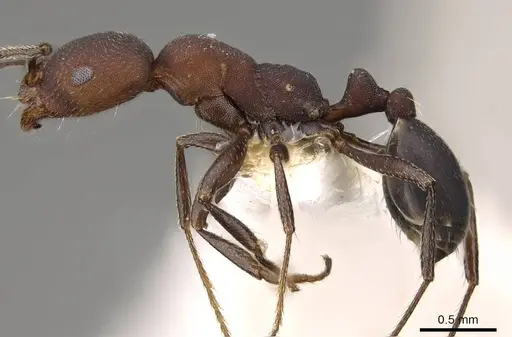
Monomorium opacum is a small, dark brown ant species native to the Afrotropical region. Workers measure 3.3-3.5mm in total length and are characterized by their dense, sharply defined reticulate-punctate sculpture and sparse pilosity . This species belongs to the Monomorium salomonis species group and is closely related to Monomorium subdentatum and Monomorium micropacum. Distribution includes the Democratic Republic of Congo, Uganda, Zambia, Zimbabwe, Angola, Malawi, Gambia, and recently recorded in Rwanda . In their natural habitat of miombo woodland and Combretum/Commiphora thickets, these ants nest in the ground or under stones.
Quick Summary
- Difficulty: Unknown, limited captive data available
- Origin & Habitat: Afrotropical region, Democratic Republic of Congo, Uganda, Zambia, Zimbabwe, Angola, Malawi, Gambia, Rwanda. Found in miombo woodland and Combretum/Commiphora thicket habitats [1][2][3].
- Colony Type: Colony structure is unconfirmed. Based on typical Monomorium patterns, likely single-queen colonies, but this has not been documented for this specific species.
- Size & Growth:
- Antkeeping:
- Temperature: Warm conditions (24-28°C) based on Afrotropical distribution. Provide a temperature gradient allowing workers to self-regulate.
- Humidity: Moderate to high humidity (50-70%) based on woodland/thicket habitat preferences. Keep substrate consistently moist but not waterlogged.
- Diapause: Unlikely, as a tropical species, does not require hibernation.
- Nesting: Ground-nesting species. In captivity, a test tube setup works well for founding colonies. For established colonies, a Y-tong or plaster nest with moist substrate mimics their natural woodland floor habitat. Provide some dry areas within the nest for workers to regulate moisture.
- Behavior: Monomorium opacum workers are small (3.3-3.5mm) and docile. They have a stinger but are too small to effectively penetrate human skin. Workers are excellent escape artists, use fine mesh barriers. Foraging style is likely opportunistic omnivorous. This species belongs to the Myrmicinae subfamily and uses sting as its primary defense mechanism, injecting venom composed of piperidine alkaloids.
- Common Issues: limited species-specific care information makes proper husbandry challenging, small worker size creates escape risk, use fine mesh and tight-fitting lids, tropical humidity requirements may cause mold issues if ventilation is poor, wild-caught colonies may carry parasites or diseases that can cause colony failure, colony size and growth rate are unconfirmed, proceed with patience
Nest Preferences and Housing
Monomorium opacum is a ground-nesting species that naturally inhabits woodland areas and thickets in tropical Africa. In captivity, you can start with a simple test tube setup for founding colonies. Once the colony reaches 20-30 workers, consider moving to a more permanent nest. A Y-tong or plaster nest works well for this species. Keep the nest substrate consistently moist but not waterlogged, these ants come from areas with moderate to high humidity. Provide a small water reservoir connected to the nest chamber to maintain moisture over time. Because workers are small (3.3-3.5mm), ensure your setup has no gaps larger than 1mm that could allow escapes. [1]
Feeding and Diet
While specific dietary studies for Monomorium opacum are lacking, Monomorium species are generally omnivorous and opportunistic feeders. In captivity, offer a varied diet including sugar sources (honey water, sugar water) and protein (small insects like fruit flies, pinhead crickets, or mealworms). They likely forage for honeydew and small arthropods in the wild. Feed small amounts of protein 2-3 times per week, removing any uneaten prey after 24 hours. Keep a constant supply of sugar water available. Fresh water should always be accessible.
Temperature and Environmental Conditions
As a species from tropical Africa, Monomorium opacum requires warm conditions. Maintain nest temperatures around 24-28°C, with a slight gradient allowing workers to move between warmer and cooler areas. A heating cable or mat placed on one side of the nest can provide additional warmth if your room temperature is below this range. Avoid placing heating directly under water reservoirs as this can cause excessive condensation. Room temperature in the low-to-mid 20s°C is often suitable. Monitor colony behavior, if workers consistently cluster near the heat source, increase temperature slightly, if they avoid heated areas, reduce heat. Unlike temperate species, this ant does not require a winter diapause period. [1]
Colony Establishment and Growth
The founding behavior of Monomorium opacum has not been directly documented. Expect the first nanitic (first-generation) workers to appear smaller than normal workers. Colony growth rate is unconfirmed for this species. The transition from founding colony to established colony may take 6-12 months. Be patient with this species, as specific growth data is not available. Avoid disturbing the queen during the founding phase, excessive vibrations or light can cause her to abandon or eat her brood.
Defense Mechanism
Monomorium opacum belongs to the Myrmicinae subfamily and the Solenopsidini tribe. Like other species in this group, they use sting as their primary defense mechanism. The venom is composed mostly of piperidine alkaloids, which they use to hunt prey and defend the colony. Workers are small (3.3-3.5mm) and their sting is not effective against human skin.
Frequently Asked Questions
How long does it take for Monomorium opacum to produce first workers?
The exact timeline is unconfirmed for this species. Based on related Monomorium species, expect several weeks from egg to worker at optimal temperature (24-28°C). The first workers (nanitics) will be smaller than normal workers.
What do Monomorium opacum ants eat?
While not specifically studied, Monomorium species are omnivorous. Feed them small insects (fruit flies, pinhead crickets, small mealworms) for protein 2-3 times per week, and keep a constant supply of sugar water or honey water available. They also need access to fresh water.
What temperature do Monomorium opacum ants need?
As a tropical African species, keep them warm at 24-28°C. A temperature gradient is ideal so workers can self-regulate. Room temperature in the low-to-mid 20s°C is often suitable. They do not require hibernation.
Are Monomorium opacum ants good for beginners?
This species is not well-documented in the antkeeping hobby, and limited species-specific care information is available. It may be challenging to keep due to the lack of captive breeding data. If you are new to antkeeping, consider starting with more established species like Lasius niger or Messor barbarus.
How big do Monomorium opacum colonies get?
Colony size is unconfirmed for this species. No documented maximum colony size data is available.
Can I keep multiple Monomorium opacum queens together?
The colony structure of this species has not been documented. Combining unrelated queens is not recommended as Monomorium species typically establish single-queen colonies. Multiple foundress queens may fight or stress each other, leading to colony failure.
What humidity level do Monomorium opacum ants need?
Based on their woodland and thicket habitat, aim for moderate to high humidity (50-70%). Keep the nest substrate consistently moist but not waterlogged. Provide some drier areas within the nest so workers can self-regulate.
When should I move Monomorium opacum to a formicarium?
Keep them in a test tube setup for the founding stage (until you have 20-30+ workers). Once the colony outgrows the test tube or you see workers spending significant time outside the tube, transfer to a formicarium or larger nest setup.
Why are my Monomorium opacum ants escaping?
Workers are very small (3.3-3.5mm) and can squeeze through tiny gaps. Use fine mesh (0.5mm or smaller) on all openings, apply fluon to rim barriers, and ensure all connections between outworld and nest are secure. Check for gaps even in seemingly sealed setups.
Report an Issue
The current care sheet is based fully on literature. See inconsistencies, or something that's incorrect? Please , it will be resolved after review from an admin. Contributing to the blogs tab also helps providing information, to make us be able to further improve the caresheets. Thank you for your support!
References

Este guia de cuidados está sob a licença CC BY-SA 4.0 .
Posts da comunidade

Literatura
Carregando mapa de distribuição...Carregando produtos...