
Monomorium effractor
- Nome científico
- Monomorium effractor
- Tribo
- Solenopsidini
- Subfamília
- Myrmicinae
- Autor
- Bolton, 1987
- Distribuição
- Encontrada em 0 países
Introdução
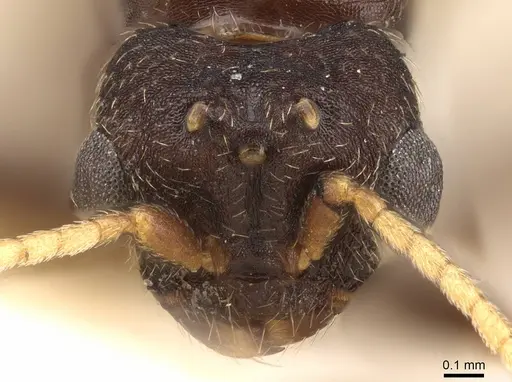
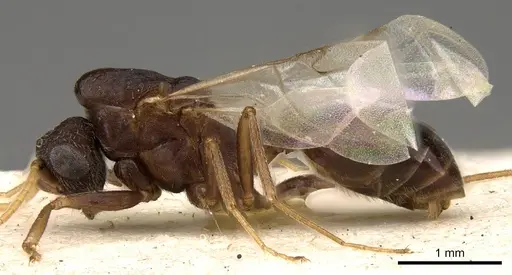
Monomorium effractor is an extremely rare social parasite ant species endemic to India. It was originally described as Wheeleriella wroughtoni in 1910 but had to be renamed by Bolton in 1987 because the name was already taken for a different species. This ant is a permanent social parasite - it lives entirely within colonies of its host species, Monomorium indicum, and cannot survive on its own . What makes M. effractor remarkable is its extreme rarity. The species has not been collected in over 130 years - the last known specimens were collected in Pune, Maharashtra in 1890-1891. It may be extinct in the wild, and no live colonies have ever been documented in modern times. This is not a species that antkeepers can maintain in captivity .
Quick Summary
- Difficulty: Expert
- Origin & Habitat: Endemic to India, specifically recorded from Maharashtra state in the Pune (Poona) area. Found in the Indomalaya region [2].
- Colony Type: Permanent social parasite, lives exclusively within host colonies of Monomorium indicum. The queen invades the host colony and uses host workers to raise her brood. Cannot found colonies independently.
- Size & Growth:
- Queen: Size data unavailable, only known from a few historical specimens [1]
- Worker: Size data unavailable, genus typical size is small but no measurements recorded [1]
- Colony: Unknown, dependent on host colony size [1]
- Growth: Unknown
- Development: Unknown, cannot be studied in captivity (Development occurs within host colony, no independent colony has ever been documented)
- Antkeeping:
- Temperature: Unknown, cannot be kept in captivity
- Humidity: Unknown, cannot be kept in captivity
- Diapause: Unknown, cannot be kept in captivity
- Nesting: Nests within host colony (Monomorium indicum), cannot be maintained independently [1]
- Behavior: As a permanent social parasite, this species has no independent foraging or defensive behavior. It relies entirely on host workers for all colony functions. Escape prevention is irrelevant as the species cannot be maintained in captivity. The queen likely kills or displaces the host queen and manipulates host workers to care for her brood [1].
- Common Issues: this species has not been collected in over 130 years and may be extinct in the wild, no live colonies have ever been documented in modern scientific literature, the species requires a host colony (Monomorium indicum) to survive, it cannot be kept independently, even if found, combining with host colonies would require expert knowledge of social parasitism, there is no established protocol for keeping this species in captivity
Why This Species Cannot Be Kept
Monomorium effractor is one of the rarest ant species in the world and is not suitable for antkeeping under any circumstances. As a permanent social parasite, it cannot survive without a host colony of Monomorium indicum. The species has only been collected a handful of times, the last specimens date from 1890-1891 in Pune, India. It has not been observed in over a century and may be extinct [1]. Even if living colonies were discovered, keeping them would require expert knowledge of social parasitism and a thriving colony of the specific host species. This is not a species for hobbyists, it represents a significant scientific mystery that researchers have been unable to solve for over 130 years. The antkeeping community should not attempt to acquire or keep this species, as no protocol exists and doing so would serve no conservation or educational purpose [1].
Taxonomy and Nomenclature
This species has a complicated taxonomic history. It was first described as Monomorium wroughtoni by Forel in 1910,but this name was already in use for a different species (Monomorium wroughtoni from 1902). When Bolton revised the genus in 1987,he was forced to create a new name, Monomorium effractor, to replace the junior homonym. The species remains known only from the original type specimens collected by R. Wroughton in Pune, Maharashtra in 1890-1891. These specimens are housed in museums (BMNH and MHNG) and represent the only known evidence that this species ever existed [1].
Conservation Status
Monomorium effractor is effectively a ghost species, it may already be extinct. The last collection event was over 130 years ago, and despite significant ant collection efforts in India over the past century, no additional specimens have been found. This could mean the species is extinct, extremely rare and localized, or perhaps was always just a rare variant of Monomorium indicum that has since been overlooked. Without live specimens, scientists cannot study its biology, behavior, or confirm whether it truly represents a distinct species. The antkeeping community should not contribute to any potential remaining populations by attempting to collect or trade this species [1].
Frequently Asked Questions
Can I keep Monomorium effractor in my ant farm?
No. This species cannot be kept in captivity. It is a permanent social parasite that requires a host colony of Monomorium indicum to survive, and no live colonies have ever been documented. The species has not been collected in over 130 years and may be extinct.
Where can I buy Monomorium effractor ants?
You cannot buy this species. It is not available in the antkeeping hobby and likely does not exist in the wild anymore. No legitimate source exists, and any claims of selling this species should be treated as scams.
What does Monomorium effractor eat?
As a social parasite, it does not forage for itself. It relies entirely on host workers to feed it and its brood. The specific diet within the host colony is unknown.
How big do Monomorium effractor colonies get?
Unknown. The species has never been documented in a living colony. As a parasite, its numbers would be limited by what the host colony can support.
Is Monomorium effractor endangered?
The species has not been seen since 1891 and may be extinct. Its conservation status has not been formally assessed, but the complete absence of records for over a century suggests it is either extinct or extremely rare.
What is the geographic range of Monomorium effractor?
The species is only known from Pune (Poona), Maharashtra, India. It was collected in 1890-1891 and has not been found anywhere else.
How do I start an ant colony like Monomorium effractor?
You cannot. This species is a social parasite that cannot establish colonies independently. Even if you found both species, establishing a parasitic colony requires expert knowledge and would likely result in the death of the host colony. This species should not be attempted by any antkeeper.
Report an Issue
The current care sheet is based fully on literature. See inconsistencies, or something that's incorrect? Please , it will be resolved after review from an admin. Contributing to the blogs tab also helps providing information, to make us be able to further improve the caresheets. Thank you for your support!
References

Este guia de cuidados está sob a licença CC BY-SA 4.0 .
Posts da comunidade
CASENT0908781
Ver no AntWeb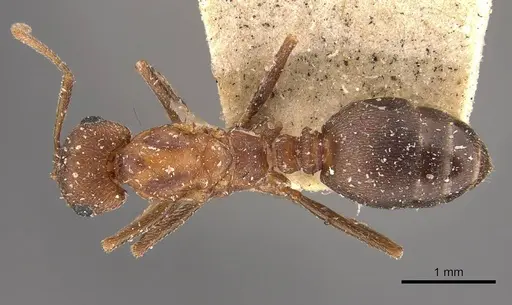
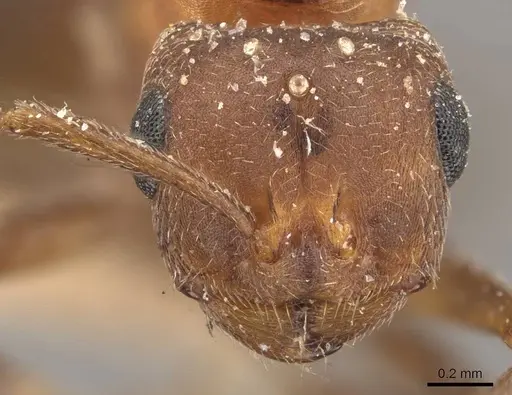
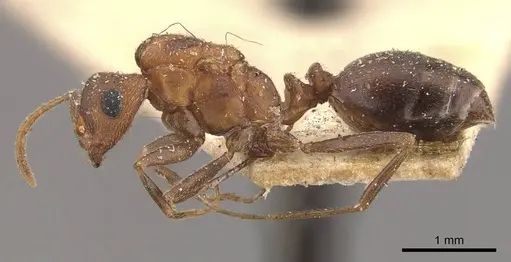
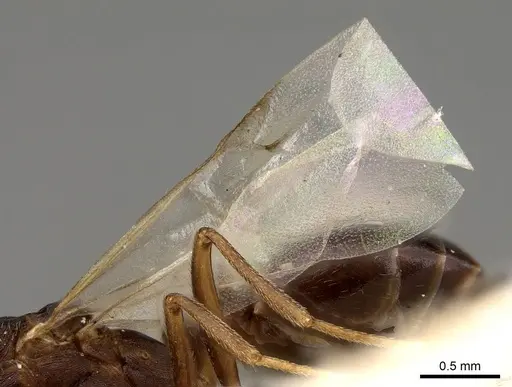
CASENT0914321
Ver no AntWeb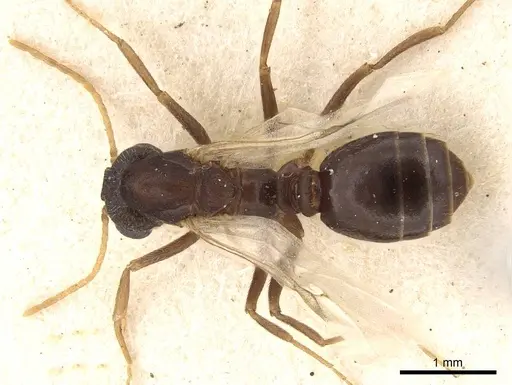
Literatura
Carregando mapa de distribuição...Carregando produtos...