
Messor caviceps
- Nome científico
- Messor caviceps
- Tribo
- Stenammini
- Subfamília
- Myrmicinae
- Autor
- Forel, 1902
- Distribuição
- Encontrada em 1 países
Introdução
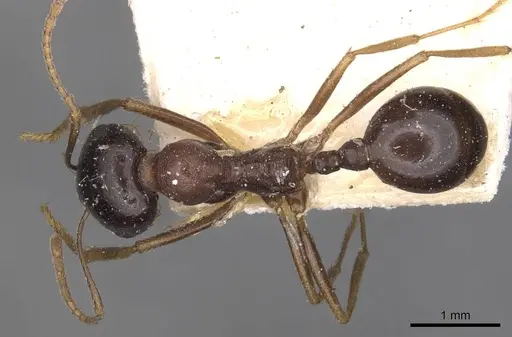
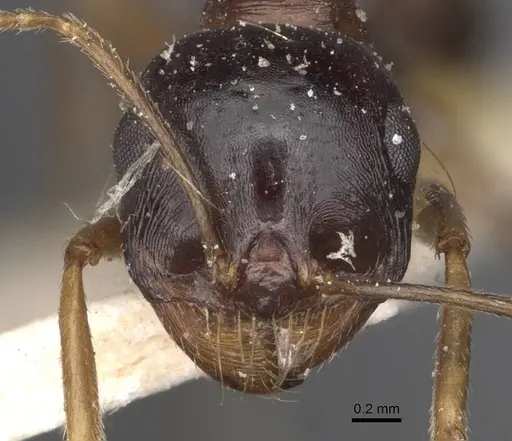
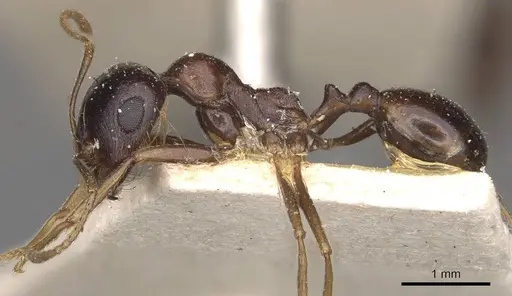
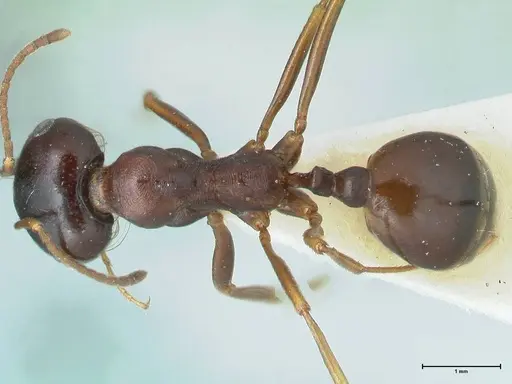
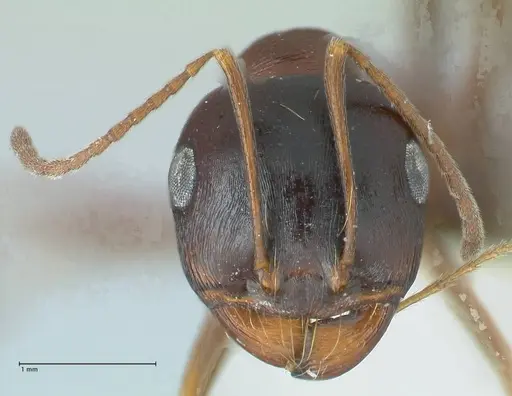
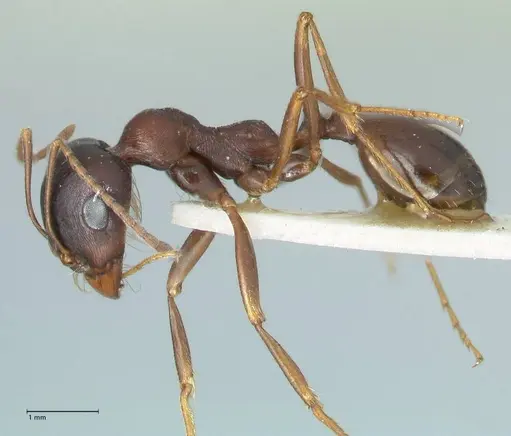
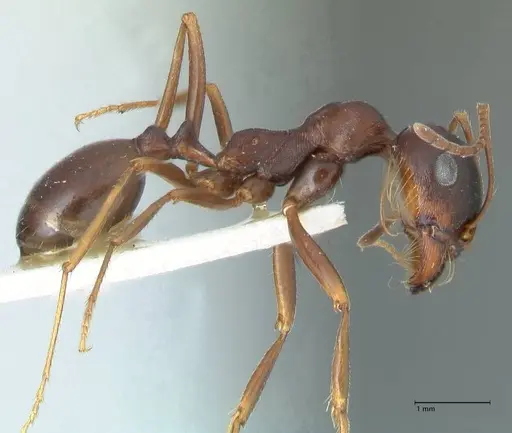
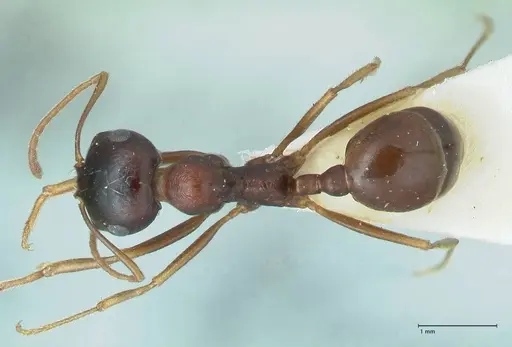
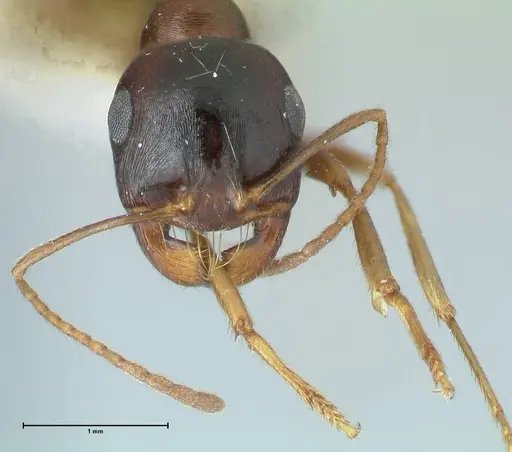
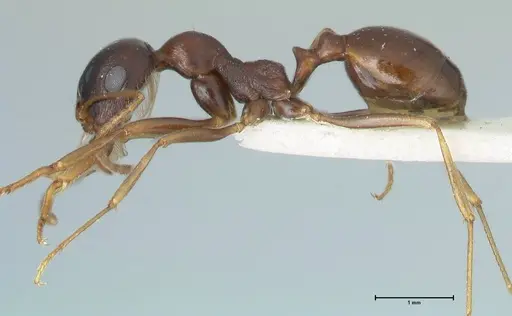
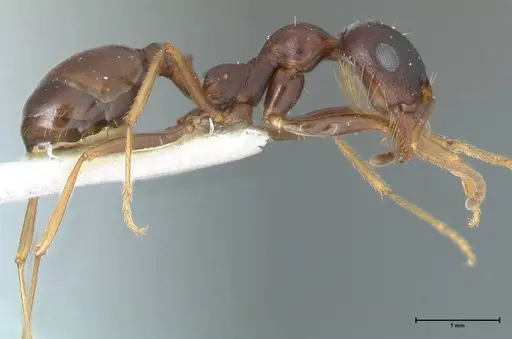
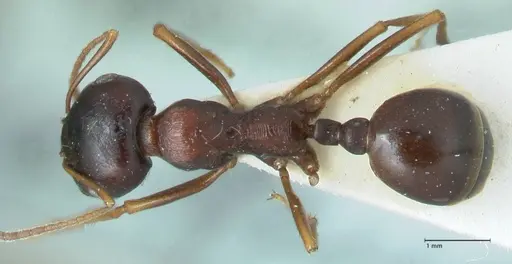
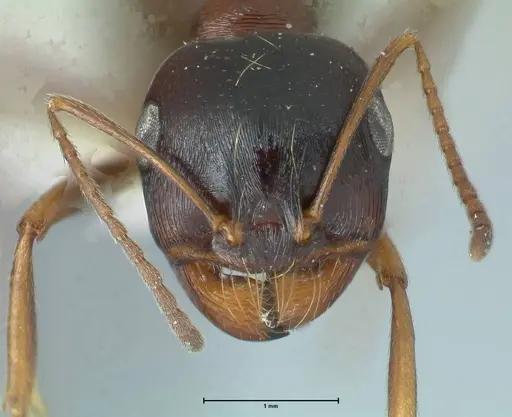
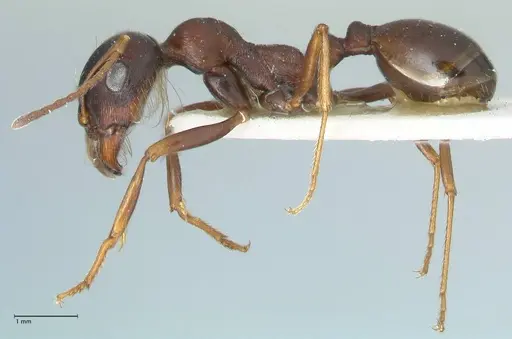
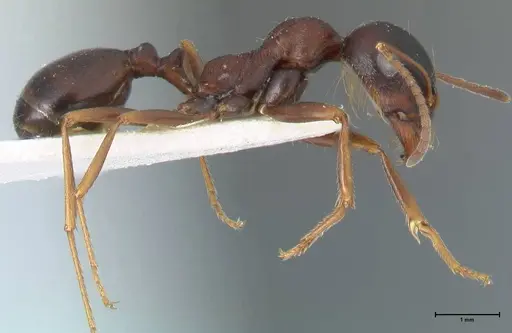
Messor caviceps is a small harvester ant native to the Sahara desert regions of North Africa, specifically Algeria and eastern Morocco. Workers measure 4-7mm with a distinctive appearance: a black-brown head, brown-yellow trunk, and dark brown abdomen. This species has a unique concave underside of its head (gula) that helps it carry sand pellets - a clever adaptation for nest-building in sandy environments . These are specialized seed harvesters that collect grains from desert grasses like Aristida pungens . Their colonies are relatively small compared to other Messor species.
Quick Summary
- Difficulty: Medium
- Origin & Habitat: Native to the Sahara desert region of Algeria and eastern Morocco, specifically the dune areas between Touggourt and El Oued, Beni Abbès, and Figuig. They inhabit pure sand regions where only drought-resistant grasses like Aristida pungens grow [2][1]. This is an extreme desert species adapted to hot, dry conditions.
- Colony Type: Single-queen colonies (monogyne). The colony structure consists of one queen that establishes the nest, with workers specializing in seed harvesting and processing.
- Size & Growth:
- Queen: Size data unavailable, no direct measurements exist in the literature
- Worker: 4-7mm [1]
- Colony: Maximum colony size is unknown, limited data suggests smaller colonies than tropical Messor species
- Growth: Moderate
- Development: Development timeline is unconfirmed, likely slower than tropical species due to desert adaptation (First workers (nanitics) will be smaller than mature workers.)
- Antkeeping:
- Temperature: Keep warm at 24-30°C during active season. This is a desert species that thrives in heat, use a heating cable on one side of the nest to create a gradient.
- Humidity: Low to moderate, these are desert ants adapted to dry conditions. Keep nest substrate relatively dry with only occasional misting. Provide a small water dish but avoid constant moisture.
- Diapause: Unknown, no specific research exists on hibernation requirements for this species. Based on Palearctic distribution, a winter rest period may be beneficial.
- Nesting: Natural nesting: underground in sandy soil, often under stones or in open sand dunes. For captivity: a Y-tong (AAC) nest with sand-based substrate works well, or a plaster nest with dry chambers. Avoid overly humid setups.
- Behavior: Generally peaceful and not aggressive toward keepers. Workers are active foragers that search for seeds and will store them in the nest. They process seeds by crushing them to create 'ant bread' to feed the colony. Escape risk is moderate due to their small size, use standard barrier methods. They are diurnal and most active during warmer hours.
- Common Issues: desert species are sensitive to overwatering, too much humidity can kill colonies, limited colony growth data makes development expectations uncertain, seed-harvesting behavior requires appropriate food, they need actual seeds, not just insect protein, no confirmed hibernation requirements exist, observe your colony for seasonal slowdowns, small colony size means growth may be slower than expected
Nest Preferences and Housing
Messor caviceps naturally nests in sandy desert soil, often in areas with sparse vegetation where they can harvest seeds from grasses like Aristida pungens [2]. In captivity, they do well in nests that mimic these dry, sandy conditions. A Y-tong (AAC) formicarium with a sand-based substrate works excellently, the sand allows them to exhibit natural tunneling behavior and provides the medium they need for their seed-processing activities. You can also use a plaster nest with dry chambers, but avoid setups that stay constantly humid. The key is providing a dry environment with a small water source so they can control their moisture intake. Because they're a desert species, ventilation is important to prevent mold. An outworld with sand allows them to forage and process seeds naturally.
Feeding and Diet
As a specialized harvester ant, Messor caviceps collects and stores seeds as their primary food source. In the wild, they harvest seeds from desert grasses, particularly Aristida pungens [2]. In captivity, provide a mix of grass seeds, millet, sesame seeds, and other small seeds. They will crush these seeds and process them into 'ant bread' to feed the colony, including the queen and larvae. Beyond seeds, they also accept small insects as protein, but seeds should make up the majority of their diet. Offer fresh seeds regularly and remove any that become moldy. A small dish of sugar water or honey can be offered occasionally, but they are primarily seed-eaters.
Temperature and Seasonal Care
Being a Sahara desert species, Messor caviceps needs warm temperatures to thrive. Keep the nest area at 24-30°C during the active season, use a heating cable on one side of the nest to create a temperature gradient so ants can choose their comfort zone. They are adapted to extreme heat in the wild. Regarding winter rest, no specific research exists on diapause requirements for this species. Based on its Palearctic distribution, you may observe your colony for seasonal slowdowns and provide a cooler period (around 15-18°C) for 2-3 months during winter if they show reduced activity. Reduce feeding during any cool period. [1]
Behavior and Colony Dynamics
Messor caviceps workers are active foragers that spend considerable time searching for seeds to harvest. Unlike predatory ants that hunt insects, these ants are peaceful collectors that process plant material. The colony will establish storage chambers for seeds, and workers can be observed crushing seeds with their mandibles, this processing creates the 'ant bread' that feeds the entire colony. Workers are not particularly aggressive and rarely bite. The colony will grow gradually over several years. The queen remains hidden in the nest after founding, tended by workers. You may notice workers carrying small sand particles, this is related to their unique head structure (concave gula) that helps them transport sand pellets for nest maintenance [2].
Growth and Development
Workers emerge at 4-7mm in size, with the first workers (nanitics) typically being smaller than mature workers [1]. No queen size measurements exist in the literature. Colonies develop gradually over several years rather than exploding in size quickly. This slower growth is normal for the species and should not be cause for concern. The key to successful growth is maintaining warm temperatures and providing a consistent seed-based diet. Avoid disturbing the queen during the founding phase, queens likely seal themselves in and should not be exposed to light or disturbance until workers emerge.
Frequently Asked Questions
Can I keep Messor caviceps in a test tube?
You can start a founding queen in a test tube, but this desert species prefers drier conditions than typical test tube setups. If using a test tube, use less water in the reservoir and provide ventilation. For established colonies, a Y-tong nest with sandy substrate is better than a test tube, it allows for natural seed-harvesting behavior and better humidity control.
What do Messor caviceps eat?
They are seed-harvesters, so provide grass seeds, millet, sesame, and similar small seeds. They will crush these into 'ant bread' to feed the colony. You can also offer occasional small insects for protein, but seeds should be the primary food. Fresh seeds should always be available.
How long until first workers in Messor caviceps?
Development timeline is unconfirmed in the literature. Expect several weeks to a few months at optimal temperature (around 26-28°C). The first workers (nanitics) will be smaller than mature workers.
Do Messor caviceps need hibernation?
No specific research exists on hibernation requirements for this species. Based on its Palearctic distribution from Algeria, a winter rest period may be beneficial. You can reduce temperature to around 15-18°C for 2-3 months during winter if your colony shows reduced activity. Reduce feeding during this period.
Are Messor caviceps good for beginners?
They are medium difficulty. The main challenges are providing the correct dry desert conditions, maintaining proper temperatures, and understanding their seed-based diet. If you're prepared to provide warm, dry housing with proper seeds, they can be rewarding.
How big do Messor caviceps colonies get?
Maximum colony size is unknown. Limited data suggests they remain smaller than many tropical Messor species. Their unique desert adaptations and seed-harvesting behavior make them interesting to observe even at smaller colony sizes.
Do Messor caviceps ants sting?
They are not known for stinging and are generally peaceful toward keepers. Their small size and peaceful nature make them safe to observe. They focus on seed-harvesting rather than defense.
Why are my Messor caviceps dying?
The most common causes are: overhumidity (they're desert ants, keep them dry), temperatures that are too cool (they need 24-30°C), or improper diet (they need seeds, not just insects). Check your humidity levels first, too much moisture kills these desert species.
When should I move my Messor caviceps to a formicarium?
Move them once the colony reaches 20-30 workers and the queen is consistently producing workers. A Y-tong nest with sandy substrate is ideal. Don't rush the transfer, let the colony establish in a founding setup first.
Can I keep multiple Messor caviceps queens together?
No. This is a monogyne (single-queen) species. Unlike some social insects, unrelated queens will fight. Only keep one queen per colony.
Report an Issue
The current care sheet is based fully on literature. See inconsistencies, or something that's incorrect? Please , it will be resolved after review from an admin. Contributing to the blogs tab also helps providing information, to make us be able to further improve the caresheets. Thank you for your support!
References

Este guia de cuidados está sob a licença CC BY-SA 4.0 .
Posts da comunidade
Literatura
Carregando mapa de distribuição...Carregando produtos...