
Meranoplus laeviventris
- Nome científico
- Meranoplus laeviventris
- Tribo
- Crematogastrini
- Subfamília
- Myrmicinae
- Autor
- Emery, 1889
- Distribuição
- Encontrada em 2 países
Introdução
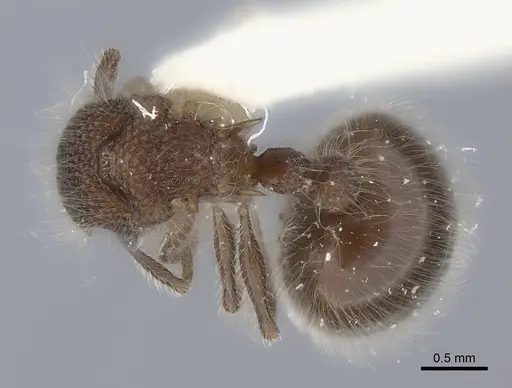
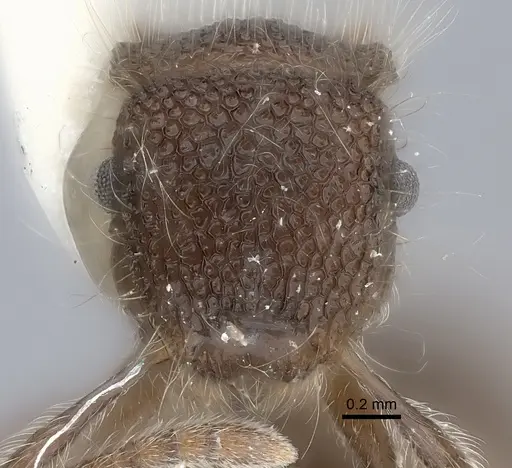
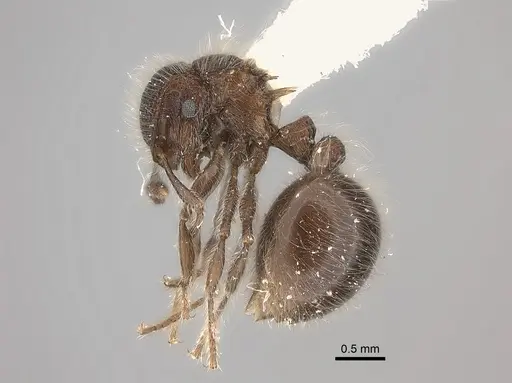
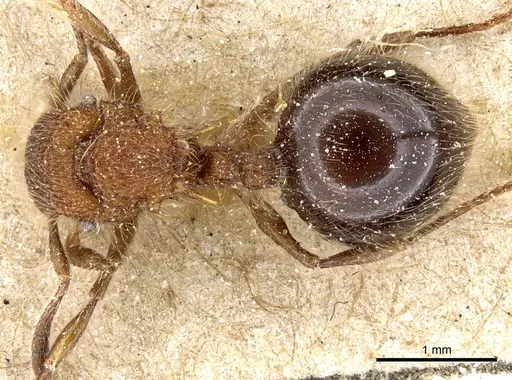
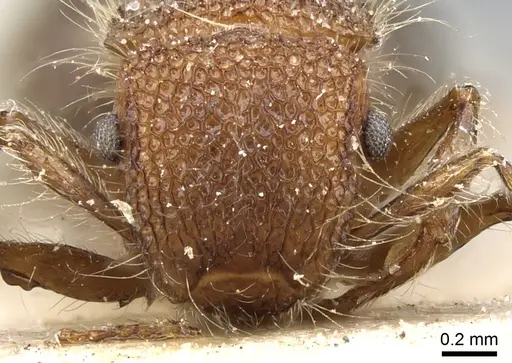
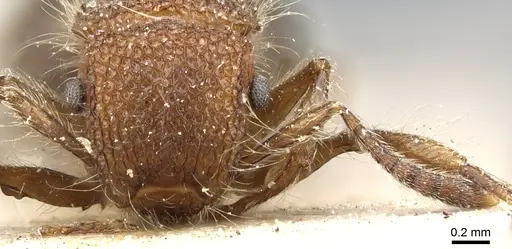
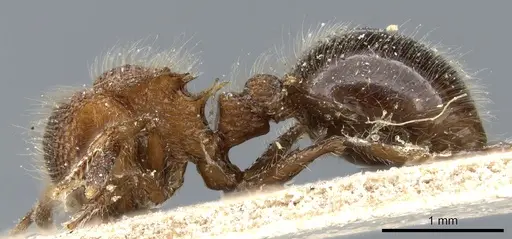
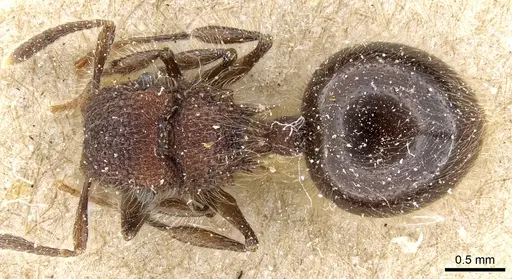
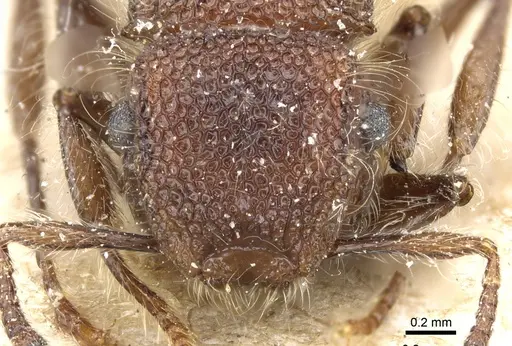
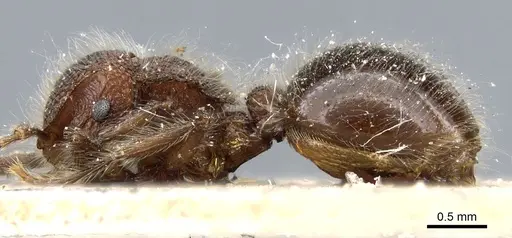
Meranoplus laeviventris is a small, dark ant from Southeast Asia. Workers measure 4.1–4.5 mm and have a shield-like promesonotum covered with spines and teeth, along with a quadrangular petiole that makes it the only Oriental Meranoplus species in continental Asia with this feature . They are dark brown to nearly black, with the head, thorax, and legs often slightly lighter . Found in highland rainforests (800–1500 m) of China (Yunnan), Myanmar, Thailand, Laos, and northeastern India . Nest in soil .
Quick Summary
- Difficulty: Medium
- Origin & Habitat: Highland rainforests (800–1500 m elevation) of Southeast Asia and southern China. Recorded from primary and secondary forests but not from rubber plantations [6]. Nests in soil [5].
- Colony Type: Colony structure is unconfirmed. No data on queen number – likely monogyne based on genus patterns, but not confirmed.
- Size & Growth:
- Antkeeping:
- Temperature: As a highland species, keep in cool to moderate temperatures (low‑to‑mid 20s °C). Avoid temperatures above 30 °C. Provide a temperature gradient so workers can choose their preferred zone.
- Humidity: Moderate to high humidity. Keep nest substrate consistently moist but not waterlogged. Good ventilation is needed to prevent mold. A water source in the outworld helps maintain humidity.
- Diapause: Unknown – highland species may tolerate cooler winters, but diapause requirements are unconfirmed.
- Nesting: Soil‑nesting species [5]. Use a naturalistic setup with moist soil, or a Y‑tong or plaster nest with narrow chambers. Provide dark, enclosed spaces.
- Behavior: Workers are small (≈4 mm), so excellent escape prevention is essential. They belong to Myrmicinae tribe Crematogastrini, which uses a smear defense mechanism: a modified, flattened stinger wipes venom onto enemies rather than piercing. No specific aggression data exists – likely timid and rely on morphology (spines, teeth) for protection. Foraging behavior is unstudied but probably involves individual foraging.
- Common Issues: escape through tiny gaps due to small worker size – use fine mesh (0.5 mm or less) on all openings., overheating – highland origin makes them sensitive to sustained temperatures above 30 °C., humidity imbalance – too dry causes desiccation, too wet promotes mold, aim for moist substrate without standing water., mold in nest – ensure ventilation while maintaining humidity, remove uneaten prey promptly., wild‑caught colonies may carry mites or parasites – quarantine new colonies.
Housing and Nest Setup
Meranoplus laeviventris is a soil‑nesting species [5]. Provide a naturalistic setup with moist substrate, or use a Y‑tong or plaster nest with narrow chambers. Because workers are only around 4 mm [1], escape prevention is critical – use fine mesh (0.5 mm or less) on ventilation holes and tight‐fitting lids. The nest area should be dark and enclosed. A small outworld allows for foraging observation. Avoid direct sunlight or heat sources that would dry the substrate quickly.
Feeding and Diet
No specific dietary data exists for this species. Based on general Meranoplus patterns, offer small live prey such as fruit flies, pinhead crickets, or mealworms. Provide sugar water or honey water as a carbohydrate source. Feed protein 2–3 times per week and keep a constant sugar source available. Remove uneaten prey after 24–48 hours to prevent mold. Start with prey items small enough for workers to handle.
Temperature and Humidity
This highland species (800–1500 m) [5] prefers cooler conditions than typical tropical ants. Keep temperatures in the low‑to‑mid 20s °C (22–26 °C). Sustained temperatures above 30 °C can stress or kill the colony. Humidity should be moderate to high – the nest substrate should feel consistently moist but not waterlogged. Provide a water source in the outworld to help maintain humidity. If the colony clusters near moisture, increase humidity, if they avoid moist areas, reduce slightly. Good ventilation is necessary to prevent mold.
Behavior and Colony Life
Workers are small and active. They belong to Myrmicinae tribe Crematogastrini, which uses a smear defense mechanism: a modified, flattened stinger wipes venom onto enemies rather than piercing. No specific aggression data exists – likely they rely on their prominent spines and teeth for defense. Their morphology includes a quadrangular petiole (unique among Oriental Meranoplus) [1], translucent fenestrae on the mesosomal shield [1], and multiple spines on the promesonotum [3]. Foraging behavior and social organization are undocumented.
Growth and Development
No direct data exists on colony development for Meranoplus laeviventris. Founding behavior is unconfirmed – claustral founding is typical for Myrmicinae but not guaranteed. Without research, growth rate and colony size remain unknown. Avoid making assumptions.
Frequently Asked Questions
How long does it take for Meranoplus laeviventris to produce first workers?
Unknown – no development data exists for this species. Avoid assuming timelines from related species.
What size colony does Meranoplus laeviventris reach?
Maximum colony size is unknown. No data available.
Can I keep multiple queens together?
Colony structure is unconfirmed. There is no evidence of polygyny in this species. Combining queens is not recommended.
What do Meranoplus laeviventris ants eat?
Specific diet unknown. Offer small live prey and sugar sources. Remove uneaten food to prevent mold.
Do Meranoplus laeviventris ants sting?
They have a modified stinger used for smearing venom, typical of the Crematogastrini tribe. It is unlikely to penetrate human skin effectively. Their main physical defense is their spines and mandibles.
Are Meranoplus laeviventris good for beginners?
This is a medium‑difficulty species. Their small size requires excellent escape prevention, and their highland origin demands careful temperature and humidity management. Not ideal for complete beginners.
What temperature do Meranoplus laeviventris need?
Keep them in the low‑to‑mid 20s °C (22–26 °C). As a highland species, they may struggle above 30 °C.
Do they need hibernation?
Diapause requirements are unconfirmed. A slight winter cool period might be tolerated, but this is not documented.
Why are my ants escaping?
Workers are only about 4 mm [1] and can squeeze through tiny gaps. Use fine mesh (0.5 mm or less), tight‑fitting lids, and fluon barriers on all openings.
Where is Meranoplus laeviventris found?
Highland rainforests (800–1500 m) in Yunnan (China), Myanmar, Thailand, Laos, and northeastern India (Meghalaya) [2][3][4][6].
Report an Issue
The current care sheet is based fully on literature. See inconsistencies, or something that's incorrect? Please , it will be resolved after review from an admin. Contributing to the blogs tab also helps providing information, to make us be able to further improve the caresheets. Thank you for your support!
References

Este guia de cuidados está sob a licença CC BY-SA 4.0 .
Posts da comunidade
Literatura
Carregando mapa de distribuição...Carregando produtos...