
Megalomyrmex staudingeri
- Nome científico
- Megalomyrmex staudingeri
- Tribo
- Solenopsidini
- Subfamília
- Myrmicinae
- Autor
- Emery, 1890
- Distribuição
- Encontrada em 2 países
Introdução
Megalomyrmex staudingeri is a small, dark ant species native to the Amazon basin and surrounding regions of South America. Workers are deep-brown to almost black in color with smooth mandibles and a distinctive 3-segmented antennal club. These ants inhabit wet Neotropical rainforests at elevations between 300-1000 meters, where they nest in forest floor habitats. As a free-living species in the leoninus group, they are not parasites and maintain their own colonies. This species has been documented in Peru, Colombia, Ecuador, and Brazil, with type specimens collected from the Iquitos region of Peru .
Quick Summary
- Difficulty: Experimental, no captive husbandry data exists for this species
- Origin & Habitat: Wet Neotropical rainforests in South America (Peru, Colombia, Ecuador, Brazil) at elevations 300-1000m [2][3]. Found in forest habitats including wet forest at around 400m altitude [2].
- Colony Type: Free-living (non-parasitic) species. Colony structure is unconfirmed, specific queen number and colony size data is not available in scientific literature [4].
- Size & Growth:
- Queen: Size data unavailable, no specific measurements have been documented for queens
- Worker: Approximately 3-4mm, inferred from genus typical size range
- Colony: Unknown, no colony size data available
- Growth: Unknown
- Development: Unconfirmed, no development data available for this species (Development timeline has not been studied in scientific literature)
- Antkeeping:
- Temperature: Based on their wet forest habitat at 300-1000m elevation, they likely prefer warm, humid conditions in the low-to-mid 20s°C range. Start around 22-25°C and monitor colony activity.
- Humidity: High humidity required, these are wet rainforest ants. Keep nest substrate consistently moist but not waterlogged. Provide a water source and maintain humidity levels similar to their natural forest floor habitat.
- Diapause: Unknown, as a tropical species from the Amazon basin, they likely do not require true hibernation but may reduce activity during cooler periods.
- Nesting: Natural nesting sites include forest floor debris and rotting wood. In captivity, a naturalistic setup with moist substrate or a Y-tong/plaster nest with good humidity retention would likely work well. Avoid dry conditions.
- Behavior: Megalomyrmex ants are known for their potent venom alkaloids, which they use for defense and in interspecific interactions. This species produces trans-2-butyl-5-pentylpyrrolidine venom [4]. Workers are likely moderately aggressive when defending the nest. Their small size means they can squeeze through small gaps, use standard escape prevention.
- Common Issues: no captive husbandry data exists, this species has not been kept in captivity by hobbyists, humidity requirements may be critical, dry conditions likely fatal, wild-caught colonies may have parasites or fail to adapt to captive conditions, specific dietary needs are unknown, related species are predatory on small invertebrates
Natural History and Distribution
Megalomyrmex staudingeri is found across the Amazon basin in South America, with documented records in Peru, Colombia, Ecuador, and Brazil [5][6]. The type locality is Iquitos, Peru, and specimens have been collected from various locations including the Colombian Amazon (Caquetá, Amazonas departments) at elevations between 300-1000 meters [1][2]. These ants inhabit wet Neotropical rainforests, typically in lowland forest environments. The species was originally described by Emery in 1890 and was later recognized as the senior synonym of Megalomyrmex staudingeri, which was described from specimens in Brazil's Amazonas state [7].
Identification and Morphology
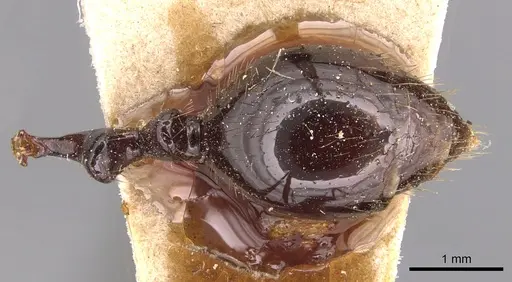
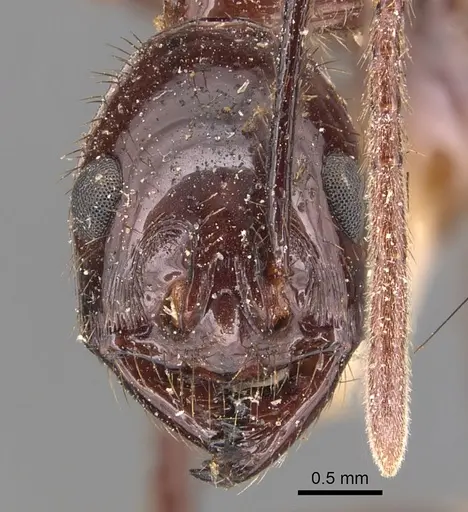
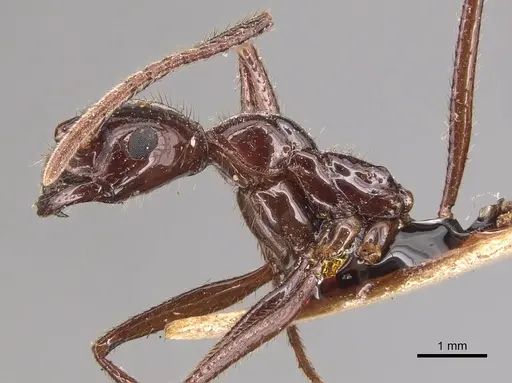
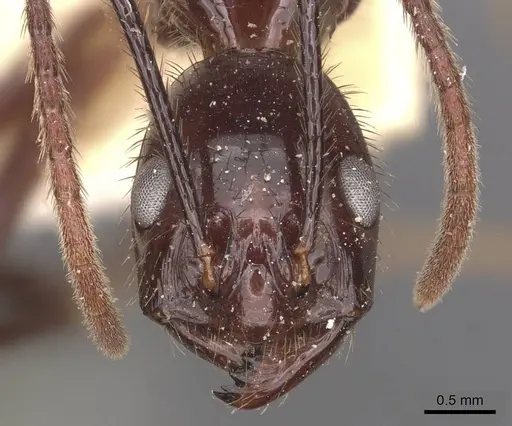
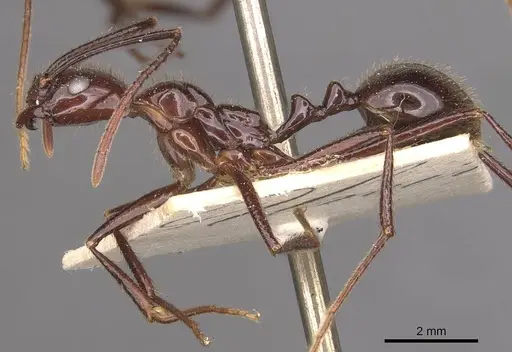
Workers of Megalomyrmex staudingeri are characterized by smooth mandibles, a straight anterior clypeal border with a median denticle, and a 3-segmented antennal club. The frontal suture is impressed, and the occipital margin is raised. The propodeum has a gentle angle between the dorsal face and declivity without lateral tubercles. The petiole is pedunculate with an anteroventral denticle. Color is described as deep-brown, almost black. Some intraspecific variation exists in the degree of striation around the antennal sockets, propodeum shape, and the median area of the clypeus. A gamergate (reproductive worker) has been documented with 3 ocelli, a compressed petiolar node, and a distinctly swollen gaster [7].
Chemistry and Defense
Megalomyrmex staudingeri produces venom alkaloids, specifically trans-2-butyl-5-pentylpyrrolidine, which is characteristic of the genus [4]. This venom is used for defense and is part of what makes Megalomyrmex ants notable, their chemical defenses are sophisticated and used in both predator deterrence and interspecific competition. The genus is known for producing various pyrrolidine alkaloids that can be toxic to other ant species. This defensive capability suggests that workers may be more aggressive than typical small ants when threatened.
Keeping This Species in Captivity
There is no documented captive husbandry information for Megalomyrmex staudingeri, this species has not been kept in captivity by antkeepers. Based on their natural habitat in wet Neotropical rainforests at 300-1000m elevation, they would likely require high humidity, warm temperatures in the low-to-mid 20s°C, and a moist nesting substrate. Related Megalomyrmex species are typically predatory on small invertebrates, so offering small live prey like springtails or fruit flies would be a reasonable starting point. This species would be recommended only for experienced antkeepers willing to experiment, as no established care protocols exist. If you obtain a colony, document your observations carefully as they would contribute valuable information to the antkeeping community.
Frequently Asked Questions
How do I keep Megalomyrmex staudingeri ants?
There is no established captive husbandry data for this species. Based on their wet rainforest habitat, provide high humidity, temperatures around 22-25°C, and a moist nest substrate. This is an experimental species for advanced antkeepers only.
What do Megalomyrmex staudingeri ants eat?
Diet is unconfirmed for this specific species. Related Megalomyrmex species are predatory on small invertebrates. Offer small live prey like springtails, fruit flies, or other micro-arthropods. Sugar sources may be accepted but should not be the primary food.
Where is Megalomyrmex staudingeri found?
This species is found in the Amazon basin of South America: Peru, Colombia, Ecuador, and Brazil. They inhabit wet Neotropical rainforests at elevations between 300-1000 meters [2][5][6].
Are Megalomyrmex staudingeri ants aggressive?
Aggression level is not documented, but Megalomyrmex species are known for their potent venom alkaloids used in defense. Workers likely defend the nest actively when threatened. Standard escape prevention is recommended due to their small size.
How big do Megalomyrmex staudingeri colonies get?
Colony size is unknown, no scientific data documents maximum colony size for this species.
Do Megalomyrmex staudingeri queens need to hibernate?
Diapause requirements are unknown. As a tropical species from the Amazon basin, they likely do not require true hibernation but may reduce activity during cooler periods. Maintain stable warm temperatures year-round.
Is Megalomyrmex staudingeri a good species for beginners?
No. This species is not recommended for beginners. There is no captive husbandry data available, making it an experimental species only suitable for experienced antkeepers willing to document their findings.
What temperature do Megalomyrmex staudingeri ants need?
Exact requirements are unconfirmed. Based on their wet forest habitat at 300-1000m elevation, aim for temperatures in the low-to-mid 20s°C (22-25°C). Monitor colony response and adjust accordingly.
Can I keep multiple Megalomyrmex staudingeri queens together?
Colony structure (monogyne vs polygyne) is unconfirmed for this species. Combining unrelated queens is not recommended without evidence they can coexist.
What is the egg to worker development time for Megalomyrmex staudingeri?
Development timeline is unconfirmed, no scientific data exists for this species.
Report an Issue
The current care sheet is based fully on literature. See inconsistencies, or something that's incorrect? Please , it will be resolved after review from an admin. Contributing to the blogs tab also helps providing information, to make us be able to further improve the caresheets. Thank you for your support!
References

Este guia de cuidados está sob a licença CC BY-SA 4.0 .
Posts da comunidade
CASENT0904607
Ver no AntWeb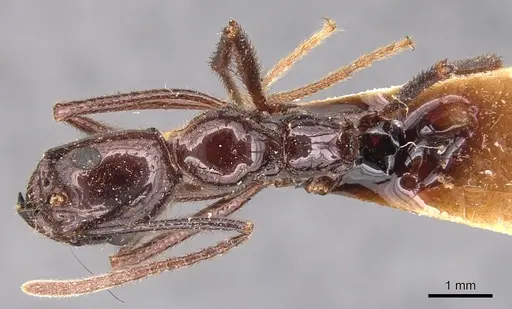
CASENT0908788
Ver no AntWeb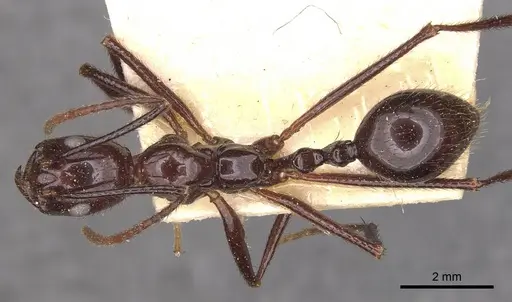
Literatura
Carregando mapa de distribuição...Carregando produtos...