
Lordomyrma taylori
- Nome científico
- Lordomyrma taylori
- Tribo
- Crematogastrini
- Subfamília
- Myrmicinae
- Autor
- Bharti & Ali, 2013
- Distribuição
- Encontrada em 0 países
Introdução
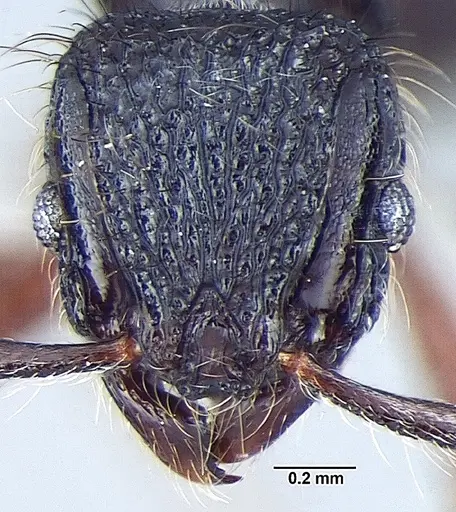
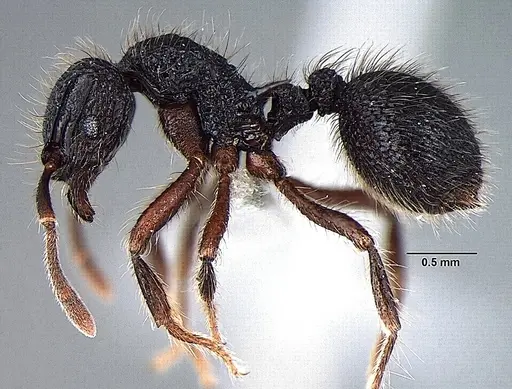
Lordomyrma taylori is a tiny myrmicine ant endemic to the Western Ghats of Kerala, India. Workers measure 4.07-4.23mm total length and are dull black with dark reddish-black appendages. They have remarkably long propodeal spines and heavily sculptured bodies with longitudinal rugae on the head and rugoreticulate patterns on the mesosoma. The clypeus features a unique hourglass-shaped carinae pattern. This species was discovered in Silent Valley National Park at 1100m elevation in a primary undisturbed tropical moist evergreen forest. Only two worker specimens have ever been collected, making it one of the rarest ant species known. The genus Lordomyrma consists of cryptic leaf-litter ants rarely collected and virtually unknown in captivity.
Quick Summary
- Difficulty: Expert
- Origin & Habitat: Endemic to Kerala, India, specifically Silent Valley National Park in the Western Ghats. Found at 1100m elevation in a primary undisturbed tropical moist evergreen forest with 95% relative humidity and mean annual temperature of 20.2°C. Collected from leaf litter approximately 2cm thick in shady areas with limited sunlight [1][2].
- Colony Type: Colony structure is unconfirmed. Only known from two worker specimens collected via Winkler extraction from leaf litter. No queens or colony samples have been documented.
- Size & Growth:
- Queen: Unknown, queen caste has not been described in scientific literature
- Worker: 4.07-4.23mm total length [1]
- Colony: Unknown, only two workers have ever been collected
- Growth: Unknown
- Development: Unconfirmed, no breeding data exists for this species (Development timeline is unstudied. Based on typical Myrmicinae patterns, expect several weeks at optimal temperature, but this is entirely speculative.)
- Antkeeping:
- Temperature: Keep around 20-22°C based on the mean annual temperature of 20.2°C in their natural habitat [1]. They come from a cool tropical elevation and likely do not tolerate high heat.
- Humidity: Very high humidity required, their native habitat has 95% relative humidity and receives over 6,000mm of annual rainfall. Keep the nest substrate consistently moist but not waterlogged. Provide good ventilation to prevent mold while maintaining humidity.
- Diapause: Unknown, no data on overwintering requirements. The relatively cool mean annual temperature (20.2°C) suggests they may not need a true diapause, but this is unconfirmed.
- Nesting: In nature they live in leaf litter in a shady, humid tropical forest. In captivity, a naturalistic setup with moist substrate or a well-humidified Y-tong/plaster nest would be appropriate. They are tiny and require small chambers.
- Behavior: Behavior is poorly documented due to the species rarity. Based on genus-level knowledge, Lordomyrma are cryptic leaf-litter ants that forage slowly through the substrate. They are not aggressive. Their small size means escape prevention is important, use fine mesh barriers. As Myrmicinae, they have a stinger but given their tiny size, any sting would likely be imperceptible to humans.
- Common Issues: this species is extremely rare, only two workers have ever been collected in scientific surveys, no captive husbandry information exists, keepers will essentially be pioneering care for this species, very small size requires excellent escape prevention with fine mesh barriers, high humidity requirements can lead to mold problems if ventilation is inadequate, the species appears to be naturally rare in the wild, captive colonies may be difficult to establish, obtaining specimens is nearly impossible since they have never been found in the hobby
Discovery and Rarity
Lordomyrma taylori was described in 2013 by Himender Bharti and Shahid Ali, making it one of the least-known ant species in existence. The type specimens were collected from Silent Valley National Park in Kerala, India, using a Winkler extractor (a device that sifts leaf litter to extract tiny arthropods). What makes this species remarkable is its apparent rarity, despite repeated intensive surveys in the region, researchers only encountered this species once. This suggests either very low population densities or highly localized distribution within the Western Ghats. For antkeepers, this means specimens are essentially unavailable, and established colonies are nonexistent [1][2].
Natural Habitat and Conditions
This species inhabits a very specific ecological niche in the Western Ghats. They live at 1100 meters elevation in a primary undisturbed tropical moist evergreen forest. The mean annual temperature is 20.2°C, relatively cool for a tropical species, and the area receives 6,066mm of rainfall annually with 95% relative humidity. They were collected from leaf litter approximately 2cm thick in shady areas with limited sunlight exposure. This combination of cool temperatures, extremely high humidity, and shaded forest floor conditions is critical for captive care. These ants are not suited to warm, dry environments [1].
Identification and Morphology
Lordomyrma taylori workers are distinctive among Indian Lordomyrma species. They are dull black overall with dark reddish-black appendages. The head has characteristic longitudinal rugae (grooved sculpture), and the mesosoma is irregularly rugoreticulate. Most distinctive are the very long propodeal spines that are slightly upcurved. The clypeus has a unique hourglass-shaped carinae pattern that converges centrally and diverges anteriorly and posteriorly. The entire body is covered in long, dense, yellowish hairs that are curved and tapering. Workers measure just 4.07-4.23mm total length, making them quite small [1][3].
Defense Mechanism
As a member of the subfamily Myrmicinae and tribe Crematogastrini, Lordomyrma taylori possesses a modified, flattened spatulate stinger. This type of stinger is used to wipe or smear venom onto enemies rather than piercing flesh. However, given the tiny size of these ants, any defensive use would be minimal and unlikely to affect humans.
Feeding and Diet
The diet of Lordomyrma taylori has not been directly studied. Based on genus-level knowledge of cryptic leaf-litter Myrmicinae, they likely prey on small soft-bodied invertebrates found in leaf litter. In captivity, offer small live prey such as springtails and fruit flies. Sugar sources may be accepted but this is unconfirmed. Given the complete lack of captive data, experimental feeding trials will be necessary.
Housing and Nesting
Because this species nests in leaf litter, a naturalistic terrarium-style setup works best. Use a moist substrate that can hold humidity, a mix of soil and rotting leaf material mimics their natural environment. Alternatively, a well-humidified Y-tong or plaster nest with small chambers scaled to their tiny size would be appropriate. The key requirements are: very high humidity (aim for 80-95%), consistently moist substrate, and minimal temperature variation (around 20-22°C). Provide a water reservoir for moisture. Because workers are only about 4mm, ensure any connections between nest areas and outworld are appropriately sized [1].
Challenges and Considerations
Keeping Lordomyrma taylori represents a true frontier in ant husbandry. This species has never been documented in captivity, meaning there are no established care protocols, no known successful breeders, and no information on colony development. The primary challenges are: obtaining specimens (they are extremely rare even in their native range), establishing a colony from wild-caught queens (if found), and replicating the very specific environmental conditions they require. Additionally, because they appear to be naturally rare, ethical considerations about wild collection apply. This species is best suited for advanced antkeepers who are prepared to document their findings and potentially contribute to our knowledge of this poorly understood species [1][2].
Frequently Asked Questions
How do I keep Lordomyrma taylori ants?
This species has never been documented in captive husbandry, so there are no established care protocols. Based on their natural habitat, you would need to provide temperatures around 20-22°C, very high humidity (80-95%), and a naturalistic setup with moist substrate. This is pioneering antkeeping, expect to experiment and document your findings.
Where does Lordomyrma taylori live?
Lordomyrma taylori is endemic to Kerala, India, specifically Silent Valley National Park in the Western Ghats. They live at 1100m elevation in primary tropical moist evergreen forest at around 20°C mean annual temperature with 95% relative humidity.
How big are Lordomyrma taylori workers?
Workers are tiny, measuring just 4.07-4.23mm in total length.
Are Lordomyrma taylori ants available for sale?
This species is extremely rare in the antkeeping hobby. It has only been collected twice ever (the type specimens), and no captive colonies are known to exist. Finding them for sale would be exceptionally unlikely.
Do Lordomyrma taylori ants sting?
As Myrmicinae, they possess a stinger, but given their tiny size (around 4mm), any sting would likely be imperceptible to humans. They are not considered dangerous.
What do Lordomyrma taylori eat?
Diet is unconfirmed, but based on genus patterns, they likely prey on small soft-bodied invertebrates found in leaf litter. In captivity, offer small live prey like springtails and fruit flies. Sugar acceptance is uncertain.
How long does it take for Lordomyrma taylori to develop from egg to worker?
This has never been documented. Development timeline is entirely unstudied for this species.
Is Lordomyrma taylori a good species for beginners?
No. This species is not recommended for any antkeeper except experts with specific research interests. There is no captive husbandry information, specimens are essentially unavailable, and the care requirements are extremely specific. This is a species for pioneering documentation, not casual keeping.
Do Lordomyrma taylori need hibernation?
Unknown. Their native habitat has a relatively cool mean annual temperature of 20.2°C with minimal seasonal variation. They likely do not require a true diapause, but this is unconfirmed.
Can I keep multiple Lordomyrma taylori queens together?
This is unknown. Colony structure has never been documented for this species, and no colonies have ever been observed. Combining unrelated queens is not recommended without any data on their social structure.
Report an Issue
The current care sheet is based fully on literature. See inconsistencies, or something that's incorrect? Please , it will be resolved after review from an admin. Contributing to the blogs tab also helps providing information, to make us be able to further improve the caresheets. Thank you for your support!
References

Este guia de cuidados está sob a licença CC BY-SA 4.0 .
Posts da comunidade
ANTWEB1008009
Ver no AntWeb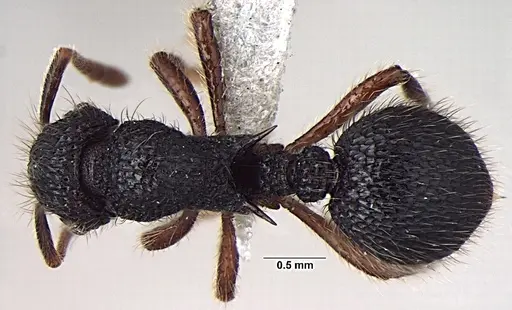
Literatura
Carregando mapa de distribuição...Carregando produtos...