
Lordomyrma crawleyi
- Nome científico
- Lordomyrma crawleyi
- Tribo
- Crematogastrini
- Subfamília
- Myrmicinae
- Autor
- Menozzi, 1923
- Distribuição
- Encontrada em 1 países
Introdução
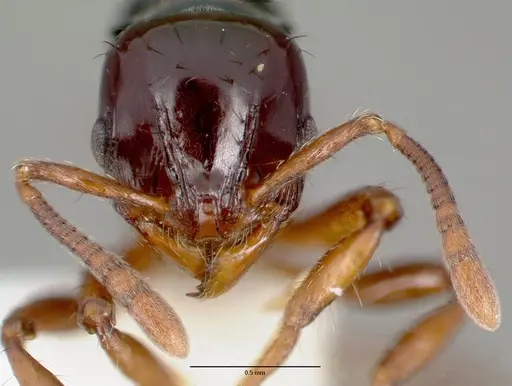
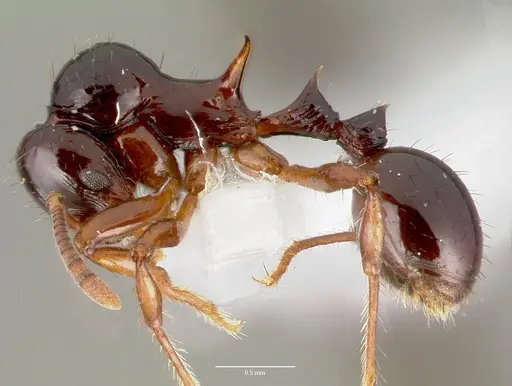
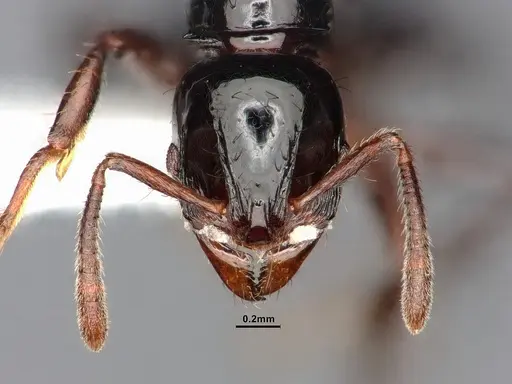
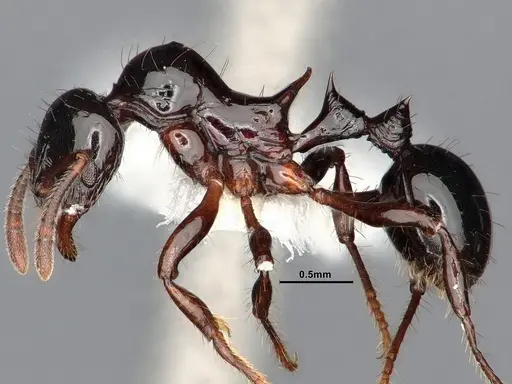
Lordomyrma crawleyi is a tiny ant species native to New Guinea, first described by Menozzi in 1923 from specimens collected at Humboldt Bay in West Papua . Workers are among the smallest ants in the Myrmicinae subfamily, with a pale to reddish-brown coloration. This species belongs to a group of aberrant species closely related to L. furcifera . The genus Lordomyrma contains around 30 species distributed across Southeast Asia, Fiji, and the Australasian region . These ants are rarely kept in captivity and remain poorly studied in scientific literature.
Quick Summary
- Difficulty: Unknown, likely Moderate to Hard
- Origin & Habitat: New Guinea (Humboldt Bay, West Papua), tropical rainforest environment [1][2]
- Colony Type: Unconfirmed, colony structure has not been documented in scientific literature
- Size & Growth:
- Queen: Size data unavailable, no queen measurements documented
- Worker: Size data unavailable, only head width (0.89mm) and mesosoma length (1.32mm) are documented from type specimen [1]
- Colony: Unknown, no colony size data available
- Growth: Unknown
- Development: Unknown, no documented development timeline exists for this species (Development data does not exist for this species. Estimates based on related tropical Myrmicinae would be speculative.)
- Antkeeping:
- Temperature: Temperature requirements unconfirmed, being from tropical New Guinea, they likely prefer warm conditions. Room temperature (20-24°C) may be appropriate, with slight warming if needed.
- Humidity: Keep substrate moderately moist, these are forest floor ants from a humid tropical environment. Provide a moisture gradient so ants can choose their preferred zone.
- Diapause: Unlikely, being a tropical species, they probably do not require hibernation.
- Nesting: No specific data exists, but related Lordomyrma species typically nest in rotting wood, under bark, or in soil pockets in forest habitats. A Y-tong or plaster nest with some damp substrate works well as a starting point.
- Behavior: Behavior is unstudied in captivity. Based on genus patterns for small Myrmicinae, these are likely docile, slow-moving ants that forage individually or in small groups on the forest floor. Their tiny size means they are not aggressive and pose no sting threat to humans. Escape prevention is critical due to their very small size, they can squeeze through standard test tube openings and need fine mesh barriers.
- Common Issues: very small size makes escape prevention challenging, use fine mesh and tight-fitting lids, lack of documented care information means you'll be experimenting with conditions, tropical species may be sensitive to temperature drops or dry conditions, no data on acceptable foods, start with standard ant diet and observe what they accept, slow growth and small colony sizes may frustrate beginners expecting rapid development
Housing and Nest Setup
Given the complete lack of captive care data for this species, you'll need to approach housing experimentally. Start with a standard test tube setup for the founding queen, as this allows you to easily monitor humidity and observe behavior. Because workers are extremely small, use a test tube with a narrow opening or add cotton barrier material to prevent escapes. Once the colony establishes, consider moving to a small Y-tong nest or plaster formicarium with chambers scaled to their tiny size. Keep the nest setup simple with moderate moisture, these forest-floor ants likely prefer some damp substrate but not saturated conditions. A small outworld area allows for feeding observation.
Feeding and Diet
Diet preferences have not been documented for this species. As a Myrmicinae ant from a tropical forest environment, they likely accept small protein sources like fruit flies, pinhead crickets, and other tiny arthropods. Start by offering small live prey appropriate to their size, springtails and fruit fly pupae are good starting options. They may also accept sugar sources like honey water or sugar water, though this is unconfirmed. Offer food twice weekly and remove uneaten items within 24-48 hours to prevent mold. Given their tiny size, even small prey items represent significant meals. Monitor carefully to see what they actually accept and adjust your feeding accordingly.
Temperature and Humidity
Being from tropical New Guinea, these ants likely need warm and humid conditions. Aim for temperatures in the 24-28°C range, which matches their natural habitat in the lowland forests of Papua. A heating cable placed on one end of the nest can help maintain warmth, but avoid overheating. For humidity, keep the nest substrate moderately moist, think damp forest floor rather than waterlogged swamp. A moisture gradient lets the ants choose their preferred zone. Room temperature in most homes (20-24°C) may be slightly cool, so consider using a small heat source. These ants are likely sensitive to dry conditions, so monitor substrate moisture regularly.
Defense Mechanism
Lordomyrma crawleyi belongs to the subfamily Myrmicinae and tribe Crematogastrini. Members of this tribe possess a modified, flattened spatulate stinger used to wipe or smear venom onto enemies rather than piercing flesh. This smear defense is characteristic of the Crematogastrini and differs from the typical stinging mechanism found in many other ant subfamilies.
Behavior and Temperament
Specific behavioral observations for Lordomyrma crawleyi do not exist in scientific literature. Based on related Lordomyrma species and general Myrmicinae patterns, expect docile, non-aggressive ants that forage quietly. Their tiny size means they pose no sting threat to keepers. Activity level is likely moderate, they probably forage individually or in small groups rather than forming large raiding columns. The most important behavioral note is their escape risk: at only around 2-3mm estimated body length, they can squeeze through remarkably small gaps. Use fluon on test tube rims, fine mesh on any openings, and check connections regularly. They are not aggressive and will likely retreat rather than defend when disturbed.
Frequently Asked Questions
How long does it take for Lordomyrma crawleyi to produce first workers?
The egg-to-worker timeline is unconfirmed for this species. No direct development data exists in scientific literature.
What do Lordomyrma crawleyi ants eat?
Diet is unconfirmed for this species. Based on genus patterns, they likely accept small live prey like fruit flies, springtails, and other tiny arthropods. They may also accept sugar sources. Start with small protein prey and sugar water, then observe what your colony actually accepts.
Can I keep Lordomyrma crawleyi in a test tube?
Yes, a test tube setup is appropriate for founding colonies. However, due to their very small size, you must use excellent escape prevention, add cotton barriers or fine mesh over any openings. Check connections regularly as tiny ants can squeeze through surprisingly small gaps.
Do Lordomyrma crawleyi ants sting?
No sting threat exists, they are far too small to penetrate human skin. They possess a smear-type defense mechanism typical of Crematogastrini, wiping venom onto attackers rather than stinging. They are docile by nature and will likely flee rather than defend when disturbed.
Are Lordomyrma crawleyi good for beginners?
This species is not recommended for beginners due to the complete lack of documented care information. You will essentially be experimenting with conditions. If you're experienced with tropical Myrmicinae and enjoy keeping species with unknown requirements, this could be an interesting challenge.
What temperature do Lordomyrma crawleyi need?
Temperature requirements are unconfirmed. Being from tropical New Guinea, they likely prefer warm conditions. Room temperature (20-24°C) may be appropriate, with a slight increase if your home runs cool.
How big do Lordomyrma crawleyi colonies get?
Colony size is unconfirmed, no scientific data exists on maximum colony size. Based on related species, they likely form small colonies.
Do Lordomyrma crawleyi need hibernation?
No, being a tropical species from New Guinea, they do not require hibernation. You can maintain warm conditions year-round.
Why is my Lordomyrma crawleyi colony dying?
Without documented care information, diagnosing problems is difficult. Common issues likely include: temperature too cold, humidity too dry, escape-related losses, or inappropriate food size. Review each parameter and make small adjustments. Their tropical nature means they are probably sensitive to environmental stress.
When should I move Lordomyrma crawleyi to a formicarium?
Wait until the colony has at least 20-30 workers before considering a move. These are tiny ants that do well in small spaces, a test tube or small Y-tong nest works well even for established colonies. Only move if the current setup is clearly too small or drying out too quickly.
Report an Issue
The current care sheet is based fully on literature. See inconsistencies, or something that's incorrect? Please , it will be resolved after review from an admin. Contributing to the blogs tab also helps providing information, to make us be able to further improve the caresheets. Thank you for your support!
References

Este guia de cuidados está sob a licença CC BY-SA 4.0 .
Posts da comunidade
CASENT0006154
Ver no AntWeb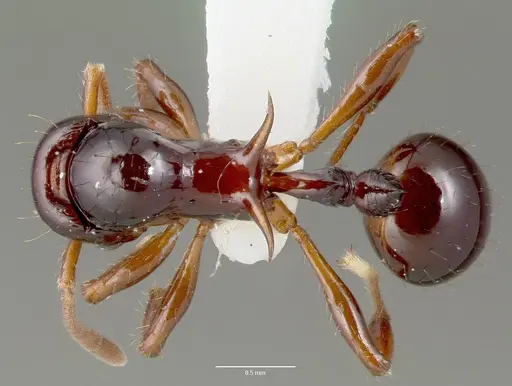
CASENT0885528
Ver no AntWeb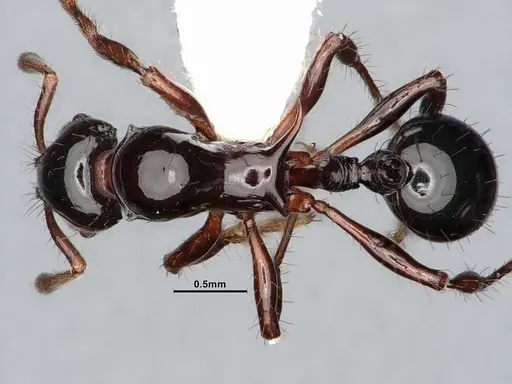
Literatura
Carregando mapa de distribuição...Carregando produtos...