
Lioponera varians
- Nome científico
- Lioponera varians
- Subfamília
- Dorylinae
- Autor
- Clark, 1924
- Distribuição
- Encontrada em 1 países
Introdução
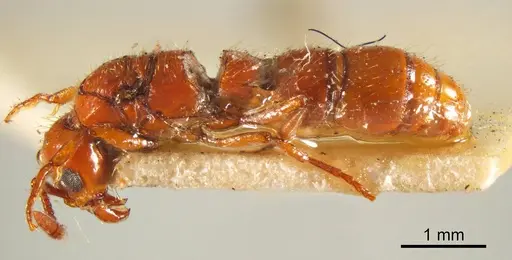
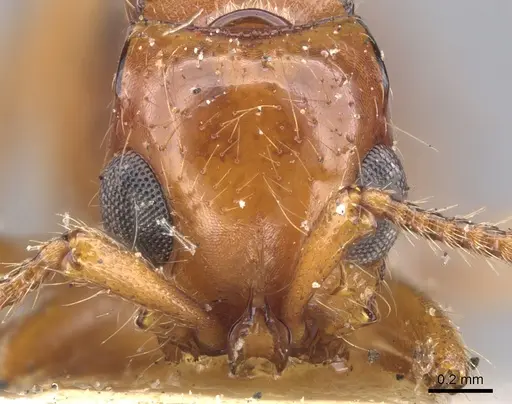
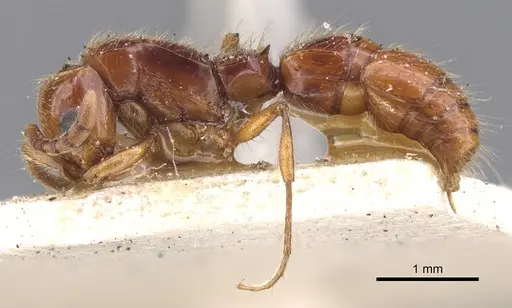
Lioponera varians is an Australian army ant in the subfamily Dorylinae. Workers have large eyes and variable coloration . The species lives in drier regions of Western Australia (South-West Botanical Province and Eremaean Botanical Province) and the Darling River region of New South Wales . Unlike many blind or small-eyed Dorylinae, this species has large eyes with a dorsolateral carina curving toward them . Originally described as Phyracaces varians in 1924,it was later moved to Cerapachys, then to Lioponera .
Quick Summary
- Difficulty: Unknown
- Origin & Habitat: Australia: drier parts of the South-West Botanical Province and neighbouring Eremaean Botanical Province in Western Australia, plus the Darling River region of New South Wales [1].
- Colony Type: Unconfirmed
- Size & Growth:
- Queen: Unknown, no measurements available
- Worker: Unknown, no measurements available
- Colony: Unknown
- Growth: Unknown
- Development: Unknown (No development data exists for this species.)
- Antkeeping:
- Temperature: Estimated from distribution: room temperature around 20-25°C likely tolerated. Provide a gradient.
- Humidity: Estimated from distribution: drier conditions preferred. Allow nest substrate to dry between waterings [1].
- Diapause: Unknown
- Nesting: Natural nesting habits unconfirmed. Based on Dorylinae patterns, likely nests in soil or under stones.
- Behavior: Undocumented. Based on Dorylinae subfamily patterns, likely predaceous. Large eyes suggest more visual activity than typical blind army ants [1]. Escape risk is unknown.
- Common Issues: limited data makes care recommendations uncertain., founding behavior is undocumented., no documented temperature or humidity preferences., growth rate and development timeline are unknown., rare in the antkeeping hobby.
Species Overview and Identification
Lioponera varians was originally described as Lioponera varians by Clark in 1924,later transferred to Cerapachys, and now placed in Lioponera following taxonomic revisions [2]. Workers have notably large eyes compared to other Dorylinae species, plus a dorsolateral carina curving toward the eye [1]. The species shows variable coloration, reflected in its name 'varians' [1].
Natural Habitat and Distribution
This species occupies drier regions of southwestern Australia. Specimens come mostly from the South-West Botanical Province and neighbouring Eremaean Botanical Province in Western Australia [1]. The species also occurs in the Darling River region of New South Wales [1]. This distribution suggests adaptation to drier, arid to semi-arid conditions.
Housing and Nesting
Specific nesting habits are undocumented [1]. Based on the species' distribution in drier regions, provide moderate humidity with dry periods between waterings [1]. A test tube setup works for founding. For established colonies, use a small formicarium with substrate that can dry partially. Avoid constantly wet conditions.
Feeding and Diet
Diet is unconfirmed for this species. Based on Dorylinae subfamily patterns, workers likely hunt small invertebrates like springtails and mites. Offer small live prey appropriate to colony size. Remove uneaten prey to prevent mold.
Temperature and Seasonal Care
Temperature requirements are undocumented. Based on the Australian distribution, room temperature around 20-25°C is likely tolerated [1]. Provide a gradient so the colony can self-regulate. Diapause requirements are unknown. The species may show reduced activity during cooler months, but this is unconfirmed.
Behavior and Temperament
Behavior is poorly documented. The large eyes suggest more visual orientation than typical blind Dorylinae [1]. Based on subfamily patterns, workers likely hunt in groups. Aggression levels and escape risk are unknown.
Frequently Asked Questions
How do I care for Lioponera varians ants?
Care is experimental due to limited data. Use a test tube setup for founding. Maintain moderate humidity with drying periods, based on the species' origin in drier regions [1]. Keep at room temperature around 20-25°C. Feed small live prey like springtails. This is not a beginner species.
What do Lioponera varians eat?
Diet is unconfirmed. Based on Dorylinae patterns, they likely eat small live invertebrates. Offer springtails, fruit flies, or tiny insects. Remove uneaten prey promptly.
How big do Lioponera varians colonies get?
Colony size is unknown. No scientific data documents maximum size.
Does Lioponera varians need hibernation?
Diapause requirements are unconfirmed. Keep at stable room temperature year-round unless the colony shows signs of seasonal slowdown.
Do Lioponera varians ants sting?
Dorylinae ants possess stingers, but most are too small to penetrate human skin. Specific defense mechanisms for this species are unstudied.
Can beginners keep Lioponera varians?
No. This species is not recommended for beginners due to complete lack of documented care requirements. Keepers must be prepared to experiment without established protocols.
How long does it take for Lioponera varians to produce first workers?
Development timeline is unknown. No data exists for egg-to-worker duration.
Where is Lioponera varians found in the wild?
This species is native to Australia, specifically the drier regions of Western Australia (South-West Botanical Province and Eremaean Botanical Province) and the Darling River region of New South Wales [1].
Is Lioponera varians a monogyne or polygyne species?
Colony structure is unconfirmed. No documentation exists regarding queen number.
What makes Lioponera varians distinctive?
Workers have large eyes and variable coloration. The dorsolateral carina curves toward the eye [1]. These traits distinguish it from many blind or small-eyed Dorylinae.
Report an Issue
The current care sheet is based fully on literature. See inconsistencies, or something that's incorrect? Please , it will be resolved after review from an admin. Contributing to the blogs tab also helps providing information, to make us be able to further improve the caresheets. Thank you for your support!
References

Este guia de cuidados está sob a licença CC BY-SA 4.0 .
Posts da comunidade
ANTWEB1008253
Ver no AntWeb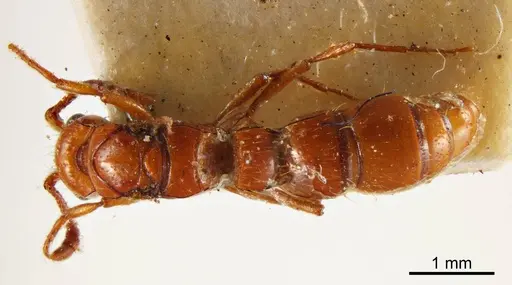
CASENT0902758
Ver no AntWeb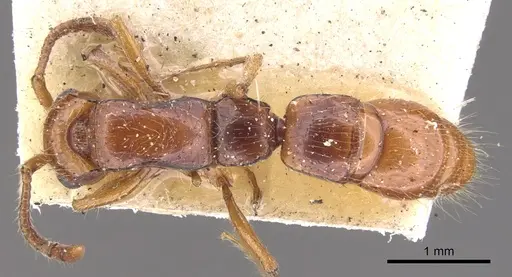
Literatura
Carregando mapa de distribuição...Carregando produtos...