
Leptogenys laozii
- Nome científico
- Leptogenys laozii
- Tribo
- Ponerini
- Subfamília
- Ponerinae
- Autor
- Xu, 2000
- Distribuição
- Encontrada em 0 países
Introdução
Leptogenys laozii is a slender predatory ant species native to Yunnan Province, China. Workers measure 4.5-5.0mm in total length with a distinctive dark brown to blackish body . This species belongs to the Leptogenys zhuangzii group and is known only from the worker caste, with no documented information on queens or reproductive biology . The genus Leptogenys contains predatory ants that hunt using their stingers, though specific hunting behaviors for this species remain unstudied.
Quick Summary
- Difficulty: Unknown, insufficient data for care difficulty assessment
- Origin & Habitat: Endemic to Yunnan Province, China, specifically recorded from Menglun, Mengla County at 650m elevation in Xishuangbanna region [3]. The type specimens were collected in March.
- Colony Type: Colony structure is unconfirmed, only worker caste has been described, with no queen or colony size data available [1].
- Size & Growth:
- Queen: Unknown, only workers described [1]
- Worker: 4.5-5.0mm total length [1][2]
- Colony: Unknown, no colony data available
- Growth: Unknown, no development data exists
- Development: Unknown, no development studies exist for this species (Based on typical Leptogenys patterns, expect several months but this is unconfirmed)
- Antkeeping:
- Temperature: Based on the subtropical Yunnan climate, start around 24-26°C. Use a heating cable on one side of the nest to create a gentle gradient. Adjust based on colony activity.
- Humidity: Keep nest substrate consistently moist but not waterlogged. This species likely comes from humid forest habitats in Yunnan.
- Diapause: Unknown, no seasonal data available. Based on Yunnan location, they may experience reduced activity during cooler months but true hibernation is unconfirmed.
- Nesting: No specific nesting data exists. Based on related Leptogenys species, they likely prefer humid nest chambers. A Y-tong (AAC) nest or plaster nest with good moisture retention would be appropriate.
- Behavior: Leptogenys species are predatory ants with well-developed stingers in the Ponerinae subfamily. They may use their sting when threatened. Workers at 4.5-5mm can squeeze through small gaps, use appropriate escape prevention. Activity level is unknown but related species are typically moderate to active foragers.
- Common Issues: insufficient biological data makes reliable care recommendations difficult, this is a poorly studied species, no confirmed colony structure means founding success rates are unknown, wild-caught colonies may have parasites that could affect captive survival, temperature and humidity requirements are inferred rather than confirmed, no documented diet acceptance, must experiment with live prey
Species Identification and Range
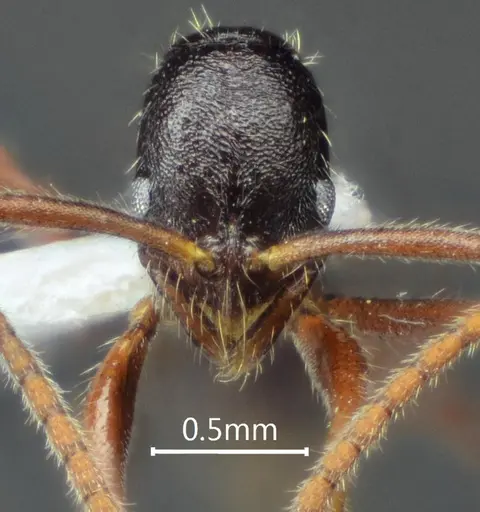
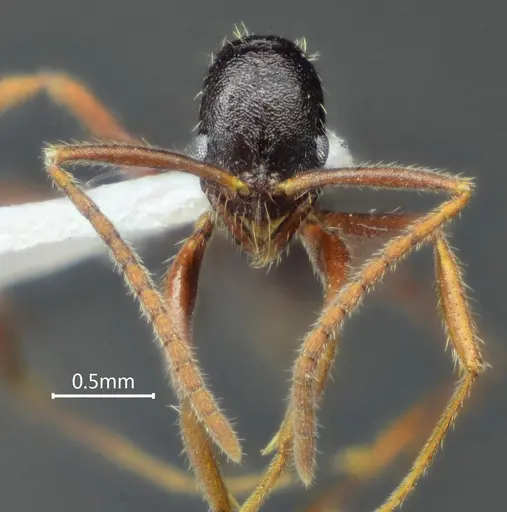
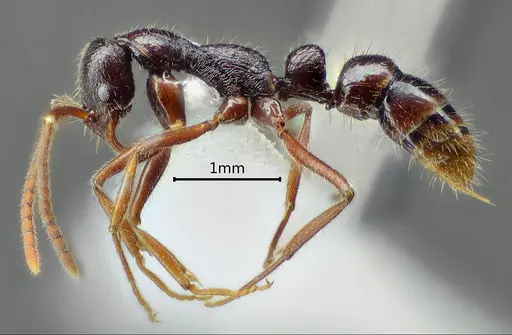
Leptogenys laozii is a slender ant species measuring 4.5-5.0mm in total length [1][2]. The body is dark brown to blackish brown, with reddish-brown mandibles, antennae, clypeus, and legs [1]. Key identification features include dense punctation on the head, alitrunk, and petiole, a deeply depressed metanotal groove, and abundant erect long hairs on the dorsal surface [1]. This species is endemic to Yunnan Province in southern China, specifically the Xishuangbanna region around Menglun in Mengla County at approximately 650m elevation [3]. It was described by Xu in 2000 and remains known only from the worker caste.
Taxonomic Context
Leptogenys laozii belongs to the Leptogenys zhuangzii species group, which is part of the larger Leptogenys genus within the Ponerinae subfamily [1]. The genus Leptogenys contains predatory ants characterized by their slender build, elongated mandibles, and well-developed stingers. This species is closely related to Leptogenys confucii but can be distinguished by its deeply depressed metanotal groove and denser punctation on the body [1]. The Yunnan region of China is a biodiversity hotspot with multiple Leptogenys species documented, though many remain poorly studied.
Housing and Setup Recommendations
Since no specific care data exists for this species, recommendations must be based on related Leptogenys species and the known habitat. Use a nest that maintains humidity well, a Y-tong (AAC) nest or plaster formicarium works well for Ponerine ants. Keep the nest substrate consistently moist but avoid waterlogging. Provide a water tube for drinking access. For outworld space, allow enough room for hunting and foraging. Use escape prevention appropriate for 4-5mm ants, standard mesh barriers should work but check for small gaps. Temperature should start around 24-26°C based on the subtropical Yunnan climate, with a heating cable on one side to create a gradient if needed.
Feeding and Nutrition
Leptogenys species are predatory ants, meaning they hunt and kill live prey. For this species, offer small live prey such as fruit flies, small crickets, mealworms, or other appropriately sized insects. The mandible structure suggests they are active hunters. Remove uneaten prey after 24-48 hours to prevent mold. Sugar water or honey may be accepted but should not be the primary food source, protein from insects is more important for predatory species. Start with live prey and observe acceptance before trying other foods.
Known Data Gaps
This species has almost no documented biological information. We do not know: colony size in the wild, queen size or morphology, founding behavior (claustral vs semi-claustral), nuptial flight timing, development time from egg to worker, exact temperature and humidity preferences, or colony structure (single queen vs multiple queens). The type specimens were collected in March, suggesting this is when reproductives are active, but this is speculative. Any care information provided is based on inference from related species and the known geographic range, not direct observation of this species in captivity. Keepers should document their observations carefully to contribute to the knowledge base for this poorly studied ant. [1][3]
Frequently Asked Questions
How do I care for Leptogenys laozii ants?
Care recommendations are largely inferred since no biological data exists for this species. Start with a humid nest (Y-tong or plaster), keep temperatures around 24-26°C, and feed small live prey. Document your observations carefully since this is a poorly studied species.
What do Leptogenys laozii eat?
Like other Leptogenys species, they are predatory and likely hunt small insects. Offer live prey such as fruit flies, small crickets, or mealworms. Sugar water may be accepted but protein-rich prey is more important.
How big do Leptogenys laozii colonies get?
Colony size is unknown, no wild colony data has been documented for this species.
Do Leptogenys laozii ants sting?
Leptogenys species have well-developed stingers as part of the Ponerinae subfamily. They likely can sting if threatened, though the sting pain level for this specific species is unstudied.
What is the temperature requirement for Leptogenys laozii?
Based on their Yunnan, China origin (subtropical climate), start around 24-26°C. Use a heating cable on one side of the nest to create a gradient and adjust based on colony behavior.
How long does it take for Leptogenys laozii to develop from egg to worker?
Development time is unknown, no studies have documented the egg-to-worker timeline for this species. Based on related Leptogenys species, expect several months, but this is an estimate.
Is Leptogenys laozii good for beginners?
This species cannot be recommended for beginners due to the complete lack of documented care information. The difficulty level is effectively unknown. Experienced antkeepers interested in contributing to species knowledge may attempt keeping them, but should expect a learning curve.
Where is Leptogenys laozii found?
This is a Chinese endemic species from Yunnan Province, specifically recorded from Menglun in Mengla County at 650m elevation in the Xishuangbanna region [3].
Do Leptogenys laozii queens need to forage during founding?
Founding behavior is unconfirmed for this species. We do not know whether queens are claustral (seal themselves in and live off stored fat) or semi-claustral (must leave to hunt for food).
Can I keep multiple Leptogenys laozii queens together?
Colony structure is unknown, we have no data on whether this species is single-queen (monogyne) or multi-queen (polygyne). Combining unrelated queens is not recommended without documented evidence of compatibility.
What humidity level do Leptogenys laozii need?
Based on the subtropical Yunnan habitat, they likely need moderate to high humidity. Keep nest substrate consistently moist but not waterlogged. Avoid overly dry conditions.
Does Leptogenys laozii need hibernation?
Diapause requirements are unknown. Based on the Yunnan location (warm subtropical climate), they may not require true hibernation but might experience reduced activity during cooler months.
Report an Issue
The current care sheet is based fully on literature. See inconsistencies, or something that's incorrect? Please , it will be resolved after review from an admin. Contributing to the blogs tab also helps providing information, to make us be able to further improve the caresheets. Thank you for your support!
References

Este guia de cuidados está sob a licença CC BY-SA 4.0 .
Posts da comunidade
ANTWEB1060504
Ver no AntWeb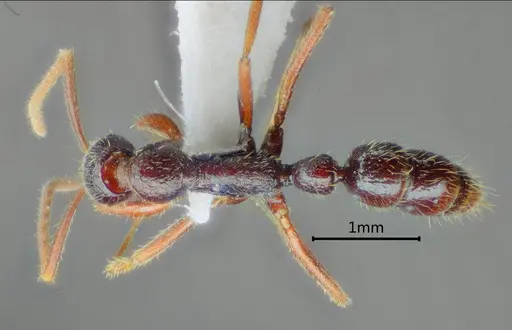
Literatura
Carregando mapa de distribuição...Carregando produtos...