
Leptanilla tanit
- Nome científico
- Leptanilla tanit
- Tribo
- Leptanillini
- Subfamília
- Leptanillinae
- Autor
- Santschi, 1907
- Distribuição
- Encontrada em 0 países
Introdução
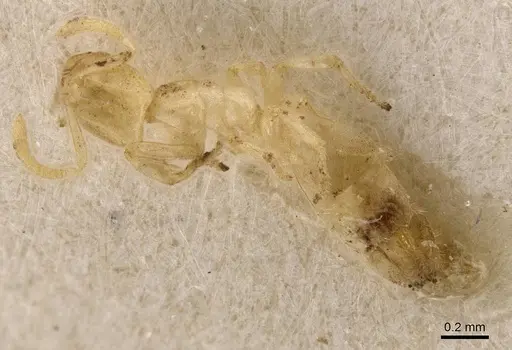
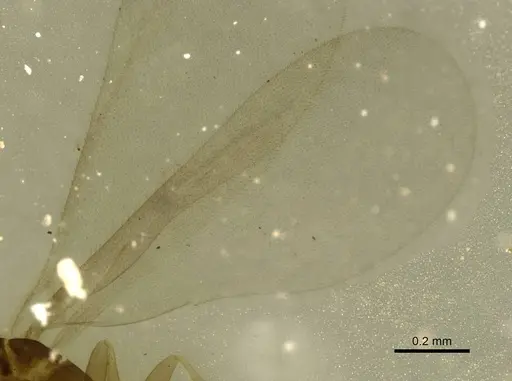
Leptanilla tanit is an extremely rare ant species known only from male specimens collected in Tunisia and Israel. Males are small, slender ants with distinctive wing venation features that distinguish them from related species. The species was originally described by Santschi in 1907 from Tunisia, with later records from Israel's Jordan Valley and southern Golan region. This is one of the most poorly known ant species in the world - no queens or workers have ever been documented, meaning there is essentially no information about their colony structure, nesting habits, or diet. The genus Leptanilla belongs to the Leptanillinae subfamily, a group of tiny, rarely encountered subterranean ants .
Quick Summary
- Difficulty: Expert
- Origin & Habitat: This species is known only from the Palaearctic region, specifically Tunisia (type locality in Kairouan) and Israel (Jordan Valley and southern Golan). The exact habitat preferences are unknown, but Leptanilla species are typically subterranean, living in soil or rotting wood in arid to semi-arid regions [4][2][3].
- Colony Type: Unknown, only male specimens have ever been collected. No queens or workers have been documented, so colony structure cannot be determined. This is one of the few ant species where the worker caste remains completely unknown to science.
- Size & Growth:
- Antkeeping:
- Temperature: Unknown for this specific species.
- Humidity: Unknown. Leptanilla species typically prefer moderately dry conditions, but specific requirements for L. tanit are unconfirmed.
- Diapause: Unknown, no seasonal data exists for this species.
- Nesting: Unknown, no natural nests have ever been found. Based on genus patterns, likely nests in soil or small cavities underground. Captive keeping would be entirely experimental.
- Behavior: Behavior is completely unstudied. Males were collected in Tunisia and Israel, suggesting this species is active during warmer months. No observations exist on worker behavior, aggression, or foraging. Escape risk cannot be assessed since workers are unknown.
- Common Issues: no captive colonies exist, this species has never been kept in captivity., no workers or queens are available in the antkeeping hobby, only males have ever been found., all care requirements are completely unknown and would be experimental., this species is essentially unavailable to antkeepers and may never be described from wild colonies.
Why This Species Is Exceptional
Leptanilla tanit represents one of the most enigmatic ant species in the world. Since its description in 1907,scientists have only ever collected male specimens, no queens, no workers, and no complete colonies have ever been found. This is extraordinarily rare among ants. The male specimens from Tunisia and Israel are the entirety of our knowledge about this species. This means there is essentially no biological or ecological data available for this ant. Even the most basic information that antkeepers need, what they eat, how they nest, how many workers a colony has, is completely unknown. This species exists in a kind of scientific limbo, known only from a handful of male specimens preserved in museum collections [1][2].
Distribution and Discovery
The species was first described by Felix Santschi in 1907 from male specimens collected in Kairouan, Tunisia. For decades, this was the only known record. In 2009,the species was reported for the first time from Israel, specifically in the Jordan Valley and southern Golan regions. This created an interesting biogeographic pattern, the species is uniquely shared between northern Africa (Tunisia) and the Levant (Israel), excluding Egypt. This distribution suggests the species may inhabit arid to semi-arid habitats across this region, but without knowing its exact habitat preferences, this remains speculative [3][4][2].
Taxonomy and Identification
Leptanilla tanit was originally described in the genus Phaulomyrma, but this genus was later synonymized with Leptanilla, making Phaulomyrma tanit the current valid combination. The species is distinguished from other Leptanilla by specific features of the male genitalia and the shape of the petiole node. In profile, the petiole node is very strongly convex anterodorsally, while in dorsal view the anterior margin appears slightly bilobate. These technical details are primarily useful for entomologists examining preserved specimens [1].
The Leptanillinae Lifestyle
While specific information about L. tanit is unavailable, we can make limited inferences from what is known about the Leptanillinae subfamily generally. These are among the smallest ants in the world. They are subterranean, meaning they live underground and are rarely seen on the surface. Many Leptanilla species are thought to be predators of other small arthropods, possibly soil-dwelling organisms. However, these are general patterns for the genus and may not apply to L. tanit specifically. Without workers to observe, we cannot confirm any of these inferences [5].
Current Scientific Status
This species represents a significant gap in myrmecology. The fact that only males have been found after over a century of searching suggests either the species is extremely rare, has very localized populations, or lives in habitats that are difficult to sample. It is possible that workers and queens exist but have simply never been collected. This makes L. tanit a species of significant scientific interest, any new collection of this species would be a major discovery. For antkeepers, this means the species is essentially unavailable and would be impossible to acquire even if desired [1][2].
Frequently Asked Questions
Can I keep Leptanilla tanit ants?
No. This species has never been kept in captivity and no workers or queens have ever been documented. There are no colonies available in the antkeeping hobby, and even if you found a wild colony, the complete absence of any biological data means no one could advise on their care.
What do Leptanilla tanit workers look like?
We do not know. Workers have never been described or documented for this species. This is one of the few ant species where the worker caste remains completely unknown to science.
Where does Leptanilla tanit live?
The species is known from two locations: Kairouan in Tunisia (type locality) and the Jordan Valley/southern Golan in Israel. The exact habitat type is unknown, but Leptanilla species typically live in soil or rotting wood in arid regions.
How big do Leptanilla tanit colonies get?
Unknown. No colonies have ever been observed.
What do Leptanilla tanit eat?
Unknown. No feeding observations exist. Many Leptanilla species are believed to be predatory on small soil arthropods, but this is unconfirmed for L. tanit.
Is Leptanilla tanit endangered?
We do not know enough to assess their conservation status. The species is known from very few specimens, suggesting either genuine rarity or simply difficulty in finding them. More research is needed.
Why are only males known for this species?
This is one of the great mysteries of ant biology. It could be that queens and workers live deep underground and are never encountered. It could also mean the species has unusual biology where only males disperse, or that scientists simply have not found the right habitat. The males collected in Tunisia and Israel were likely alates that left the nest to mate.
Do Leptanilla tanit queens exist?
No queens have ever been documented for this species. This is extremely unusual, nearly all ant species have known queen morphologies. It is possible queens exist but live entirely underground, or that the species reproduces in an unusual way.
Are there any close relatives with more information?
Yes, other Leptanilla species are better studied, though still poorly known. The genus Leptanilla includes several species where workers and queens have been described. These can provide very general clues about what L. tanit might be like, but the specific biology of L. tanit remains completely unknown.
How do I identify Leptanilla tanit?
This requires examining male genitalia under a microscope, specifically the shape of the petiole node and the terminalia. For antkeepers, this species is essentially irrelevant since no workers or colonies exist in the hobby. Identification is only relevant for researchers studying museum specimens.
Report an Issue
The current care sheet is based fully on literature. See inconsistencies, or something that's incorrect? Please , it will be resolved after review from an admin. Contributing to the blogs tab also helps providing information, to make us be able to further improve the caresheets. Thank you for your support!
References

Este guia de cuidados está sob a licença CC BY-SA 4.0 .
Posts da comunidade
CASENT0911456
Ver no AntWeb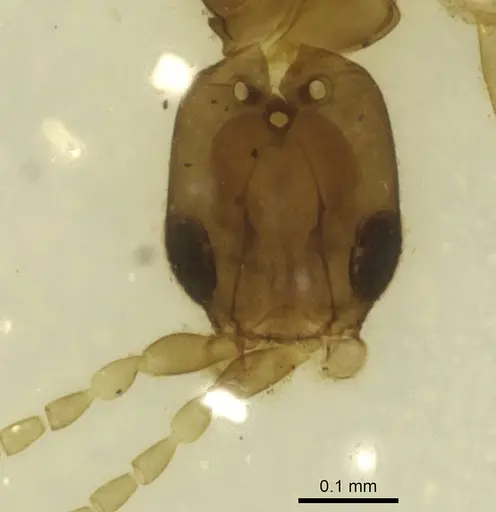
Literatura
Carregando mapa de distribuição...Carregando produtos...