
Leptanilla bethyloides
- Nome científico
- Leptanilla bethyloides
- Tribo
- Leptanillini
- Subfamília
- Leptanillinae
- Autor
- Griebenow, 2024
- Distribuição
- Encontrada em 0 países
Introdução
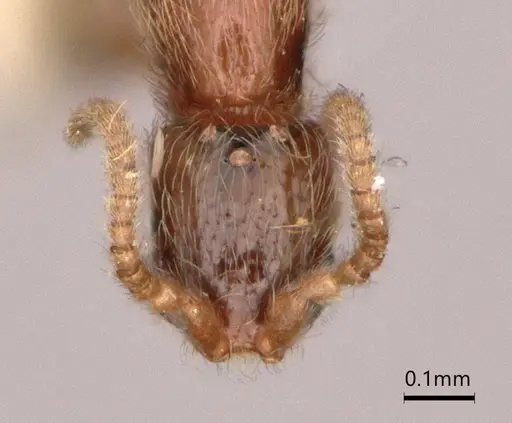
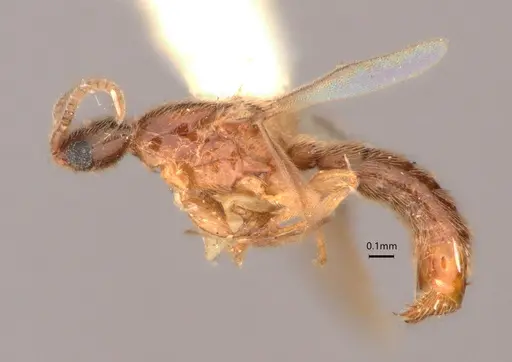
Leptanilla bethyloides is an extremely newly described species of tiny subterranean ant, known only from male specimens collected in Hong Kong. The species was formally described in 2024 and represents a major clade within the ant subfamily Leptanillinae . Males are minuscule, with distinctive morphological features including a quadrate head shape and the apparent absence of volsellae in the genitalia - a trait shared only with one other known Leptanilla species . The name 'bethyloides' refers to their resemblance to flat wasps (Bethylidae), as they were initially misidentified in museum collections . Workers have never been collected despite multiple attempts, making this one of the most poorly known ant species in existence . The genus Leptanilla contains extremely cryptic, subterranean ants that are rarely encountered, and this species exemplifies that challenge.
Quick Summary
- Difficulty: Expert
- Origin & Habitat: Only known from Hong Kong, specifically Tai Po Kau and Lantau Island at elevations ranging from 17 to 472 meters above sea level [2]. Specimens have been collected in habitats ranging from disturbed farmland to young and old growth secondary forests using Malaise traps [2]. This represents a tropical to subtropical climate with high year-round humidity.
- Colony Type: Unknown, only male specimens have ever been collected. Workers have remained elusive despite multiple collection efforts [2]. The colony structure (single-queen vs multi-queen) is completely unconfirmed.
- Size & Growth:
- Queen: Size data unavailable, queens have never been collected or described [1][2]
- Worker: Size data unavailable, workers have never been collected [2]. Based on genus patterns, workers would likely be extremely tiny
- Colony: Unknown, no colony data exists [2]
- Growth: Unknown, no developmental data exists
- Development: Unknown, no brood development has been studied (This species was only described in 2024 and workers have never been observed.)
- Antkeeping:
- Temperature: Temperature needs are unclear, based on Hong Kong's subtropical climate, likely 22-28°C. Provide a gentle gradient allowing ants to select their preferred temperature [2].
- Humidity: Based on the tropical Hong Kong environment, likely requires high humidity. Keep substrate consistently moist but not waterlogged. Provide a humidity gradient.
- Diapause: Diapause requirements are unknown, Hong Kong does not experience cold winters, so true diapause is unlikely [2].
- Nesting: Nesting preferences in captivity are unknown. In nature, Leptanilla species typically nest in soil or rotting wood in subterranean chambers. Given their minute size, they likely prefer tight chambers scaled to their tiny body size.
- Behavior: Behavior is completely unstudied in captivity. Based on genus patterns, these are likely cryptic, slow-moving ants that forage underground for tiny prey. Males were collected via Malaise traps, suggesting they are weak fliers. Escape prevention must be excellent given their extremely small size, they would likely squeeze through standard ant mesh. Temperament is unknown but Leptanilla species are not known to be aggressive.
- Common Issues: workers have never been collected, obtaining this species would require specialized breeding [2]., no captive husbandry data exists, you would be pioneering all care methods [1][2]., escape prevention is critical, these ants would be among the smallest kept in captivity and could squeeze through standard ant mesh., diet in captivity is completely unknown, experimentation with tiny live prey would be required., colony structure is unconfirmed, combining queens without data is not recommended.
Species Discovery and Rarity
Leptanilla bethyloides represents one of the most recently described and least known ant species in the world. It was formally described in 2024 by Zachary Griebenow based solely on male specimens collected in Hong Kong between 1964 and 2023 [1]. The description of a new ant species from only male specimens is generally discouraged in ant taxonomy because it creates identification challenges, but in this case it was justified to give a formal name to a major evolutionary lineage known only from males [1]. Workers have never been collected despite targeted collection efforts using various methods including Malaise traps, suggesting this species has an extremely cryptic subterranean lifestyle [2]. Only four male specimens have ever been documented [1][2]. This makes Leptanilla bethyloides perhaps the least known ant species available in the antkeeping hobby, with essentially all biological information being inferred from related species or genus-level patterns.
Why This Species Is So Poorly Known
The complete absence of worker specimens in collection records is remarkable but not unusual for the genus Leptanilla. These are among the smallest ants in the world, with completely subterranean lifestyles that make them nearly impossible to find through standard ant collection methods [2]. Males have been collected using Malaise traps at elevations ranging from 17 to 472 meters, but workers have never been captured despite these efforts [2]. The collection dates span from May through September, suggesting nuptial flights occur during the warm summer months in Hong Kong [2]. The habitats where males were found include disturbed farmland, young secondary forest, and old growth secondary forest, demonstrating some flexibility in habitat preference [2]. This species serves as a reminder of how little we still know about even relatively common ant groups in tropical regions.
Inferred Biology and Care Recommendations
Since no direct biological data exists for this species, all care recommendations must be based on inference from related Leptanilla species and general ant biology. The genus Leptanilla consists of extremely small, pale ants that typically nest in soil or rotting wood in forested areas. They are believed to be predators on other tiny arthropods, likely springtails, mites, and similar micro-arthropods found in soil [1]. Queens are almost certainly claustral based on genus patterns, but this has not been confirmed for this species. Given their likely subterranean lifestyle, these ants probably prefer dark, humid nest conditions with minimal disturbance. The extremely small size of males suggests workers would be among the smallest ants in existence, requiring exceptional escape prevention measures, standard ant mesh would not contain them. Temperature should likely be maintained in the low-to-mid 20s Celsius, reflecting Hong Kong's subtropical climate.
Housing and Setup Recommendations
Based on inferred biology, housing should consist of a small, humid nest with tight chambers scaled to their minute size. A Y-tong nest with very narrow chambers or a small plaster nest would be appropriate. The outworld should be simple and easy to maintain at high humidity. Escape prevention is absolutely critical, these ants would be capable of squeezing through gaps that other ants cannot pass. Use tight-fitting lids and consider double-barrier systems. Because nothing is known about their diet in captivity, you should experiment with tiny live prey such as springtails, fruit flies, and other micro-arthropods. Sugar sources may or may not be accepted, offer occasionally but do not rely on them. Start with room temperature (around 22-26°C) and observe colony behavior to determine optimal conditions. Given the complete lack of captive husbandry data, keeping this species should be considered an expert-level challenge requiring careful observation and experimentation.
Legal and Ethical Considerations
Leptanilla bethyloides is only known from Hong Kong, China. If you obtain this species, it would almost certainly be from a specialized breeder since wild collection would be extremely difficult given workers have never been found. Never release this or any non-native ant species into the environment, they could become invasive or disrupt native ecosystems. This species has no established population outside its native range and should not be introduced to other countries. Additionally, given how rare and newly described this species is, ensure your source is ethical and that the ants were not taken from protected areas. The scientific community is still learning about this species, so any captive observations would be valuable contributions to knowledge, consider documenting your findings. [1][2]
Frequently Asked Questions
Can I keep Leptanilla bethyloides as a pet ant?
Yes, but this is an expert-level species. Workers have never been collected, so captive colonies would need to come from specialized breeders who have obtained them. There is no established husbandry knowledge for this species, you would essentially be pioneering its care. Expect to experiment and adapt based on your observations.
What do Leptanilla bethyloides eat?
Diet in captivity is unknown. Based on genus patterns, they likely prey on tiny arthropods like springtails, mites, and micro-arthropods. Offer small live prey and experiment. Sugar acceptance is uncertain, offer honey or sugar water occasionally but do not rely on it as a primary food source.
How long does it take for Leptanilla bethyloides to develop from egg to worker?
Completely unknown, no brood development has ever been studied for this species.
What size colony does Leptanilla bethyloides reach?
Unknown, no colony size data exists. Based on related species, colonies are likely small given their minute size and cryptic lifestyle.
Do Leptanilla bethyloides ants sting?
Unknown, workers have never been observed. Given their extremely small size, any sting would likely be imperceptible to humans even if present.
What temperature should I keep Leptanilla bethyloides at?
Start around 22-26°C based on Hong Kong's subtropical climate. Provide a temperature gradient so the ants can select their preferred range. Observe colony behavior, if they cluster in warmer areas, increase temperature slightly, if they avoid heated areas, reduce temperature.
Do Leptanilla bethyloides need hibernation?
Diapause requirements are unknown, Hong Kong does not experience cold winters, so true diapause is unlikely. However, activity may naturally slow during cooler months.
Is Leptanilla bethyloides a good species for beginners?
No. This is one of the least known ant species in existence with zero captive husbandry data. Keeping it successfully would require expert-level skills in ant keeping and significant willingness to experiment. There are many better-documented species available.
Can I keep multiple Leptanilla bethyloides queens together?
Unknown, colony structure has never been documented. Without data on natural colony organization, combining unrelated queens is not recommended.
What is the best nest type for Leptanilla bethyloides?
Nesting preferences in captivity are unknown, but based on genus patterns, likely a small, humid nest with very tight chambers scaled to their minute size. A Y-tong nest with narrow chambers or a small plaster nest would be appropriate starting points. The key is excellent escape prevention, these would be among the smallest ants kept in captivity.
Where does Leptanilla bethyloides come from?
Only known from Hong Kong, China. Specimens have been collected from Tai Po Kau, Lantau Island, and surrounding areas at elevations from 17 to 472 meters. This is a tropical to subtropical environment with high humidity year-round.
Report an Issue
The current care sheet is based fully on literature. See inconsistencies, or something that's incorrect? Please , it will be resolved after review from an admin. Contributing to the blogs tab also helps providing information, to make us be able to further improve the caresheets. Thank you for your support!
References

Este guia de cuidados está sob a licença CC BY-SA 4.0 .
Posts da comunidade
CASENT0842864
Ver no AntWeb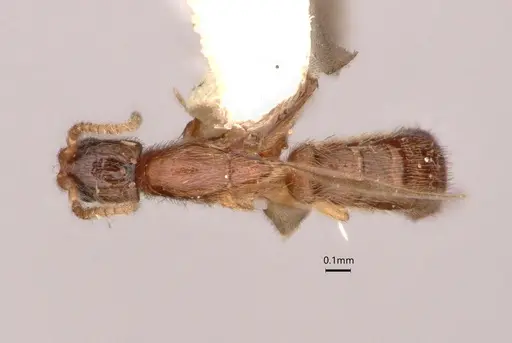
Literatura
Carregando mapa de distribuição...Carregando produtos...