
Lepisiota oculata
- Nome científico
- Lepisiota oculata
- Tribo
- Plagiolepidini
- Subfamília
- Formicinae
- Autor
- Santschi, 1935
- Distribuição
- Encontrada em 0 países
Introdução
Lepisiota oculata is a small ant species described from the Democratic Republic of Congo in 1935 . Size data is unavailable from current literature. The species is found in the Afrotropical region, including Democratic Republic of Congo, Gabon, and Benin . Workers are ground-nesting and have been documented in mango orchards in Benin . A notable aspect is that this species serves as prey for weaver ants (Oecophylla longinoda) in the wild .
Quick Summary
- Difficulty: Medium
- Origin & Habitat: Afrotropical region: Democratic Republic of Congo, Gabon, and Benin. Found in ground habitats and mango orchards [2][1][3].
- Colony Type: Unconfirmed colony structure, likely monogyne (single queen) based on typical genus patterns, but not directly studied [3].
- Size & Growth:
- Queen: Size data unavailable
- Worker: Size data unavailable
- Colony: Unknown
- Growth: Unknown
- Development: Unknown, no specific data available (Development timeline is unconfirmed, based on tropical Formicinae patterns, it may take several weeks at warm temperatures.)
- Antkeeping:
- Temperature: Maintain warm conditions around 24-28°C, based on tropical origin [3].
- Humidity: Keep nest substrate consistently moist but not waterlogged, as ground-nesting species [3].
- Diapause: No diapause required, maintain year-round warm conditions [3].
- Nesting: Ground-nesting species, use soil-based nests or Y-tong (AAC) nests with moisture chambers. Provide an outworld for foraging [3].
- Behavior: Temperament undocumented, likely moderate aggression when defending nest. Escape risk is moderate due to small size, ensure barriers are adequate [3].
- Common Issues: Escape risk due to small size, inadequate barriers may lead to colony loss., Founding behavior unconfirmed, queen establishment may fail., Limited care data requires close monitoring to prevent colony decline.
Natural History and Distribution
Lepisiota oculata was originally described by Santschi in 1935 from the Democratic Republic of Congo, later transferred to the genus Lepisiota [1]. The species has been recorded in Gabon and Benin [2][3]. In Benin, it is found in mango orchards where it serves as prey for weaver ants, indicating a low position in the local ant hierarchy [3].
Nest Preferences
This is a ground-nesting species documented in agricultural settings like mango orchards [3]. In captivity, provide a nest with soil or moist substrate for tunneling. Use Y-tong (AAC) or plaster nests with moisture chambers, scaled to their small size. Include an outworld connected to the nest for foraging.
Feeding and Diet
No specific dietary studies exist for this species. Based on typical Lepisiota behavior and their role as prey, they likely forage for small insects and honeydew. In captivity, offer sugar water or honey for energy and small protein sources like fruit flies or pinhead crickets. Observe colony preferences and adjust diet accordingly. [3]
Temperature and Seasonal Care
As a tropical African species, Lepisiota oculata requires warm conditions year-round. Maintain temperatures around 24-28°C with a gentle gradient for self-regulation. Unlike temperate species, no winter diapause is needed. Consistent warmth supports colony growth and brood development. [3]
Colony Development and Growth
No specific development timeline data exists for this species. Based on related tropical Formicinae, development may take several weeks at optimal temperatures. Founding behavior is unconfirmed, and growth rate is unknown. Patience is required due to limited data. [3]
Frequently Asked Questions
How long does it take for Lepisiota oculata to produce first workers?
Unknown, no specific data available. Based on tropical Formicinae patterns, it may take several weeks at warm temperatures.
What temperature should I keep Lepisiota oculata at?
Maintain warm conditions around 24-28°C, based on tropical origin [3].
Is Lepisiota oculata a good species for beginners?
Due to limited documented care information, this species is not ideal for beginners. Successful keeping may be challenging without specific data.
What do Lepisiota oculata ants eat?
No specific dietary data exists. Offer sugar sources like honey and small protein prey such as fruit flies [3].
How big do Lepisiota oculata colonies get?
Colony size is unknown from current literature.
Do Lepisiota oculata queens found colonies alone?
Founding behavior is unconfirmed, so it is unclear if queens found colonies alone.
Does Lepisiota oculata need hibernation?
No, as a tropical species, they do not require hibernation. Maintain warm conditions year-round [3].
What type of nest should I use for Lepisiota oculata?
Ground-nesting species do well with soil-based nests or Y-tong (AAC) nests with moisture chambers [3].
Where is Lepisiota oculata found in the wild?
Democratic Republic of Congo, Gabon, and Benin in the Afrotropical region, often in mango orchards [2][1][3].
Report an Issue
The current care sheet is based fully on literature. See inconsistencies, or something that's incorrect? Please , it will be resolved after review from an admin. Contributing to the blogs tab also helps providing information, to make us be able to further improve the caresheets. Thank you for your support!
References

Este guia de cuidados está sob a licença CC BY-SA 4.0 .
Posts da comunidade
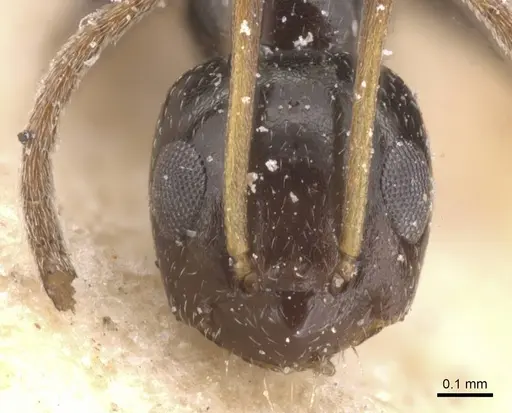
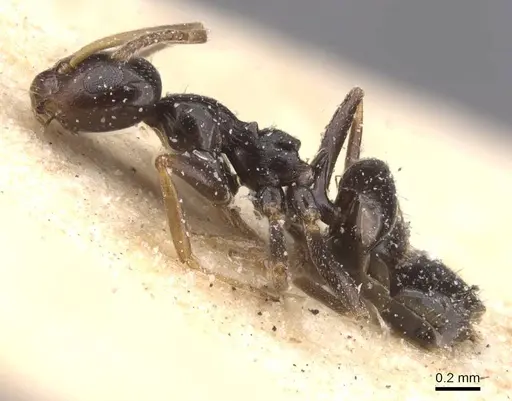
CASENT0912401
Ver no AntWeb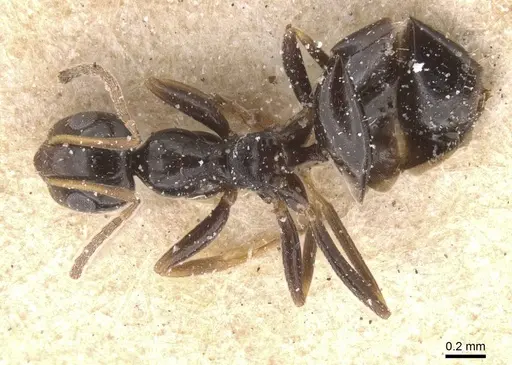
Literatura
Carregando mapa de distribuição...Carregando produtos...