
Lachnomyrmex laticeps
- Nome científico
- Lachnomyrmex laticeps
- Tribo
- Attini
- Subfamília
- Myrmicinae
- Autor
- Feitosa & Brandão, 2008
- Distribuição
- Encontrada em 1 países
Introdução
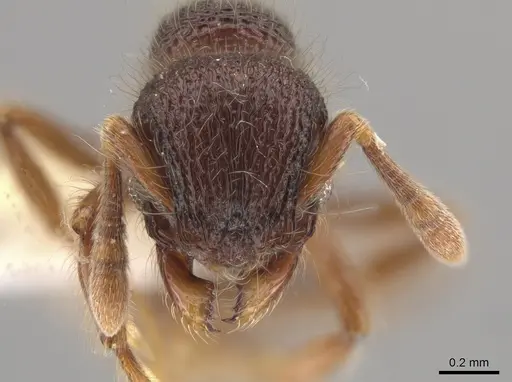
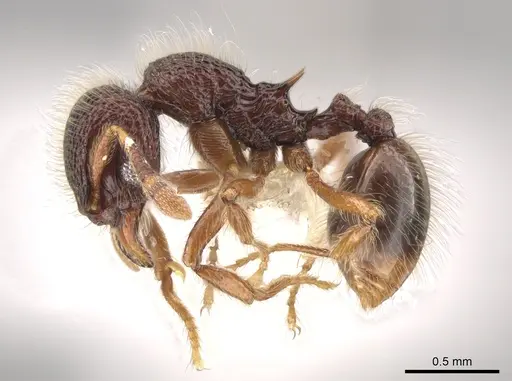
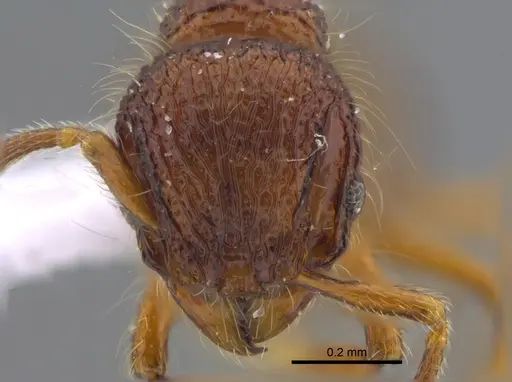
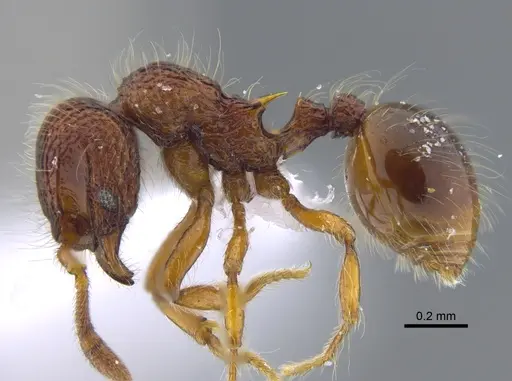
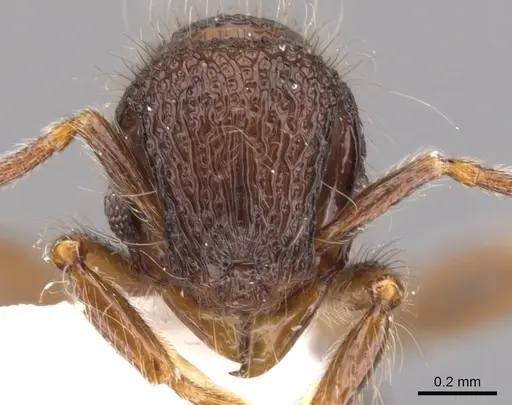
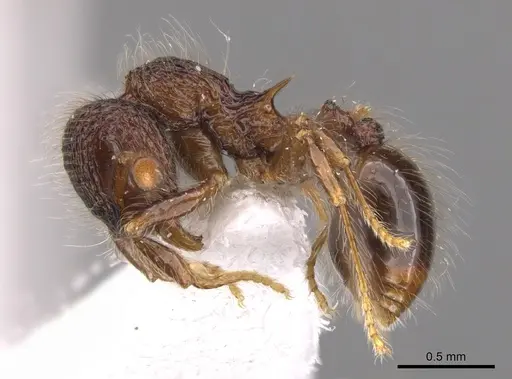
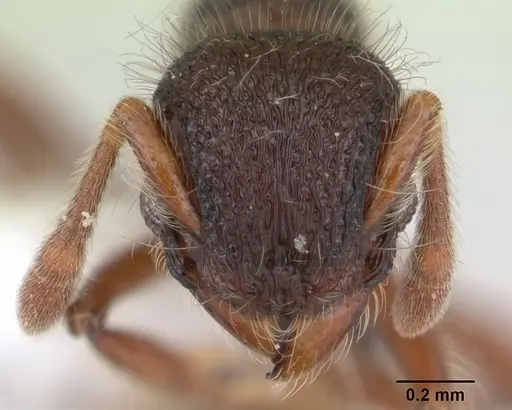
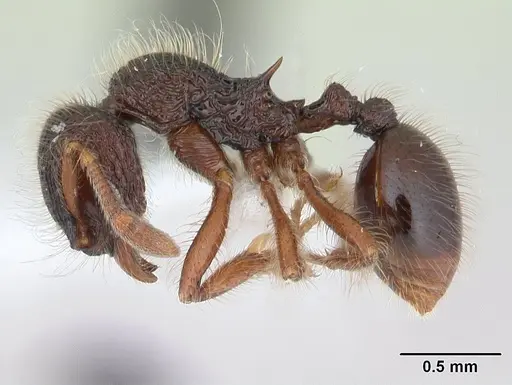
Lachnomyrmex laticeps is a tiny Neotropical ant from Costa Rica's mature wet forests at 500–1100 m elevation. Workers measure about 3.7 mm total length and are reddish to dark brown with lighter appendages. They are covered in exceptionally dense, long hairs, even on the first abdominal segment, and have a broad, flat‑topped head . They nest in clay banks or rotten wood and forage alone in leaf litter, never recruiting nestmates . Described only in 2008,the queen is still unknown, making this one of the least‑understood ant species in the hobby .
Quick Summary
- Difficulty: Expert
- Origin & Habitat: Costa Rica (Heredia and Alajuela provinces), in mature wet forests from 500 to 1100 m elevation, often found near streams in shaded, humid environments [1][3].
- Colony Type: Apparently monogynic (single queen) – though the queen has never been described [2][4].
- Size & Growth:
- Antkeeping:
- Temperature: Keep around 22–26°C, mimicking their cloud forest habitat. Avoid temperatures above 28°C [1].
- Humidity: High humidity is essential. Keep the nest substrate consistently damp but not waterlogged, and provide a water tube. Aim for the conditions of a moist forest floor [1][2].
- Diapause: Unknown – given their tropical origin, true hibernation is unlikely but may slow activity in cooler months [1].
- Nesting: Provide a naturalistic setup with moist substrate (plaster, soil, or Y‑tong) and small chambers, mimicking clay banks or rotten wood. Tiny passages work best [1][2].
- Behavior: Workers are solitary foragers that do not form recruitment trails [2]. They are non‑aggressive and will flee rather than fight. Their small size (3.7 mm) makes escape prevention critical – use fine‑mesh barriers. No stinging behavior documented, and they are harmless to humans [1].
- Common Issues: escape prevention is critical – they can squeeze through standard gaps, no established captive protocols exist, colonies remain very small even in the wild, high humidity can cause mold if ventilation is poor, queen and founding behavior are completely unknown
Natural History and Distribution
Lachnomyrmex laticeps is known only from Costa Rica, in the Heredia and Alajuela provinces at elevations of 500–1100 m. The only documented nest was found in a clay bank above a small stream at 800 m. It had a small flask‑shaped entrance leading to a tiny chamber containing just a few workers – no brood or queens were found [1][3]. The species lives in the leaf litter of submontane wet forests, where workers forage alone on the ground or among fallen leaves [2].
Identification and Appearance
Workers are small (total length 3.69–3.78 mm) and reddish to dark brown with lighter antennae and legs. Their most striking feature is an exceptionally dense coating of long hairs, covering even the first gastral tergite. The head is broad and flat on top, and the body is covered with fine, vermiculate sculpturing. They have strongly convex promesonotum, a shallow metanotal groove, and straight propodeal spines [1].
Housing and Nesting
In the wild, these ants nest in small chambers in clay banks, rotten wood, or leaf litter. A flask‑shaped entrance leads to a tiny chamber [1][2]. For captive care, provide a small naturalistic setup with moist substrate (plaster, soil, or Y‑tong) and narrow chambers. Test tubes may be too large for such tiny ants. Keep the substrate consistently damp – think a moist forest floor, not dry conditions. A humidity gradient is recommended: a damp area for the nest and a drier outworld [1][2].
Feeding and Diet
Lachnomyrmex belongs to the tribe Attini, which typically farms fungus, but the exact diet of L. laticeps is not documented. In captivity, offer small protein sources like fruit flies, pinhead crickets, and other micro‑arthropods. Sugar water or honey may be accepted but is not a primary food. Because workers forage alone, place food directly in their path and remove leftovers after 24–48 hours [2].
Behavior and Colony Structure
Workers are solitary foragers and do not recruit nestmates or form pheromone trails [2]. They are not aggressive. Only workers have been collected, the queen and males remain unknown. Wild colonies appear to be monogynous and contain only a few workers [2][1].
Frequently Asked Questions
Can I keep Lachnomyrmex laticeps as a pet ant?
No. This species is virtually unknown in the hobby, the queen has never been described, and no captive protocols exist. Wild colonies are tiny and rare – collecting them would be ecologically irresponsible. Choose a better‑documented species.
How big do colonies get?
Wild colonies are very small – the one documented nest held only a few workers. The maximum size is unknown [1][2].
What do they eat?
Their exact diet is unknown. Offer small protein sources such as fruit flies and pinhead crickets. Sugar water may be accepted but is not a primary food [2].
What temperature do they need?
Keep them around 22–26°C. Avoid temperatures above 28°C. They come from cool, stable cloud forests [1].
Do they need hibernation?
Unknown. Given their tropical origin, true hibernation is unlikely, but they may reduce activity in cooler months [1].
How do I identify them?
Look for tiny size (~3.7 mm), reddish‑brown color with lighter limbs, extremely dense body hairs, and a broad, flat‑topped head. These features separate them from similar species [1].
Where do they live in the wild?
Only in Costa Rica, at 500–1100 m elevation in mature wet forests, nesting in clay banks, rotting wood, or leaf litter near streams [1][3].
Can I catch a queen?
No – the queen has never been described. No one knows what she looks like, when flights occur, or how colonies are founded [2][4].
Are they aggressive?
No. They are solitary foragers that do not defend food and flee from threats [2].
Report an Issue
The current care sheet is based fully on literature. See inconsistencies, or something that's incorrect? Please , it will be resolved after review from an admin. Contributing to the blogs tab also helps providing information, to make us be able to further improve the caresheets. Thank you for your support!
References

Este guia de cuidados está sob a licença CC BY-SA 4.0 .
Posts da comunidade
CASENT0637898
Ver no AntWeb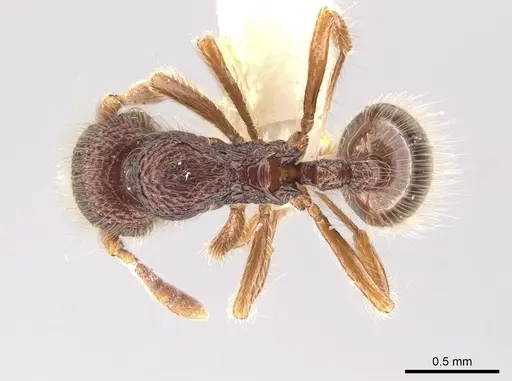
CBUMAGENT41721
Ver no AntWeb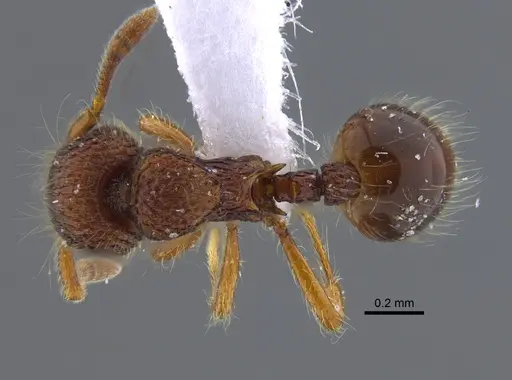
INB0003679758
Ver no AntWeb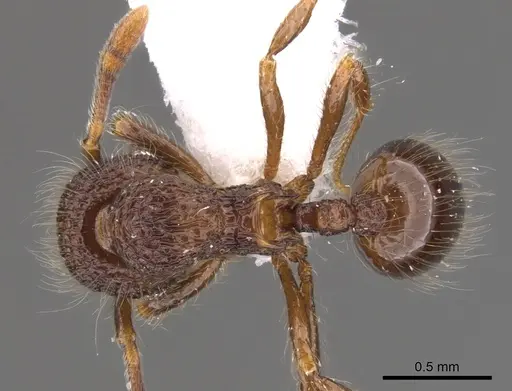
JTLC000008161
Ver no AntWeb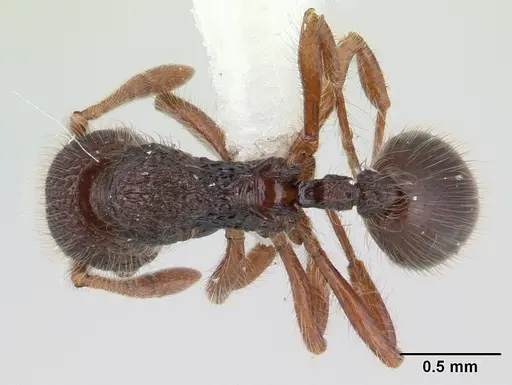
Literatura
Carregando mapa de distribuição...Carregando produtos...