
Hypoponera zwaluwenburgi
- Nome científico
- Hypoponera zwaluwenburgi
- Tribo
- Ponerini
- Subfamília
- Ponerinae
- Autor
- Wheeler, 1933
- Distribuição
- Encontrada em 0 países
Introdução
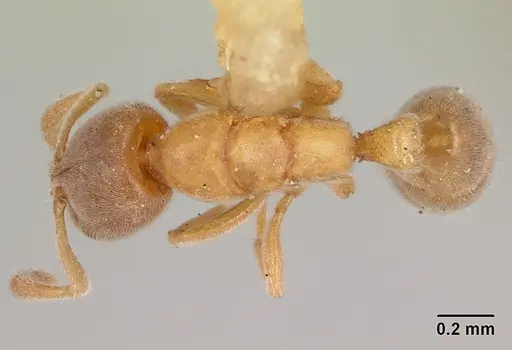
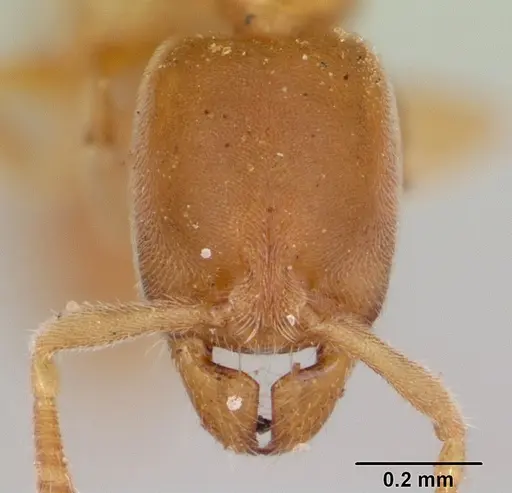
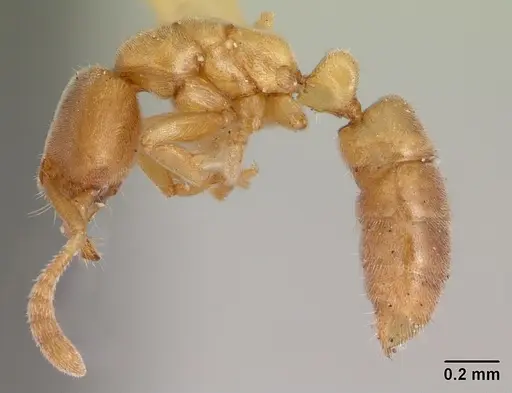
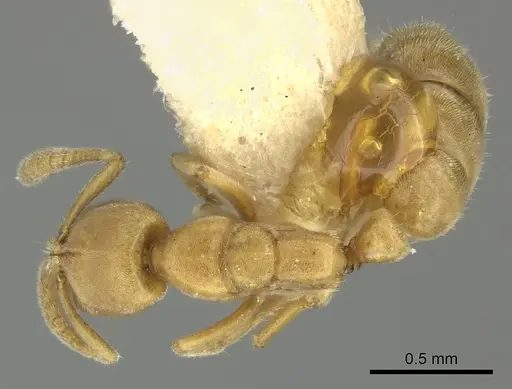
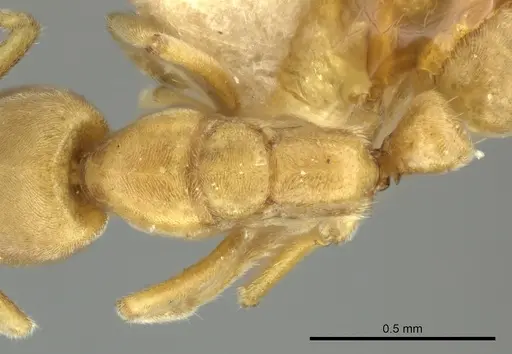
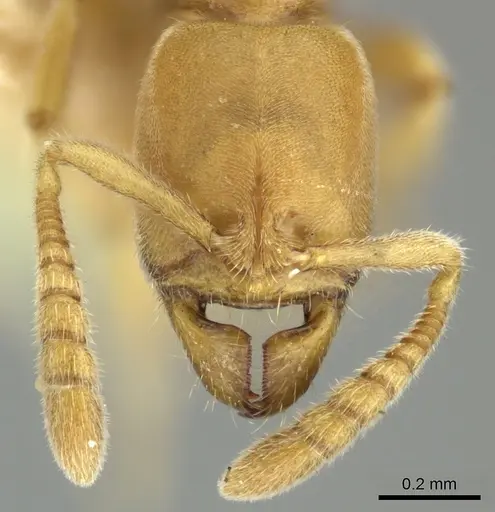
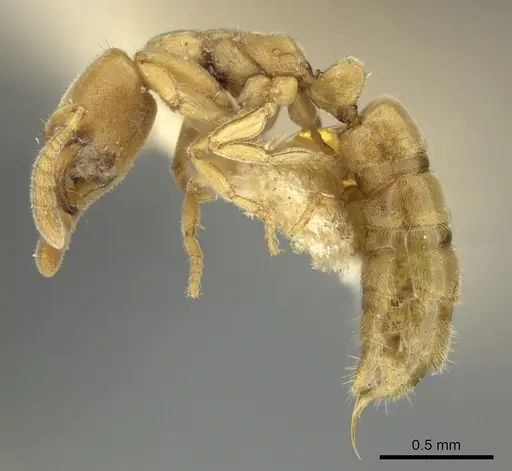
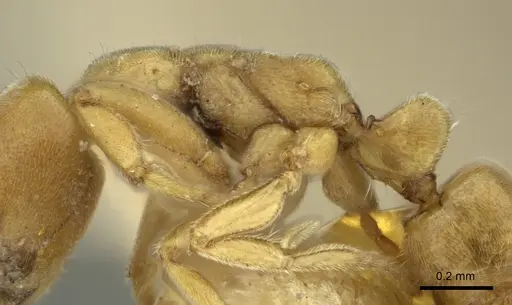
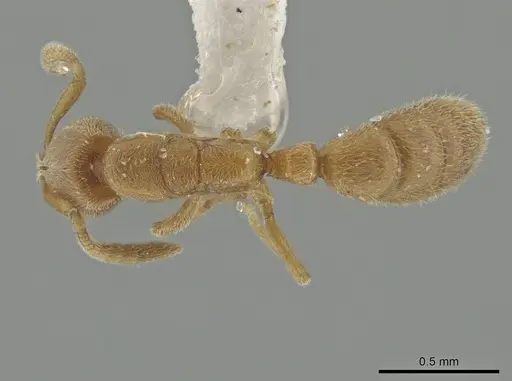
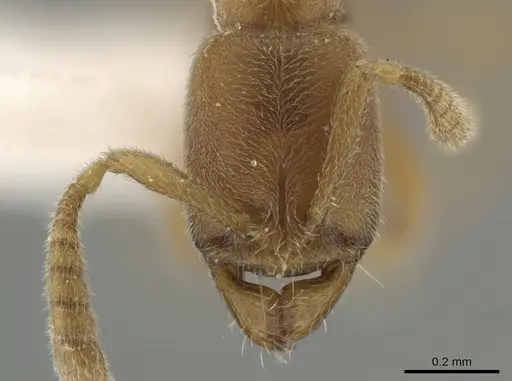
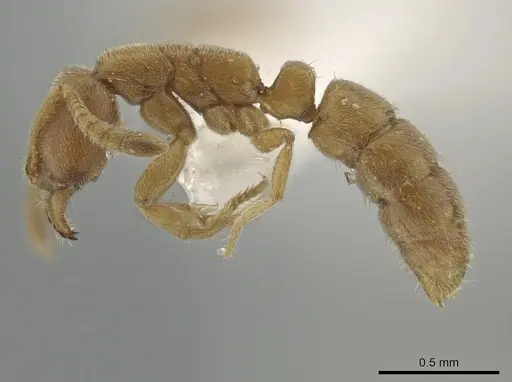
Hypoponera zwaluwenburgi is a tiny, subterranean ant measuring 2-2.3mm in total length . This species belongs to the Ponerinae subfamily and is completely blind with no eyes . Workers are brownish yellow with a slender body, a large stinger, and a distinctly 5-jointed antenna club . The species was originally described from Hawaii in 1933,where it was found living several inches below the surface in sugar-cane field soil . It has also been recorded in Japan and Singapore, though its native range remains uncertain . This cryptobiotic species lives almost entirely underground and was last recorded in Hawaii in 1967 .
Quick Summary
- Difficulty: Medium
- Origin & Habitat: Native range presumed to be Japan, with introduced populations in Hawaii and recorded in Singapore [1]. In Hawaii, found in soil of cultivated and fallow sugar-cane fields at several inches depth [2]. This is a cryptic, subterranean species that lives underground and is rarely seen on the surface [3].
- Colony Type: Colony structure is unconfirmed. Based on related Hypoponera species, likely single-queen colonies. The species is cryptobiotic, living almost entirely below ground [3][4].
- Size & Growth:
- Antkeeping:
- Temperature: Keep around 24-26°C. This range supports activity for tropical and subtropical Hypoponera species. A gentle gradient allows workers to self-regulate.
- Humidity: High humidity is essential. These ants live in soil and require consistently moist substrate. Keep the nest substrate damp but not waterlogged.
- Diapause: Unknown, as a likely tropical to subtropical species from Japan, Hawaii, and Singapore, diapause requirements are unconfirmed.
- Nesting: Y-tong or plaster nests work well for these tiny ants. They prefer tight chambers that mimic their natural soil environment. A naturalistic setup with moist soil also works.
- Behavior: This is a cryptic, subterranean ant that rarely comes to the surface. Workers are blind and navigate primarily through chemical cues. They are likely predacious, hunting small soil arthropods. The large stinger suggests they can defend themselves, though their small size makes them relatively harmless to humans. Escape risk is low due to their tiny size and preference for staying in the nest, but fine mesh is still recommended due to their ability to squeeze through small gaps.
- Common Issues: cryptobiotic nature makes them hard to observe, they may spend most time hidden in nest chambers, colonies are likely small and slow-growing, requiring patience, high humidity needs create mold risk if ventilation is poor, blind workers may have difficulty finding food in large outworlds, the species is extremely rare in the hobby and may not be available
Natural History
Hypoponera zwaluwenburgi is a cryptobiotic ant species, meaning it lives almost entirely underground and is rarely seen on the surface [3]. Originally described from Hawaii in 1933,this species was found living several inches below the soil surface in sugar-cane fields on Oahu and Maui [2]. The species has also been recorded in Japan and Singapore, though its true native range remains uncertain [1]. The Hawaiian populations were likely introduced through human activity, possibly in soil or plant material from sugar-cane cultivation [1]. This ant belongs to the archaic Ponerinae subfamily and is closely related to East Indian and Papuan species [2]. Workers are completely blind with no eyes, navigating their underground world through chemical and tactile senses [1]. The species was last recorded in Hawaii in 1967 and may still be present but undetected due to its subterranean habits [3][4]. It is classified in the CRYPTIC functional group [5].
Housing and Nesting
These tiny ants require nests with small, tight chambers scaled to their 2-3mm size. Y-tong or plaster nests work well, providing the darkness and humidity they need. A naturalistic setup with moist soil in a small container can also work, though it makes observation more difficult. Keep the nest completely dark or provide only dim lighting, as these ants are blind and prefer darkness. The outworld should be small and simple, these ants are not active foragers on the surface. Use fine mesh on any openings because despite their small size, they can squeeze through surprisingly small gaps.
Feeding and Diet
Like other Hypoponera species, this ant is likely predacious on small soil arthropods. Offer small live prey such as springtails, fruit flies, and other tiny insects. Due to their subterranean nature, they may not readily forage in open spaces, place prey directly in or near the nest entrance. Sugar sources may be accepted but are not a primary part of their diet. Feed small amounts of protein 2-3 times per week, removing any uneaten prey after 24 hours.
Temperature and Humidity
Maintain temperatures around 24-26°C, which matches their likely tropical to subtropical origin. A slight temperature gradient allows workers to self-regulate. High humidity is critical, these ants live in soil and need consistently moist substrate. The nest material should feel damp but water should not pool. Poor ventilation combined with high humidity can cause mold problems, so ensure adequate air flow while maintaining moisture.
Colony Care
This species appears to be rare in the antkeeping hobby, and established colonies may be difficult to obtain. Colonies are likely small based on their cryptic subterranean lifestyle. Growth rate is unknown, be patient and avoid disturbing the colony frequently. These ants are not aggressive and the large stinger cannot penetrate human skin. Handle with care and keep disturbance to a minimum. [3]
Frequently Asked Questions
How long does it take for Hypoponera zwaluwenburgi to produce first workers?
The exact timeline is unconfirmed. Development has not been directly studied for this species.
What do Hypoponera zwaluwenburgi ants eat?
They are likely predacious on small soil arthropods. Feed small live prey like springtails, fruit flies, and other tiny insects. Place prey near the nest entrance as they may not actively forage in open spaces.
Are Hypoponera zwaluwenburgi good for beginners?
This species is not ideal for beginners due to their cryptic nature, specific humidity requirements, and rarity in the hobby. They are difficult to observe and require patient care.
What temperature do Hypoponera zwaluwenburgi need?
Keep them around 24-26°C. This supports activity for this likely tropical to subtropical species.
Do Hypoponera zwaluwenburgi need hibernation?
Diapause requirements are unknown. As a species from Japan, Hawaii, and Singapore, they may not require a true hibernation but might benefit from a slight cool period in winter.
How big do Hypoponera zwaluwenburgi colonies get?
Colony size is unconfirmed but likely small based on their cryptic subterranean lifestyle.
Can I keep multiple queens together?
Colony structure is unconfirmed for this species. Combining unrelated queens is not recommended as it has not been documented.
Why are my Hypoponera zwaluwenburgi always hiding?
This is normal, they are cryptobiotic ants that prefer darkness and rarely come to the surface. They are not active foragers like many other ant species.
What is the best nest type for Hypoponera zwaluwenburgi?
Y-tong or plaster nests with small chambers work well. They need darkness and high humidity. Avoid bright lighting and ensure the nest material stays moist.
Report an Issue
The current care sheet is based fully on literature. See inconsistencies, or something that's incorrect? Please , it will be resolved after review from an admin. Contributing to the blogs tab also helps providing information, to make us be able to further improve the caresheets. Thank you for your support!
References

Este guia de cuidados está sob a licença CC BY-SA 4.0 .
Posts da comunidade
Literatura
Carregando mapa de distribuição...Carregando produtos...