
Hypoponera regis
- Nome científico
- Hypoponera regis
- Tribo
- Ponerini
- Subfamília
- Ponerinae
- Autor
- Bolton & Fisher, 2011
- Distribuição
- Encontrada em 0 países
Introdução
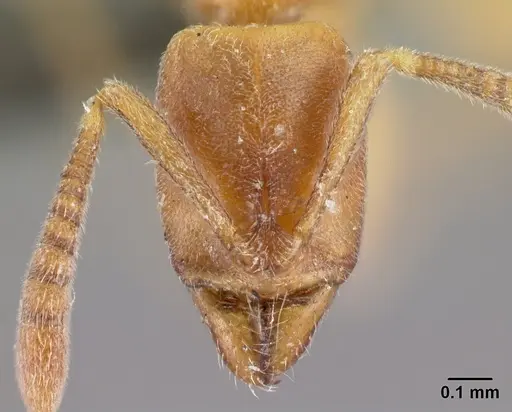
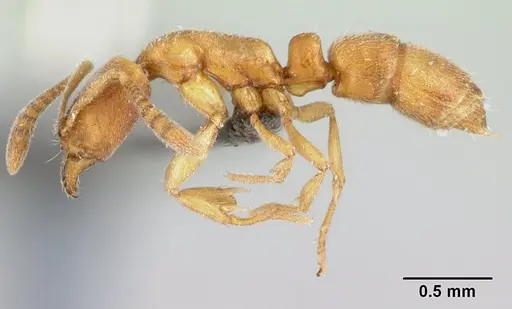
Hypoponera regis is a tiny Ponerine ant species described in 2011 from a single worker specimen collected in the Kilindi Forest Reserve in Tanzania. Workers have a distinctive yellow coloration and completely absent eyes - a trait common to hypogaeic (subterranean) ants that live their lives underground. The petiole node has an unusual shape, being as long as broad, which is very rare within the genus . This is one of the least-studied ant species in existence, known only from a single specimen captured in a pitfall trap in primary forest at 1015m elevation . As a Ponerine ant, they are related to predatory species, though their exact diet and behavior remain completely unstudied.
Quick Summary
- Difficulty: Unknown, likely Expert
- Origin & Habitat: Tanzania, Kilindi Forest Reserve in the Tanga Region. Found in primary forest at 1015m elevation [1]. The pitfall trap collection suggests they are ground-dwelling and likely hypogaeic (living underground).
- Colony Type: Unknown, only a single worker specimen has ever been documented [1].
- Size & Growth:
- Queen: Unknown, no queen has been documented [1]
- Worker: size data unavailable, the only specimen measured has head length 0.64mm and mesosoma length 0.80mm, but total body length was not recorded [1]
- Colony: Unknown, no colony data exists
- Growth: Unknown
- Development: Unknown, no development data exists for this species (No data available)
- Antkeeping:
- Temperature: Unconfirmed, start around 22-26°C and observe colony activity.
- Humidity: Unconfirmed, likely requires high humidity given the primary forest habitat. Keep substrate consistently moist but not waterlogged.
- Diapause: Unknown, tropical origin suggests year-round activity is possible, but no data exists
- Nesting: Unconfirmed, likely nests in soil or rotting wood based on genus patterns. A naturalistic setup with moist substrate or a Y-tong/plaster nest would be appropriate starting points.
- Behavior: Completely unstudied. Based on genus patterns, they are likely predatory on small invertebrates. The absence of eyes indicates a subterranean lifestyle. Escape risk is moderate given their small size, use standard barriers. As a Ponerine ant, they have a functional stinger, though these are tiny ants and sting severity would be minimal.
- Common Issues: this species is essentially unknown in captivity, no established care protocols exist, no breeding stock is available since only a single wild specimen has ever been documented, complete lack of biological data makes successful captive keeping highly uncertain, tropical species may not tolerate temperature drops below 20°C, small size and unknown behavior make them challenging even for experienced keepers
Why This Species Is Extremely Challenging
Hypoponera regis represents one of the most poorly documented ant species in the world. It is known from a single worker specimen collected in 2005 in Tanzania, no queens, no males, no colony samples, and no biological observations have ever been published [1]. This means there is no scientific data whatsoever on their diet, colony size, founding behavior, temperature preferences, or any aspect of their biology. Even the genus-level patterns for Hypoponera are poorly understood compared to more common ant groups. Attempting to keep this species would be essentially experimental and would require significant trial-and-error. For these reasons, this species is not recommended for anyone except the most dedicated researchers or extreme antkeeping enthusiasts who understand they are pioneering completely new territory.
What We Know From the Specimen
The holotype worker provides our only data point. The ant is entirely yellow in color, which is typical of hypogaeic (subterranean) ants that live their lives in darkness and lack pigmentation from sunlight exposure. Most notably, this species has completely absent eyes, a clear adaptation to life underground [1]. The petiole (the narrow waist segment) has an unusual shape that is as long as broad when viewed from above, which is very rare within the Hypoponera genus [1]. The specimen was collected in a pitfall trap in primary forest, suggesting they forage on or just beneath the forest floor.
Inferred Care Based on Genus Patterns
While specific data for H. regis does not exist, we can make educated guesses based on the genus Hypoponera and family Ponerinae. Hypoponera species are typically predatory, hunting small invertebrates like springtails, mites, and other tiny soil arthropods. They likely require high humidity to mimic the moist conditions of forest floor litter. The absence of eyes strongly suggests they are hypogaeic, living and foraging underground rather than on the surface. This means they would likely thrive in a naturalistic setup with deep, moist substrate or a plaster/Y-tong nest that maintains humidity. Temperature needs are unknown but tropical forest origin suggests they prefer warmth in the 22-28°C range. Feeding would likely consist of small live prey items like springtails, fruit flies, or tiny crickets, similar to other small Ponerines.
Legal and Ethical Considerations
Hypoponera regis has never been found in sufficient numbers to establish captive breeding populations. No antkeepers currently maintain this species, and no stock exists in the antkeeping hobby. Attempting to locate, collect, or keep this species would require access to the Kilindi Forest Reserve in Tanzania and would need appropriate research permits. Additionally, since this is a newly described species with very limited distribution, there may be conservation concerns about collecting from wild populations. For these reasons, Hypoponera regis should be considered a species to appreciate from scientific literature rather than one to attempt keeping in captivity. [1]
Frequently Asked Questions
Can I keep Hypoponera regis in my ant farm?
No, this species is not available in the antkeeping hobby and has never been kept in captivity. It is known from only a single specimen in scientific literature.
What do Hypoponera regis ants eat?
Unknown, no feeding observations exist. Based on genus patterns, they likely eat small live prey like springtails, mites, and other tiny soil invertebrates.
How big do Hypoponera regis colonies get?
Unknown, no colony has ever been documented. Most Hypoponera species have small colonies, but we have no data for this specific species.
What temperature should I keep Hypoponera regis at?
No specific data exists. Based on tropical forest origin, a starting point of 22-26°C would be appropriate, but success is entirely uncertain.
Is Hypoponera regis a good species for beginners?
No, this is one of the least-documented ant species in existence. There is no established care information, no captive breeding stock, and keeping them would be entirely experimental.
Where does Hypoponera regis live?
Only known from the Kilindi Forest Reserve in the Tanga Region of Tanzania, at 1015m elevation in primary forest [1].
How long do Hypoponera regis workers live?
Unknown, no lifespan data exists for this or most Hypoponera species.
Do Hypoponera regis queens fly?
Unknown, no queen has ever been documented. Many Hypoponera species have ergatoid (wingless) queens, but this is unconfirmed for H. regis.
Why do Hypoponera regis have no eyes?
The absence of eyes is an adaptation to subterranean (underground) life. Like many cave-dwelling and soil-dwelling animals, they navigate and find food using other senses rather than vision.
Report an Issue
The current care sheet is based fully on literature. See inconsistencies, or something that's incorrect? Please , it will be resolved after review from an admin. Contributing to the blogs tab also helps providing information, to make us be able to further improve the caresheets. Thank you for your support!
References

Este guia de cuidados está sob a licença CC BY-SA 4.0 .
Posts da comunidade
CASENT0192423
Ver no AntWeb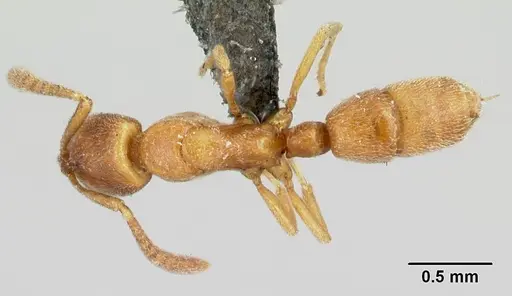
Literatura
Carregando mapa de distribuição...Carregando produtos...