
Gnamptogenys stellae
- Nome científico
- Gnamptogenys stellae
- Tribo
- Ectatommini
- Subfamília
- Ectatomminae
- Autor
- Lattke, 1995
- Distribuição
- Encontrada em 1 países
Introdução
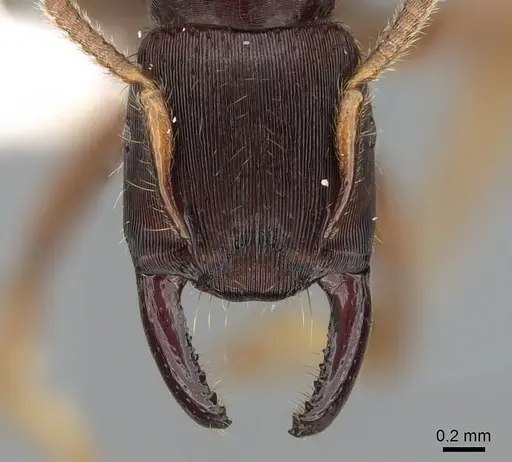
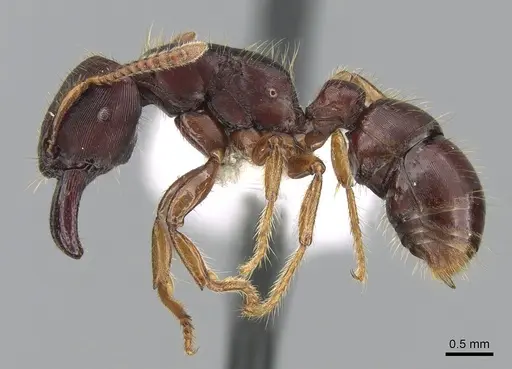
Gnamptogenys stellae is a small predatory ant species from the Neotropical region, found only in Costa Rica and Colombia. Workers have a distinctive reddish-brown body with darker brown head and mesosoma, covered with fine longitudinal striations. The species is recognized by its reduced compound eyes, unique clypeal lamella configuration with median anterior projection, and nearly linear mandibles. This species belongs to the mordax subgroup within the Gnamptogenys genus and remains one of the least studied ant species in Central America - no biological information has been documented .
Quick Summary
- Difficulty: Unknown, biology completely unstudied
- Origin & Habitat: Neotropical region: Costa Rica (Estrella Valley) and Colombia (Valle del Cauca department). Inhabits tropical forest floor environments [3][4][5].
- Colony Type: Unconfirmed colony structure, no biological data available for this species [1][2].
- Size & Growth:
- Queen: Size data unavailable, no queen described in literature
- Worker: Approximately 5-6mm total length, inferred from genus patterns
- Colony: Unknown, no colony size data exists
- Growth: Unknown
- Development: Unconfirmed, no development data available (Direct development data unavailable for this species.)
- Antkeeping:
- Temperature: Unstudied for this species. Keep at warm room temperature around 24-27°C and observe colony activity.
- Humidity: Unknown, provide moderate humidity with moist substrate.
- Diapause: Unknown, tropical species from Costa Rica and Colombia may not require formal hibernation.
- Nesting: Natural nesting unconfirmed. Likely nests in soil, under stones, or in rotting wood on forest floor. In captivity, a test tube setup with moist substrate works well for founding colonies.
- Behavior: Behavior unstudied. Based on genus patterns, these are predatory ants that hunt small arthropods. Reduced eyes suggest they may be more nocturnal or ground-active. Escape risk moderate due to small size.
- Common Issues: biology is completely unstudied, all care recommendations are estimates based on genus patterns, no information on founding behavior or colony development timeline, no data on accepted foods, must experiment with prey items, unknown colony structure (monogyne vs polygyne), no information on temperature tolerance or humidity preferences
Species Identification and Appearance
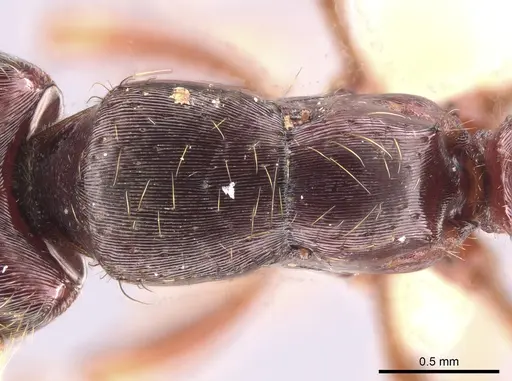
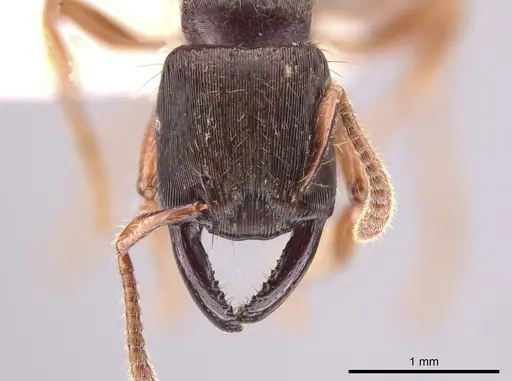
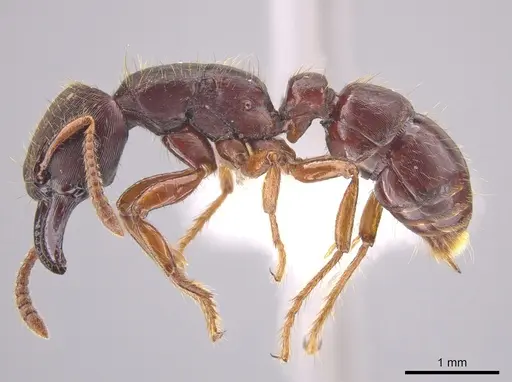
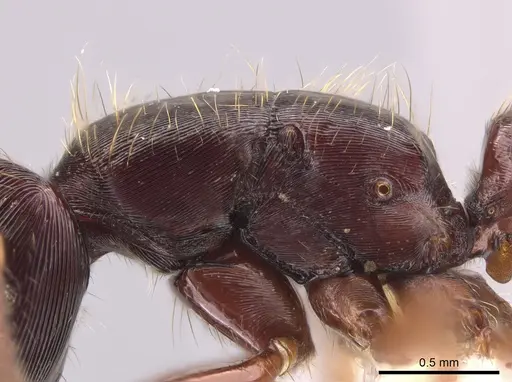
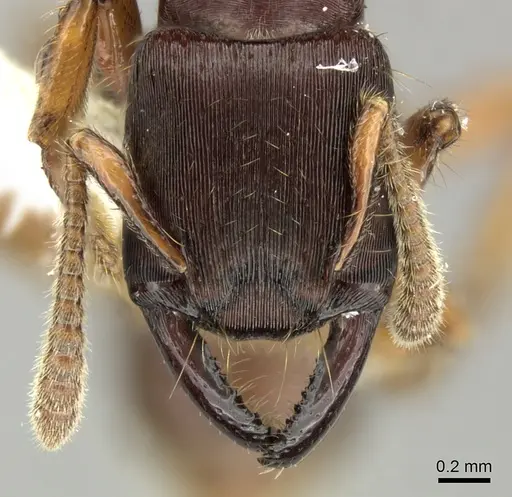
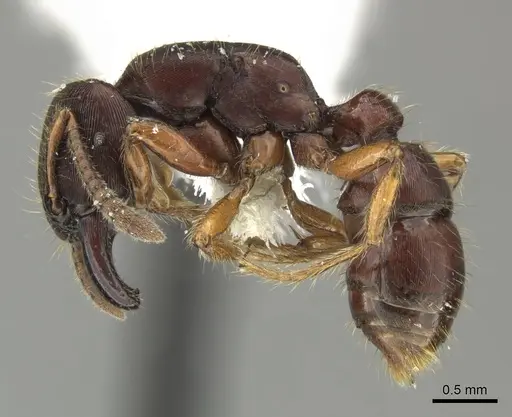
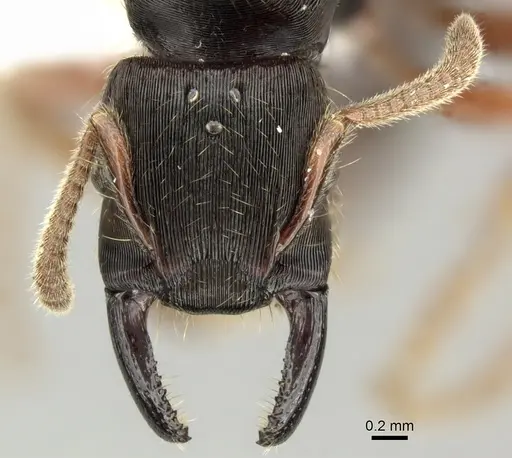
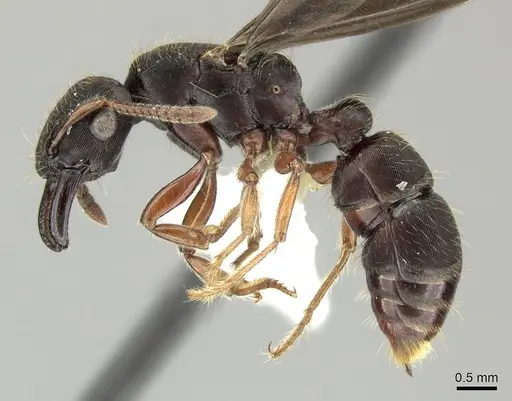
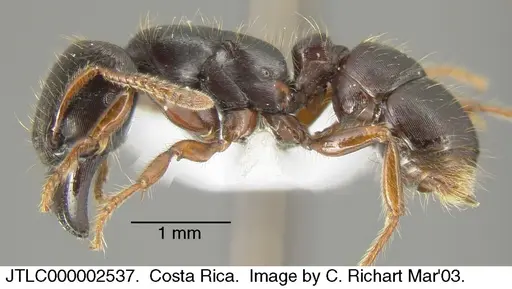
Gnamptogenys stellae is a small ant species with workers measuring approximately 5-6mm in total length. The head and body are covered with distinctive fine longitudinal striations that run from front to back. The body coloration is reddish-brown, with the mesosomal dorsum and head appearing darker brown. The legs and antennae are a lighter ferruginous color. One of the most distinctive features is the clypeal lamella, which has a unique median anterior projection with a small concavity in the middle, this feature helps distinguish it from related species. The compound eyes are notably reduced in size, and the metathoracic spiracle opens on a conical protuberance. The mandibles are nearly linear with a double row of small tubercles [6][7].
Distribution and Habitat
This species has a limited distribution in the Neotropical region, known only from Costa Rica (the type locality in Estrella Valley) and the Valle del Cauca department in Colombia [3][4]. The original type specimen was collected in April 1924 from Estrella Valley, Costa Rica. In Colombia, the species has been recorded from Puerto Merizalde in Valle del Cauca [5]. The specific habitat preferences are unknown, but based on the collection data, these ants inhabit tropical forest floor environments in humid, shaded areas. The reduced eye size suggests they may be more active in low-light conditions or under leaf litter [1][2].
Known Biology and Care Assumptions
The biology of Gnamptogenys stellae is completely unstudied, no published information exists on colony size, founding behavior, diet, development, or any aspect of their natural history [1][2]. This is one of the most poorly known ant species in the hobby. However, we can make reasonable assumptions based on what is known about the genus Gnamptogenys as a whole. The genus contains predatory ants that typically hunt small arthropods. They are not known to be aggressive toward humans. The reduced eyes suggest they may be more nocturnal or crepuscular, and they likely prefer humid environments. For keepers, this means providing a moist habitat with plenty of hiding places and small live prey items.
Feeding and Diet
No specific dietary information exists for this species. Based on typical Gnamptogenys behavior, they are predatory ants that hunt small arthropods. In captivity, you should start by offering small live prey such as fruit flies, pinhead crickets, small mealworms, and other tiny insects. Since this is a small ant species, prey items should be appropriately sized, no larger than the ant itself. It is unknown whether they accept sugar sources like honey or sugar water, though many predatory ants primarily protein and rarely take sweets. Offer a variety of small live prey and observe what they accept. Remove any uneaten prey after 24-48 hours to prevent mold.
Housing and Nesting
Since we have no direct information on this species' nesting preferences, we must rely on genus-level assumptions. Gnamptogenys species typically nest in soil, under stones, or in rotting wood on the forest floor. For captivity, a simple test tube setup works well for founding colonies, keep the tube humid but not flooded, and provide darkness for the first few weeks. Once established, you can transfer to a small formicarium or naturalistic setup with moist soil, leaf litter, and hiding places like small stones or pieces of bark. The small size of these ants means escape prevention should be moderate, standard barrier methods work well. Provide a gradient of humidity in the setup so the ants can choose their preferred zone.
Temperature and Seasonal Care
No specific temperature data exists for this species. As a tropical ant from Costa Rica and Colombia, it likely prefers warm conditions in the range of 24-28°C. You can achieve this with a heating cable on one side of the nest, or simply keep the colony in a warm room. Since they come from a region with minimal seasonal temperature variation, they likely do not require a formal hibernation period. However, they may slow down during cooler periods. Start at room temperature (around 24°C) and adjust based on colony activity, if workers become sluggish, slightly increase temperature. Avoid temperatures below 20°C or above 30°C until more is known about their tolerance.
Frequently Asked Questions
How long does it take for Gnamptogenys stellae to go from egg to worker?
This has not been documented. Without direct study, development time is unknown.
What do Gnamptogenys stellae ants eat?
No specific dietary data exists. Based on genus patterns, they are predatory and likely hunt small arthropods. Offer small live prey like fruit flies, pinhead crickets, and tiny insects. Sugar acceptance is unknown.
Are Gnamptogenys stellae good for beginners?
No. This species has no documented biology, all care recommendations are educated guesses. Beginners should start with species that have well-established care guidelines in the antkeeping hobby.
Do Gnamptogenys stellae ants sting?
Sting capability is unknown for this specific species. Most Gnamptogenys are not known for painful stings, and given their small size, any sting would likely be negligible to humans.
How big do Gnamptogenys stellae colonies get?
Colony size is unconfirmed. No wild colony size data exists for this species.
Can I keep multiple Gnamptogenys stellae queens together?
Not documented. Colony structure (monogyne vs polygyne) has not been studied. Do not combine unrelated queens until more is known about their founding behavior.
What temperature should I keep Gnamptogenys stellae at?
No specific data exists. Start around 24-27°C (warm room temperature) and observe colony behavior. Adjust based on activity levels. Avoid extremes until tolerance is known.
Do Gnamptogenys stellae need hibernation?
Unknown. As a tropical species from Costa Rica and Colombia, formal hibernation is likely not required. They may naturally slow during cooler periods.
Where is Gnamptogenys stellae found?
Only in Costa Rica (Estrella Valley) and Colombia (Valle del Cauca department). This is one of the most restricted ant species in the hobby.
Is Gnamptogenys stellae aggressive?
Aggression level is unstudied. Based on genus patterns, they are likely not aggressive toward humans but will defend their nest if threatened. They are small predatory ants, not swarmers.
Report an Issue
The current care sheet is based fully on literature. See inconsistencies, or something that's incorrect? Please , it will be resolved after review from an admin. Contributing to the blogs tab also helps providing information, to make us be able to further improve the caresheets. Thank you for your support!
References

Este guia de cuidados está sob a licença CC BY-SA 4.0 .
Posts da comunidade
CASENT0281227
Ver no AntWeb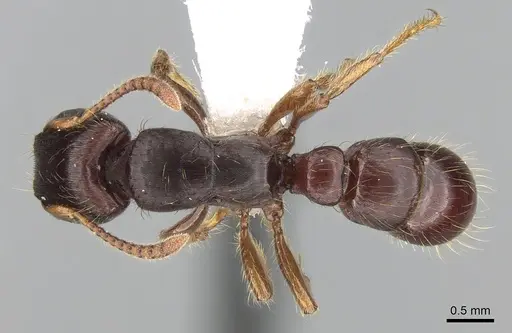
CASENT0640076
Ver no AntWeb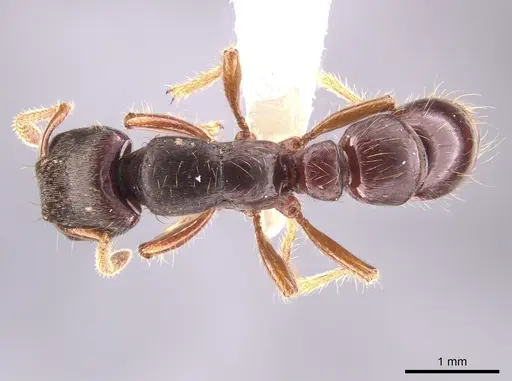
INB0003662341
Ver no AntWeb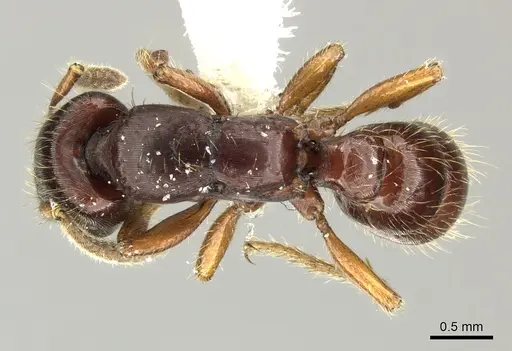
INB0003662391
Ver no AntWeb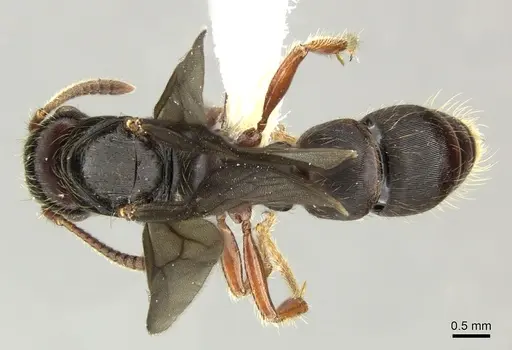
JTLC000002537
Ver no AntWeb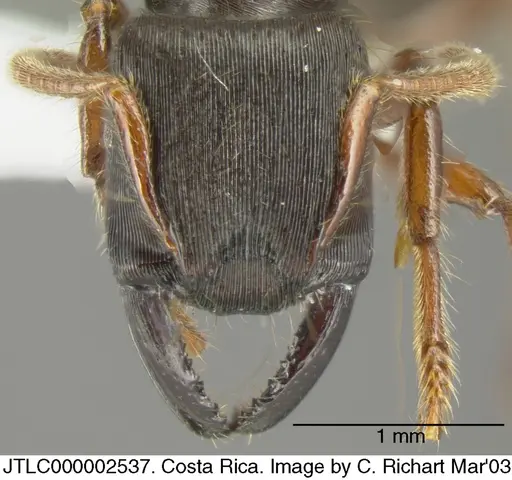
Literatura
Carregando mapa de distribuição...Carregando produtos...