
Eurhopalothrix machaquila
- Nome científico
- Eurhopalothrix machaquila
- Tribo
- Attini
- Subfamília
- Myrmicinae
- Autor
- Longino, 2013
- Distribuição
- Encontrada em 1 países
Introdução
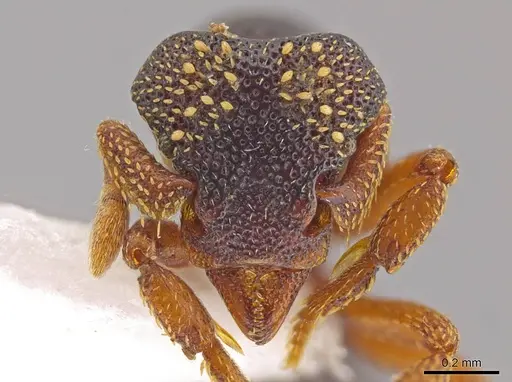
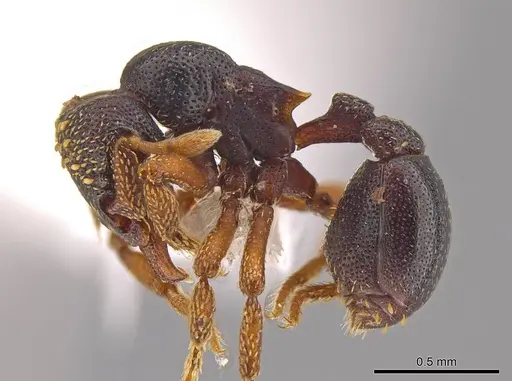
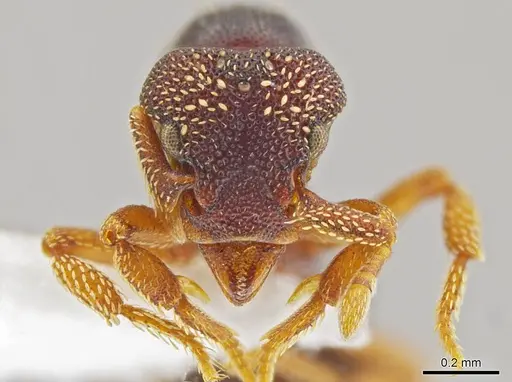
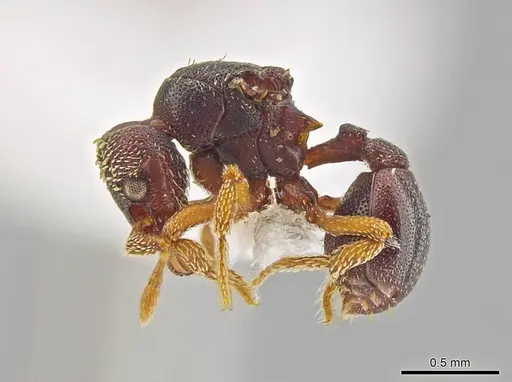
Eurhopalothrix machaquila is an extremely tiny ant species from the rainforests of Guatemala's Petén region. Workers are among the smallest ants you'll encounter - approximately 1.5-2mm in total length based on genus patterns . They have a distinctive dark brown coloration and feature specialized spatulate setae on their face - these modified hairs help them collect and hold a layer of clay particles for camouflage, making them nearly invisible against the forest floor . The genus Eurhopalothrix is characterized by 7-segmented antennae and triangular mandibles . What makes this species special is its hunting strategy. Like other Eurhopalothrix, these ants are predators that rely on stealth rather than chasing prey. They use sit-and-wait techniques in the leaf litter, remaining motionless until unsuspecting micro-arthropods wander close enough to capture . This cryptic lifestyle means they're rarely seen even in their native habitat - they show up in only about 7% of litter samples .
Quick Summary
- Difficulty: Expert
- Origin & Habitat: Guatemala's Petén lowland region at 390-400m elevation in tropical moist forest. Found in sifted leaf litter and rotten wood samples [1][2].
- Colony Type: Colony structure is unconfirmed. No data on queen number or colony size in the wild.
- Size & Growth:
- Queen: ~1.5-2mm, inferred from Eurhopalothrix genus [1][2]
- Worker: ~1.5-2mm, inferred from Eurhopalothrix genus [1][2]
- Colony: Unknown, no wild colony data available
- Growth: Unknown, likely slow based on typical leaf-litter ant patterns
- Development: Unconfirmed, no specific development data exists for this species (No direct development data exists for this species.)
- Antkeeping:
- Temperature: Keep at 24-27°C. Being a lowland tropical species, they need warm, stable conditions [1][2].
- Humidity: High humidity required, think damp forest floor. Keep substrate consistently moist but not waterlogged. These ants come from moist forest leaf litter [2].
- Diapause: Unknown, tropical species may not require formal hibernation but may slow down in cooler conditions
- Nesting: Small, tight chambers work best. These tiny ants live in leaf litter and rotting wood in the wild, so a naturalistic setup with fine substrate or a small Y-tong (AAC), plaster, or soil nest suits them. They need spaces scaled to their tiny size.
- Behavior: Extremely cryptic and shy. These ants are predators that hunt micro-arthropods in the leaf litter using sit-and-wait ambush tactics [2]. They are not aggressive and will avoid confrontation. Escape risk is extremely high due to their minute size, they can squeeze through gaps invisible to the naked eye. They are slow-moving and spend most of their time motionless, waiting for prey.
- Common Issues: escape prevention is critical, they are tiny enough to pass through standard mesh barriers, no colony data means founding and growth are unpredictable, predatory diet makes them difficult to feed, they need live micro-prey, slow growth tests keeper patience, high humidity requirements can lead to mold problems if ventilation is poor
Housing and Enclosure
Housing Eurhopalothrix machaquila presents unique challenges due to their minute size. Standard test tubes and formicarium chambers are far too large for these tiny ants, they need tight, scaled accommodations. A small Y-tong (AAC), plaster, or soil nest with narrow chambers or a naturalistic setup with fine, damp substrate works best. The key requirement is excellent escape prevention, these ants can slip through gaps that other species would never fit through. Use fine mesh barriers, seal all joints thoroughly, and consider using fluon on enclosure edges. A small outworld with minimal space helps you monitor their activity and feeding. Because they're cryptic and spend much of their time motionless, you may not see much activity, this is normal behavior, not a sign of problems. [2][1]
Feeding and Diet
Eurhopalothrix machaquila is a predator that feeds on micro-arthropods in the leaf litter [2]. In captivity, you'll need to provide small live prey, springtails are the ideal staple food. Other options include tiny fruit flies, newly hatched pinhead crickets, and other micro-arthropods. They use sit-and-wait hunting, so prey should be small enough for them to capture and subdue. Place prey near where the ants are resting or walking, don't expect active hunting. Sugar sources are unlikely to be accepted, these are specialized predators, not sugar-feeding ants. Feed every 2-3 days and remove any uneaten prey to prevent mold.
Temperature and Humidity
Being a lowland tropical species from Guatemala's Petén region, Eurhopalothrix machaquila needs warm and humid conditions. Keep temperatures in the 24-27°C range, stable warmth is more important than exact numbers. A heating cable on one side of the nest creates a gentle gradient. For humidity, think damp forest floor. Keep the substrate consistently moist but not waterlogged, the nest should have condensation visible but no standing water. These conditions mimic their natural leaf-litter environment where humidity stays high. Adequate ventilation is still necessary to prevent mold, but avoid excessive airflow that dries the enclosure. [1][2]
Understanding Their Cryptic Behavior
Don't be alarmed if your Eurhopalothrix seem inactive, this is their natural behavior. These ants are ambush predators that spend long periods motionless, waiting for prey to wander close [2]. They're not lazy or sick, they're hunting. You may also notice a clay-like coating on their body, this is intentional camouflage that helps them blend into the forest floor [2]. The specialized spatulate setae on their face help them acquire and hold this clay layer. In captivity, they may not develop this coating if kept on clean surfaces, which is perfectly normal. Their cryptic nature means you won't see the dramatic activity levels of larger ant species, this is simply how Eurhopalothrix live.
Frequently Asked Questions
How long does it take for Eurhopalothrix machaquila to produce first workers?
The egg-to-worker timeline is unconfirmed for this species. No specific development data exists for E. machaquila.
Can I keep multiple queens together?
Colony structure is unconfirmed for this species. No data exists on whether they're single-queen or multi-queen colonies. It's best to start with a single queen until more information becomes available.
What do Eurhopalothrix machaquila eat?
They're predators that need live micro-prey. Springtails are the ideal food, along with tiny fruit flies and other micro-arthropods. They use sit-and-wait hunting and won't chase after large prey. Sugar sources are unlikely to be accepted.
Are Eurhopalothrix machaquila good for beginners?
No, this is an expert-level species. Their tiny size makes housing and escape prevention extremely challenging. Their predatory diet requires live micro-prey that's harder to obtain than standard ant foods. Almost no colony data exists, making care unpredictable. They're best suited for experienced antkeepers with specialized setups.
Do Eurhopalothrix machaquila need hibernation?
Being a tropical species from lowland Guatemala, they likely don't require formal hibernation. However, they may slow down during cooler periods. If your room temperature drops significantly, they may become less active, this is normal seasonal behavior, not a health concern.
Why are my Eurhopalothrix ants so inactive?
This is normal behavior, they're ambush predators that spend long periods motionless waiting for prey [2]. They're not sick, this is how they hunt. Don't mistake their quiet nature for problems.
What temperature should I keep Eurhopalothrix machaquila at?
Keep them at 24-27°C, which mimics their lowland tropical forest habitat in Guatemala. Stable warmth is more important than hitting an exact number. A gentle gradient allows them to choose their preferred temperature.
How do I prevent escapes with such tiny ants?
Escape prevention is critical, they can slip through gaps invisible to the naked eye. Use fine mesh barriers, seal all joints thoroughly, and apply fluon to enclosure edges. Standard ant-keeping barriers won't work for this species. Check for any gaps regularly.
When should I move them to a formicarium?
Given their tiny size and cryptic nature, keeping them in a small test tube setup with a tiny outworld is often preferable to moving to a full formicarium. If you do move them, ensure the chambers are appropriately scaled, standard formicarium passages are far too large.
Report an Issue
The current care sheet is based fully on literature. See inconsistencies, or something that's incorrect? Please , it will be resolved after review from an admin. Contributing to the blogs tab also helps providing information, to make us be able to further improve the caresheets. Thank you for your support!
References

Este guia de cuidados está sob a licença CC BY-SA 4.0 .
Posts da comunidade
CASENT0614288
Ver no AntWeb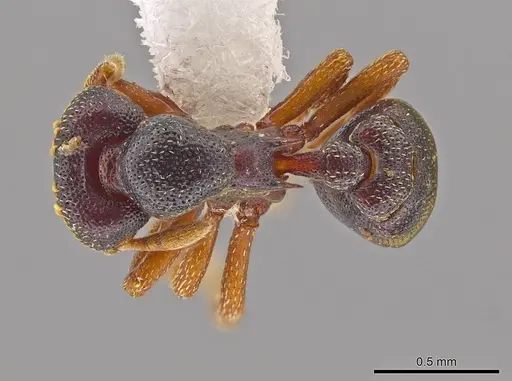
CASENT0614311
Ver no AntWeb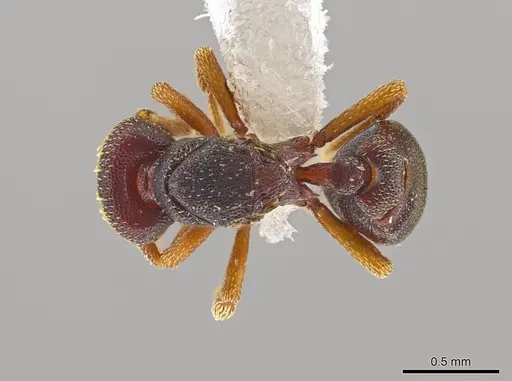
Literatura
Carregando mapa de distribuição...Carregando produtos...