
Echinopla circulus
- Nome científico
- Echinopla circulus
- Tribo
- Camponotini
- Subfamília
- Formicinae
- Autor
- Zettel & Laciny, 2015
- Distribuição
- Encontrada em 0 países
Introdução
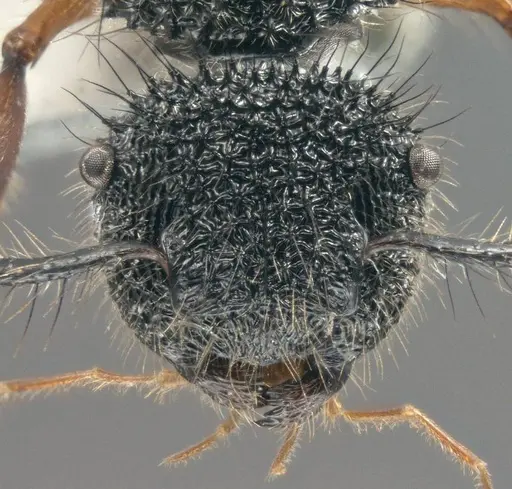
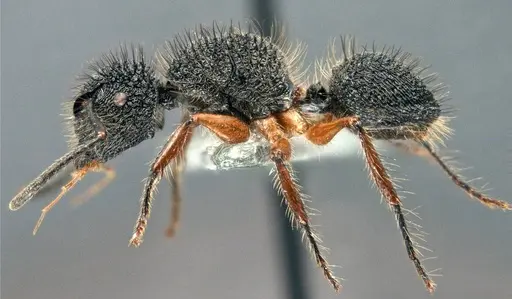
Echinopla circulus is a relatively large ant species native to Borneo, measuring 6.4-7.6mm in total length . Workers are predominantly black with distinctive yellowish legs (though the tarsi are black), and feature a striking surface texture with numerous pedestals bearing long standing black setae and rings of short pale hairs . The gaster (abdomen) shows unique circular ridges that give this species its name (circulus = small circle in Latin) . This species belongs to the Echinopla melanarctos group and is known only from the worker caste . The genus Echinopla is part of the Formicinae subfamily, related to carpenter ants. Nothing is known about the biology of this species in the wild .
Quick Summary
- Difficulty: Expert
- Origin & Habitat: Borneo (Sarawak, Sabah), Malaysia and Indonesia, Indomalaya region. Collected from highland areas around 1000m elevation in the Kelabit Highlands and Crocker Range, typically from undergrowth microhabitats [1].
- Colony Type: Colony structure is unconfirmed. Only the worker caste has been described [1].
- Size & Growth:
- Queen: Unknown, queen caste has not been described [1]
- Worker: 6.4-7.6 mm total length [1]
- Colony: Unknown, no colony size data exists
- Growth: Unknown
- Development: Unknown, development has not been studied (Based on related Formicinae genera, expect 6-10 weeks at optimal temperature, but this is an estimate)
- Antkeeping:
- Temperature: Likely needs warm conditions similar to other tropical Formicinae. Inferred from Borneo origin: aim for 24-28°C with a gentle gradient. Adjust based on colony activity.
- Humidity: Likely requires high humidity given the Borneo rainforest origin. Keep nest substrate consistently moist but not waterlogged. Provide a humidity gradient with a moist chamber and a slightly drier area.
- Diapause: Unlikely, being a tropical species from low latitude Borneo, they probably do not require a diapause period. However, some highland populations may experience seasonal variation.
- Nesting: Natural nesting is unconfirmed. Based on collection data (undergrowth, moderate elevation), they likely nest in rotting wood or under stones in damp forest environments. In captivity, a Y-tong (AAC) nest or plaster nest with good humidity retention would be appropriate. Avoid overly dry setups.
- Behavior: Behavior is unstudied in captivity. Based on genus-level patterns and the large worker size, they are likely less active and may show moderate aggression when defending the nest. Escape risk is moderate given their 6-7mm size, standard barriers should suffice, but ensure tight-fitting lids. As Formicinae, they likely use formic acid spray as their primary defense mechanism rather than stinging.
- Common Issues: this species has no documented captive history, expect a learning curve, no established feeding protocols exist, start with standard ant foods and observe acceptance, high humidity requirements may promote mold if ventilation is poor, queen and colony founding behavior is completely unknown, wild-caught colonies may have parasites or diseases with no documented treatment
Species Overview and Identification
Echinopla circulus is a relatively rare ant species described in 2015 from Borneo [1]. Workers are distinctive at 6.4-7.6mm with a predominantly black body and yellowish legs (though the tarsi are dark) [1]. The most striking feature is the surface texture: the head and mesosoma have numerous pedestals, each bearing one long standing black seta and a ring of short pale hairs directed horizontally [1]. The first gaster tergite shows similar pedestals that become progressively lower toward the rear, plus distinctive circular ridges that give the species its name (circulus meaning 'small circle') [1]. This species belongs to the Echinopla melanarctos group and is currently known only from worker castes [2][1]. The genus Echinopla is in the Formicinae subfamily, making them relatives of carpenter ants (Camponotus).
Natural History and Distribution
Echinopla circulus is known only from Borneo, specifically from the Kelabit Highlands in Sarawak and the Crocker Range National Park in Sabah, Malaysia [1]. Type specimens were collected at approximately 1000m elevation in highland areas [1]. One paratype was collected at Poring Hot Spring in Sabah [1]. The collection data suggests they inhabit undergrowth in forested areas. Beyond this, nothing specific is known about their biology, nesting preferences, or colony structure in the wild [3]. This is a genuinely understudied species where almost every aspect of captive care will require experimentation.
Housing and Nest Preferences
Since natural nesting behavior is unconfirmed, we must make educated guesses based on related Formicinae and the collection data. Workers were collected from undergrowth at moderate elevations, suggesting they likely nest in rotting wood, under stones, or in soil in damp forest environments. For captivity, a Y-tong (AAC) nest or plaster nest works well for Formicinae of this size. The nest should retain humidity well since Borneo is a humid environment. Provide a water tube for humidity and consider a moist cotton ball in the outworld. Avoid dry setups. Given their 6-7mm size, they do well in standard test tube setups until the colony reaches 15-20 workers, then move to a proper nest.
Feeding and Diet
Diet is completely unstudied for this species. As Formicinae, they likely have a varied diet similar to carpenter ants, accepting sugar sources (honey water, sugar water) and protein (insects, frozen fruit flies, mealworms). Start with standard captive ant foods: offer sugar water constantly and protein (live or frozen insects) 2-3 times per week. Observe what they accept. Given their large size, they should be able to tackle larger prey than tiny ants. Do not overfeed, remove uneaten prey within 24-48 hours. Since nothing is documented about their specific dietary needs, be prepared to experiment with different food types.
Temperature and Humidity Requirements
Being from tropical Borneo, these ants likely require warm and humid conditions. Based on the Borneo origin, aim for temperatures in the 24-28°C range. A heating cable on one side of the nest can create a gradient, allowing the ants to choose their preferred temperature. For humidity, keep the nest substrate consistently moist but not waterlogged, the substrate should feel damp to the touch. Provide a water tube and consider misting the outworld occasionally. Good ventilation is important to prevent mold while maintaining humidity. Since this species comes from highland areas (around 1000m), they may tolerate slightly cooler conditions than lowland tropical ants, but warmth still promotes activity and brood development.
Challenges and Considerations
This is one of the most challenging species to keep because absolutely no captive husbandry information exists. Everything about their care must be inferred from related species or learned through experimentation. Start with conservative estimates: standard Formicinae care (warm, humid, protein-focused diet) is your best starting point. Expect a learning curve, be prepared to adjust temperature, humidity, and feeding based on colony behavior. Wild-caught colonies may have parasites or diseases with no documented treatment. Do not release this species in non-native areas, they are not established in the pet trade and could become invasive. This species is recommended only for experienced antkeepers who enjoy the challenge of establishing care for understudied species.
Frequently Asked Questions
How long does it take for Echinopla circulus to develop from egg to worker?
The development timeline is completely unstudied. Based on related Formicinae (like Camponotus), expect approximately 6-10 weeks from egg to first worker at optimal temperature (around 26°C). This is an estimate, actual development time may vary.
What do Echinopla circulus ants eat?
Diet is unconfirmed for this species. Based on genus-level patterns, they likely accept sugar sources (honey water, sugar water) and protein (insects like fruit flies, mealworms, small crickets). Start with standard ant foods and observe what your colony accepts. Remove uneaten food promptly to prevent mold.
Are Echinopla circulus ants good for beginners?
No. This species is not recommended for beginners. Nothing is known about their biology, colony founding, or captive care requirements. Every aspect of keeping them will require experimentation. This species is best suited for experienced antkeepers who enjoy establishing care for understudied species.
What temperature do Echinopla circulus ants need?
Temperature requirements are unstudied. Based on their Borneo origin, aim for 24-28°C. A heating cable on one side of the nest can create a gradient. Observe colony activity, if workers cluster near heat, increase slightly, if they avoid it, reduce temperature.
Do Echinopla circulus ants need hibernation?
Diapause requirements are unstudied. Being from tropical Borneo (low latitude), they likely do not require a formal hibernation period. However, highland populations may experience seasonal variation. A slight reduction in temperature during winter months (to room temperature, around 20-22°C) may be appropriate, but this is an estimate.
What size nest do Echinopla circulus ants need?
Since colony size is unknown, use a test tube setup for founding colonies. Once the colony reaches 15-20 workers, transition to a Y-tong (AAC) or plaster nest with chambers sized appropriately for their 6-7mm workers. Ensure good humidity retention.
Can I keep multiple Echinopla circulus queens together?
Colony structure is unconfirmed. No data exists on whether they are monogyne (single queen) or polygyne (multiple queens). Do not attempt combining unrelated queens until more is known about their natural colony structure.
How big do Echinopla circulus colonies get?
Maximum colony size is unknown. No colony size data exists in the scientific literature. Based on worker size and related Formicinae, colonies likely reach several hundred workers, but this is an estimate.
Is Echinopla circulus a claustral founder?
Founding behavior is unconfirmed. No direct observations of colony founding exist for this species. As Formicinae, they may follow a claustral pattern where the queen seals herself in and raises the first brood alone on stored fat reserves, but this has not been documented.
Report an Issue
The current care sheet is based fully on literature. See inconsistencies, or something that's incorrect? Please , it will be resolved after review from an admin. Contributing to the blogs tab also helps providing information, to make us be able to further improve the caresheets. Thank you for your support!
References

Este guia de cuidados está sob a licença CC BY-SA 4.0 .
Posts da comunidade
CASENT0914946
Ver no AntWeb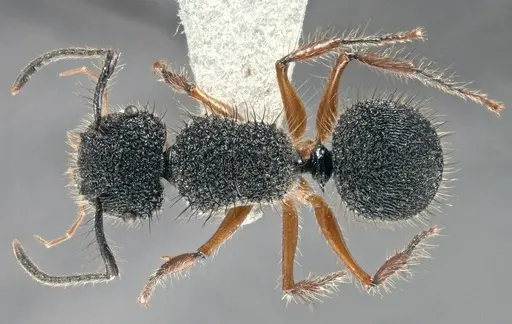
Literatura
Carregando mapa de distribuição...Carregando produtos...