
Sharkfined Dolly Ant
Dolichoderus reflexus
- Nome científico
- Dolichoderus reflexus
- Tribo
- Dolichoderini
- Subfamília
- Dolichoderinae
- Autor
- Clark, 1930
- Nome comum
- Sharkfined Dolly Ant
- Distribuição
- Encontrada em 1 países
Introdução
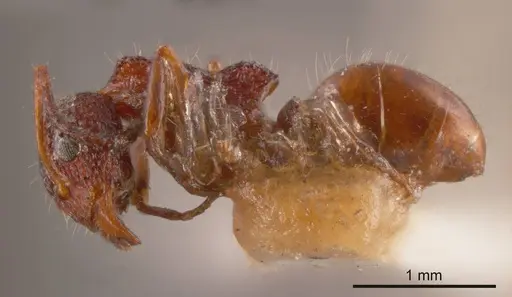
Dolichoderus reflexus is a small reddish ant native to southern Australia. Workers measure around 4-5mm with a distinctive body shape featuring a highly arched propodeum that creates an exaggerated concave appearance when viewed from the side. Their head is dark while the body ranges from yellow-red to dark red-brown, and they have sparse hairs on the abdomen and legs. This species lives in mallee woodlands and creates nests in soil with characteristic crater-like entrances. They are diurnal foragers that travel in columns, searching for honeydew from aphids and other small insects on low vegetation and trees. While widespread across southern Australia, they are nowhere common and are considered a rare find for antkeepers.
Quick Summary
- Difficulty: Medium
- Origin & Habitat: Southern Australia, primarily in mallee woodland habitats. Nests in soil with crater entrances, typically under rocks or in rotten wood [1].
- Colony Type: Colony structure is not documented in scientific literature.
- Size & Growth:
- Queen: Size data unavailable, no specific measurements for queens exist
- Worker: ~4-5mm, inferred from genus patterns
- Colony: Unknown maximum, likely small based on sparse natural populations
- Growth: Unknown
- Development: Unknown, no species-specific development studies available (Development time is unconfirmed for this species)
- Antkeeping:
- Temperature: Keep at 22-26°C. Australian species from temperate regions can tolerate a range, but avoid extremes.
- Humidity: Moderate humidity around 50-70%. Keep nest substrate slightly moist but not waterlogged.
- Diapause: Likely requires a winter rest period given their southern Australian distribution. Reduce temperature to 15-18°C for 2-3 months during winter.
- Nesting: Soil-based nests work best. Use a naturalistic setup with soil substrate, or a Y-tong/plaster nest with moisture chambers. They nest under rocks or in rotten wood in the wild, so include some cover in the outworld.
- Behavior: These ants are diurnal and relatively peaceful. Workers forage in columns on the ground and low vegetation, tending aphids for honeydew. They are general scavengers and will accept various foods. Escape risk is moderate, they are small but not extremely tiny, so standard barriers should suffice. They are not aggressive and rarely bite.
- Common Issues: limited availability, this species is rarely collected and not commonly available in the antkeeping hobby, colony founding difficulty, wild-caught queens may be hard to find given their sparse populations, specific habitat requirements, they need soil nests with proper moisture retention, limited dietary data, may be selective about food acceptance in captivity, escape prevention, small size means gaps in equipment must be sealed properly
Housing and Nest Setup
Dolichoderus reflexus requires a soil-based nesting environment. In the wild, they nest in soil with characteristic crater-like entrances, often under rocks or in rotting wood [1]. For captivity, a naturalistic setup with a soil chamber works best, or you can use a Y-tong/plaster nest with moisture retention capabilities. The outworld should include some form of cover like small stones or leaf litter since they naturally forage under some cover. These ants are not aggressive and can be housed in standard formicarium setups, but ensure all connections are sealed since workers are small enough to escape through tiny gaps.
Feeding and Diet
In the wild, these ants are general scavengers that also tend aphids and other Hemiptera for honeydew. They forage in columns on the ground and on low vegetation [2]. In captivity, offer a varied diet including sugar water or honey as an energy source, and protein sources like small insects. Since they naturally tend Hemiptera, they likely have a sweet tooth, keep a constant sugar water source available. Feed protein 2-3 times per week and remove uneaten prey after 24 hours.
Temperature and Seasonal Care
Maintain temperatures between 22-26°C for optimal colony activity. As a southern Australian species, they are adapted to temperate conditions with seasonal variation. During winter, provide a diapause period by reducing temperatures to 15-18°C for 2-3 months. This mimics their natural seasonal cycle and helps maintain colony health. Avoid temperatures below 10°C or above 30°C. A heating cable on one side of the nest can create a gradient if your room temperature runs cool, but ensure they can move to cooler areas if needed.
Behavior and Foraging
Dolichoderus reflexus workers are diurnal and forage in columns, traveling along established trails on the ground and up into vegetation [2]. This is an active species that will establish clear foraging routes. They are generalist feeders but show a preference for honeydew from sap-sucking insects. Workers are relatively peaceful and unlikely to bite, making them easy to handle. They are not known for being escape artists in the same way as extremely tiny ants, but standard barrier methods like fluon on container rims should still be used.
Colony Establishment
This species is rarely collected and not commonly available in the antkeeping hobby, making colony establishment challenging. If you obtain a founding queen, keep her in a dark, undisturbed founding chamber. Expect several weeks for the first workers to emerge, though exact timing is unconfirmed for this species. Wild colonies appear to be small based on their sparse natural populations, so do not expect the massive colonies seen in some other genera.
Frequently Asked Questions
How long does it take for Dolichoderus reflexus to produce first workers?
Development time is unconfirmed for this species. Expect several weeks at optimal temperature, but no specific data exists.
What do Dolichoderus reflexus ants eat?
They are general scavengers that also tend aphids for honeydew. Feed them sugar water or honey for energy, and small insects like fruit flies or small mealworms for protein. Offer a varied diet and remove uneaten food promptly.
What temperature do Dolichoderus reflexus ants need?
Keep them at 22-26°C. During winter, provide a diapause period with temperatures reduced to 15-18°C for 2-3 months to mimic their natural seasonal cycle.
Are Dolichoderus reflexus good for beginners?
This species is rated as medium difficulty primarily because it is rarely available in the antkeeping hobby. Their care requirements are straightforward, soil nests, moderate humidity, and standard feeding. However, finding a colony to start may be the main challenge.
How big do Dolichoderus reflexus colonies get?
Colony size is not well-documented, but based on their sparse natural populations, colonies likely remain small. They are not known for producing massive supercolonies.
Do Dolichoderus reflexus need hibernation?
Yes, they likely require a winter diapause period. Reduce temperatures to 15-18°C for 2-3 months during winter. This is typical for southern Australian temperate species.
What type of nest is best for Dolichoderus reflexus?
Soil-based naturalistic setups work best since they nest in soil with crater entrances in the wild. Y-tong or plaster nests with moisture chambers are also suitable alternatives. Include some cover in the outworld area.
Can I keep multiple Dolichoderus reflexus queens together?
Colony structure is not well-studied for this species. Without evidence they can coexist peacefully, keeping multiple queens together is not recommended.
Why are my Dolichoderus reflexus dying?
Common causes include: temperature extremes (keep between 22-26°C), improper humidity (too dry or too wet), poor escape prevention allowing workers to escape, or offering foods they don't accept. Also ensure they have a winter diapause period. If wild-caught, they may have parasites that cause colony failure.
Report an Issue
The current care sheet is based fully on literature. See inconsistencies, or something that's incorrect? Please , it will be resolved after review from an admin. Contributing to the blogs tab also helps providing information, to make us be able to further improve the caresheets. Thank you for your support!
References

Este guia de cuidados está sob a licença CC BY-SA 4.0 .
Posts da comunidade
ANTWEB1008173
Ver no AntWeb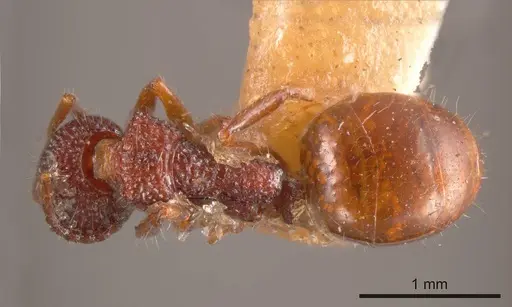
Literatura
Carregando mapa de distribuição...Carregando produtos...