
Dilobocondyla didita
- Nome científico
- Dilobocondyla didita
- Tribo
- Crematogastrini
- Subfamília
- Myrmicinae
- Autor
- Walker, 1859
- Distribuição
- Encontrada em 0 países
Introdução
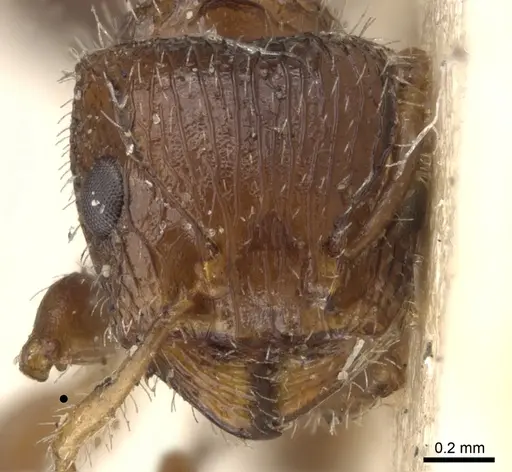
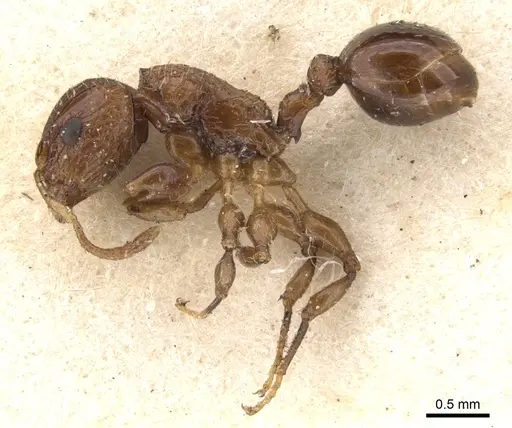
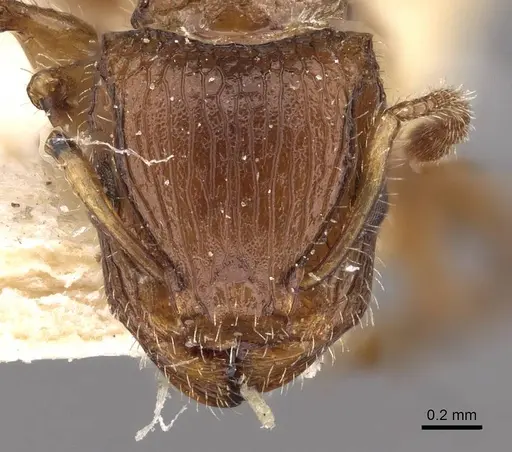
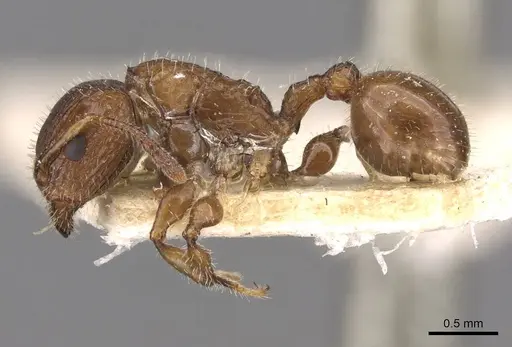
Dilobocondyla didita is a small, dark myrmicine ant species endemic to Sri Lanka. Workers are dark brown to black in color with a relatively compact body typical of the genus. The species has a complex taxonomic history - it was originally described in 1859 by Walker, but the original type material contained specimens from two different genera, complicating early identification. The major worker belongs to Dilobocondyla while the minor was actually a Pheidole species. This confusion was resolved when the species was properly placed in Dilobocondyla in 1932, with its synonym Atopomyrmex escherichi formally merged . This is one of the least-studied ant species in the hobby, with virtually no published research on its captive care, colony structure, or behavior. What we know comes primarily from taxonomic literature rather than biological studies. The genus Dilobocondyla contains fewer than 20 described species, all distributed across South and Southeast Asia, and most are similarly data-deficient.
Quick Summary
- Difficulty: Unknown, likely Moderate
- Origin & Habitat: Endemic to Sri Lanka, found in the Indomalaya region [1]. Natural habitat is not documented in available literature.
- Colony Type: Unconfirmed. Colony structure has not been studied in this species.
- Size & Growth:
- Queen: size data unavailable
- Worker: size data unavailable, only the major worker was formally described [2]
- Colony: Unknown, no colony data exists
- Growth: Unknown
- Development: Unknown, no development data exists for this species (No studies have documented development times for this species.)
- Antkeeping:
- Temperature: Unconfirmed. Based on Sri Lanka's tropical climate, they likely prefer warm conditions around 24-28°C. Start in this range and observe colony activity.
- Humidity: Unconfirmed. Sri Lanka is a humid tropical island, they likely prefer moderate to high humidity. Keep nest substrate consistently moist but not waterlogged.
- Diapause: Unknown, unlikely given tropical origin, but no documented seasonal behavior exists
- Nesting: Not documented. Based on related species, likely nests in soil or rotting wood in forested areas. Y-tong or plaster nests with moisture provision would be appropriate starting points.
- Behavior: Undocumented. No studies have described their behavior, foraging patterns, or aggression levels in captivity. Based on genus-level patterns, they are likely relatively docile and may be ground-nesting. Defense mechanism involves a modified, flattened stinger used to smear venom onto enemies rather than piercing.
- Common Issues: no documented care information makes successful captive husbandry uncertain, colony size and growth rate are completely unknown, making feeding schedules difficult to establish, founding behavior is unconfirmed, it's unclear if queens are claustral, no information on whether they accept sugar sources or require live prey exclusively, escape prevention requirements are unknown due to lack of size data
Taxonomic Background and Identification
Dilobocondyla didita has one of the more complicated taxonomic histories among ants. When Frederick Walker originally described 'Dilobocondyla didita' in 1859 from Sri Lanka, he described what he thought were major and minor workers. However, these two specimens actually belonged to different genera entirely, the major worker was a Dilobocondyla, while the minor was a Pheidole species (later identified as Pheidole sharpi). This confusion wasn't resolved until 1932 when Donisthorpe properly assigned the species to Dilobocondyla and established that Dilobocondyla escherichi, described by Forel in 1911, was a synonym [1][2].
For antkeepers, this means the species was effectively 'lost' to science for over 70 years. Very little biological research has been conducted on D. didita specifically, and most information about the genus comes from studies of other Dilobocondyla species. The worker that serves as the type specimen is the only formally described caste, and no published measurements or detailed morphological descriptions exist in accessible literature.
Known Distribution and Wild Habitat
Dilobocondyla didita is endemic to Sri Lanka, meaning it's found nowhere else in the world naturally [1]. Sri Lanka is a tropical island nation off the southern tip of India, characterized by warm temperatures year-round (typically 25-30°C), high humidity, and seasonal monsoons. The island has diverse habitats from lowland rainforests to highland tea plantations.
The specific microhabitat where D. didita nests is completely undocumented. Other Dilobocondyla species in the region are typically ground-nesting in forested areas, often in soil or under stones. Given Sri Lanka's climate, this species almost certainly lives in warm, humid conditions and does not experience cold winters or dormancy periods. For captive care, this suggests avoiding any cooling or hibernation attempts and maintaining consistently warm, humid conditions.
Challenges in Keeping This Species
Dilobocondyla didita represents one of the most challenging species to keep in the antkeeping hobby precisely because we know so little about it. Unlike more commonly kept species with extensive care documentation, there are no established protocols for feeding, housing, or breeding this ant. You will essentially be pioneering captive husbandry for this species.
The complete lack of information on colony size means you won't know what to expect as your colony grows. Without data on founding behavior, you won't know if the queen seals herself in (claustral) or must forage during founding (semi-claustral). Without dietary studies, you won't know if they accept sugar or require exclusively protein sources. This uncertainty makes D. didita unsuitable for beginners who need predictable, well-documented care guidelines.
Recommended Starting Approach
Given the complete lack of species-specific data, your best approach is to treat D. didita as you would other small, tropical, ground-nesting Myrmicinae from South Asia. Start with standard test tube setups for the founding queen, providing a water reservoir and keeping the setup in the 24-28°C range with moderate to high humidity. Observe behavior carefully and document your findings.
For feeding, offer both sugar water (or honey diluted 1:4 with water) and protein sources like small crickets, mealworms, or fruit flies. Note which foods are accepted and in what quantities. The lack of existing care information means your observations could be valuable contributions to the antkeeping community, consider sharing your results in forums or with researchers studying Asian ants.
Frequently Asked Questions
How do I care for Dilobocondyla didita ants?
There is no established care guide for this species. Based on its Sri Lankan origin, provide warm temperatures (24-28°C), moderate to high humidity, and a moist nest substrate. Start with a test tube setup and offer both sugar water and small protein sources. Document your observations carefully since this species has not been kept in captivity before.
What do Dilobocondyla didita ants eat?
Unknown, no dietary studies exist for this species. Based on related tropical Myrmicinae, they likely accept both sugar sources and small live prey. Offer honey water and small insects like fruit flies or pinhead crickets, then note what they accept.
How big do Dilobocondyla didita colonies get?
Unknown, no colony size data exists for this species. The maximum colony size is completely undocumented in scientific literature.
Do Dilobocondyla didita queens need to forage during founding?
Unconfirmed, founding behavior has not been documented. Most Myrmicinae are claustral (queen seals herself in and lives on stored fat), but this species has not been studied. Observe your founding queen to determine if she leaves the chamber to hunt.
Is Dilobocondyla didita good for beginners?
No. This species is not recommended for beginners due to the complete lack of documented care information. Beginners should choose species with established care protocols like Lasius niger, Camponotus species, or common Myrmica species.
What temperature should I keep Dilobocondyla didita at?
Unconfirmed, but based on Sri Lanka's tropical climate, aim for 24-28°C. Avoid temperatures below 20°C or above 32°C until you observe how the colony responds.
Does Dilobocondyla didita need hibernation?
Unknown, highly unlikely given their tropical origin. Sri Lanka has no cold winters, so they likely do not require any diapause or cooling period.
How long does it take for Dilobocondyla didita to produce first workers?
Unknown, no development studies exist for this species.
Can I keep multiple Dilobocondyla didita queens together?
Unknown, colony structure has not been studied. Without data on whether they are monogyne (single queen) or polygyne (multiple queens), combining unrelated queens is not recommended.
Where is Dilobocondyla didita found in the wild?
This species is endemic to Sri Lanka, meaning it's found naturally only in Sri Lanka and nowhere else in the world.
Report an Issue
The current care sheet is based fully on literature. See inconsistencies, or something that's incorrect? Please , it will be resolved after review from an admin. Contributing to the blogs tab also helps providing information, to make us be able to further improve the caresheets. Thank you for your support!
References

Este guia de cuidados está sob a licença CC BY-SA 4.0 .
Posts da comunidade
CASENT0902012
Ver no AntWeb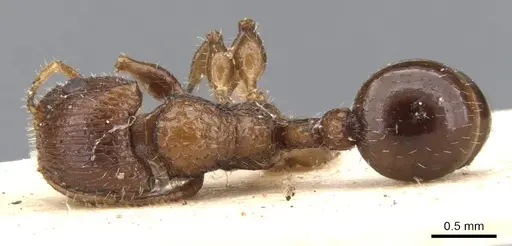
CASENT0908983
Ver no AntWeb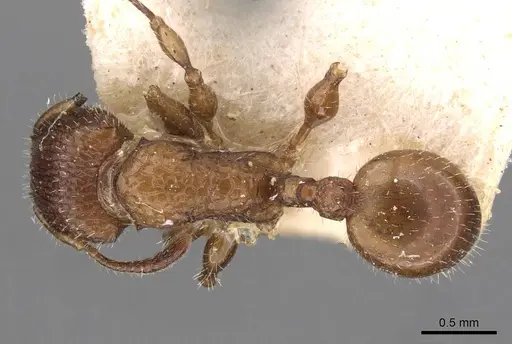
Literatura
Carregando mapa de distribuição...Carregando produtos...