
Diacamma scalpratum
- Nome científico
- Diacamma scalpratum
- Tribo
- Ponerini
- Subfamília
- Ponerinae
- Autor
- Smith, 1858
- Distribuição
- Encontrada em 2 países
Introdução
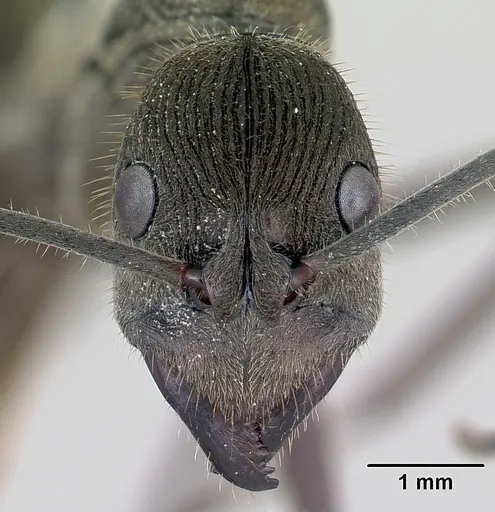
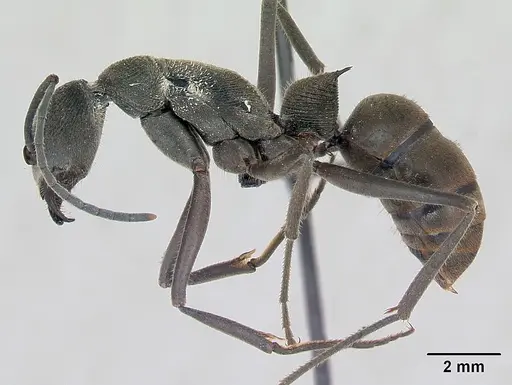
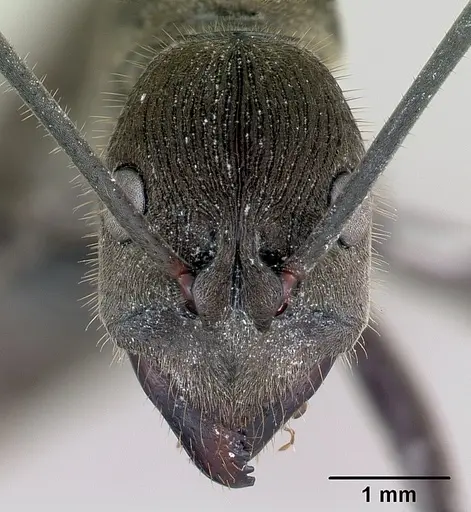
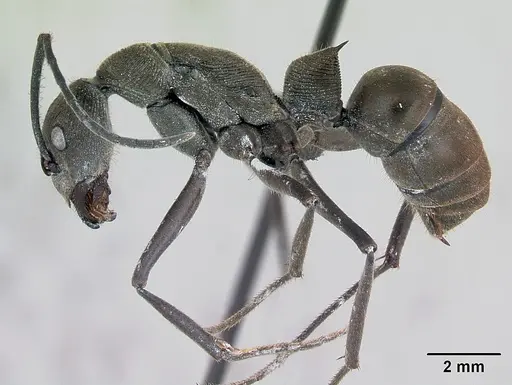
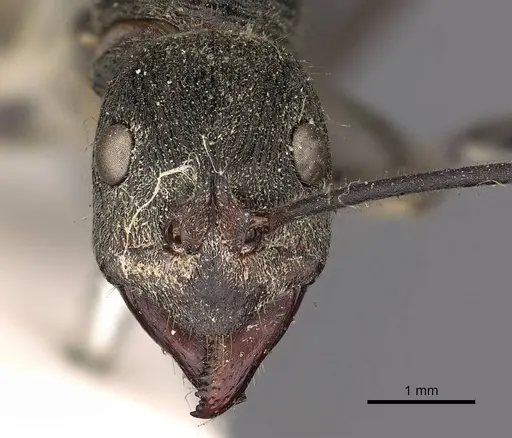
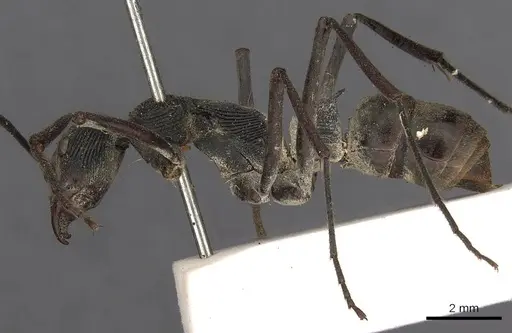
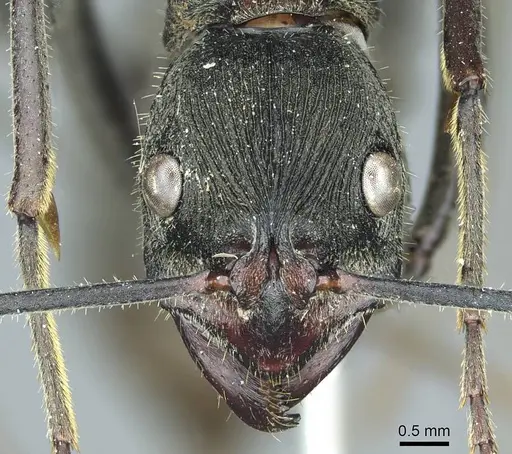
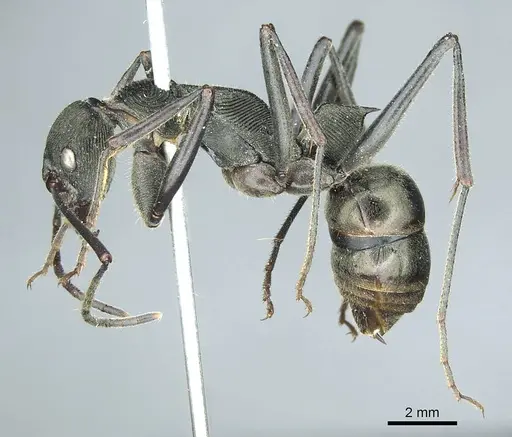
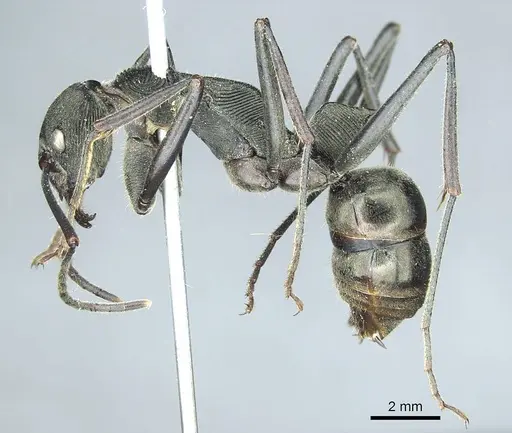
Diacamma scalpratum is a large ant species native to South and Southeast Asia, found in Pakistan, India, and Myanmar. Workers measure 16-18mm in total length and have a distinctive black body with reddish-brown markings on the clypeus, frontal lobes, and the rear edges of their abdominal segments. The most notable physical feature is the strongly compressed, scale-like petiole with long, closely-spaced teeth. Unlike most ant species, D. scalpratum has no true queen - reproduction is handled by a gamergate, a mated worker that retains reproductive organs and lays all eggs. Colonies are relatively small, typically containing around 150 workers. They nest under debris and stones in forest and grassland habitats, with workers foraging on the ground .
Quick Summary
- Difficulty: Medium
- Origin & Habitat: Native to Pakistan, India, and Myanmar in the Indomalaya region. Found in forest and grassland habitats at elevations up to 1200 meters above sea level. Nests under debris and stones, with workers foraging on soil [1][3][4][5][6].
- Colony Type: Queenless, no distinct queen caste, reproduction by gamergates (reproductive workers).
- Queen Status: Queenless Colony
- Special: Gamergates
- Size & Growth:
- Queen: Queenless species, reproduction by gamergate (reproductive worker) instead of a distinct queen caste.
- Worker: 16-18mm [2][1]
- Colony: Up to approximately 150 workers per colony [7]
- Growth: Moderate
- Development: Approximately 8-12 weeks at optimal temperature (estimated based on typical Ponerinae development) (Development time not specifically studied for this species. Ponerinae generally have moderate development compared to faster-growing ant subfamilies.)
- Antkeeping:
- Temperature: Keep at 24-28°C. This species comes from warm tropical and subtropical regions of South Asia, so they need temperatures in the mid-to-high 20s Celsius. A heating cable on one side of the nest creates a suitable gradient.
- Humidity: Keep the nest substrate consistently moist but not waterlogged. These forest-floor ants prefer conditions that don't fully dry out, mist occasionally and provide a water tube.
- Diapause: Likely minimal or no true diapause. Being from tropical/subtropical Asia, they probably don't require hibernation. However, they may slow down slightly during cooler winter months if room temperature drops.
- Nesting: In captivity, they do well in naturalistic setups with soil or in Y-tong/plaster nests. Provide a deep chamber since wild colonies can extend 90cm deep. They prefer nesting under cover, flat stones, debris, or a covered formicarium with moist substrate works well.
- Behavior: These are large, impressive ants with a potent sting. Workers are active foragers that search the ground for prey. They are defensive and will readily attack threats, expect a painful sting if you handle them carelessly. They are not aggressive toward colony members thanks to their unique gamergate system, but will defend the nest vigorously. Escape prevention is important given their size, they can climb smooth surfaces but aren't extreme escape artists like tiny species.
- Common Issues: potent sting, these are Ponerinae ants with a painful sting, handle with extreme caution, queenless colonies, you cannot start with a queen, must acquire an established colony with a gamergate, small colony size, wild colonies are only around 150 workers, so don't expect massive colonies, parasitism risk, Eucharitid wasps can parasitize their cocoons in the wild, temperature sensitivity, being from warm climates, they may struggle if kept too cool
The Unique Gamergate System
Diacamma scalpratum is one of the few ant species without a true queen. Instead, reproduction is handled by a gamergate, a mated worker that retains her reproductive organs (gemmae) and lays all the eggs for the colony. When workers emerge from their cocoons, they already have gemmae, but the dominant gamergate bites them off to prevent competition. This creates a hierarchy where only one worker reproduces. Studies show that aggression between workers regulates who gets to reproduce, the gamergate actively suppresses the fertility of other workers by removing their gemmae [8]. For antkeepers, this means you cannot start a colony from a founding queen. You must acquire an established colony that already contains a functional gamergate. Look for colonies with a clearly dominant, larger worker that is attended to by the others.
Housing and Nest Setup
These large ants need space to move around. In the wild, colonies can extend up to 90cm deep in the soil, so provide a nest with adequate depth. A naturalistic setup with soil and a flat stone on top works well, this mimics their natural preference for nesting under stones and debris. Alternatively, a Y-tong or plaster formicarium with moist chambers suits them. They prefer dark, enclosed spaces and will often seal off chambers if given the chance. Keep the nest humid but ensure some ventilation to prevent mold. A water tube attached to the formicarium provides constant access to moisture. Because they forage on the ground surface, include an outworld area where they can hunt and explore. [7]
Feeding and Diet
As Ponerinae ants, Diacamma scalpratum are predators. They hunt and kill prey rather than scavenging sweet substances. Feed them protein-rich foods like crickets, mealworms, and other insects appropriate to their size. Because workers are 16-18mm, they can take down reasonably sized prey. Offer food every few days, removing any uneaten prey within 24 hours to prevent mold. While their primary diet is insect prey, they may occasionally accept sugar water or honey, but don't rely on these as staples. Fresh killed insects are better than frozen, the movement triggers their hunting response. [7]
Temperature and Seasonal Care
Being from South and Southeast Asia, these ants prefer warm conditions. Keep the nest at 24-28°C for optimal activity and brood development. A heating cable placed on one end of the nest creates a temperature gradient they can choose between. They are found in tropical and subtropical regions, so they don't need true hibernation. However, if your room temperature drops significantly in winter, they may become less active, this is normal and they should recover when warmed. Avoid temperatures below 20°C for extended periods. High humidity complements their warm conditions, mist the outworld occasionally and keep the nest substrate damp but not soggy. [1][3][4]
Handling and Safety
Warning: Diacamma scalpratum has a potent sting. These are large Ponerinae ants with powerful venom, expect a painful sting if you are stung. They are not aggressive toward humans unless provoked, but they will defend their nest vigorously. When working with them, use gentle techniques and avoid provoking defensive responses. Never handle them with bare hands, especially when moving or disturbing the nest. Use soft brushes or plastic tools to guide them. Their large size and powerful mandibles also mean they can deliver a painful bite. Always prioritize safety when maintaining their enclosure. [7]
Frequently Asked Questions
How do I start a Diacamma scalpratum colony?
You cannot start from a queen like most ants, this species is queenless. You must acquire an established colony that already contains a gamergate (a mated, reproductive worker). Look for colonies where one dominant worker is clearly attended by others. Expect to pay more for established colonies since they cannot be founded artificially.
How big do Diacamma scalpratum colonies get?
Colonies are relatively small compared to many ant species. Wild colonies typically contain around 150 workers. Don't expect the massive colonies you might get with Lasius or Camponotus species. This is a modest-sized colony even at maturity.
What do Diacamma scalpratum eat?
They are predators that hunt insect prey. Feed them appropriately sized insects like crickets, mealworms, and other arthropods. They may accept sugar water occasionally, but protein-rich prey should be their main food source. Remove uneaten prey within 24 hours.
What temperature do Diacamma scalpratum need?
Keep them warm at 24-28°C. They come from tropical and subtropical Asia, so they need heat to thrive. A heating cable on part of the nest creates a gradient. Avoid temperatures below 20°C for extended periods.
Are Diacamma scalpratum good for beginners?
No, they are not recommended for beginners. The queenless gamergate system makes them harder to acquire and establish. Their potent sting also makes them risky for inexperienced keepers. They require specific conditions and careful handling. Medium to advanced antkeepers will have better success.
Do Diacamma scalpratum need hibernation?
Probably not. Being from tropical/subtropical Asia, they likely don't require true hibernation. They may slow down slightly in cooler winter months, but a full diapause is probably unnecessary. Simply maintain normal warm temperatures year-round.
How long does it take for Diacamma scalpratum to develop from egg to worker?
Exact development time is unconfirmed for this species, but based on typical Ponerinae patterns, expect around 8-12 weeks from egg to first worker at optimal temperature (around 26°C). They develop more slowly than many Myrmicinae species.
Can I keep multiple Diacamma scalpratum queens together?
This species doesn't have queens, it has gamergates (mated workers). Only one gamergate reproduces per colony. Combining unrelated colonies is not recommended and would likely result in fighting. Each colony should be kept separately.
What type of nest is best for Diacamma scalpratum?
Naturalistic setups with soil and flat stones work well, mimicking their natural nesting under debris. Y-tong or plaster formicariums with moist chambers are also suitable. Provide depth since wild colonies can extend 90cm deep. Keep the nest humid and dark.
Report an Issue
The current care sheet is based fully on literature. See inconsistencies, or something that's incorrect? Please , it will be resolved after review from an admin. Contributing to the blogs tab also helps providing information, to make us be able to further improve the caresheets. Thank you for your support!
References

Este guia de cuidados está sob a licença CC BY-SA 4.0 .
Posts da comunidade
CASENT0173639
Ver no AntWeb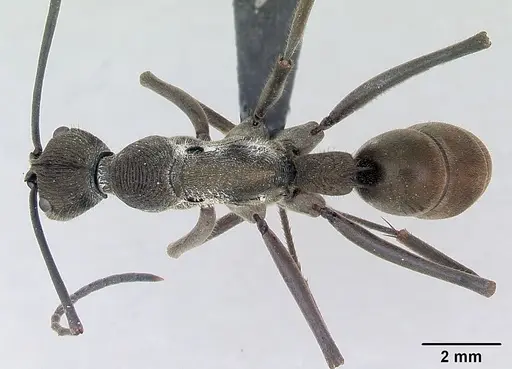
CASENT0173640
Ver no AntWeb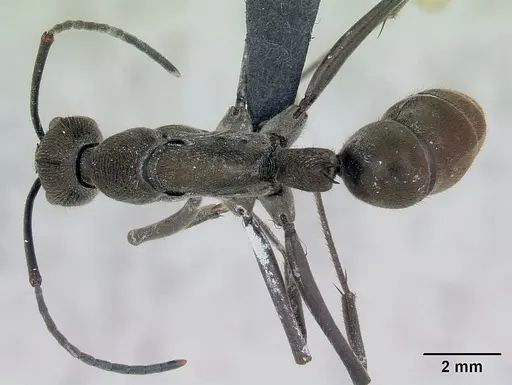
CASENT0173643
Ver no AntWeb
CASENT0900667
Ver no AntWeb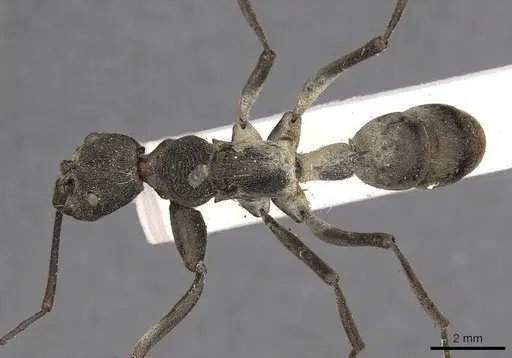
CASENT0915970
Ver no AntWeb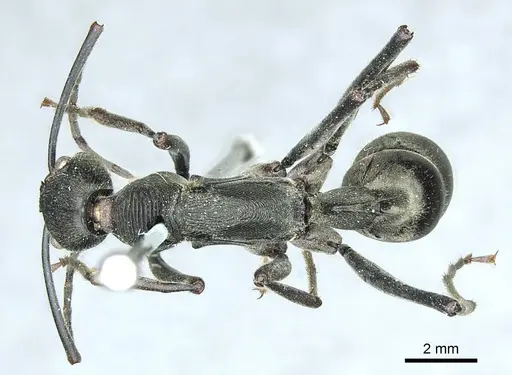
Literatura
Carregando mapa de distribuição...Carregando produtos...