
Diacamma longitudinale
- Nome científico
- Diacamma longitudinale
- Tribo
- Ponerini
- Subfamília
- Ponerinae
- Autor
- Emery, 1889
- Distribuição
- Encontrada em 0 países
Introdução
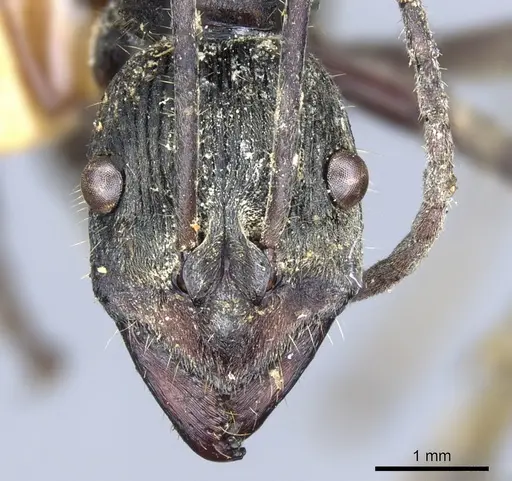
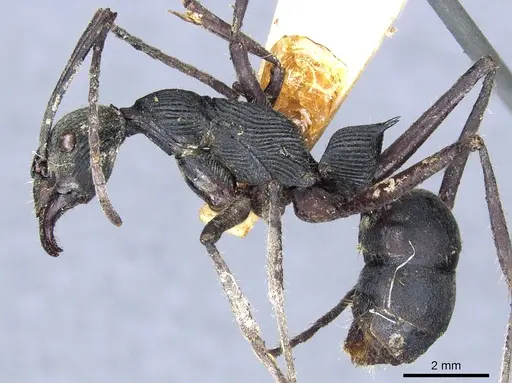
Diacamma longitudinale is a large ponerine ant species native to the Indomalaya region, found in Laos and Vietnam . Workers measure 13 mm in total length . They have longitudinal striations on the petiole and pronotum, while the first abdominal segment is smooth . As a member of the Ponerinae subfamily, they are known for their potent sting and active hunting behavior. Colonies are led by gamergates - reproductive workers that lay eggs, rather than a permanent queen .
Quick Summary
- Difficulty: Medium
- Origin & Habitat: Native to Laos and Vietnam, inhabiting tropical monsoon forests [1][2][3].
- Colony Type: Queenless, no distinct queen caste, reproduction by gamergates (reproductive workers).
- Queen Status: Queenless Colony
- Special: Gamergates
- Size & Growth:
- Queen: Queenless species, reproduction by gamergate (reproductive worker) instead of a distinct queen caste.
- Worker: 13 mm [4]
- Colony: Up to a few hundred workers (estimated based on typical Diacamma species)
- Growth: Moderate
- Development: Estimated 6-10 weeks at optimal temperatures (24-28°C) (Development time is inferred from related Ponerinae species, specific data for D. longitudinale is not available.)
- Antkeeping:
- Temperature: Keep warm, roughly 24-28°C, with a gradient
- Humidity: Keep nest substrate consistently moist but not waterlogged
- Diapause: No, as a tropical species, they do not require hibernation
- Nesting: Prefer soil nests in forest floor environments. In captivity, use moist substrate or Y-tong/plaster nests [5].
- Behavior: Active hunters with a potent sting. Territorial and defend nest vigorously. Forage individually. Escape risk due to climbing ability.
- Common Issues: temperatures below 22°C can cause colony failure, gamergate replacement is critical, if all gamergates die, the colony cannot produce new workers, overfeeding can lead to mold issues in their moist nest environment, wild-caught colonies may have parasites that can devastate captive populations, their potent sting makes handling risky, use caution when servicing the nest
Understanding Gamergate Colonies
Diacamma longitudinale is a queenless ant species, there is no permanent queen in the colony. Instead, certain workers called gamergates become reproductive and take on the role of egg-laying [5]. Multiple gamergates can exist in a single colony, and when one dies, another worker can develop into a replacement. For keepers, acquiring an established colony with active gamergates is essential for success.
Housing and Nest Setup
These ants do well in naturalistic setups that mimic their forest floor habitat. Use a mix of soil and sand as substrate, keeping it consistently moist but never waterlogged. A layer of leaf litter on the surface helps maintain humidity and provides foraging opportunities. Since they are larger ants, they need appropriately sized chambers, avoid tiny test tube setups. Y-tong nests also work well if you provide adequate moisture and dark nesting chambers [5]. Outworld space should include areas for hunting and waste disposal.
Feeding and Nutrition
As active predators, Diacamma longitudinale needs a protein-rich diet. Offer small live insects regularly, fruit flies, small crickets, mealworms, and waxworms are all good options. They may also accept protein jelly or frozen insects if accustomed to non-living prey. Sugar sources are not typically a major part of their diet. Feed them 2-3 times per week, removing any uneaten prey after 24 hours to prevent mold.
Temperature and Seasonal Care
Being a tropical species from Vietnam and Laos, these ants require consistent warmth. Keep the nest area between 24-28°C year-round. A small heating cable placed on one side of the nest creates a temperature gradient. Avoid any temperature drops below 22°C, as this can slow their metabolism. Unlike temperate species, they do not enter diapause and should be kept active throughout the year.
Handling and Safety
Diacamma longitudinale has a potent sting, these are Ponerine ants, known for their painful defensive abilities. While they are not aggressive toward humans unless provoked, they will not hesitate to sting if threatened. When servicing their enclosure, move slowly and avoid disturbing the nest directly. If you need to move them, coax them into a test tube rather than grabbing them. Should you be stung, wash the area with soap and water, apply ice for swelling, and monitor for allergic reactions.
Frequently Asked Questions
How do I start a Diacamma longitudinale colony?
You need to acquire an established colony with gamergates (reproductive workers). Unlike most ants where you catch a queen, this species is queenless. Look for colonies for sale from breeders or catch a group of workers from the wild (where legal). The colony should have multiple large workers, as one of them is likely a gamergate [5].
Do Diacamma longitudinale ants have a queen?
No, this species does not have a traditional queen. Instead, certain workers called gamergates become reproductive and lay eggs. Multiple gamergates can exist in a colony, and when one dies, another worker can develop into a replacement [5].
How long does it take for Diacamma longitudinale to produce first workers?
Based on typical Ponerinae development, expect around 6-10 weeks from egg to worker at optimal temperatures (24-28°C). Specific development data for this species is not available, so this is an estimate.
What do Diacamma longitudinale ants eat?
They are active predators that need live prey. Feed them small insects like fruit flies, small crickets, mealworms, and similar prey 2-3 times per week. They may also accept protein jelly or dead insects if conditioned to non-living food.
What temperature do Diacamma longitudinale ants need?
Keep them at 24-28°C consistently. They are tropical ants from Vietnam and Laos and need warmth to thrive. Use a heating cable on one side of the nest to maintain proper temperatures.
Are Diacamma longitudinale ants good for beginners?
They are rated as medium difficulty. While unique due to their gamergate system, they require more specific care than beginner species. You need to understand their queenless colony structure, maintain warm temperatures, and provide live prey regularly.
How big do Diacamma longitudinale colonies get?
Colonies typically reach up to a few hundred workers. They are not as prolific as some other ant species, but they make up for it with the interesting social structure of gamergate-led colonies.
Do Diacamma longitudinale ants need hibernation?
No, they do not hibernate. As tropical ants from Southeast Asia, they remain active year-round. Keep temperatures stable and warm throughout the year.
What size enclosure do Diacamma longitudinale ants need?
Because they can reach a few hundred workers and are active hunters, they need moderate to large outworld space. A naturalistic setup with at least 20x20cm of floor space works well. Nest chambers should be appropriately sized for their 13mm workers [4].
Report an Issue
The current care sheet is based fully on literature. See inconsistencies, or something that's incorrect? Please , it will be resolved after review from an admin. Contributing to the blogs tab also helps providing information, to make us be able to further improve the caresheets. Thank you for your support!
References

Este guia de cuidados está sob a licença CC BY-SA 4.0 .
Posts da comunidade
CASENT0903863
Ver no AntWeb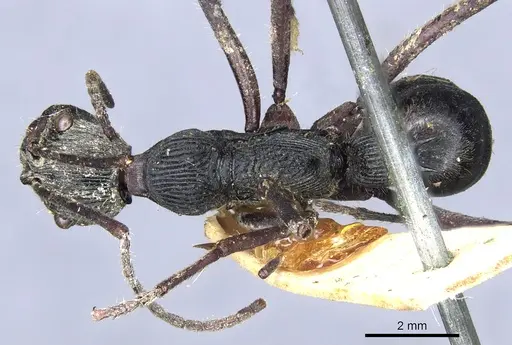
Literatura
Carregando mapa de distribuição...Carregando produtos...