
Cyphomyrmex hamulatus
- Nome científico
- Cyphomyrmex hamulatus
- Tribo
- Attini
- Subfamília
- Myrmicinae
- Autor
- Weber, 1938
- Distribuição
- Encontrada em 4 países
Introdução
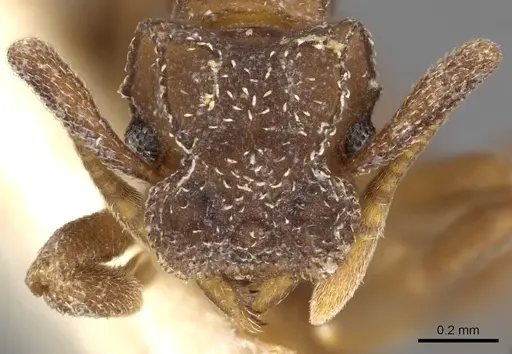
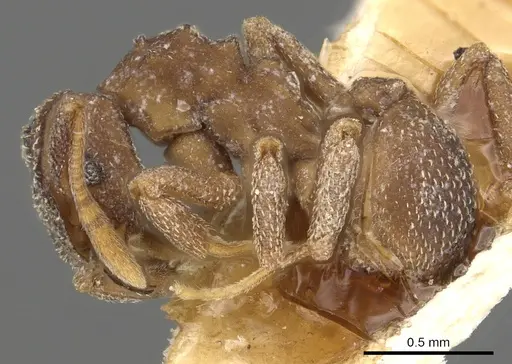
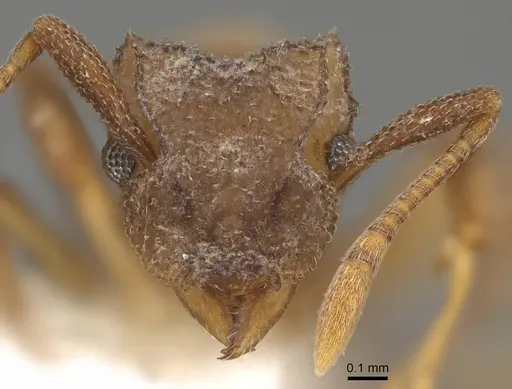
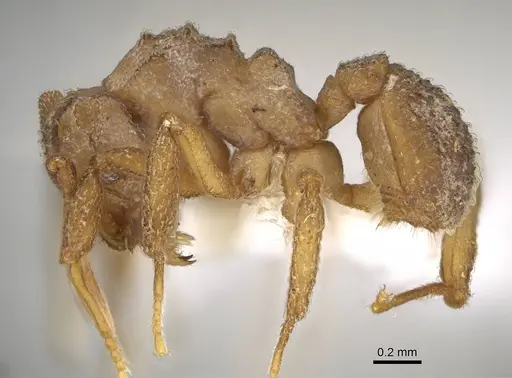
Cyphomyrmex hamulatus is a tiny fungus-growing ant, with workers measuring about 2.7 mm in total length . They have a rusty ferruginous color, with the head and gaster a bit darker. The mesosoma has sharply pointed tubercles, and the frontal carinae are sinuous . This species lives in the Neotropics, from Costa Rica down through Colombia, Bolivia, Brazil, Peru, and Venezuela . As a member of the tribe Attini, they cultivate fungus gardens, which makes their biology and care very different from most ants. Unfortunately, almost nothing is known about their colony structure, queen, or captive requirements, so keeping them is a challenge for experienced keepers.
Quick Summary
- Difficulty: Expert
- Origin & Habitat: Neotropical region: Bolivia, Brazil (Amazonas, Pará), Colombia, Costa Rica, Peru, Venezuela, Panama, Trinidad and Tobago [2][3]. In Colombia, specimens were collected at 250–1550 m elevation in Antioquia, Caquetá, and Sucre [2]. They likely live in humid tropical forests, as other fungus-growing ants do.
- Colony Type: Unknown colony structure. Only workers have been described scientifically, no queens or reproductives are known [1]. Related Cyphomyrmex species usually have single‑queen colonies, but that is unconfirmed here.
- Size & Growth:
- Queen: Unknown – no queen description exists.
- Worker: 2.7 mm total length [1]
- Colony: Unknown – no data available.
- Growth: Unknown
- Development: Unknown – no development data for this species. (Based on typical Attini patterns, expect several months from egg to worker at tropical temperatures, but this is purely estimated.)
- Antkeeping:
- Temperature: Keep at warm tropical temperatures, roughly 24–28°C. This is inferred from their Neotropical distribution [2][3]. Avoid temperatures below 22°C, as that could slow or stop fungus growth.
- Humidity: High humidity is needed, around 70–80% RH, to keep both ants and fungus healthy. Keep nest substrate consistently moist but not waterlogged. This is typical for fungus‑growing ants [1].
- Diapause: No – as a tropical species, they do not hibernate. Keep warm year‑round.
- Nesting: Preferred nest type is unknown. Based on related small Attini, likely test tubes with cotton or plaster nests with high humidity. Because workers are only 2.7 mm, escape prevention is critical – use fine mesh.
- Behavior: Behavior is poorly documented. As Attini, they are probably cryptic and not aggressive. They tend fungus gardens instead of foraging openly. Their tiny size means they can slip through the smallest gaps, so escape‑proofing is essential. Any stinger is likely too small to affect humans.
- Common Issues: no documented colony founding – initial establishment is a gamble, lack of species‑specific care – you will have to experiment, tiny size requires excellent escape prevention with fine mesh barriers, fungus garden maintenance is complex and different from typical antkeeping, high humidity can cause mold if ventilation is inadequate, queen unknown – cannot be collected from the wild, only workers available
Fungus‑Growing Behavior
Cyphomyrmex hamulatus belongs to the tribe Attini, which are all fungus‑growing ants. Unlike leaf‑cutters, Cyphomyrmex species collect organic debris – dead leaves, insect parts, seeds – to feed their fungal cultures. The fungus itself is the main food, the ants eat the fungal structures, not the substrate. This means you have to maintain a healthy fungal garden alongside the colony, which is a big challenge. The specific fungal symbiont for C. hamulatus is unknown, but Attini usually grow Leucocoprinus or similar basidiomycetes. In captivity, you would need to provide appropriate organic matter and probably introduce a compatible fungal culture [1].
Housing and Nest Setup
Since no specific nesting data exists, base the setup on related Cyphomyrmex and small Attini. Use a test tube with water at one end and a cotton plug, or a plaster nest with high humidity chambers. The nest must stay moist without flooding. A small water reservoir in the outworld helps keep humidity up. Because workers are only 2.7 mm, escape prevention is vital – use fine mesh (e.g.,0.2 mm) on all openings and seal any gaps. Provide a separate outworld for feeding and foraging. Keep the entire setup warm and stable, away from direct sun and drafts.
Feeding and Nutrition
Feeding fungus‑growing ants is different from typical ants. Instead of giving them direct food, you provide organic material for the fungus garden. Good options: small pieces of dead leaves, dead insects (e.g., fruit flies, mealworms), seeds, or crushed dry cat food. Avoid fresh greens that might mold. The exact preferences of C. hamulatus are unknown, but related Cyphomyrmex accept various plant and insect debris. The hardest part is getting the right fungus – you may need to obtain a starter culture from another Attini colony. Sugar water is usually not accepted because fungus‑growers get their carbs from the fungus. [1]
Temperature and Humidity
As a Neotropical species from places like Costa Rica and the Amazon, C. hamulatus needs warm, humid conditions. Keep temperatures at 24–28°C, this matches their natural range [2][3]. Below 22°C may slow or stop fungal growth. Humidity should be high, around 70–80% RH, for both ants and fungus. Use a hygrometer to monitor. A heating cable on one side of the nest can create a gradient, but make sure it doesn’t dry out the nest too fast. Mist the setup occasionally, but avoid standing water.
Challenges and Considerations
This species is among the hardest to keep because almost nothing is known about its biology. Only workers have been described – no queens, no colony founding, no development times. You will be pioneering its care. The fungus‑cultivating lifestyle adds another layer: you must keep the fungal culture alive, which requires different skills than normal antkeeping. Also, since no queen is known, you cannot collect a founding queen from the wild, any colony you get would likely be a worker group with no queen. This ant is only for expert keepers who are ready to experiment and accept that failure is likely [1].
Frequently Asked Questions
How do I keep Cyphomyrmex hamulatus ants?
This is an expert‑level species with no documented care. You’ll need warm (24–28°C), humid (70–80%) conditions and a fungus culture. Start with a test tube setup and experiment with organic substrates for the fungus garden. Be prepared for a steep learning curve.
What do Cyphomyrmex hamulatus eat?
They don’t eat typical ant food. Instead, they cultivate a fungus garden and feed it organic debris like dead leaves, insect bits, and plant matter. The specific fungus they need is unknown [1].
Are Cyphomyrmex hamulatus ants good for beginners?
No. There’s no care information, no known queens, and the fungus‑growing behavior is difficult. Start with a well‑documented genus like Lasius or Camponotus instead.
How big do Cyphomyrmex hamulatus colonies get?
Colony size is unknown – no data exists. Related Cyphomyrmex species have small to moderate colonies, but this is just a guess.
Where is Cyphomyrmex hamulatus found?
The species ranges across the Neotropics: Bolivia, Brazil (Amazonas and Pará), Colombia, Costa Rica, Peru, Venezuela, Panama, and Trinidad and Tobago [2][3].
Can I keep multiple Cyphomyrmex hamulatus queens together?
Unknown. No queens have been described, so colony structure is a mystery. Don’t try combining unless you have species‑specific information.
How long does it take for Cyphomyrmex hamulatus to develop from egg to worker?
Unknown. No development data exists. Based on other Attini at tropical temps, expect several months (maybe 3–6), but that’s a rough guess.
Do Cyphomyrmex hamulatus ants need hibernation?
No. As a tropical species, they don’t hibernate. Keep them warm all year round.
Why is Cyphomyrmex hamulatus so difficult to find for sale?
Because only workers are known – no queen has ever been described. That makes it impossible to collect a founding queen from the wild. Also, the complex fungus‑growing requirements deter most keepers [1].
Report an Issue
The current care sheet is based fully on literature. See inconsistencies, or something that's incorrect? Please , it will be resolved after review from an admin. Contributing to the blogs tab also helps providing information, to make us be able to further improve the caresheets. Thank you for your support!
References

Este guia de cuidados está sob a licença CC BY-SA 4.0 .
Posts da comunidade
CASENT0901673
Ver no AntWeb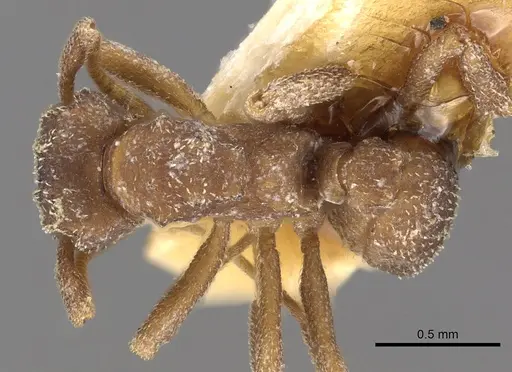
CASENT0922127
Ver no AntWeb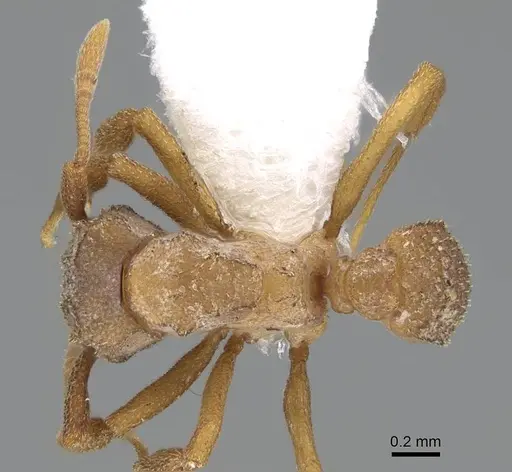
Literatura
Carregando mapa de distribuição...Carregando produtos...