
Crematogaster yamanei
- Nome científico
- Crematogaster yamanei
- Tribo
- Crematogastrini
- Subfamília
- Myrmicinae
- Autor
- Hosoishi & Ogata, 2009
- Distribuição
- Encontrada em 0 países
Introdução
Crematogaster yamanei is a small ant species endemic to Sumatra, Indonesia. Workers display pronounced size polymorphism, with some workers noticeably larger than others. They have a distinctive black body with longitudinal rugulae (groove-like sculptures) on the head, pronotum, mesonotum and propodeum. This species belongs to the C. vacca-subgroup within the C. inflata-group and is closely related to Crematogaster vacca, found in the Malay Peninsula and Borneo . The species was described in 2009 and is known only from the type locality near Parapat at Lake Toba (Danau Toba) in northern Sumatra at approximately 900m elevation . Nothing is known about the biology of this species - their colony structure, founding behavior, diet preferences, and seasonal patterns have not been documented. This makes C. yamanei an expert-level species suitable only for experienced antkeepers who can develop care through observation rather than following established protocols.
Quick Summary
- Difficulty: Expert
- Origin & Habitat: Endemic to Sumatra, Indonesia. Known only from the type locality near Parapat at Lake Toba (Danau Toba) at 900m elevation. During glacial periods, populations retreated to higher elevations due to competition with related species at lower elevations [1].
- Colony Type: Unconfirmed, colony structure has not been documented for this species.
- Size & Growth:
- Queen: Undescribed, queen measurements have not been published [2].
- Worker: Size data unavailable, the research provides head width (1.15-1.7mm) and mesosoma length (1.26-1.78mm) but not total body length. Based on typical Crematogaster genus patterns, workers are likely 2-4mm total length.
- Colony: Unknown, no colony size data exists for this species.
- Growth: Unknown, no development timing has been documented.
- Development: Unknown, no direct observations exist. (Development timeline has not been studied for this species.)
- Antkeeping:
- Temperature: Unconfirmed, no thermal studies exist for this species. Start around 22-26°C and observe colony activity. The type locality at 900m elevation suggests they may tolerate slightly cooler conditions than lowland tropical ants.
- Humidity: Unconfirmed, no humidity data exists. Most Crematogaster species prefer moderate to high humidity. Aim for 60-80% relative humidity with a moist but not waterlogged nest substrate.
- Diapause: Unknown, no seasonal data exists. As a tropical species endemic to Sumatra near the equator, they likely do not require diapause, but this is unconfirmed.
- Nesting: Unconfirmed, no natural nesting observations exist. Related species in the C. inflata-group typically nest in rotting wood or under bark in forested areas. A naturalistic setup with rotting wood pieces or a Y-tong/plaster nest with moderate humidity would be appropriate.
- Behavior: Undocumented, no behavioral observations have been published. Crematogaster species are generally known for their characteristic heart-shaped gaster that they raise in a defensive display when threatened. Most species in this genus are arboreal or semi-arboreal, nesting in wood or hollow plant stems rather than in soil. They are typically active foragers that can be aggressive when defending their nest. This species has the subfamily default smear defense mechanism, they use a modified, flattened stinger to wipe venom onto enemies rather than piercing flesh. Escape prevention should be moderate, their small size means they can squeeze through small gaps.
- Common Issues: no biological data exists, keepers must develop care through experimentation, colony may fail without obvious cause due to unknown requirements, queen and colony founding behavior is completely unstudied, temperature and humidity preferences are unknown, no information on diet acceptance, may have specialized feeding requirements
Why This Species Is Expert-Level
Crematogaster yamanei is one of the least-studied ant species in the hobby. Unlike common species like Crematogaster lineolata or Crematogaster scutellaris where care is well-established, this species has zero biological data. You will not find established feeding schedules, temperature ranges, or colony development timelines. This is not a species for someone who wants clear instructions to follow, it is for experienced keepers who enjoy experimenting and adapting care based on colony behavior. You must be prepared for the possibility that your colony may fail despite your best efforts, simply because we do not know what this species needs. If you want a rewarding experience with Crematogaster, consider starting with better-documented species like C. scutellaris or C. lineolata first.
What We Know From Related Species
While C. yamanei specifically has not been studied, we can make educated guesses from related ants. This species belongs to the C. vacca-subgroup within the C. inflata-group, which is closely related to C. vacca found in the Malay Peninsula and Borneo [1]. Members of this group are typically found in forested habitats at higher elevations. General Crematogaster biology suggests: they likely have claustral founding (queen seals herself in), they probably accept sugar sources and protein prey like most Crematogaster, and they likely nest in rotting wood or under bark rather than in soil. However, these are inferences, not confirmed facts for this species. Use them as starting points, not certainties.
Housing Recommendations
Since we do not know their natural nesting preferences, use a setup that works for related forest-dwelling Crematogaster. A Y-tong or plaster nest with narrow chambers works well for small Crematogaster species. Keep the nest moderately humid, the substrate should feel damp but not soggy. Provide a water tube for drinking and maintain humidity around 60-80%. Since the type locality is at 900m elevation in Sumatra, they may prefer slightly cooler conditions than typical tropical ants, consider starting around 22-24°C and adjusting based on colony activity. If workers cluster together in one area, they may be too cold, if they avoid the nest area, it may be too warm or too dry.
Feeding Strategy
No specific diet data exists for this species. Based on general Crematogaster behavior, offer a mix of sugar sources (honey water, sugar water) and protein (small insects like fruit flies, pinhead crickets, mealworms). Crematogaster species typically have workers that forage actively and accept a wide variety of foods. Start by offering sugar water constantly and protein prey 2-3 times per week. Remove uneaten prey after 24-48 hours to prevent mold. Observe carefully, if workers ignore a food source, try alternatives.
Colony Establishment
Since founding behavior is unconfirmed, treat the queen as potentially claustral (she may seal herself in and not leave to forage). Provide a small test tube setup with a water reservoir and keep it dark and undisturbed for 4-8 weeks after the nuptial flight. Do not disturb the founding chamber. Once workers emerge (nanitics will be small), you can begin offering tiny food items. Growth will likely be slow, expect several months before the colony has more than a dozen workers. Do not be alarmed if growth seems slow, we have no development timeline for this species.
Frequently Asked Questions
How long does it take for Crematogaster yamanei to produce first workers?
Unknown, no development timeline has been documented for this species. The actual timeline may be significantly different from related species.
What do Crematogaster yamanei ants eat?
Unconfirmed, no feeding observations exist. Based on related Crematogaster species, they likely accept sugar water/honey and small protein prey like fruit flies, pinhead crickets, or mealworms. Start with these standard foods and observe what the colony accepts.
Are Crematogaster yamanei good for beginners?
No. This is an expert-level species because absolutely no biological data exists for it. There are no established care protocols, temperature guidelines, or colony development timelines. Beginners should start with better-documented species like Crematogaster scutellaris, Crematogaster lineolata, or Lasius niger.
What temperature should I keep Crematogaster yamanei at?
Unconfirmed, no thermal studies exist. Start around 22-24°C and observe your colony. If workers cluster together tightly, try slightly warmer. If they avoid the nest area, try slightly cooler. The 900m elevation of the type locality suggests they may prefer conditions slightly cooler than typical lowland tropical ants.
Do Crematogaster yamanei need hibernation?
Unknown, no seasonal data exists. As a species endemic to Sumatra near the equator, they likely do not require a diapause period. However, some related species from higher elevations may have seasonal slowdowns. Monitor your colony for natural activity changes.
How big do Crematogaster yamanei colonies get?
Unknown, no colony size data exists for this species.
Can I keep multiple Crematogaster yamanei queens together?
Unknown, colony structure has not been documented. We do not know if this species is single-queen (monogyne) or multi-queen (polygyne). Do not attempt to combine unrelated queens until more is known about their social structure.
What nest type is best for Crematogaster yamanei?
Unconfirmed, no natural nesting observations exist. Based on related species, a Y-tong or plaster nest with narrow chambers scaled to their small size would be appropriate. Keep the substrate moderately moist. Avoid dry, desert-style setups.
Do Crematogaster yamanei ants sting?
Crematogaster species have a stinger but use a smear defense mechanism, they wipe or smear venom onto enemies rather than piercing flesh. They may also bite and spray formic acid. The sting is generally mild for humans, though individual reactions vary.
Where is Crematogaster yamanei found in the wild?
Only known from the type locality near Parapat at Lake Toba (Danau Toba) in northern Sumatra, Indonesia, at approximately 900m elevation [2][1]. It is endemic to Sumatra, meaning it is found nowhere else in the world.
Why is so little known about Crematogaster yamanei?
This species was only described in 2009 and is known from a very limited geographic range [2]. It was discovered and named relatively recently compared to many ant species that have been studied for decades. Additionally, the remote location in Sumatra and the species' restricted distribution have limited research opportunities.
Is Crematogaster yamanei aggressive?
Undocumented, no behavioral observations exist. Most Crematogaster species will defend their nest aggressively and may bite or spray formic acid when threatened. Assume moderate aggression until you observe otherwise, and use appropriate escape prevention.
Report an Issue
The current care sheet is based fully on literature. See inconsistencies, or something that's incorrect? Please , it will be resolved after review from an admin. Contributing to the blogs tab also helps providing information, to make us be able to further improve the caresheets. Thank you for your support!
References

Este guia de cuidados está sob a licença CC BY-SA 4.0 .
Posts da comunidade
CASENT0905904
Ver no AntWeb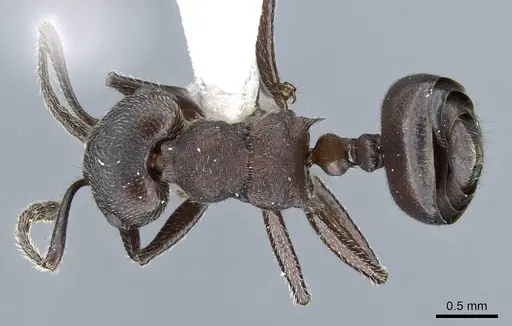
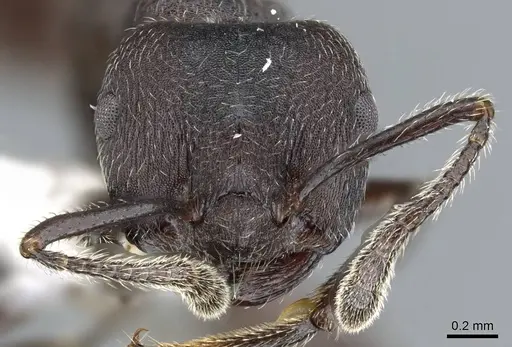
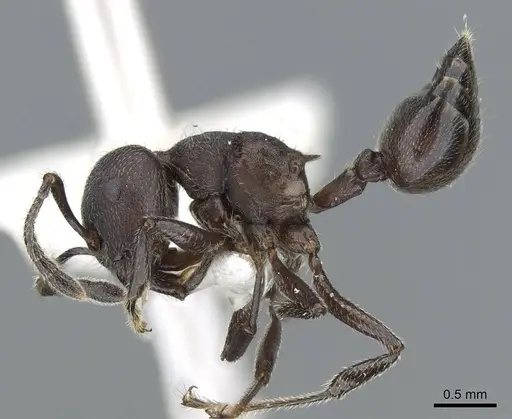
Literatura
Carregando mapa de distribuição...Carregando produtos...