
Crematogaster sorokini
- Nome científico
- Crematogaster sorokini
- Tribo
- Crematogastrini
- Subfamília
- Myrmicinae
- Autor
- Ruzsky, 1905
- Distribuição
- Encontrada em 0 países
Introdução
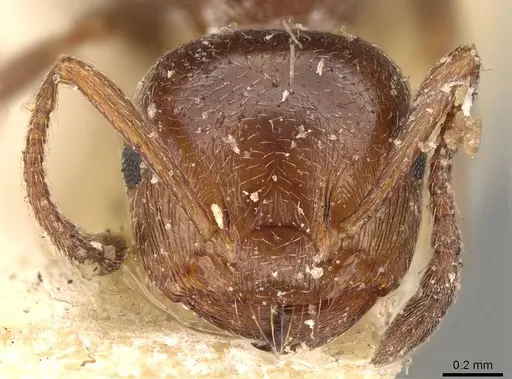
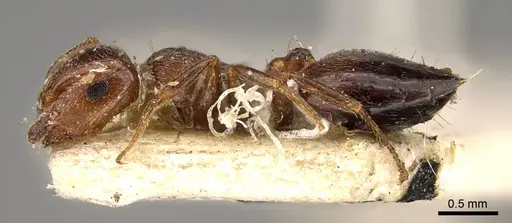
Crematogaster sorokini is a small ant species in the Myrmicinae subfamily. Workers measure approximately 3-4mm with a distinctive heart-shaped gaster that they raise when threatened, giving them the common name 'cocktail ants'. They have a dark brown head and mesosoma, with the gaster often darker in the posterior portion. This species is nearly indistinguishable from its close relative Crematogaster auberti, originally described as a variety of that species . This is a tree-dwelling species found across the Palaearctic region in Iran, Iraq, Kazakhstan, and Turkmenistan . They inhabit dry tree branches in forested areas and oases, building complex multi-chambered nests connected by foraging trails .
Quick Summary
- Difficulty: Medium
- Origin & Habitat: Native to the Palaearctic region, found in Iran, Iraq, Kazakhstan, and Turkmenistan [2]. In Iran, they inhabit parkland areas on ground and trees in moderate rainfall regions [1]. In Turkmenistan's Kopetdag mountains, they are tree-dwelling ants (dendrobionts) found in oases and forested areas, nesting in dry tree branches [3].
- Colony Type: Colony structure is not documented in scientific literature. Based on Crematogaster genus patterns, likely single-queen colonies, though this requires confirmation for this specific species.
- Size & Growth:
- Queen: ~5-6mm, inferred from Crematogaster genus patterns
- Worker: ~3-4mm, based on genus patterns [1]
- Colony: Up to several hundred workers in mature colonies (estimated from related species and nesting system descriptions)
- Growth: Moderate
- Development: ~6-8 weeks at optimal temperature, inferred from Crematogaster genus patterns (Development time is estimated from related species. Warmer temperatures within safe ranges may accelerate development.)
- Antkeeping:
- Temperature: Keep at 22-26°C during active season. They are adapted to warm temperate climates and are active from June through September in their native range [3]. A gentle temperature gradient allows ants to self-regulate.
- Humidity: Moderate humidity around 50-60%. As tree-dwelling ants, they prefer drier nest conditions compared to ground-nesting species. Provide some moisture but ensure good ventilation to prevent mold.
- Diapause: Yes, they enter a winter rest period. In their native range, activity is concentrated in summer months (June-September), suggesting they hibernate during colder months. Reduce temperature to around 10-15°C for 2-3 months during winter [3].
- Nesting: Use a formicarium with narrow chambers and passages scaled to their small size. Y-tong (AAC) nests or plaster nests work well. As tree-dwelling ants, they prefer drier conditions than ground-nesting species. Provide small twigs or branches within the outworld to simulate their natural tree-nesting habitat [3].
- Behavior: These ants are moderately active and form complex colony networks in the wild. They are hortobionts, hunting mainly in low vegetation like sagebrush and other plants [3]. Workers forage for honeydew from aphids and small insects. When threatened, they raise their heart-shaped gaster as a defensive display and may bite. They are not aggressive but will defend the nest. Workers are small so escape prevention should be moderate, they can fit through small gaps but are not as tiny as some Myrmicinae. They show peak activity during morning and evening hours in their native range [3].
- Common Issues: colonies may fail if kept too humid, tree-dwelling species prefer drier nest conditions, winter diapause is essential, colonies that are kept warm year-round may decline faster, slow founding phase means patience is required, small colony size initially means they are vulnerable to disturbance, multi-nest colony systems in the wild may not translate well to captivity, start with single nest setup
Nest Preferences and Housing
Crematogaster sorokini is a tree-dwelling (dendrobiont) species that naturally nests in dry tree branches and twigs [3]. In captivity, they do well in Y-tong (AAC) nests or plaster formicariums with relatively dry conditions. Unlike many Myrmicinae that need high humidity, this species prefers drier nest chambers with good ventilation.
The natural nesting system in Turkmenistan shows they build complex multi-tiered nests: primary nests (I order) with 1-2 trunks containing the queen and most brood, secondary nests (II order) with workers and brood, and small foraging stations [3]. In captivity, start with a simple single-nest setup and expand only if the colony grows very large. Add small twigs or cork bark in the outworld to provide enrichment that mimics their natural tree-dwelling habitat.
Feeding and Diet
In the wild, Crematogaster sorokini feeds primarily on honeydew from aphids and small insects [3]. They are hortobionts, foraging mainly in low vegetation and shrubs rather than on the ground. In captivity, offer a varied diet including sugar water or honey as a honeydew substitute, and small protein sources like fruit flies, small mealworms, or other tiny insects.
Feed protein (insects) 2-3 times per week and provide a constant sugar source. Remove uneaten food after 24-48 hours to prevent mold. As small ants, prey items should be appropriately sized, very small insects or pre-killed portions work best.
Temperature and Seasonal Care
Keep these ants at 22-26°C during the active season. They are adapted to warm temperate climates and show peak activity from June through September in their native range [3]. A temperature gradient allows workers to choose their preferred warmth.
During winter (roughly November-February), they require a diapause period. Reduce temperatures to 10-15°C to simulate winter conditions. This rest period is essential for colony health, colonies kept warm year-round may experience declining brood production. The natural activity pattern shows they are most active during morning and evening hours [3], so avoid exposing them to intense direct heat at midday.
Behavior and Colony Dynamics
Crematogaster sorokini workers are small but active foragers that build complex colony networks in the wild. They use established trails connecting different nest structures, with primary nests housing the queen and brood, and smaller satellite nests for foragers and aphid colonies [3].
When threatened, they display characteristic defensive behavior, raising their heart-shaped gaster upward (giving them the nickname 'cocktail ants'). They may bite if provoked but are not particularly aggressive toward keepers. Workers are primarily active during cooler parts of the day, morning and evening, which is typical for desert/temperate species avoiding midday heat. In captivity, observe when your colony is most active and adjust feeding times accordingly.
Frequently Asked Questions
How long does it take for Crematogaster sorokini to produce first workers?
Expect 6-8 weeks from egg to first worker at optimal temperature (22-26°C). This is estimated from related Crematogaster species as specific development timing for C. sorokini has not been documented. The founding queen may take 2-4 weeks to lay her first eggs after sealing in.
Do Crematogaster sorokini ants sting?
They can bite but do not have a painful sting like some larger ants. When threatened, they raise their heart-shaped gaster as a warning display. They are not considered dangerous to humans.
What temperature do Crematogaster sorokini need?
Keep them at 22-26°C during the active summer season. They require a winter diapause period, reduce temperatures to 10-15°C for 2-3 months during winter months.
Can I keep multiple Crematogaster sorokini queens together?
This has not been documented for this specific species. Based on related Crematogaster behavior, single-queen colonies are most common. Do not combine unrelated foundress queens as they will likely fight.
What do Crematogaster sorokini eat?
They feed on honeydew (offer sugar water or honey) and small insects. Feed small protein sources like fruit flies or tiny mealworms 2-3 times per week, with a constant sugar source available.
Are Crematogaster sorokini good for beginners?
They are moderate difficulty. They require specific temperature management and a winter diapause period, which adds complexity. Their small size also requires attention to escape prevention. They are not the easiest species but are manageable for intermediate antkeepers.
Do Crematogaster sorokini need hibernation?
Yes, they require a winter diapause. In their native range, they are active only from June through September. Reduce temperatures to 10-15°C for 2-3 months during winter to maintain colony health.
What humidity level do Crematogaster sorokini need?
As tree-dwelling ants, they prefer drier conditions than ground-nesting species. Aim for moderate humidity around 50-60% in the nest area with good ventilation. Avoid overly damp conditions that can cause mold.
When should I move Crematogaster sorokini to a formicarium?
Wait until the colony has at least 20-30 workers before moving from a founding setup. They do well in Y-tong or plaster nests that provide drier conditions. Ensure the formicarium has appropriately sized chambers for their small workers.
How big do Crematogaster sorokini colonies get?
Mature colonies likely reach several hundred workers based on related species. The complex multi-nest system in the wild can involve hundreds of workers across connected nest structures. In captivity, expect moderate colony growth over 1-3 years.
Report an Issue
The current care sheet is based fully on literature. See inconsistencies, or something that's incorrect? Please , it will be resolved after review from an admin. Contributing to the blogs tab also helps providing information, to make us be able to further improve the caresheets. Thank you for your support!
References

Este guia de cuidados está sob a licença CC BY-SA 4.0 .
Posts da comunidade
CASENT0914149
Ver no AntWeb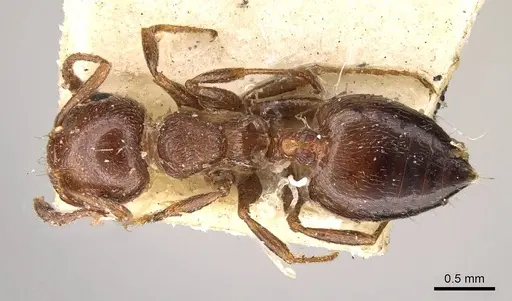
Literatura
Carregando mapa de distribuição...Carregando produtos...