
Crematogaster malala
- Nome científico
- Crematogaster malala
- Tribo
- Crematogastrini
- Subfamília
- Myrmicinae
- Autor
- Blaimer, 2010
- Distribuição
- Encontrada em 1 países
Introdução
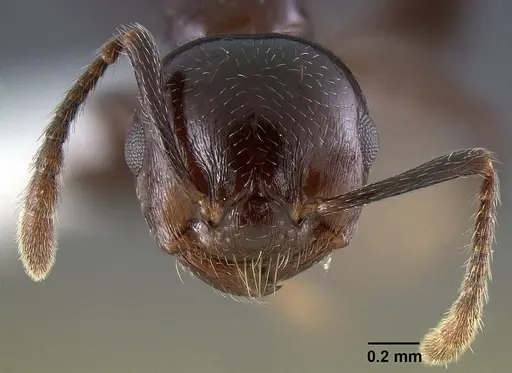
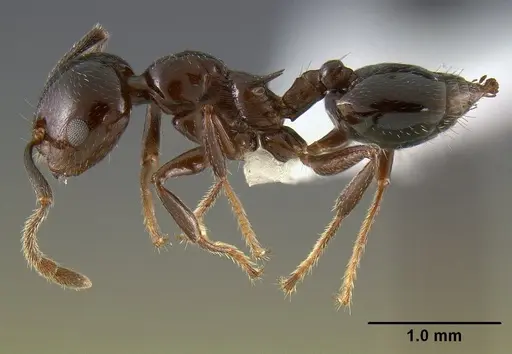
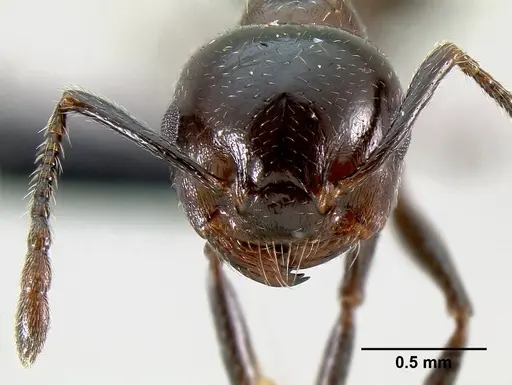
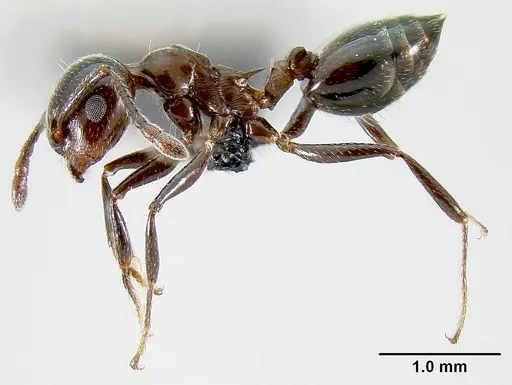
Crematogaster malala is a small to medium-sized acrobat ant endemic to Madagascar, known only from three high-elevation montane rainforest locations above 1250m . Workers are light to dark brown in color, with the mesosoma typically lighter than the head and abdomen . This species belongs to the Crematogaster (Decacrema) group and is distinguished by its distinctive erect setae on the petiole and postpetiole - a single stiff seta on each postero-lateral tubercle of the petiole, and a pair on the postpetiole . The name 'malala' means 'the beloved one' in Malagasy, chosen by the describing author due to happiness about discovering its morphological distinctness . This is one of the rarest and most poorly known ant species in Madagascar - queens and males have never been discovered .
Quick Summary
- Difficulty: Expert
- Origin & Habitat: Endemic to Madagascar, found exclusively in montane rainforests at elevations above 1250m in the Ankaratra (Ankazomivady), Andringitra, and Midongy massifs [1]. The species nests in dead twigs in living trees and occasionally in carton nests [1][2].
- Colony Type: Unknown, no queens or males have ever been discovered, making colony structure unconfirmed [1].
- Size & Growth:
- Queen: Unknown, queens have not yet been discovered [1]
- Worker: ~2-3mm total length, inferred from Crematogaster genus patterns (head width 0.89-1.09mm, mesosoma 0.97-1.16mm) [1]
- Colony: Unknown, only limited worker specimens have been collected [1]
- Growth: Unknown, no development data exists for this species
- Development: Unknown, no direct observations of colony development exist (No published data on egg-to-worker timeline.)
- Antkeeping:
- Temperature: Based on high-elevation montane rainforest origin (1250-1800m), likely prefers cooler temperatures than typical tropical ants. A gentle gradient around 18-22°C is recommended.
- Humidity: High humidity required, these ants come from rainforest environments. Keep nest substrate consistently moist but not waterlogged.
- Diapause: Unknown, no data on overwintering requirements. High elevation origin suggests some seasonal adaptation may be needed.
- Nesting: Arboreal nester, in captivity they will need vertical or elevated nest setups. Dead twigs, cork bark, or Y-tong style nests work well. Avoid horizontal soil nests.
- Behavior: Behavior is unstudied in captivity. In the wild, they nest arboreally in dead twigs and carton nests, similar to other Decacrema group species [1][2]. Related species are typically active foragers and may tend scale insects (Coccoidea) [2]. Workers can raise their abdomen as a defensive display, a common behavior in Crematogaster. Escape prevention should be moderate given their small size.
- Common Issues: no documented captive husbandry, this is one of the least-studied ant species in the hobby., no queen availability, wild queens have never been discovered, making captive colonies essentially impossible to obtain., high elevation origin means temperature requirements may differ significantly from typical tropical ants., very restricted natural distribution suggests ecological sensitivity, colonies may fail if conditions don't match their narrow habitat niche., arboreal nesting means standard test tube setups are likely unsuitable.
Discovery and Rarity
Crematogaster malala was only described in 2010 by Bonnie Blaimer, making it one of the newest described ant species from Madagascar [1]. The species is exceptionally rare, colonies have been found at only three locations, all in high-elevation montane rainforests exceeding 1250m altitude [1]. The type colony was collected at 1782m elevation in Ankazomivady, and additional colonies were found in Andringitra and Midongy national parks [1]. A recent targeted search for this species in Andringitra at around 1800m was unsuccessful, suggesting the ant may be highly restricted in its habitat and possess inconspicuous habits that make it difficult to find [1]. This rarity makes captive keeping extremely unlikely, no one has yet discovered a queen or male of this species [1].
Identification and Distinguishing Features
Workers of Crematogaster malala can be identified by a combination of unique characters. The petiole has postero-lateral tubercles that each bear a single, stiff, long erect seta [1]. The postpetiole is distinctly bilobed and broadly medially impressed, also bearing a pair of dorso-posterior stiff, long erect setae [1]. These features, along with erect pilosity on abdominal segments 4-7 and 4 mandibular teeth, are shared with the related species Crematogaster grevei [1]. The key distinguishing feature from C. grevei is that the lateral portions of the promesonotum are not raised with respect to the median portion, they are postero-lateral rounded or angular rather than raised [1]. Workers are small to medium-sized within the genus.
Natural Nesting Habits
In the wild, Crematogaster malala is an arboreal nester, found exclusively in dead twigs of living trees [1][3]. Five colony collections have documented this species nesting in dead twigs (4 colonies) and in a single carton nest (1 colony) [1]. This arboreal nesting behavior is typical of the Decacrema group, which includes many Madagascar Crematogaster species that have adapted to nesting above ground rather than in soil [2]. The high elevation montane rainforest habitat (1250-1800m) suggests these ants prefer cooler, more humid conditions than many other Crematogaster species [1]. The preference for dead twigs means captive setups should provide vertical nesting options like cork bark, twigs, or similar arboreal-style formicaria rather than horizontal soil nests.
Why This Species Is Not Recommended for Keepers
Crematogaster malala is one of the least suitable species for ant keeping, for one critical reason: no one has ever discovered a queen or male of this species [1]. Without queens, there is no way to start a captive colony. All ant species in the hobby depend on either wild-caught queens or established colonies with queens. This species remains known only from a handful of worker specimens collected by researchers in Madagascar [1]. Even if queens were somehow discovered, the extreme habitat restrictions (high-elevation montane rainforest, specific elevation range of 1250-1800m) would make replicating their natural conditions extremely challenging. For antkeepers interested in Crematogaster, many other species in the genus are well-established in the hobby with known care requirements and available queens.
Related Species in the Hobby
While C. malala itself is not available to keepers, the genus Crematogaster (acrobat ants) contains many species that are popular in the antkeeping hobby. The Decacrema group that C. malala belongs to includes other Madagascar species that nest almost exclusively in carton nests and dead twigs [2]. These ants get their common name 'acrobat ants' from their ability to raise their abdomen over their head when disturbed, which exposes a secretory gland as a defensive display. Related species are known to tend scale insects (Coccoidea) for honeydew, and are typically active foragers [2]. Keepers interested in Madagascar Crematogaster should look for better-documented species in the hobby, as C. malala remains a scientific curiosity rather than a viable captive species.
Frequently Asked Questions
Can I keep Crematogaster malala ants?
No, this species is not available to antkeepers. Queens have never been discovered, making it impossible to obtain a founding queen or established colony [1]. Even if queens were found, the extreme rarity and specific habitat requirements would make captive keeping impractical.
Where does Crematogaster malala live?
Only in Madagascar, at high elevations above 1250m in montane rainforests. Known locations include the Ankaratra, Andringitra, and Midongy massifs [1].
What do Crematogaster malala ants look like?
Workers are small to medium, around 2-3mm in total length. They are light to dark brown in color with distinctive stiff erect setae on the petiole and postpetiole, and 4 teeth on their mandibles [1].
How big do Crematogaster malala colonies get?
Unknown, only small worker series have been collected and no large colonies have been documented [1].
Do Crematogaster malala ants sting?
Crematogaster ants have a modified stinger used to smear venom onto enemies rather than pierce flesh. They can raise their abdomen as a defensive display, but they are not considered dangerous to humans.
What temperature do Crematogaster malala ants need?
Unknown, no captive observations exist. Based on their high-elevation origin (1250-1800m), they likely prefer cooler temperatures than typical tropical ants, possibly around 18-22°C [1].
How do Crematogaster malala ants nest?
They are arboreal nesters, found in dead twigs in living trees and occasionally in carton nests [1][2]. They do not nest in soil.
Are Crematogaster malala queens available?
No, queens of this species have never been discovered by scientists [1]. The species remains known only from worker specimens.
What is the difficulty level for keeping Crematogaster malala?
Expert, this species cannot be kept because no queens have ever been discovered. Even if available, their extreme habitat specificity would make them extremely difficult to maintain [1].
Do Crematogaster malala ants need hibernation?
Unknown, no captive data exists. Their high-elevation origin suggests some form of seasonal temperature variation may be beneficial, but specific requirements are unstudied [1].
Report an Issue
The current care sheet is based fully on literature. See inconsistencies, or something that's incorrect? Please , it will be resolved after review from an admin. Contributing to the blogs tab also helps providing information, to make us be able to further improve the caresheets. Thank you for your support!
References

Este guia de cuidados está sob a licença CC BY-SA 4.0 .
Posts da comunidade
CASENT0127524
Ver no AntWeb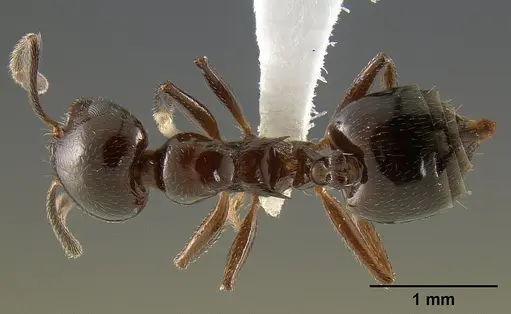
CASENT0140925
Ver no AntWeb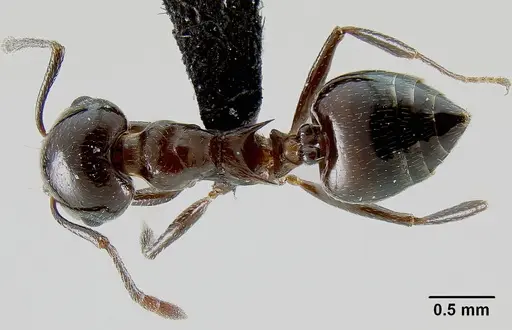
Literatura
Carregando mapa de distribuição...Carregando produtos...