
Ionian Cocktail Ant
Crematogaster ionia
- Nome científico
- Crematogaster ionia
- Tribo
- Crematogastrini
- Subfamília
- Myrmicinae
- Autor
- Forel, 1911
- Nome comum
- Ionian Cocktail Ant
- Distribuição
- Encontrada em 3 países
Introdução
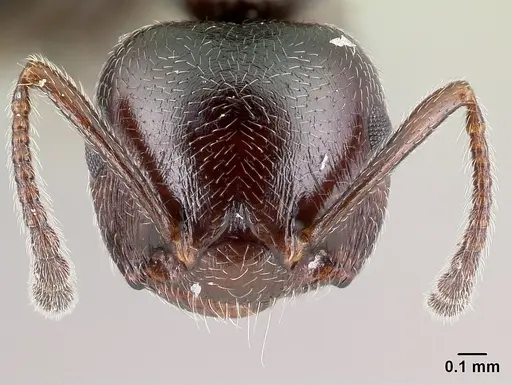
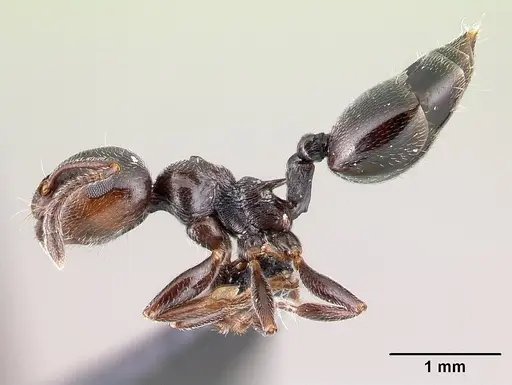
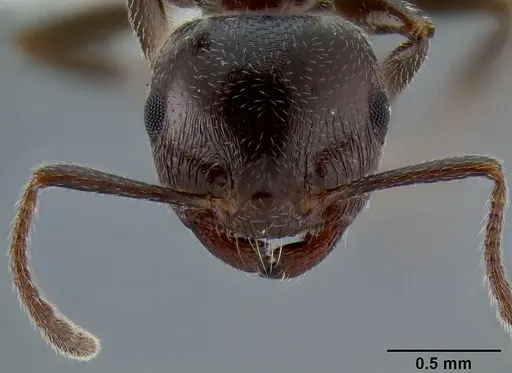
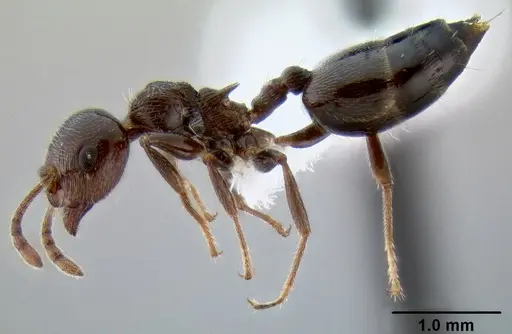
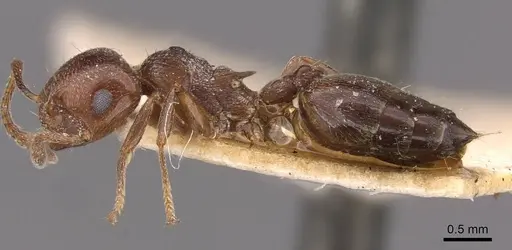
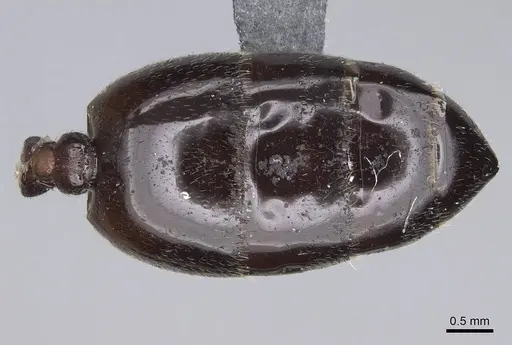
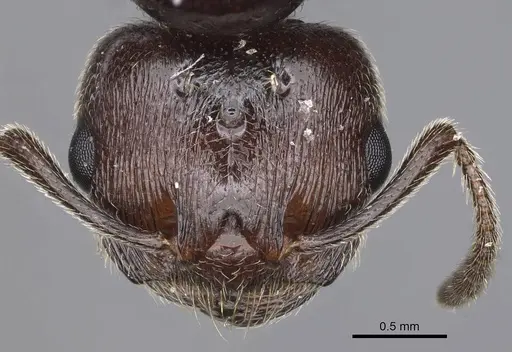
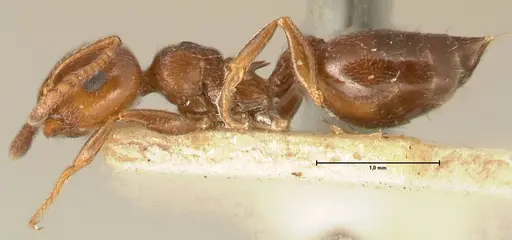
Crematogaster ionia is a small acrobat ant native to the Mediterranean region. Workers measure 4.8-5.0mm and have a distinctive appearance with dark reddish to brown head, thorax, and appendages, while the abdomen (gaster) is dark brown to black. The name 'acrobat ant' comes from their ability to raise their abdomen over their head and thorax when disturbed. This species is a member of the Crematogaster scutellaris group and is currently under taxonomic review as molecular data suggests it may represent a complex of multiple closely related species . This is a thermophilic, tree-dwelling species that nests in decaying wood, tree cavities, and under stones in warm Mediterranean habitats. Colonies become very large with thousands of aggressive workers. They are generalized omnivores, feeding on honeydew from aphids, small insects, and sweet secretions from scale insects. Their arboreal nature makes them fascinating to observe as they forage along branches and tree trunks .
Quick Summary
- Difficulty: Medium
- Origin & Habitat: Mediterranean region including Greece, Turkey, Israel, Croatia, Montenegro, Serbia, Jordan, Lebanon, Syria, Cyprus, and Bulgaria. Found in mixed and pine forests, typically nesting under stones, in humus at shrub bases, or in tree cavities. Prefers warm, low-to-mid altitudes from sea level up to about 900m (occasionally up to 1350m on Crete) [1][2][3][4].
- Colony Type: Colony structure is unconfirmed. Available literature does not specify whether this species is monogyne (single queen) or polygyne (multiple queens). Colonies can become very large with thousands of workers [2].
- Size & Growth:
- Queen: Size data unavailable, no total length measurements exist for queens. Based on typical Crematogaster patterns, queens are likely 1.5-2x worker size, approximately 7-10mm (inferred from genus)
- Worker: 4.8-5.0mm [1]
- Colony: Very large, thousands of workers in established colonies [2]
- Growth: Moderate to fast
- Development: Development timeline is unconfirmed for this species (As a thermophilic Mediterranean species, development likely accelerates at warmer temperatures (24-28°C))
- Antkeeping:
- Temperature: Keep at 24-28°C. As a Mediterranean thermophile, they prefer warm conditions but can tolerate room temperature (20-24°C). Provide a gentle heat gradient allowing workers to choose their preferred temperature [2].
- Humidity: Moderate humidity (50-60%). Since they nest in decaying wood and tree cavities, keep the nest substrate slightly moist but not waterlogged. Provide a water tube for drinking water [1][5].
- Diapause: Winter diapause requirements are unconfirmed for this species. Based on Mediterranean origin, a short rest period at 10-15°C for 2-3 months may be beneficial [2].
- Nesting: Arboricole (tree-dwelling) species. Best kept in wood-based nests like Y-tong (AAC), plaster nests with wood inserts, or naturalistic setups with decaying wood or branches. They prefer nesting in wood rather than soil. Avoid pure soil setups [5][2].
- Behavior: Very aggressive when threatened, colonies will vigorously defend their nest. Workers are active foragers that can climb well, making escape prevention important. They raise their abdomen over their head when disturbed (the 'acrobat' behavior). As generalized omnivores, they readily accept sugar water, honey, and protein sources like small insects. Their arboreal nature means they often forage along vertical surfaces. Colonies are highly defensive and will swarm out to attack perceived threats [2][1].
- Common Issues: escape prevention is critical, small size and climbing ability means they can escape through tiny gaps, colonies may be aggressive, handle with care and use proper protection when servicing nests, wood-dwelling nature requires appropriate nesting material, standard test tubes may not be ideal for long-term housing, taxonomic uncertainty means wild-caught colonies may include multiple similar species, large colony size requires expanding housing as the colony grows, colony type (monogyne vs polygyne) is unconfirmed in scientific literature
Housing and Nest Setup
Crematogaster ionia is an arboricole species that prefers nesting in wood. In captivity, Y-tong (AAC) nests or plaster nests with wood inserts work well. You can also create naturalistic setups with pieces of decaying wood or branches. The key is providing a nest material that mimics their natural tree-cavity habitat. Avoid pure soil test tube setups for long-term housing, while they may found in test tubes initially, they will do much better in wood-based nests once the colony establishes. Ensure the nest has chambers sized appropriately for their colony size, as they create extensive tunnel systems. This species is commonly found co-occurring with Camponotus lateralis and Colobopsis truncatus in the wild, sharing similar tree-dwelling habitats [5][2].
Feeding and Diet
These are generalized omnivores. Offer a constant sugar source like sugar water, honey, or diluted honey-water. For protein, provide small insects such as fruit flies, small crickets, mealworms, or other appropriately-sized prey. They also tend aphids in nature, with documented associations with Chaitoperus leucomelas on poplar, Aphis species on various plants, and other hemipterans. They may also feed on sweet foods secreted by scale insects and other pests. Feed protein 2-3 times per week, and keep sugar water available at all times. Remove uneaten prey after 24-48 hours to prevent mold [1][6].
Temperature and Seasonal Care
As a Mediterranean thermophile, Crematogaster ionia prefers warm conditions around 24-28°C. They can tolerate room temperature (20-24°C) but will be more active and develop faster when kept warmer. Provide a heat gradient so workers can regulate their own temperature. During winter, they may benefit from a short rest period at 10-15°C for 2-3 months, mimicking Mediterranean winter conditions. Reduce feeding during this period. They are found from sea level up to 1350m altitude, showing adaptability to various conditions within warm climates [2][1].
Behavior and Colony Dynamics
This species forms very large colonies with thousands of aggressive workers. When threatened, they exhibit their characteristic 'acrobat' behavior, raising the abdomen over the head and thorax. They are excellent climbers and will readily forage along branches, plant stems, and the walls of their enclosure. Colonies are highly defensive and will swarm out to attack perceived threats. When trunks or branches are moved by a potential predator or observer, workers leave their chambers to defend the nest. This makes them fascinating to watch but requires careful handling. They often co-occur with Camponotus lateralis and Colobopsis truncatus in the wild, sharing similar tree-dwelling habitats [5][2].
Escape Prevention
Escape prevention is critical with this species. Despite their moderate size (4.8-5mm), they are excellent climbers and can squeeze through small gaps. Use fluon or similar barriers on enclosure edges. Ensure all connections between the nest and outworld are secure. Check for gaps around water tubes and food dishes. Their arboreal nature means they are constantly moving up and along surfaces, so thorough barrier application is essential [2].
Frequently Asked Questions
How long does it take for Crematogaster ionia to produce first workers?
Development timeline is unconfirmed for this species. At optimal temperatures (24-28°C), expect first workers (nanitics) in approximately 6-8 weeks based on typical Crematogaster development patterns, though this may vary. Be patient during the founding stage as the queen needs time to raise her first brood alone.
What is the best nest type for Crematogaster ionia?
Y-tong (AAC) nests or plaster nests with wood inserts work best. This is an arboricole species that naturally nests in decaying wood and tree cavities. Avoid pure soil test tube setups for long-term housing, provide wood-based nesting material for the best results.
Do Crematogaster ionia ants sting?
Crematogaster ants have a modified stinger used to smear venom onto enemies rather than pierce flesh. They are more likely to bite and spray formic acid. Their main defense is the 'acrobat' behavior, raising the abdomen over the head, and they may spray acid rather than sting. The pain is minimal compared to larger stinging ants.
How big do Crematogaster ionia colonies get?
Colonies can become very large with thousands of workers. In the wild, nests are described as very large, made up of thousands of workers. You will need to progressively expand their housing as the colony grows.
Do Crematogaster ionia need hibernation?
Winter diapause requirements are unconfirmed for this species. Based on Mediterranean origin, a short rest period at 10-15°C for 2-3 months may be beneficial and would mimic their natural seasonal cycle in warm Mediterranean climates. Reduce feeding during this period.
Are Crematogaster ionia good for beginners?
This species is rated as Medium difficulty. While not the most challenging, they do have specific needs (wood-dwelling habitat, warm conditions) that make them better suited for keepers with some experience. Their large colony size and aggressive defense also require careful handling.
What do Crematogaster ionia eat?
They are generalized omnivores. Offer constant sugar water or honey, and protein sources like small insects (fruit flies, small crickets, mealworms) 2-3 times per week. They also tend aphids in the wild and may accept other sweet substances.
Can I keep multiple Crematogaster ionia queens together?
Not recommended. The colony type (monogyne vs polygyne) is unconfirmed in scientific literature. This species is likely single-queen based on typical Crematogaster patterns. Combining unrelated queens has not been documented and would likely result in aggression. If you obtain a wild colony, it will typically have one queen.
Why is my Crematogaster ionia colony dying?
Common causes include: incorrect humidity (too dry for wood-nesting species), temperatures outside their preferred range, poor escape prevention leading to escapes, or stress from excessive disturbance during the founding stage. Ensure wood-based nesting material, moderate humidity, and warm temperatures (24-28°C).
When should I move Crematogaster ionia to a formicarium?
Wait until the colony has at least 20-30 workers before moving to a larger formicarium. The founding queen can start in a test tube, but transfer to a proper nest setup once the colony is established. They do best in wood-based nests from the start if available.
Report an Issue
The current care sheet is based fully on literature. See inconsistencies, or something that's incorrect? Please , it will be resolved after review from an admin. Contributing to the blogs tab also helps providing information, to make us be able to further improve the caresheets. Thank you for your support!
References

Este guia de cuidados está sob a licença CC BY-SA 4.0 .
Posts da comunidade
CASENT0179888
Ver no AntWeb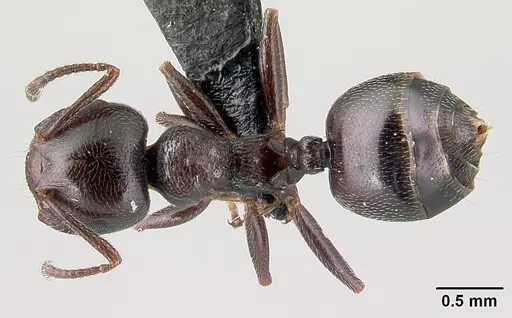
CASENT0193617
Ver no AntWeb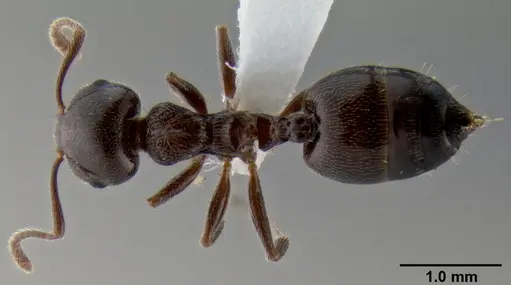
CASENT0908491
Ver no AntWeb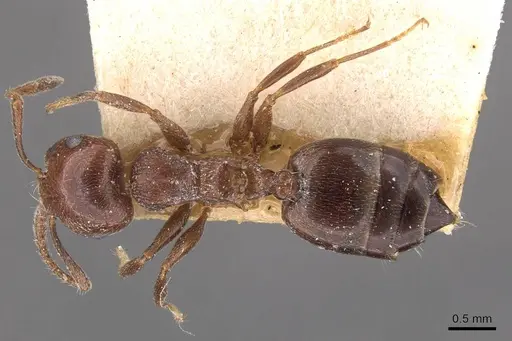
CASENT0914236
Ver no AntWeb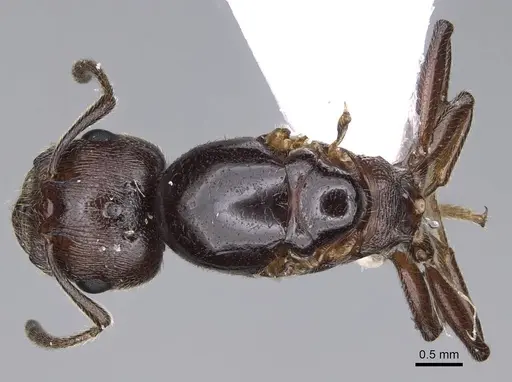
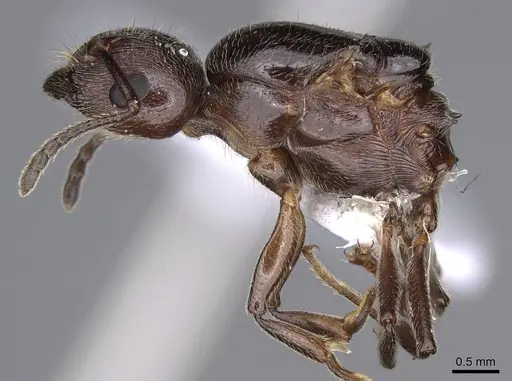
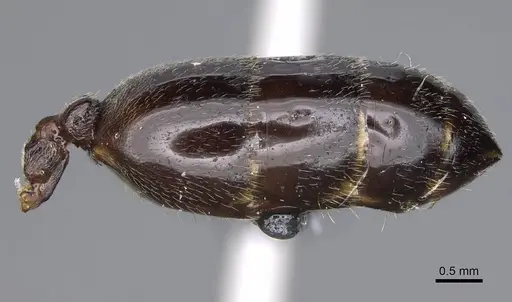
FOCOL1448
Ver no AntWeb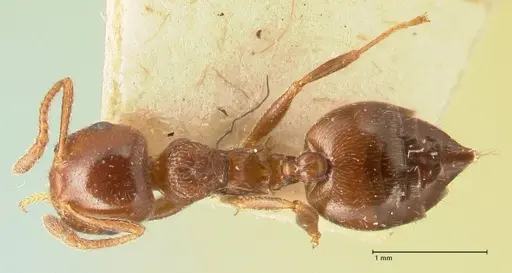
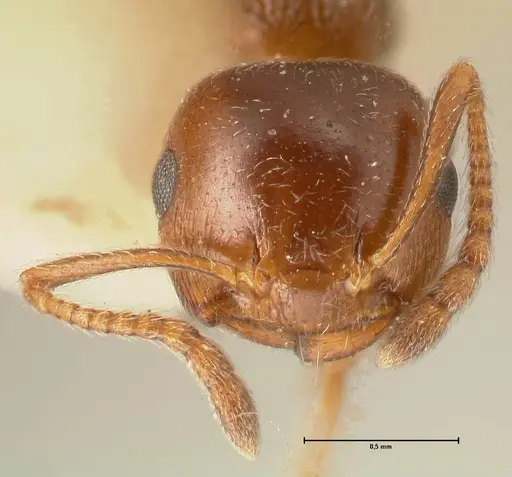
Literatura
Carregando mapa de distribuição...Carregando produtos...