
Crematogaster ghoneimi
- Nome científico
- Crematogaster ghoneimi
- Tribo
- Crematogastrini
- Subfamília
- Myrmicinae
- Autor
- Sharaf & Aldawood, 2022
- Distribuição
- Encontrada em 0 países
Introdução
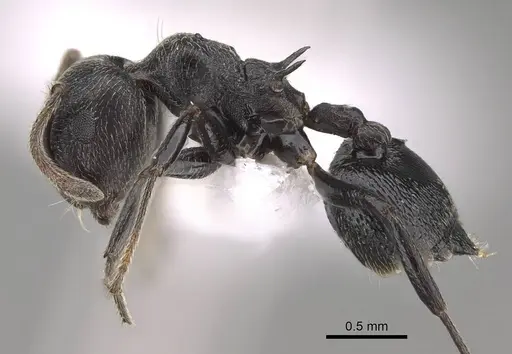
Crematogaster ghoneimi is a small ant species recently described from the Al Sarawat Mountains of Saudi Arabia, now also documented in Yemen. Workers measure 2.2-2.6mm in total length and are uniformly black to black-brown in color. This species is distinguished by its exceptionally long, thin propodeal spines that are more than three times longer than their base, and a single pair of hairs on the promesonotum. The species was collected in mountainous areas with high floral diversity at elevations ranging from 728m to 1881m. The recent discovery of a colony in an urban garden in Taiz, Yemen suggests this species may adapt to modified habitats.
Quick Summary
- Difficulty: Unknown, Insufficient Data
- Origin & Habitat: Endemic to the Arabian Peninsula, found in the Al Sarawat Mountains of Saudi Arabia (Al Bahah Province) and recently recorded in Yemen. Collected in mountainous areas with high floral diversity at elevations 728-1881m [1][2].
- Colony Type: Colony structure is unconfirmed. No data on queen number or colony organization exists in scientific literature.
- Size & Growth:
- Antkeeping:
- Temperature: Likely warm-adapted based on Arabian Peninsula origin. Start around 24-28°C and observe colony activity.
- Humidity: Likely prefers moderate to dry conditions given the arid-to-semiarid climate of their native range. Keep nest substrate lightly moist, allowing some drying between waterings. Avoid overly damp conditions.
- Diapause: Unknown, no data on overwintering requirements. The species occurs at moderate-to-high elevations in mountains where cooler temperatures occur seasonally, so a cool period may be beneficial.
- Nesting: No specific nesting data exists. In captivity, standard test tubes or small Y-tong nests work well for founding colonies. The species has been found in pitfall traps near ground level, suggesting ground-nesting behavior.
- Behavior: Behavior is unstudied. Crematogaster ants are known for their characteristic heart-shaped gaster that they raise when threatened, and their ability to squirt formic acid. Workers are moderately active foragers. Escape risk is moderate given their small size, use standard barrier methods.
- Common Issues: no captive husbandry data exists, this is a newly described species with no established care protocols, colony founding may be challenging since founding behavior has not been documented, unknown diapause requirements could lead to colony loss if kept too warm year-round, extremely limited availability, likely not available in the antkeeping hobby
Species Discovery and Identification
Crematogaster ghoneimi was described in 2022 by Sharaf and Aldawood, making it one of the newest ant species in scientific literature. It was discovered in the Al Bahah Province of Saudi Arabia, specifically in the Shada Al 'Ala nature reserve within the Al Sarawat Mountains. The species was named in honor of Egyptian urologist Professor Mohamed Ghoneim. In 2024, researchers reported the first records from Yemen, specifically from an urban garden in Taiz, suggesting the species may be expanding its range through human activity or has simply been overlooked. The most distinctive feature is the exceptionally long, thin propodeal spines, more than three times longer than their base, which easily separates it from related species like Crematogaster chiarinii. [1][2]
Natural Habitat and Distribution
This species is endemic to the Arabian Peninsula, known only from the Al Sarawat Mountains region that stretches from Saudi Arabia into Yemen. Type specimens were collected at elevations between 728m and 1881m in areas characterized by high floral diversity. The type locality near Shada Al 'Ala features plants including Juniperus procera (cypress), Acacia gerrardii, and Aloe officinalis. The collection site was next to an Adenium obesum (desert rose) tree. The Yemen record from an urban garden at 1400m elevation raises the possibility that the species may have been transported in imported plants, though more likely it represents a previously undocumented native range extension into modified habitats. [1][2]
Identification and Morphology
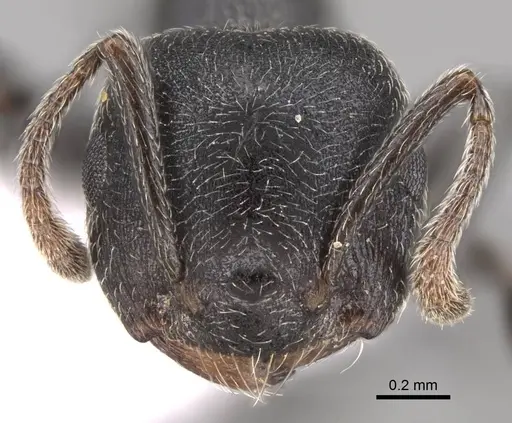
Workers measure 2.2-2.6mm in total length with a uniformly black to black-brown body and dark brown antennae. The head is as long as or slightly broader than long, with convex sides and a shallowly concave posterior margin. The antennal scapes just reach the posterior margin of the head when laid back. The propodeal spines are the most distinctive feature, they are exceptionally thin, long, and acute, being more than three times longer than their base and at least twice as long as the propodeal spiracle diameter. The promesonotum has a single pair of hairs, and the subpetiolar process is absent. The postpetiolar node is distinctly bilobed when viewed from above. These features distinguish it from all other Crematogaster species in the region. [1][2]
Caring for a Newly Described Species
Since Crematogaster ghoneimi was only described in 2022, there is no established husbandry protocol in the antkeeping hobby. This species represents both an opportunity and a challenge. Start with conditions typical for Crematogaster genus: a test tube setup for founding colonies, temperatures around 24-28°C, and moderately moist substrate. Observe your colony closely for signs of stress or comfort. Workers may show increased activity at warmer temperatures and may cluster in cooler areas if overheating. The lack of specific data means you will be contributing valuable observations to the antkeeping community. Consider documenting your colony's behavior, growth rate, and preferences to help future keepers.
Related Species for Comparison
Crematogaster ghoneimi is closely related to Crematogaster chiarinii, which occurs in East Africa. The two can be distinguished by the spine length, C. ghoneimi has spines more than three times longer than their base, while C. chiarinii has spines only about 1.5 times longer. Additionally, C. ghoneimi has a single pair of hairs on the promesonotum and lacks a subpetiolar process, whereas C. chiarinii has an acute subpetiolar process and no promesonotum hairs. Other regional Crematogaster species include Crematogaster acaciae, which can be found in similar habitats across the Arabian Peninsula. [1]
Frequently Asked Questions
Is Crematogaster ghoneimi available for purchase?
Extremely unlikely. This species was only described in 2022 and is endemic to a limited region of the Arabian Peninsula. It has not been cultured in the antkeeping hobby and is not commonly available from suppliers.
How do I care for Crematogaster ghoneimi?
No established care protocol exists for this newly described species. Based on typical Crematogaster preferences and the species' Arabian origin, start with temperatures around 24-28°C, moderate humidity in the nest, and standard test tube or small Y-tong housing. Observe your colony's behavior to fine-tune conditions.
What does Crematogaster ghoneimi look like?
Workers are small at 2.2-2.6mm, with a uniformly black to black-brown body. The most distinctive feature is the pair of exceptionally long, thin propodeal spines that are more than three times longer than their base. They have a single pair of hairs on the promesonotum and lack a subpetiolar process.
Where is Crematogaster ghoneimi found?
This is an endemic species of the Arabian Peninsula, known only from the Al Sarawat Mountains in Saudi Arabia (Al Bahah Province) and recently documented in Yemen. It lives at elevations between 728m and 1881m in areas with diverse vegetation.
Do Crematogaster ghoneimi ants sting?
Crematogaster ants have a modified stinger used to wipe or smear venom onto enemies rather than piercing flesh. They may also bite. The small size means any chemical defense would be minimal to humans.
How long do Crematogaster ghoneimi workers live?
Worker lifespan has not been studied for this species. In general, Crematogaster workers live several months to over a year, depending on caste and conditions.
Does Crematogaster ghoneimi need hibernation?
Unknown. The species occurs at moderate-to-high elevations in mountains where seasonal temperature changes occur, so a cool period may be natural. However, no specific diapause data exists. If keeping this species, consider a slight temperature reduction during winter months, but monitor for negative effects.
Can I keep multiple Crematogaster ghoneimi queens together?
Unknown. Colony structure (monogyne vs polygyne) has not been documented for this species. Without data, combining unrelated queens is not recommended.
What do Crematogaster ghoneimi eat?
Diet has not been documented. Based on typical Crematogaster behavior, they likely forage for honeydew and small insects. In captivity, offer sugar water or honey and small protein sources like fruit flies or small crickets. Observe acceptance.
Is this a good beginner ant species?
No. This species is not recommended for beginners due to the complete lack of captive husbandry data. It would be an expert-level species suitable only for experienced antkeepers interested in pioneering care for newly described species.
How fast do Crematogaster ghoneimi colonies grow?
Unknown. No growth data exists for this species.
What makes Crematogaster ghoneimi special?
This is one of the most recently described ant species in the world, only named in 2022. Keeping this species would mean working with virtually unknown biology and pioneering captive care protocols. Its extremely long propodeal spines make it morphologically distinctive among Arabian Crematogaster species.
Report an Issue
The current care sheet is based fully on literature. See inconsistencies, or something that's incorrect? Please , it will be resolved after review from an admin. Contributing to the blogs tab also helps providing information, to make us be able to further improve the caresheets. Thank you for your support!
References

Este guia de cuidados está sob a licença CC BY-SA 4.0 .
Posts da comunidade
CASENT0746645
Ver no AntWeb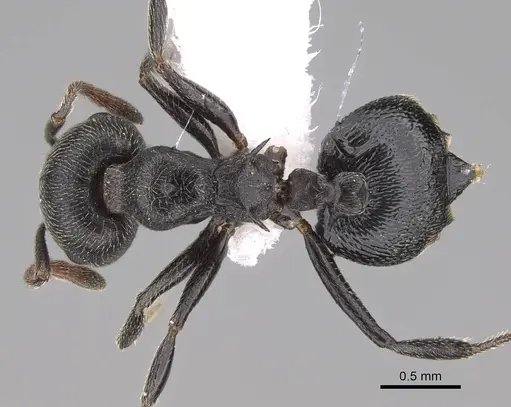
Literatura
Carregando mapa de distribuição...Carregando produtos...