
Crematogaster dalyi
- Nome científico
- Crematogaster dalyi
- Tribo
- Crematogastrini
- Subfamília
- Myrmicinae
- Autor
- Forel, 1902
- Distribuição
- Encontrada em 2 países
Introdução
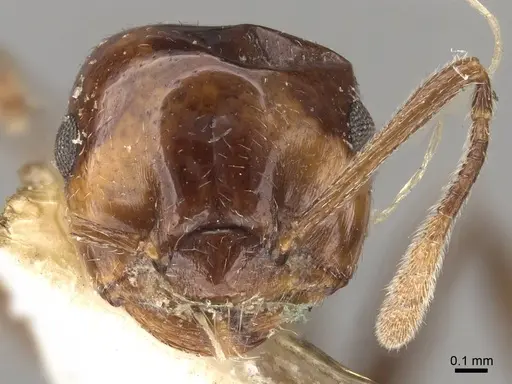
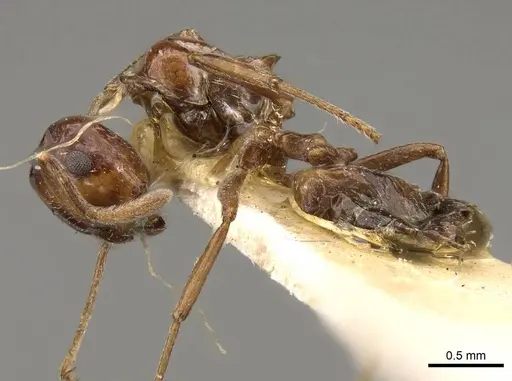
Crematogaster dalyi is a rare acrobat ant species from the ranavalonae-group, found only in India. Workers have a smooth, shiny brown body and a heart-shaped gaster they raise when threatened. Their head width is 0.86–0.92mm, but total body length is undocumented in the literature . The species is endemic to India, recorded from Tamil Nadu (type locality Coonoor), Karnataka, West Bengal, and Haryana . They resemble Crematogaster sikkimensis but have much shorter propodeal spines . This species stands out for its high‑altitude lifestyle. It’s been collected at around 1500 metres in the Himalayas , suggesting it prefers cooler conditions than most tropical Crematogaster. The strongly bilobed postpetiole (more than twice as broad as long) and complete lack of erect hairs give them a distinctive look . Because so little is known about their wild biology, keeping them is a challenge best left to experienced antkeepers.
Quick Summary
- Difficulty: Hard
- Origin & Habitat: Endemic to India, found in Himalayan regions at approximately 1500 metres elevation. Recorded from Tamil Nadu (type locality Coonoor), Karnataka, West Bengal, and Haryana [3][2].
- Colony Type: Colony structure is unconfirmed. Based on Crematogaster patterns, likely single‑queen (monogyne) colonies, but this has not been directly studied.
- Size & Growth:
- Queen: No queen measurements available in the literature [1]
- Worker: Size data unavailable – only head width measurements (0.86–0.92mm) exist. Total body length is not documented [1].
- Colony: Unknown – no colony size data available
- Growth: Unknown – no development data exists for this species
- Development: Unconfirmed – no direct measurements exist for this species. Based on typical Crematogaster patterns and small worker size, you might expect roughly 6–8 weeks at optimal temperature, but this is a rough guess, not a confirmed value. (Small worker size suggests relatively fast development compared to larger Crematogaster species, but this is inferred, not confirmed.)
- Antkeeping:
- Temperature: Based on altitude (1500m) and Himalayan distribution, this species likely prefers cooler conditions than typical tropical ants. Start around 18–22°C and watch the colony. Provide a gentle temperature gradient so workers can choose their own comfort zone [3].
- Humidity: Moderate humidity. Keep the nest substrate lightly moist, not waterlogged. Many Crematogaster nest in partially decayed wood or under bark, so they can tolerate some dryness between soakings.
- Diapause: Likely yes – being a Himalayan species at 1500m, they probably experience seasonal temperature drops. If your colony slows down in winter, offer a 2–3 month rest period at 10–15°C [3].
- Nesting: No specific nesting data exists. Based on genus patterns, they probably prefer small cavities – under bark, in rotting wood, or in tight rock crevices. A Y‑tong (AAC) nest with narrow chambers or a small naturalistic setup with tight spaces should work. Avoid large, open chambers [1].
- Behavior: These are tiny, active ants with typical Crematogaster defense: they raise their gaster when disturbed and smear venom using a flattened, spatulate stinger, rather than stinging. Their small size makes them escape hazards – use fine mesh (0.5mm or smaller). They are likely omnivorous foragers, collecting honeydew and small insects. They are not aggressive toward humans and are too small to sting effectively. Based on subfamily/tribe defense mechanism.
- Common Issues: tiny worker size means excellent escape prevention is needed – they can squeeze through standard mesh., no species‑specific care information exists – you must rely on genus‑level inference., slow or failed colony development is possible without proper temperature management., high altitude origin suggests they may not tolerate typical room temperatures without cooling., wild‑caught colonies are difficult to find as the species is rarely collected.
Nest Preferences and Housing
No scientific literature describes the natural nesting sites of Crematogaster dalyi. Based on the ranavalonae‑group and general Crematogaster habits, these ants probably nest in tight, protected spots – like under loose bark, in rotting wood cavities, or within rock crevices at high elevations [1]. Their tiny workers (head width 0.86–0.92mm) need appropriately scaled housing with narrow chambers and passages.
For captive care, a Y‑tong (AAC) nest with small, tight chambers works well. Alternatively, a small plaster or 3D‑printed nest with chambers sized to match the workers would be suitable. Avoid large open spaces that might stress such small ants. A test tube works for founding colonies, but cover any ventilation holes with very fine mesh (0.5mm or smaller) to prevent escapes. The nest should have a water reservoir to maintain slight moisture without flooding.
Feeding and Diet
No specific dietary studies exist for Crematogaster dalyi. Across the Crematogaster genus, ants are omnivorous with a strong taste for sugary liquids (honeydew, nectar) and protein from small insects [4]. Offer sugar water or honey as a constant energy source, and small protein like fruit flies, springtails, or tiny arthropods.
Because workers are so small (head width under 1mm), prey must be appropriately sized. Fruit flies and springtails are perfect. Avoid large prey that workers cannot tackle. Remove uneaten food within 24 hours to prevent mould in the nest.
Temperature and Seasonal Care
This is the trickiest part of keeping C. dalyi. The species has been recorded at about 1500 metres in the Himalayas [3], suggesting it naturally experiences cool, temperate conditions. There are no thermal studies for this species, but you should aim for cooler room temperatures than you’d use for most Crematogaster.
Start with a baseline of 18–22°C. Watch your colony – if workers cluster near any heat source, the temperature may be too low. If they become sluggish, try gently warming one area of the nest with a low‑setting heating cable. Create a temperature gradient so the ants can choose. During winter, if colony activity drops, provide a 2–3 month diapause at 10–15°C to mimic natural seasonal cooling [3].
Behavior and Handling
Crematogaster ants are famous for their acrobatic defense – they raise their gaster when disturbed and smear venom using a modified, flattened stinger (spatulate stinger) rather than piercing the skin [4]. This display also releases alarm pheromones that recruit nestmates. The species is too small to sting humans effectively, but the chemical smell can be unpleasant in enclosed spaces.
Workers are tiny and very active, so they will quickly find any gap in the housing. Escape prevention is critical: use tight‑fitting lids, fine mesh (0.5mm or smaller) on all vents, and check regularly for potential exits. They are not aggressive toward keepers and can be handled gently if needed, but their small size makes careful transfer important to avoid crushing them.
Frequently Asked Questions
How long does it take for Crematogaster dalyi to produce first workers?
The egg‑to‑worker timeline is unconfirmed for this species. Based on typical Crematogaster patterns and their very small worker size, you might expect roughly 6–8 weeks at optimal temperature, but this is a rough estimate, not a confirmed measurement.
Can I keep Crematogaster dalyi in a test tube?
Yes, test tubes work fine for founding colonies. Make sure any ventilation is covered with fine mesh (0.5mm or smaller) to prevent escapes, because these ants are extremely tiny.
What temperature do Crematogaster dalyi ants need?
Being a Himalayan species recorded at 1500m elevation, they prefer cooler conditions than most Crematogaster. Aim for 18–22°C initially and adjust based on colony activity. A gentle temperature gradient lets workers self‑regulate [3].
Do Crematogaster dalyi ants have a sting?
They are too small to sting humans effectively. Their primary defense is to raise the gaster and smear venom using a flattened, spatulate stinger, rather than piercing skin. They also release alarm pheromones.
How big do Crematogaster dalyi colonies get?
Colony size is unknown – no scientific data exists on maximum colony size for this species. Based on their tiny size and ranavalonae‑group patterns, colonies are likely to be smaller than many common Crematogaster species.
Are Crematogaster dalyi good for beginners?
No. This species is not recommended for beginners for several reasons: extremely limited distribution and availability, no species‑specific care information, tiny size requiring excellent escape prevention, and likely specific temperature requirements as a Himalayan species. Consider starting with more established species like Crematogaster ashbyi or other common Crematogaster.
Do Crematogaster dalyi need hibernation?
Likely yes – being a high‑altitude Himalayan species, they probably experience seasonal temperature drops in the wild. Provide a winter rest period of 2–3 months at 10–15°C if your colony shows reduced activity during cooler months [3].
What do Crematogaster dalyi eat?
Based on genus patterns, they accept sugary liquids (honey water, sugar water) and small protein sources like fruit flies, springtails, or tiny arthropods. Because workers are so small, prey must be appropriately tiny.
Where is Crematogaster dalyi found in the wild?
This species is endemic to India, recorded only from higher elevation areas. The type locality is Coonoor in Tamil Nadu, with additional records from Karnataka, West Bengal, and Haryana. It has been found at approximately 1500 metres elevation in Himalayan regions [1][2][3].
Why are my Crematogaster dalyi dying?
Without species‑specific research, common causes include: temperature too high (they prefer cooler conditions), improper humidity (too wet or too dry), escape‑related losses due to their tiny size, or simply the challenges of keeping a rarely‑studied species. Review temperature, housing, and ensure escape prevention is excellent.
Report an Issue
The current care sheet is based fully on literature. See inconsistencies, or something that's incorrect? Please , it will be resolved after review from an admin. Contributing to the blogs tab also helps providing information, to make us be able to further improve the caresheets. Thank you for your support!
References

Este guia de cuidados está sob a licença CC BY-SA 4.0 .
Posts da comunidade
CASENT0907510
Ver no AntWeb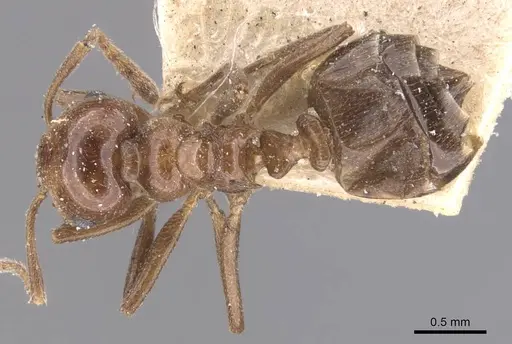
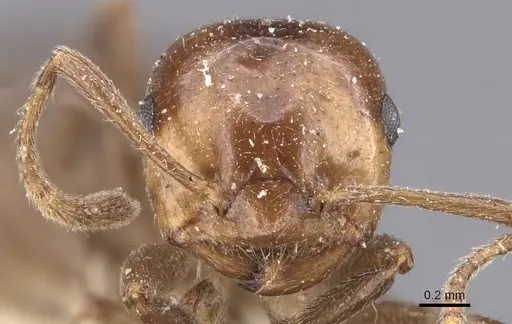
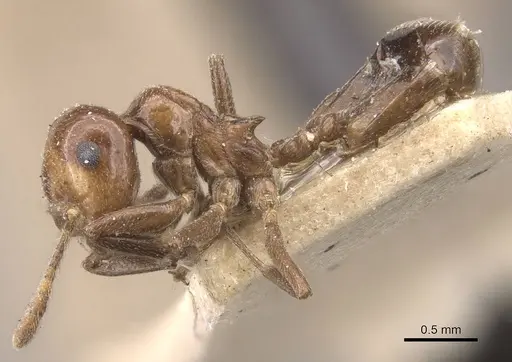
CASENT0914301
Ver no AntWeb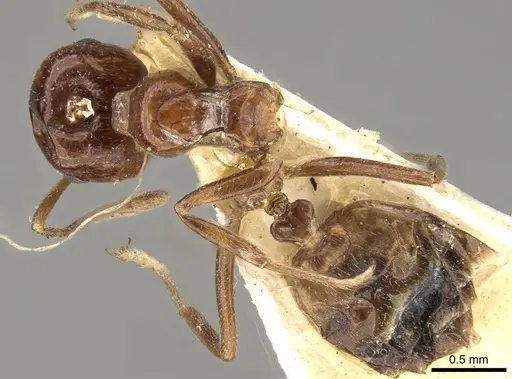
Literatura
Carregando mapa de distribuição...Carregando produtos...