
Crematogaster cornuta
- Nome científico
- Crematogaster cornuta
- Tribo
- Crematogastrini
- Subfamília
- Myrmicinae
- Autor
- Crawley, 1924
- Distribuição
- Encontrada em 0 países
Introdução
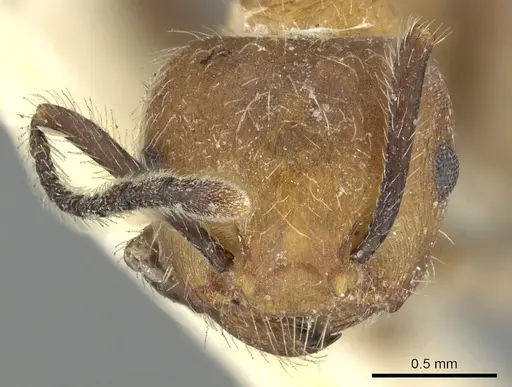
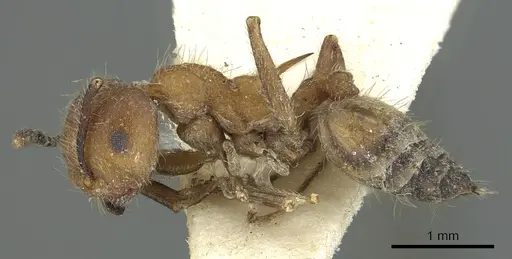
Crematogaster cornuta is a small ant species endemic to Sumatra, Indonesia. Workers have a distinctive reddish-brown coloration and belong to the Crematogaster ransonneti-group. They are recognized by their very long propodeal spines directed posterolaterally, a diamond-shaped petiole that is widest at mid-length, and longitudinal rugulae on the dorsal surface of the head and propodeum. The postpetiole is weakly bilobed without a distinct longitudinal median sulcus. These ants are abundantly covered in suberect setae, giving them a distinctly hairy appearance. As with all Crematogaster species, they can raise their heart-shaped gaster in a defensive display when threatened.
Quick Summary
- Difficulty: Unknown, limited data available
- Origin & Habitat: Endemic to Sumatra, Indonesia in the Indomalaya region [1].
- Colony Type: Colony structure is unconfirmed. Based on typical Crematogaster genus patterns, likely polygynous (multi-queen) with possible colony foundation by single queens or pleometrosis (multiple queens founding together).
- Size & Growth:
- Queen: Size data unavailable, inferred from genus patterns to be approximately 6-8mm
- Worker: Size data unavailable, the research provides head measurements but not total body length for this species
- Colony: Unknown, no colony size data available for this species
- Growth: Unknown, no development timing data available
- Development: Estimated 4-8 weeks based on typical tropical Crematogaster development patterns (No direct species-specific development data available. Tropical species typically develop faster than temperate relatives.)
- Antkeeping:
- Temperature: Estimated 24-28°C based on tropical Sumatran origin. Use a heating cable on one side of the nest to create a gentle gradient if room temperature is below this range.
- Humidity: Estimated 60-80% based on tropical origin. Keep the nest substrate consistently moist but not waterlogged. Mist occasionally and provide a water tube for drinking.
- Diapause: No, this is a tropical species from Sumatra and does not require hibernation. Maintain warm conditions year-round.
- Nesting: In nature, Crematogaster species often nest in rotting wood, under bark, or in hollow twigs. In captivity, a Y-tong (AAC) nest, plaster nest, or naturalistic setup with rotting wood works well. Provide small chambers scaled to their worker size.
- Behavior: Workers are moderately active and foragers. Like other Crematogaster species, they may show defensive behavior by raising their gaster, though they are not particularly aggressive. They likely recruit nestmates to food sources using chemical trails. Escape risk is moderate, use standard barrier methods (Fluon on test tube rims, fine mesh on outworlds).
- Common Issues: limited data means care requirements are estimated from genus patterns, monitor colony behavior and adjust conditions accordingly, tropical species may be sensitive to temperature drops, avoid keeping in cool rooms, no specific colony size data available so growth expectations are uncertain
Identification and Distinguishing Features
Crematogaster cornuta workers are small ants with a reddish-brown coloration and abundantly covered in suberect setae (short, slightly angled hairs). The most distinctive feature is their very long propodeal spines, which are directed posterolaterally. The petiole is diamond-shaped and widest at mid-length, and notably wider than the postpetiole. The dorsal surface of the head and propodeum have longitudinal rugulae (groove-like sculptures). The postpetiole is weakly bilobed but lacks a distinct longitudinal median sulcus (groove along the center). These ants belong to the Crematogaster ransonneti-group, which includes several similar Asian species [1].
Distribution and Natural Habitat
This species is endemic to Sumatra, Indonesia. It has not been recorded from the Indochinese Peninsula or other regions, making it a truly Sumatran species. The original description was based on specimens collected in 1915 from Pantjuran Gading (Kurintji) in Sumatra. More recent specimens have been collected from the Solok district on Mount Talang. As a tropical ant from Sumatra, it likely inhabits humid forest environments where it nests in rotting wood, under bark, or in similar sheltered microhabitats [1].
Nest Preferences and Housing
In captivity, Crematogaster cornuta will do well in nests that mimic their natural rotting wood habitat. Y-tong (AAC) nests work well for this species, as do plaster nests or naturalistic setups with small chambers. The chambers should be appropriately scaled to their worker size, small and tight-fitting. Provide some moisture in the nest substrate to maintain humidity, but ensure good ventilation to prevent mold. An outworld (foraging area) should be connected to the nest, and standard escape prevention methods should be used.
Feeding and Diet
Like other Crematogaster species, these ants are likely omnivorous with a preference for protein sources. They probably feed on honeydew (a sugary substance from aphids and scale insects) in the wild, along with small insects and other arthropods. In captivity, offer sugar water or honey as a constant energy source, and provide protein-rich foods such as small insects (fruit flies, pinhead crickets, mealworms). Feed protein 2-3 times per week and ensure sugar sources are always available. Remove uneaten prey after 24-48 hours to prevent mold.
Temperature and Seasonal Care
As a tropical species from Sumatra, Crematogaster cornuta requires warm conditions year-round. Keep the nest area at 24-28°C. A heating cable placed on one side of the nest can create a gentle temperature gradient, allowing the ants to choose their preferred temperature. Do not allow temperatures to drop below 20°C for extended periods. Unlike temperate species, this ant does not require a diapause (winter rest) period. Maintain warm, stable conditions throughout the year to support continuous brood development.
Behavior and Colony Dynamics
Crematogaster cornuta exhibits typical Crematogaster behavior. Workers are moderately active and will forage for food in the outworld. When threatened, they can raise their distinctive heart-shaped gaster as a defensive display, this is a characteristic behavior of the genus. Workers likely recruit nestmates to food sources through chemical trail-laying. The colony structure is not well documented, but Crematogaster species are typically polygynous (multiple queens) and may establish colonies through pleometrosis (multiple queens founding together). Queens are likely claustral, sealing themselves in to raise the first brood alone.
Frequently Asked Questions
How long does it take for Crematogaster cornuta to produce first workers?
The exact timeline is unknown for this species. Based on typical tropical Crematogaster development patterns, expect 4-8 weeks from egg to first worker at optimal temperature (24-28°C).
What temperature do Crematogaster cornuta ants need?
Keep them at 24-28°C. This tropical species from Sumatra requires warm conditions year-round and does not tolerate cool temperatures.
Do Crematogaster cornuta ants need hibernation?
No. As a tropical species from Sumatra, they do not require diapause or hibernation. Maintain warm conditions throughout the year.
What do Crematogaster cornuta ants eat?
They are omnivorous. Offer sugar water or honey as a constant energy source, and protein-rich foods such as small insects (fruit flies, mealworms, pinhead crickets) 2-3 times per week.
How big do Crematogaster cornuta colonies get?
The maximum colony size is unknown, no colony size data has been documented for this species. Based on typical Crematogaster genus patterns, colonies likely reach several hundred to a few thousand workers.
Can I keep multiple Crematogaster cornuta queens together?
The colony structure is not well documented for this specific species. Many Crematogaster species are polygynous (multi-queen). However, combining unrelated foundress queens carries risks, they may fight until only one remains. If you want to try multi-queen colony founding, provide ample space and monitor closely.
What type of nest is best for Crematogaster cornuta?
Y-tong (AAC) nests, plaster nests, or naturalistic setups with rotting wood work well. Provide small chambers scaled to their tiny worker size. Keep the nest moderately humid with good ventilation.
Do Crematogaster cornuta ants sting?
Crematogaster ants have a stinger but rarely use it against humans. They may display defensive behavior by raising their gaster. The sting is not medically significant for most people.
Are Crematogaster cornuta ants good for beginners?
Difficulty level is uncertain due to limited species-specific data. They are a tropical species requiring warm conditions year-round. If you have experience with other Crematogaster species, this one should be manageable. Beginners may find the limited care information challenging.
Where is Crematogaster cornuta found?
This species is endemic to Sumatra, Indonesia. It has only been recorded from that island and is not found elsewhere in Asia.
Report an Issue
The current care sheet is based fully on literature. See inconsistencies, or something that's incorrect? Please , it will be resolved after review from an admin. Contributing to the blogs tab also helps providing information, to make us be able to further improve the caresheets. Thank you for your support!
References

Este guia de cuidados está sob a licença CC BY-SA 4.0 .
Posts da comunidade
CASENT0902128
Ver no AntWeb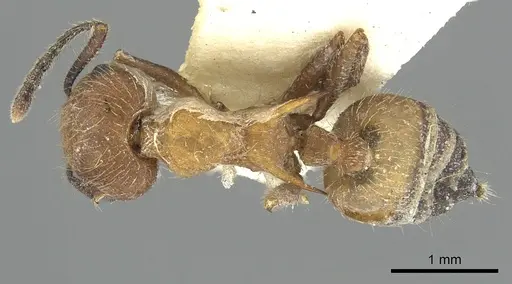
Literatura
Carregando mapa de distribuição...Carregando produtos...